

Take us back to the very beginning, Sparsh — what first pulled you toward the drums, and do you remember the moment you knew this was going to be your life?
My journey with drums began at a very young age, growing up in an environment where music was always a part of life. My mother was an Assamese Bihu dancer in her younger days, and my father is a renowned ethnic stroke player, musician, and music producer who has been working in the industry for over 25 years. Being surrounded by music and different forms of artistic expression naturally influenced me, but the drums were something I felt particularly drawn to. There was something about the energy, the rhythm, and the freedom of expression behind the instrument that fascinated me.
What started as curiosity gradually turned into a passion, and eventually, that passion became a serious commitment. The more I learned, the more I realised that drumming was not just about playing an instrument — it was about expressing myself, connecting with people, and being a part of something bigger through music.
I don’t think there was one single moment when I knew this was going to be my life. It was a gradual realisation that came through years of practice, performing, learning, and pushing myself to become a better musician. Every opportunity I got to perform on stage reinforced that feeling. Over time, what I loved doing became what I wanted to dedicate my life to.
Looking back, I’m grateful that something that began as a natural attraction to music has grown into a career that allows me to perform, create, collaborate with incredible artists, and keep discovering new possibilities behind the drums. For me, it’s still a journey of learning, and that’s what keeps the passion alive.
Can you recall one of your earliest memorable moments behind the kit — a performance, a jam, or even a practice session that stayed with you? Tell us what made it so vivid.
One of my earliest and most memorable musical experiences was playing my very first gig as a percussionist alongside my dad in Delhi. I was around 12 years old at the time, and it was a special experience for me because I was sharing the stage with someone I had grown up looking up to, both as a musician and as a father.
Being on stage at that age was a completely different feeling. It gave me an early glimpse into the world of live performance and what it meant to be a part of a musical experience beyond just practising an instrument. Looking back, that performance holds a special place in my heart because it was one of my first steps into the professional world of music.
I may not have understood the full magnitude of what that moment meant for my future back then, but it was the beginning of a journey that has taken me to some incredible stages and given me opportunities I could only have dreamed of as a child. In many ways, that first gig with my dad will always remain one of the most meaningful milestones in my musical journey.
Your playing moves across rock, progressive metal, funk, Latin, drum and bass, and Indian fusion — how did your style come to span such a wide world of sound, and what ties it all together for you?
I’ve always believed that music has no boundaries, and as a drummer, I’ve never wanted to limit myself to one particular genre. Growing up in a musical environment exposed me to different sounds and influences, and over time, I developed a curiosity to explore everything from rock and progressive metal to funk, Latin, drum and bass, and Indian fusion.
A big part of that journey has been listening to and learning from drummers who have inspired me since the beginning of my career. Mike Portnoy, Chris Coleman, Jojo Mayer, Benny Greb, and Steve Smith have influenced my understanding of technique, creativity, groove, and musicality. On the Indian side, legends and pioneers like Ustad Zakir Hussain, Ranjit Barot, Trilok Gurtu, and Gino Banks have deeply inspired me with their approach to rhythm, improvisation, and the fusion of Indian and contemporary musical styles. Each of them has a distinct voice on the instrument, and studying their work has encouraged me to keep pushing my own boundaries.
Every genre offers something different. Progressive music challenges me technically and pushes me to think outside the box, funk and Latin music teach me about groove and feel, while Indian music brings a completely different rhythmic vocabulary and a deeper understanding of rhythm and phrasing. I enjoy taking something from each of these worlds and finding ways to incorporate it into my own playing.
For me, the key is not just learning to play different styles, but understanding the musical language behind them. I want to be able to adapt to the music, serve the song, and still bring my own identity to the instrument.
Ultimately, what ties everything together is rhythm, feel, and expression. No matter how complex or simple the music is, I believe the drums should always contribute to the emotion and energy of the composition. My goal is to remain versatile, keep experimenting, and never stop learning, because I feel that the more musical languages you understand, the more freely you can express yourself as an artist.
You've spoken about developing your own identity behind the drums. How would you describe that identity in your own words — what makes a groove unmistakably yours?
I would describe my identity behind the drums as a blend of power, precision, groove, and versatility. I love exploring complex rhythmic ideas and pushing technical boundaries, but at the same time, I believe that a drummer should always serve the music and understand when to play less and let the song breathe.
Having grown up listening to and learning from drummers across different genres, I’ve always tried to absorb their musical philosophies without losing my own individuality. I enjoy bringing the energy and aggression of rock and progressive metal together with the pocket of funk, the rhythmic freedom of Latin music, and the depth of Indian rhythms.
For me, what makes a groove unmistakably mine isn’t necessarily a particular fill or technique. It’s the way I approach a piece of music, how I interpret its dynamics, how I build energy, and how I respond to the musicians around me. I want my playing to have both intensity and sensitivity — to be able to drive a high-energy performance one moment and create something subtle and deeply musical the next.
Ultimately, I’m still discovering and developing my identity every day. I don’t want to be known only for how fast or technically challenging I can play, but for how I make people feel through my playing. If someone can recognise my musical personality through the way I approach a groove, regardless of the genre, then I feel I’m moving in the right direction.
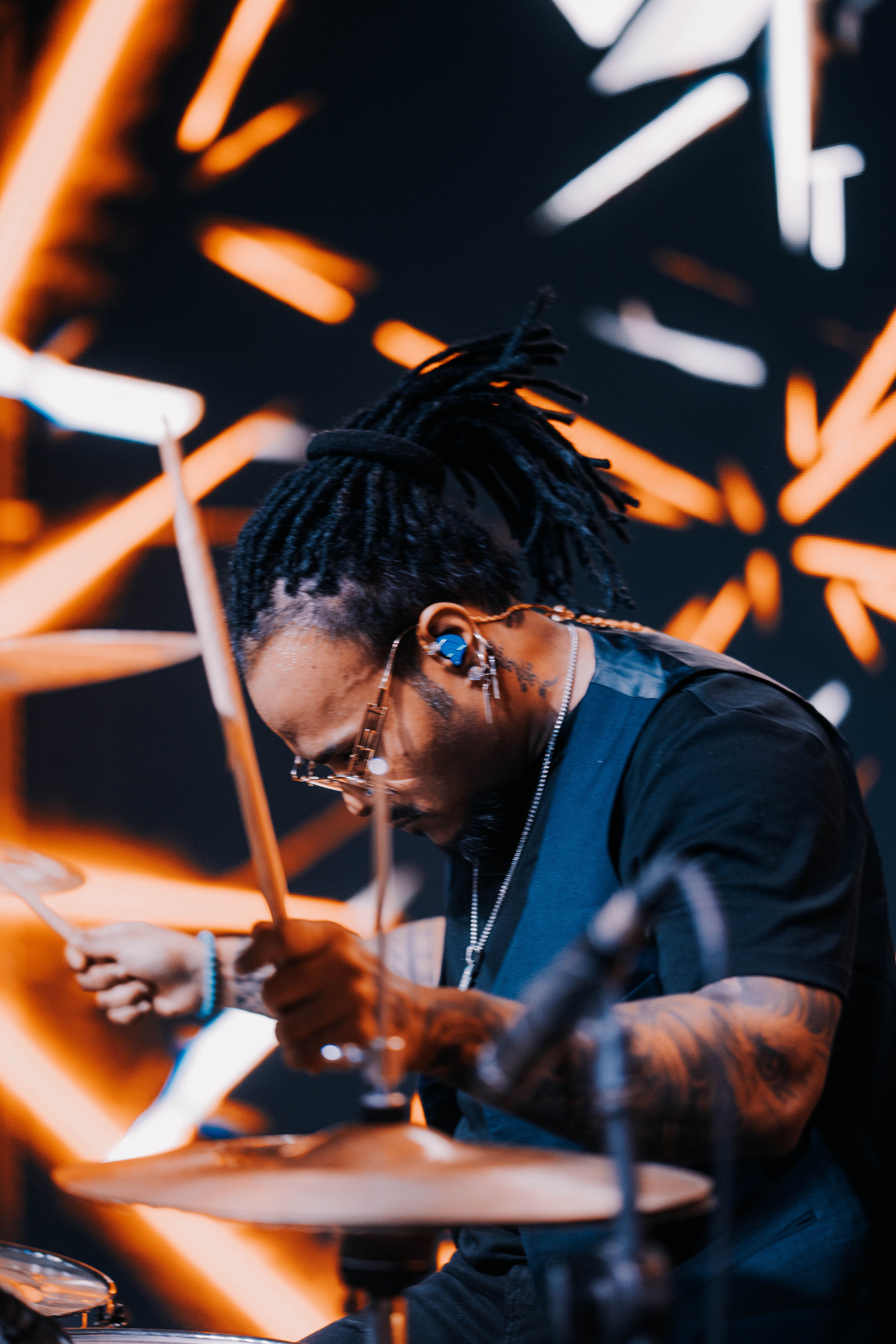
What's happening in that moment you just shared, and why did you choose it to represent you?
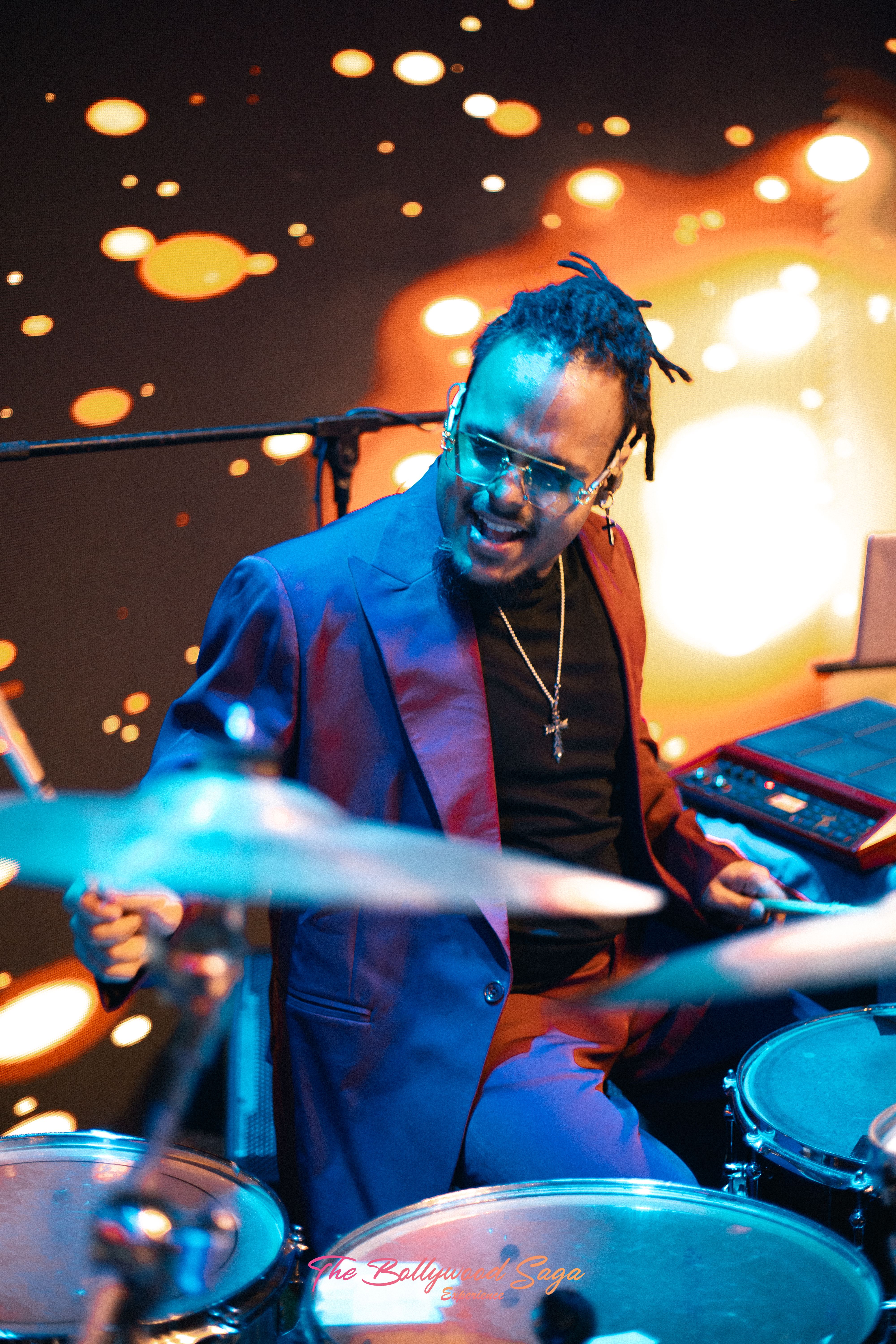
This one's from one of the most mad gig I did few years back with "Yo Yo Honey Singh" in Abu Dhabi
What do you remember most about that night on stage — the energy, the crowd, the people you were playing with?
What made that moment special for me was the fact that the intro music was something I had designed and worked on over months, with the vision of creating a grand, almost cinematic entrance for Yo Yo Honey Singh every time he stepped on stage. So, seeing that idea come to life in front of thousands of people was an incredible feeling.
There’s a different kind of adrenaline when you’re performing something you’ve created yourself. You’re not just playing your instrument; you’re watching an idea that started in your head translate into a live experience, with the entire crowd waiting for that moment. The energy in the arena, the anticipation before the entrance, and the collective reaction of the audience made it incredibly powerful.
Sharing that moment with the entire band and the team made it even more rewarding. It takes a lot of preparation, trust, and coordination to make something of that scale work live, and seeing all those elements come together on stage was something I’ll always remember.
For me, it was a proud moment as both a drummer and a musician — a reminder that our role goes beyond performing on stage. We also get to create moments that people experience and remember.
What has playing drums alongside Yo Yo Honey Singh over these years taught you, and is there a favourite memory from that journey you'd love to share?
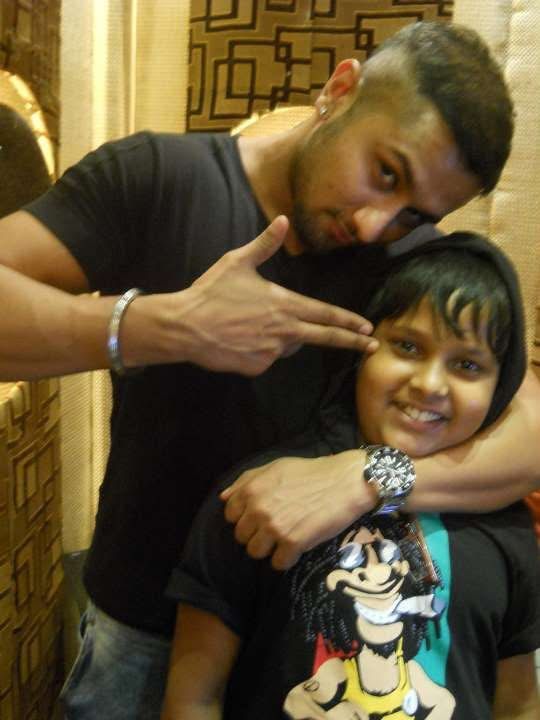
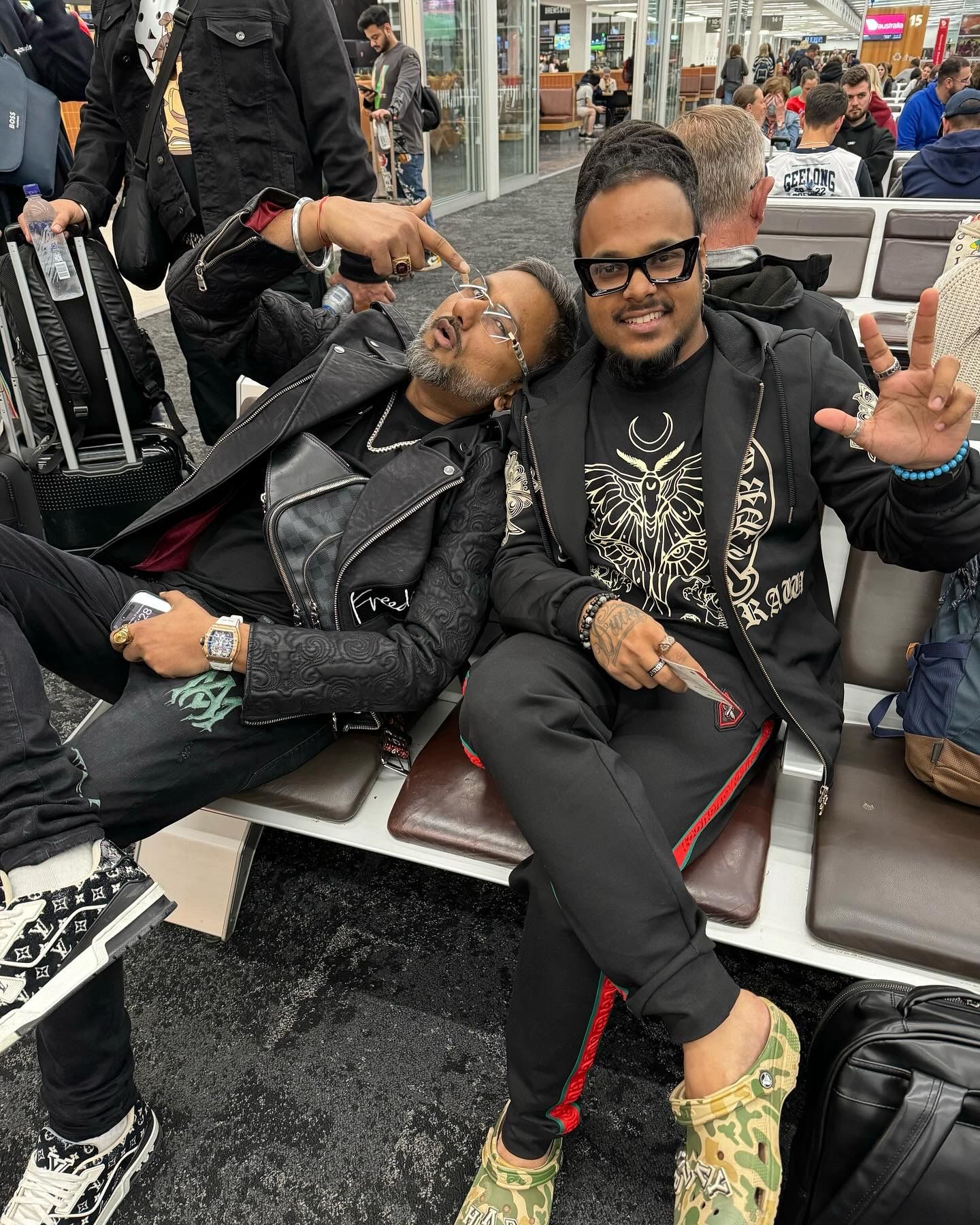
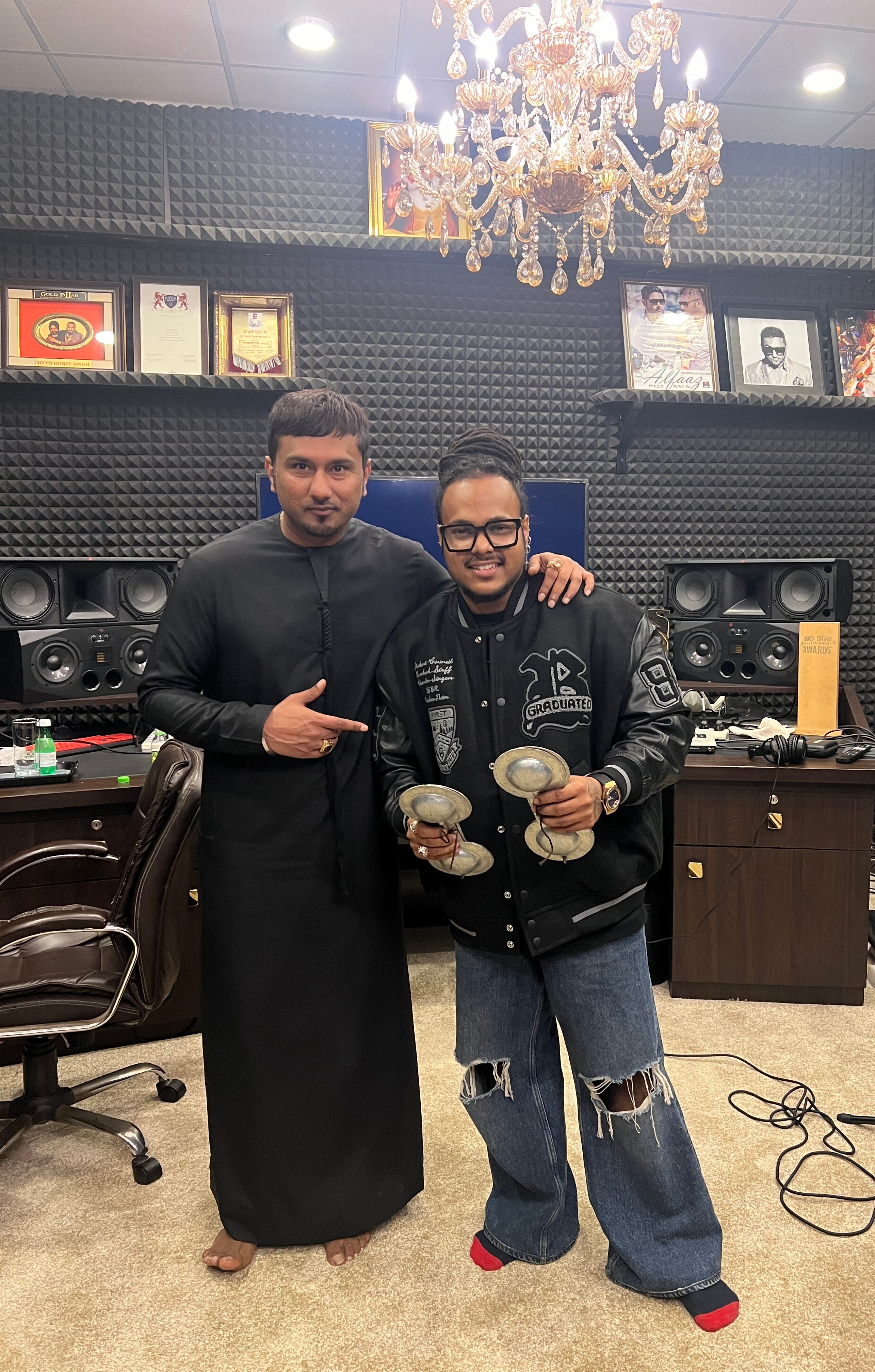
Playing drums alongside Yo Yo Honey Singh over the years has taught me so much about discipline, consistency, adaptability, and what it takes to perform at the highest level. When you’re part of a production of that scale, it’s not just about being a good musician; it’s about understanding the artist’s vision, being prepared, working as a team, and delivering every single time, regardless of the circumstances.
One of the biggest things I’ve learned is how to channel the energy of live music. Performing in front of thousands of people, reading the crowd, and making sure the music has the right impact every night is an experience that teaches you things you simply can’t learn in a practice room. It’s also pushed me to grow beyond being just a drummer and explore my creative side through arranging, designing musical transitions, and contributing to the overall live experience.
One of my most memorable experiences with Yo Yo has been performing at the Coca-Cola Arena in Dubai. Playing in a venue of that scale, with the energy of the crowd and the entire production coming together, was a truly special experience. Moments like these remind me why I fell in love with performing in the first place and how rewarding it is to be part of something that connects with so many people through music.
I’m genuinely grateful for the journey and the trust I’ve been given over the years. It’s taught me that no matter how far you go in your career, you have to keep learning, stay hungry, and never lose the passion that made you pick up the instrument in the first place.
Recording drums for Asha Bhosle ji's final song is a milestone few musicians will ever know. Whenever you feel ready, we'd be honoured if you'd share what that experience meant to you.
Recording drums for Asha Bhosle ji’s final song is something I will always hold very close to my heart. Honestly, it’s difficult to put into words what an honour that is. She was an iconic voice whose music has been a part of generations of listeners, and to have my own contribution be a part of her final musical journey is something I consider one of the biggest milestones of my life.
Interestingly, this opportunity came to me through my dad. He told me that Asha ji’s music producer, Mr. Rajiv Tyagi, was looking for a drummer who could bring the right groove and feel to a track with an old-school, classic sound. Rajiv ji had seen some of my playing and expressed an interest in having me on board for the project. Getting this opportunity through my dad made it even more special for me.
As a drummer, I really enjoyed approaching the track with the sensitivity and musicality it required. Sometimes, the challenge isn’t about playing something technically complex; it’s about understanding the character of a song and finding the right groove that complements it.
What made the experience even more meaningful was receiving a Certificate of Appreciation from the All India Cine Artists Workers Association for my contribution to the track. It was a beautiful moment of recognition, and something I’ll always cherish.
I’m incredibly grateful to my dad for connecting me to this opportunity, and to Mr. Rajiv Tyagi and the team for trusting me with such a meaningful project. Being part of a recording connected to Asha Bhosle ji’s extraordinary legacy is an honour I will carry with me throughout my life. It’s a reminder of how music can create moments that go far beyond a career milestone and become a part of your personal history.
Walk us through what we're seeing there — what does a day of studio recording or building an arrangement look like through your eyes?
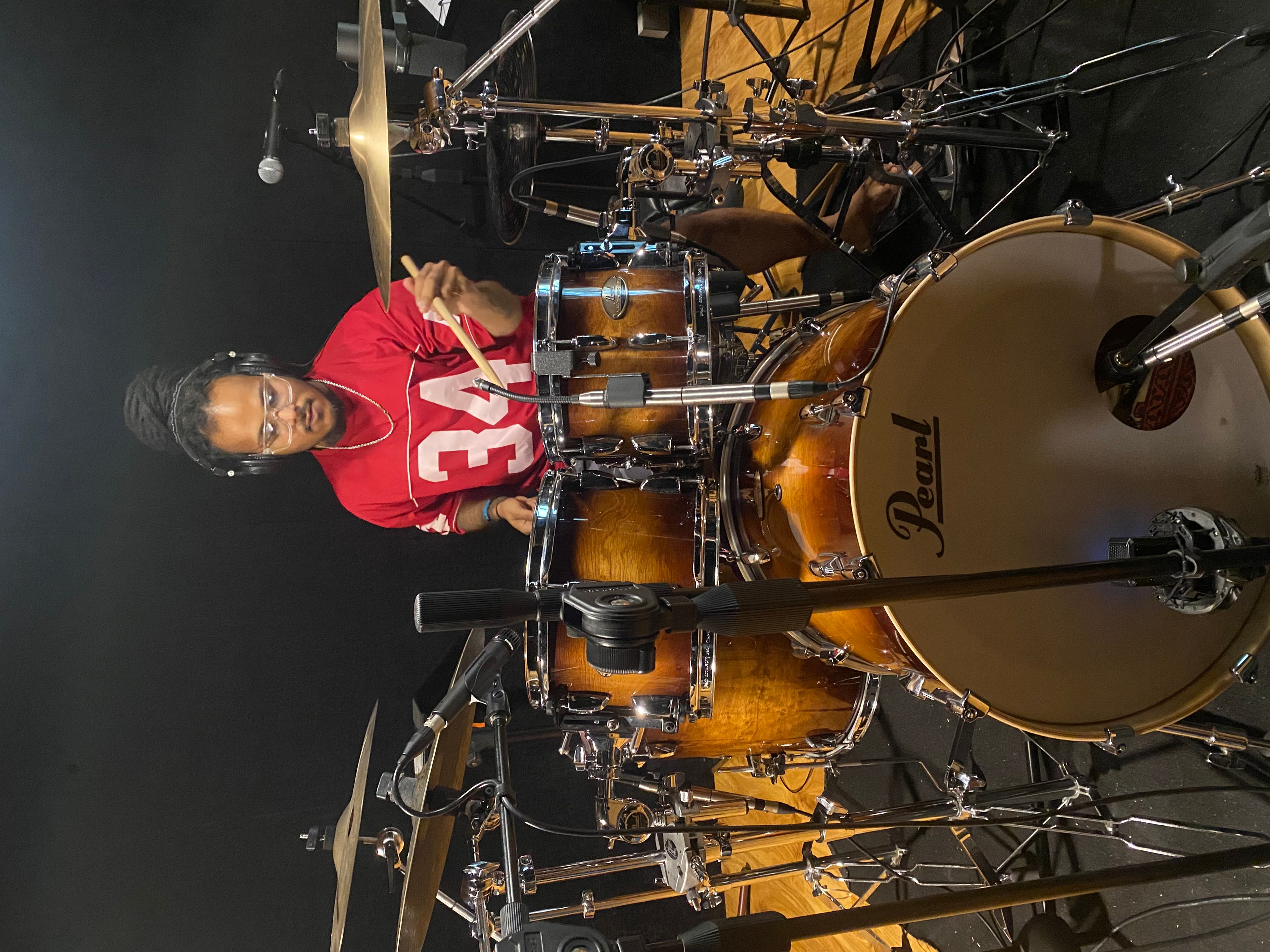
What you’re seeing is the setup I used to record drums for Asha Bhosle ji’s song, so this particular setup holds a very special place in my heart.
For me, a studio recording session begins long before I sit behind the kit. I like to understand the composition, the mood of the song, and what the music requires from the drums. Especially when working on a track with a classic sound, the goal isn’t to overpower the arrangement but to find the right groove, dynamics, and textures that complement the song.
Once I’m behind the kit, I spend time getting the sounds right and making sure every element serves the music. The choice of cymbals, tuning, playing dynamics, and even the way I approach a particular groove can make a huge difference to the final recording. I used my Meinl cymbals for this session, and I always enjoy experimenting with different sounds to find what best fits the musical context.
When I’m building an arrangement, I also think about the bigger picture — how the drums interact with the other instruments, where the energy should build, where the music needs space, and how each section should flow into the next. Sometimes, the most effective thing you can play is something very simple, provided it has the right feel.
Ultimately, my approach in the studio is to be as creative as possible while remaining sensitive to the song’s identity. Every session is an opportunity to learn something new, and with a project as special as this one, that process becomes even more meaningful.
You're drawn to bringing progressive, fusion, and contemporary sounds together and building original projects. What are you dreaming up next, and what sound are you chasing right now?
Right now, I’m really interested in exploring the space between progressive music, contemporary sounds, and Indian musical influences. I love music that challenges you as a musician but still connects with people emotionally. For me, the exciting part is finding that balance between complexity and feel — creating something that musicians can appreciate on a technical level, but that also makes people feel something.
I’m constantly experimenting with different rhythmic ideas, textures, and arrangements, especially through my collaborations with other musicians. I enjoy working with artists who have a strong musical identity and are willing to push boundaries rather than follow a formula. There’s something very exciting about bringing different influences together and discovering a sound that neither musician might have arrived at individually.
I’m also keen to develop more original projects where I can explore my identity not just as a drummer, but as a composer, arranger, and creative collaborator. I’d love to bring together progressive rock and metal, Indian rhythms, electronic textures, and cinematic elements in a way that feels fresh and genuinely personal.
Ultimately, the sound I’m chasing is one that doesn’t fit neatly into a box. I want to keep evolving, take creative risks, and make music that reflects who I am and the influences I’ve absorbed over the years. I think the most exciting thing about being a musician is that you never really arrive at a final destination — there’s always another sound to discover, another idea to explore, and another musical boundary to push.
When you imagine the musician you're still becoming, how do you hope people feel the moment you sit down behind the drums?
I hope people feel something genuine when they hear me play. Whether it’s the energy of a powerful rock performance, the intricacy of a progressive arrangement, or the subtlety of a simple groove, I want my playing to connect with people on an emotional level.
As a musician, I’m constantly trying to evolve, not just technically, but also in how I understand and express music. I want to reach a point where my playing speaks for itself, where I don’t necessarily have to prove anything through speed or complexity, but can create an impact simply through the way I feel and interpret the music.
I also hope to inspire other musicians, especially young drummers who are still finding their own voices. I’ve spent years learning from the artists and drummers who inspired me, and I believe that journey of learning never really ends. If my music can encourage someone to pick up an instrument, explore different styles, or believe in their own potential, that would mean a lot to me.
Ultimately, I want people to walk away feeling the music rather than just remembering the drummer. For me, that’s the real goal — to play with honesty, make every performance count, and leave a little something behind through the music I create. I’m still becoming the musician I want to be, and I hope that sense of curiosity and hunger to grow stays with me for the rest of my life.
Contact and Follow
Email: sparshsangam4468@gmail.com
Instagram: https://instagram.com/sparsh_sangam
YouTube: https://youtube.com/@sparshsangam8005?si=akltBGHIKByh27ky