



Where did your music journey really begin, and what made you commit to it seriously?
I’m Maaz Ahmad—an emerging singer, composer, and performer based in Delhi NCR, and I’ve been shaping my sound for over six years now. What started as a genuine love for singing slowly turned into something I wanted to pursue with real discipline, especially once I began training and understanding how much growth comes from consistent practice. Over time, I trained with the T-Series Stageworks Academy, which helped me take my vocals, pitch control, and performance confidence to a more professional level. I’ve also had a few milestones that pushed me to keep going—like becoming a finalist on India’s Talent Fight Season 2, placing Top 5 in the Sing Dilse Cover Contest, and winning a 92.7 Big FM singing contest. Musically, I lean into Hindi soul and emotional melodies, and I love performing both originals and acoustic covers—whether it’s for my audience online or on stage.
What’s the first moment you remember when someone reacted strongly to your voice?
I still remember this so clearly—I was in 6th standard, and it was the first time I ever sang in front of my whole school. Before that, I was genuinely shy and had major stage fear, so even stepping up felt like a huge risk for me. But the moment I started singing, I saw the reactions on people’s faces, and something shifted inside me. The applause and the energy in that room hit me in a way I had never felt before. That was the first time I thought, “Yes—this is something I’m made for,” and it gave me the courage to keep choosing music, even when it felt scary.
Since your first releases, what’s the one skill you feel you’ve improved the most?
The biggest improvement for me has been my vocals—especially because I’ve started taking vocal training and daily practice much more seriously. When I look back at my voice around 2020, I can honestly say it was very different from what it is today. With time, guidance, and repetition, I’ve understood how much control and consistency matter—breathwork, clarity, and holding notes cleanly without strain. I’m still learning, but the progress feels real. For me, the simple truth is: more practice makes my vocals work better, and it also builds confidence when I’m performing or recording.
When you’re balancing engineering and music, what does a “normal” day look like for you?
By education, yes—I’m an engineer. But by profession and by heart, I see myself as a full-time artist and musician. A normal day for me is usually about managing both responsibilities without losing my creative energy. I try to keep my mind clear for music, even if I have other work happening alongside it. I actually enjoy the balance because it keeps me disciplined, and it reminds me that music isn’t just a hobby for me—it’s the center of what I want to build long-term.
Take us back to your early days—what are we seeing in this photo, and why does it still matter to you?

This photo is from when I was in 6th standard—the time I won my first singing award in my city, Aligarh. It represents the very first public “yes” I got from people, and it’s a memory that still gives me confidence. For me, that moment wasn’t just about a prize—it was proof that my voice could connect with an audience. It’s also the point where my journey started feeling real, not just something I did privately. Even today, whenever I feel doubt, I remember that early win and the feeling of stepping into my purpose.
Which cover visual best represents who you are right now, and what does it say about your identity?

I chose this cover because it connects directly to where I am right now as an artist—this is my latest release, and it feels like an honest snapshot of my current sound. It’s also one of my favorite acoustic pieces, originally sung by KK, and I’ve always been drawn to songs that carry emotion without needing heavy production. This visual represents the side of me that’s rooted in melody and feeling—simple, sincere, and focused on delivering the song in a way that touches people.
What are we hearing in this raw demo, and what do you still want to improve before calling it “final”?
This raw demo is based on a song originally sung by Lata Mangeshkar, and honestly, it’s one of the toughest songs to sing. The pitch accuracy, the control, and the emotional steadiness required in the delivery are all very demanding. In a first take like this, I’m mainly focused on capturing the soul of the melody, even if everything isn’t perfect yet. Raw clips like these help me hear what’s working—and what needs more refinement. Before I’d ever consider it “final,” I’d want even cleaner transitions, stronger control in the difficult parts, and a vocal tone that stays consistent all the way through.
When you strip everything down to an acoustic take, what emotion comes through more clearly in this clip?
This song is one of my all-time favorites, and in an acoustic version, it honestly hits very different. Without layers or heavy production, the voice has nowhere to hide—and that makes the emotion feel more direct. It’s originally sung by my favorite singer, Arijit Singh, so there’s also a personal connection for me when I perform it. I’m not trying to copy—my goal is to carry the feeling in my own tone. In this stripped-down take, the softness and sincerity come out more, and that’s the kind of emotional honesty I want people to feel when they listen.
In this hip-hop collaboration clip, who are you working with, and what role did you take on in the track?
This is my original song in collaboration with RFI Studios. The idea was to blend my vocal style with a rap-influenced production space, while still keeping the melody strong. My role in the track is as the singer and performer—focused on delivering the vocal parts with clarity and emotion so they sit confidently alongside the beat. Collabs like this excite me because they push me to adapt and experiment, without losing the soulful identity that’s central to my sound.
When you’re in the studio, what does your recording setup look like—and what’s one habit that keeps your vocals clean and emotive?


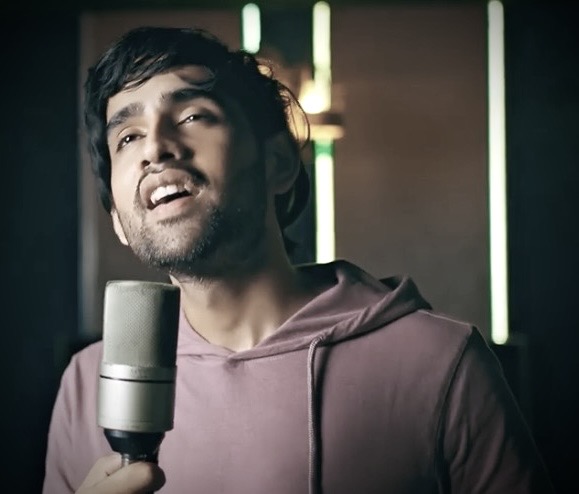

These photos are from a recording session at RFI Studio, where I’ve been working in a focused environment that helps me perform at my best. Being in a proper studio setup makes a big difference—especially when you’re trying to capture small emotional details in the voice. One habit I always keep in mind while recording is to prioritize clean vocal capture—starting with a good-quality mic and making sure the tone stays clear and controlled. If the input is clean, the emotion translates better too. For me, “emotive and clean” comes from preparation: warming up properly, staying relaxed between takes, and singing like I’m telling a story—not just hitting notes.
Contact and Follow
- Name: Maaz Ahmad
- Email: ahmadmaaz25@gmail.com
- Instagram: https://www.instagram.com/maazahmad2520?igsh=MW96ZXExdmp6dDdscA%3D%3D&utm_source=qr


