

How did your journey in street and documentary photography begin?
It started just a few years back. I always had a wish to capture what I saw—be it humans, nature, the street, or anything that creates a story beyond ordinary vision. Simple curiosity about everyday life and the stories hidden within ordinary moments drove me. I gradually realized that I was drawn less towards posed photographs and more towards real emotions, culture, and human interactions. Streets, ghats, old houses, and everyday scenes started feeling like living narratives to me. Photography slowly became more than just capturing images—it became a way of observing, understanding, and preserving moments that often go unnoticed.
What was the first moment you realized you wanted to capture human emotions through your lens?
We as humans show a wide variety of emotions, often influenced by circumstances, state of mind, and our outlook towards the world. As a reader of books, I'm a very imaginative person, so these emotions used to stay with me for a longer period than usual. When I got my hands on a camera, I felt an urge to capture some raw emotions. I realized that once captured, I would be able to witness those unfiltered expressions time and again, exploring the depth of the human mind. That started my journey of documenting people in their natural surroundings and capturing the emotions I wanted to portray.
How has your approach to visual storytelling evolved over the years?
When I started, I merely captured what I saw. Most of the frames didn't have much storytelling to offer. After quite some time, when I reviewed my clicks, I understood that I needed to create visual imagery in frames to make them more appealing to viewers. Since I had clicked quite a few photos by then, I had developed a sense of how to spot something interesting, something unusual, that would generally be overlooked at first glance. Building on that, I've been trying to improve myself every time I step out with my camera. Learning from my own mistakes as well as observing the work of my peers helps me a lot to evolve with time.
What does 'authentic storytelling' mean to you personally?
Anything that strikes a chord with the viewers. It could be the smile of a child, the devotion in the eyes of a priest, or the cry of people at the departure of the Goddess. Anything that emotionally shakes you, forces you to pause and think, maybe change your perspective. This is what authentic storytelling means to me.
What photo best represents your street photography style, and what story does it tell?
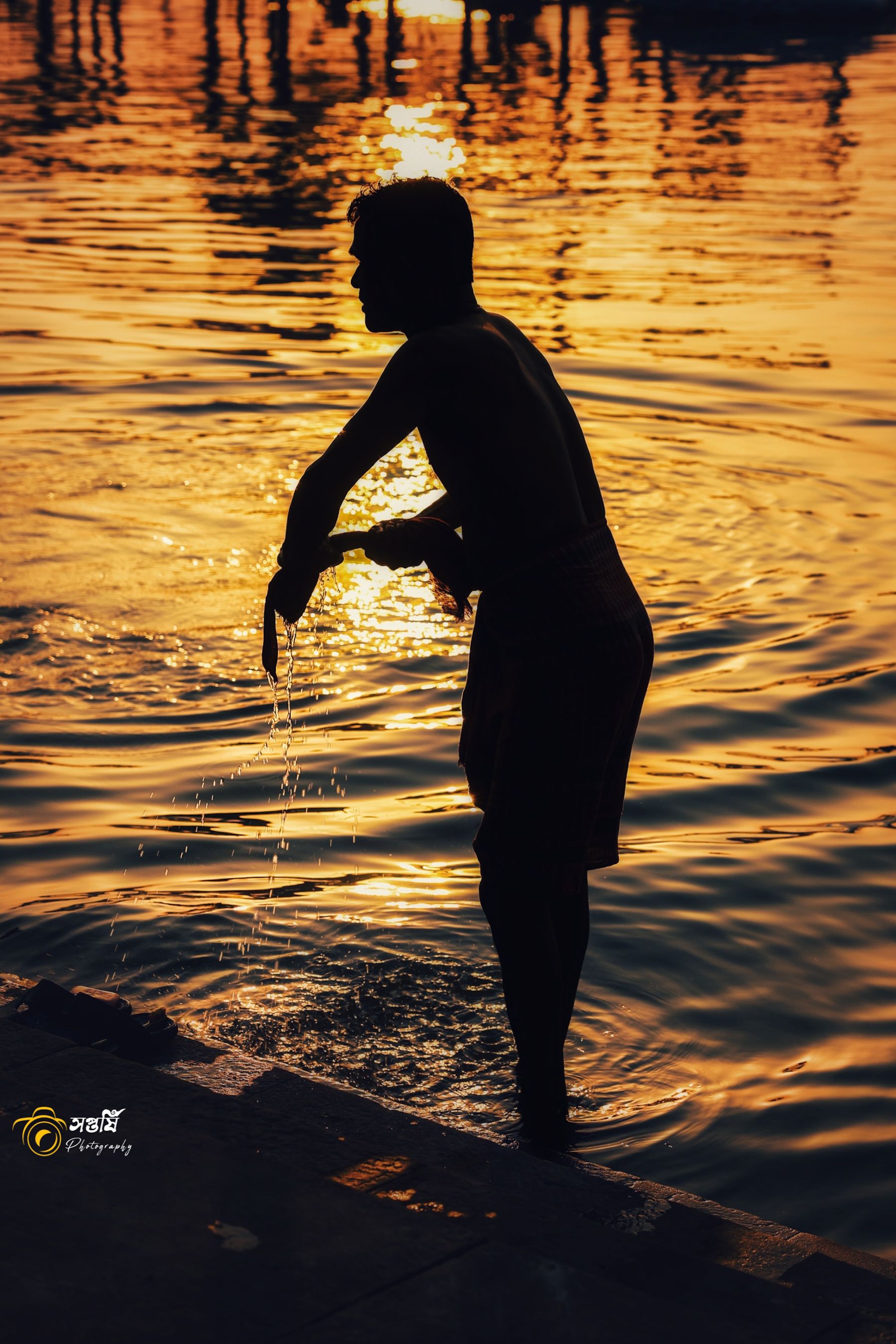
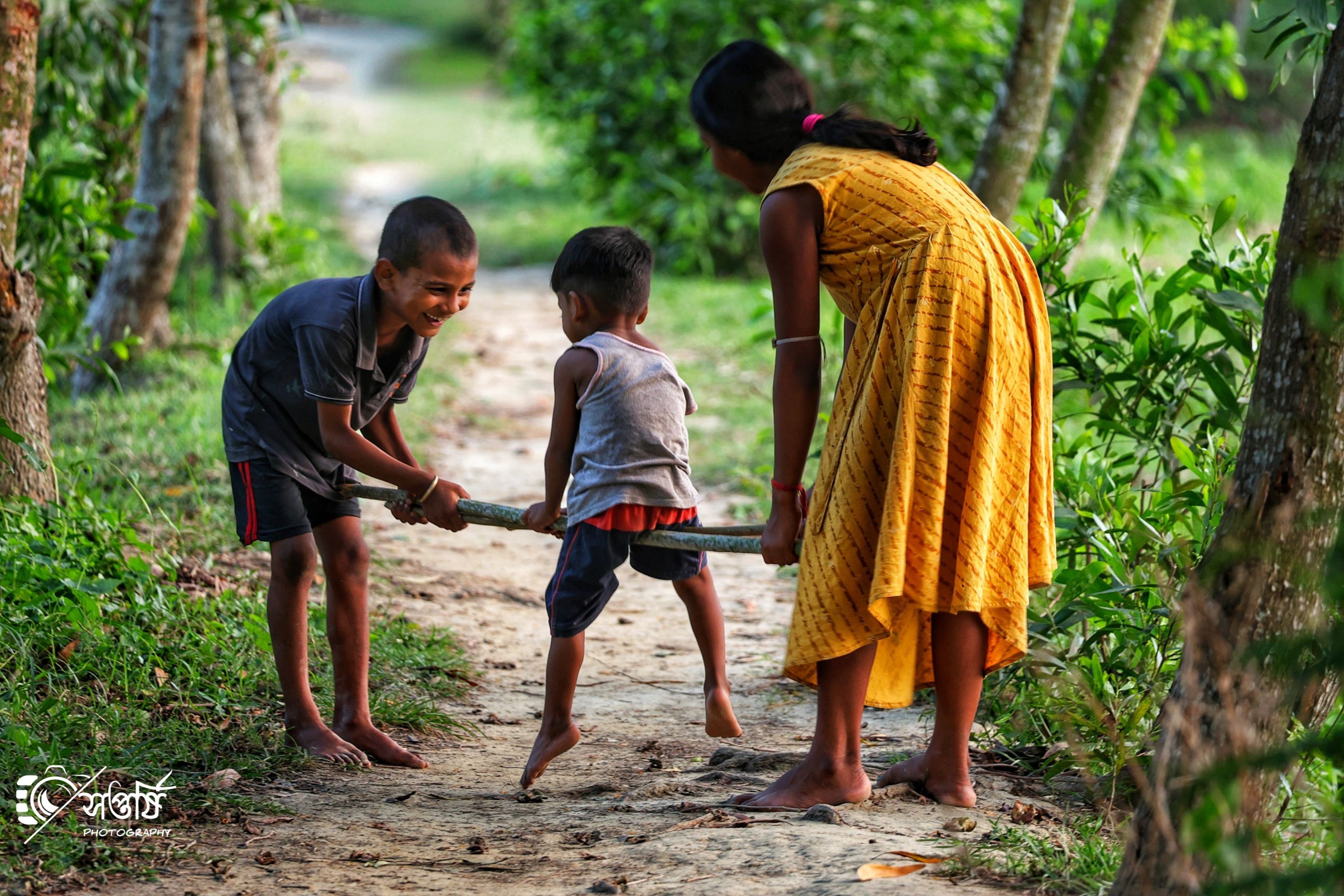
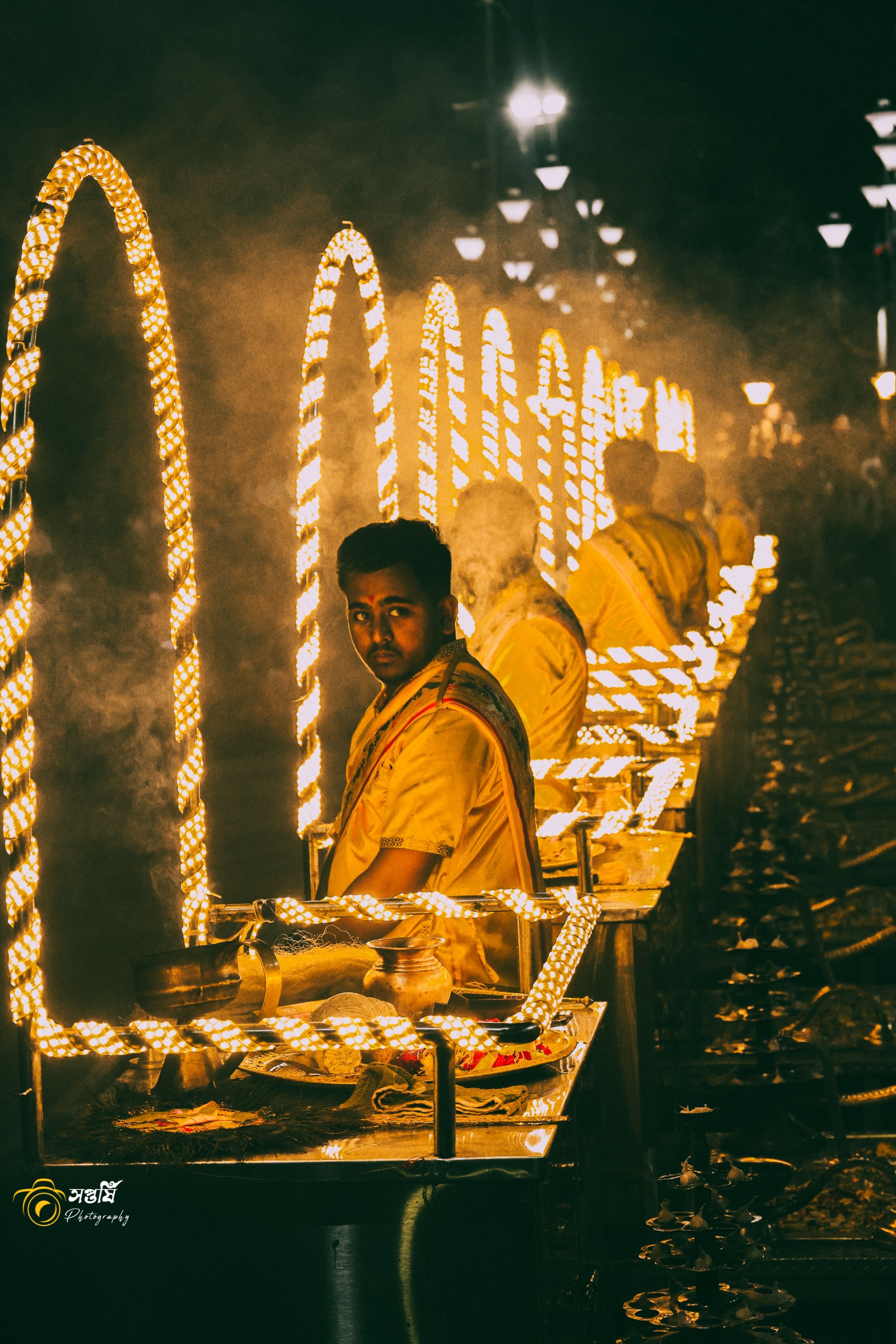
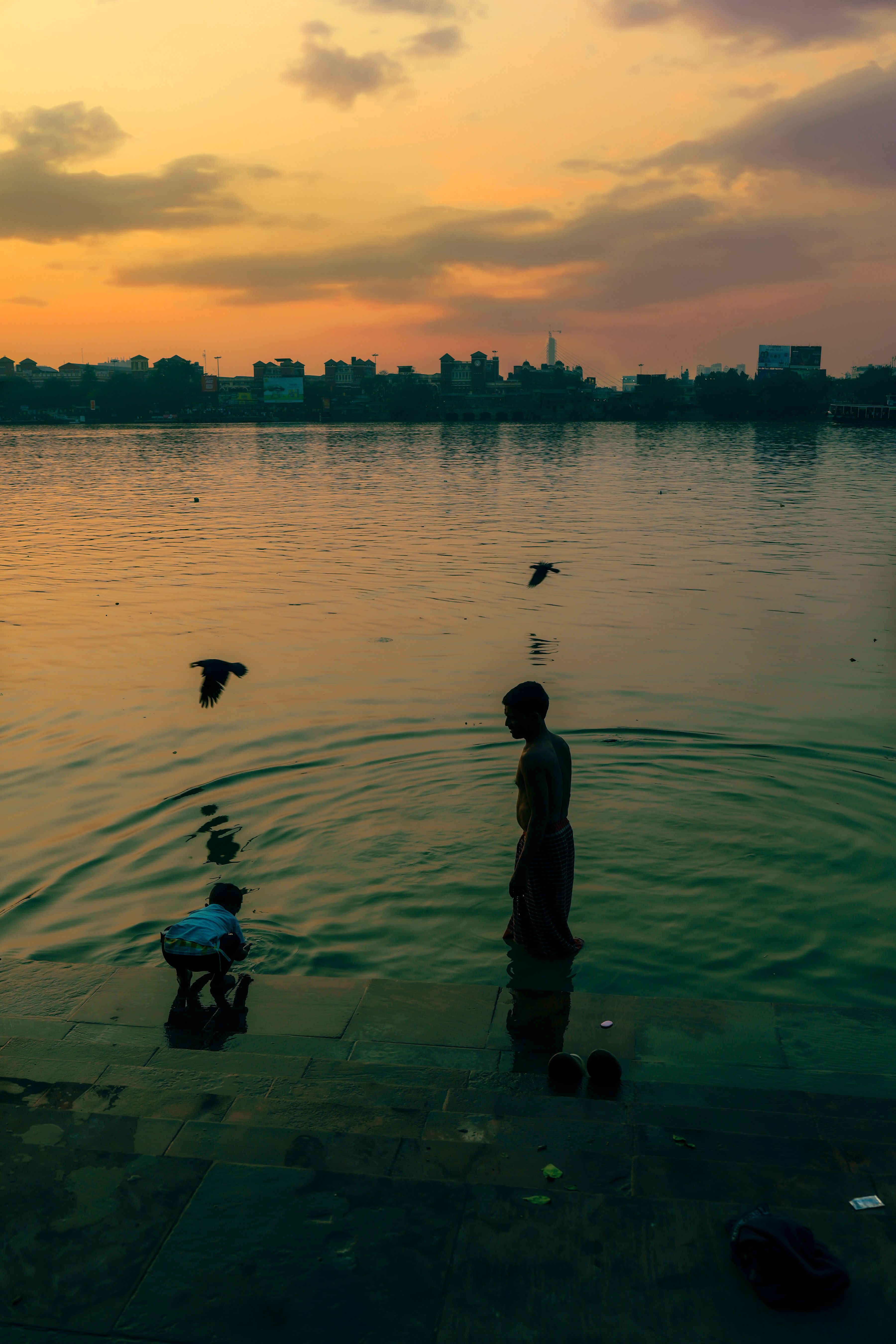
The silhouette describes a man's daily chores by the river, but his appearance is darkened against the blazing light of the setting sun. We are all very tiny when compared to the might of nature. People come and go, but nature is eternal. The second image shows a joyful moment of innocence of three children playing with a branch on a narrow village road—a moment of unfiltered joy, happiness, and peace that makes your mind relaxed and heart tranquil with content. The third image is a moment captured in the midst of devotion, showing something different or unexpected residing in the midst of usualness, order, or routine. The last image is quite tough to understand. It shows a child dipping his hands in the river water while his father patiently waits for him to finish playing. Above their heads, two pigeons fly away. The one flying over the child's head is larger, symbolizing the boy's desire to grow up like his dad and swim in the river all by himself. The other pigeon, flying above the father's head, is smaller, symbolizing the father's wish to once again return to the playful days of childhood.
What were you feeling when you captured that candid moment of the priest during Ganga Aarti?
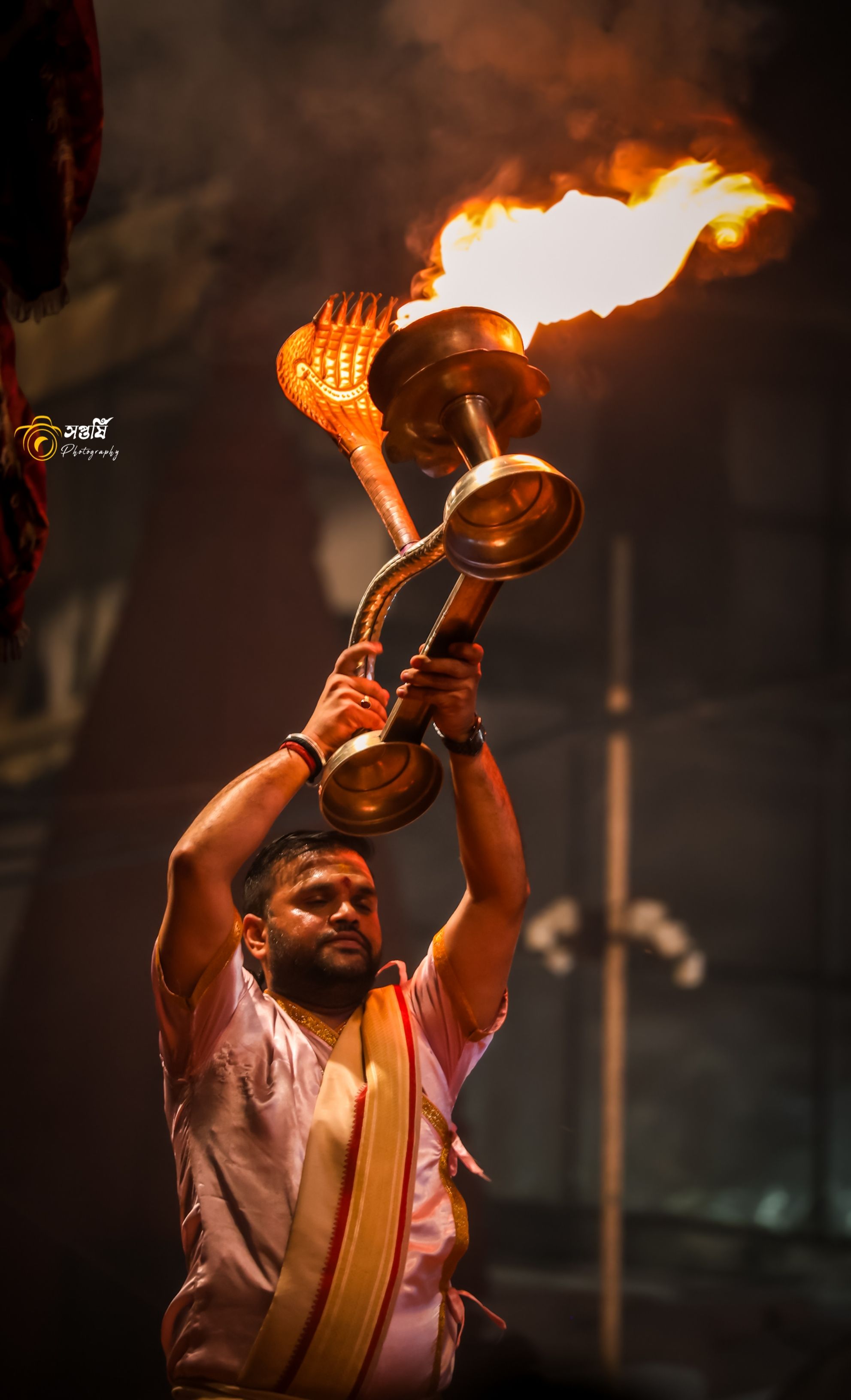
This shot was captured while witnessing the Ganga Aarti. The mesmerizing chants, the movement with the holy fire, and the hallowed atmosphere filled me with devotion and calmness. I wanted to capture a priest in his divine mood performing the ritual, and thus came up with this shot.
What cultural significance does the photograph from Kumartuli hold for you?
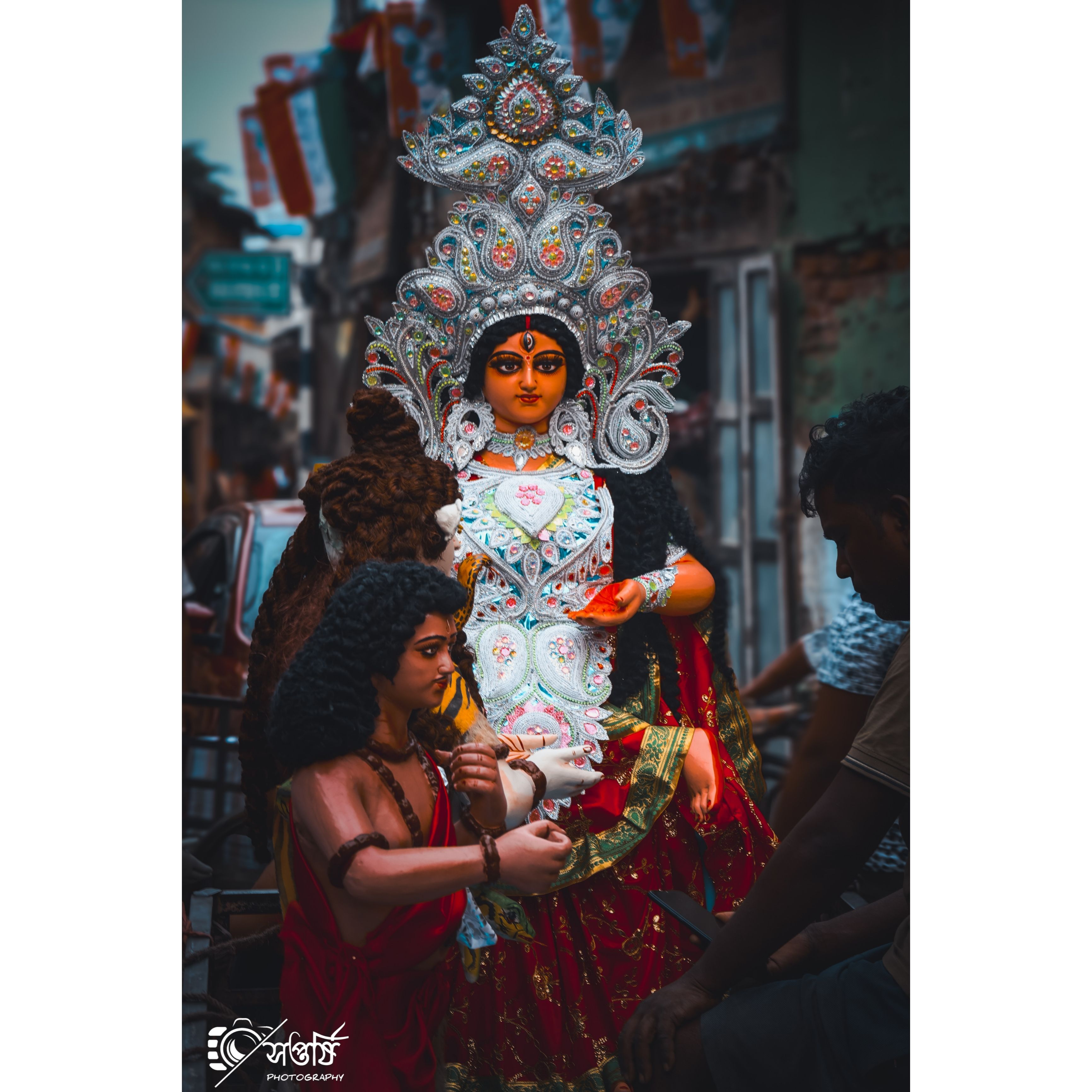
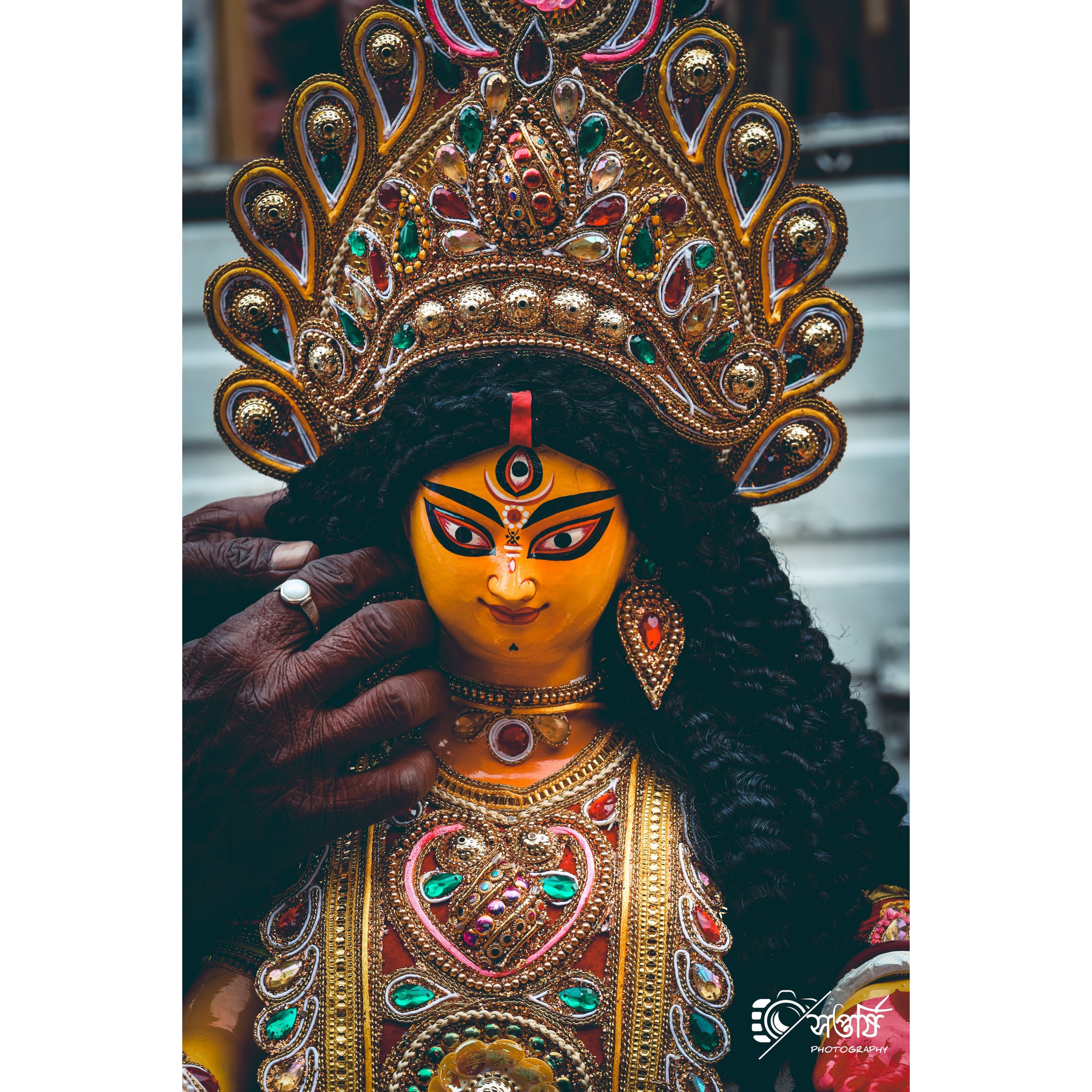
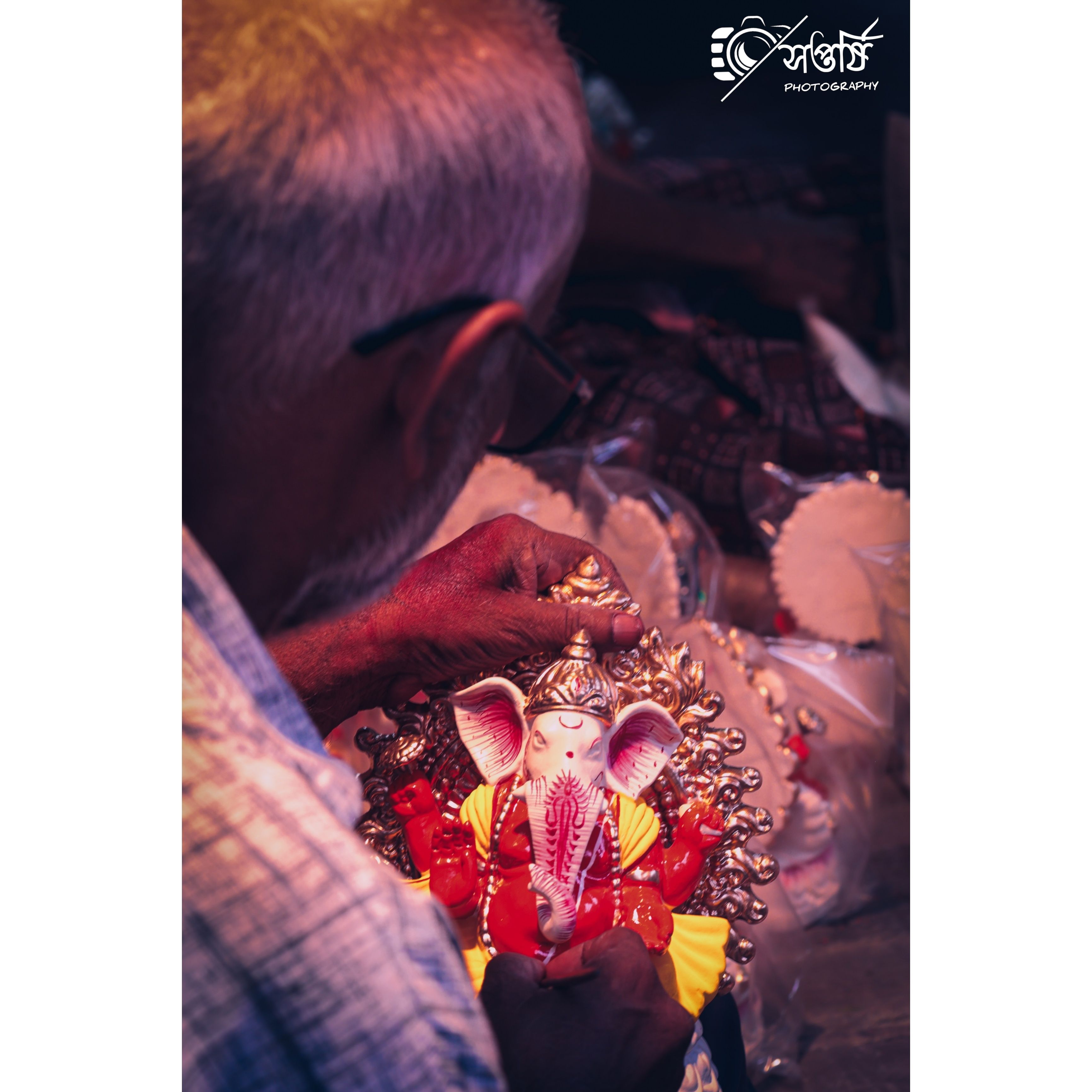
The pictures have been captured in a place called Kumartuli, the pottery lane of Kolkata, West Bengal, India. Artists build clay structures of Gods and Goddesses, then paint the faces, adorn them with ornaments, and drape clothes around the structures to give them life. It is through the skilled, weathered, and experienced hands of these artisans that the Gods and Goddesses come to life and visit us during the Pujas. The atmosphere in that area is one of calmness, focus, innovation, and devotion.
Describe the editing choices you made for the before-and-after image.
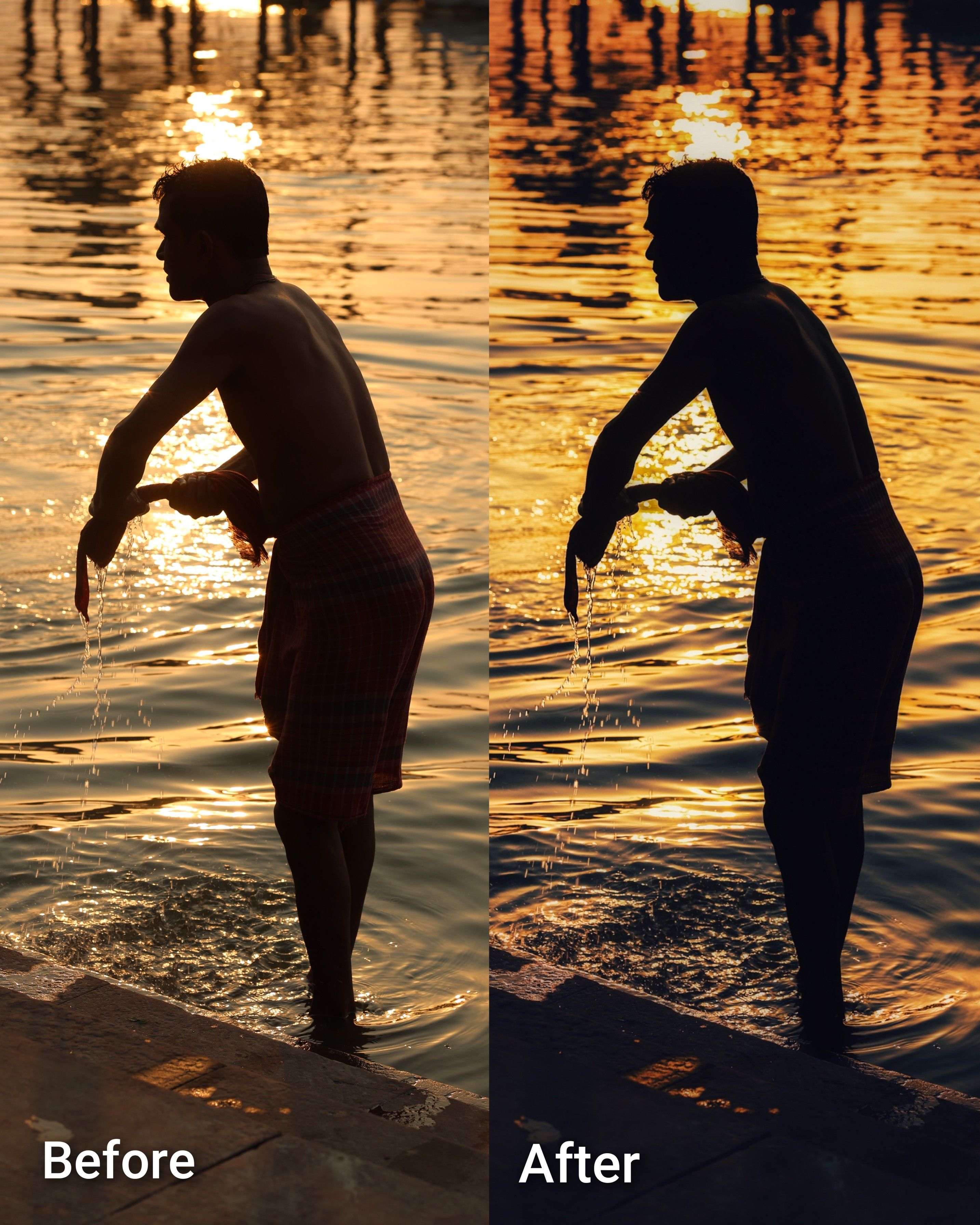
I wanted the contrast and shadows to be deeper and more prominent to signify the arrival of darkness with the departure of the sun. The person's chores by the river would also end with the dying light, and he'd be walking off soon, mixing himself with the darkness of the surroundings.
How did you adapt to the challenging lighting conditions to capture the sunflower field shot?
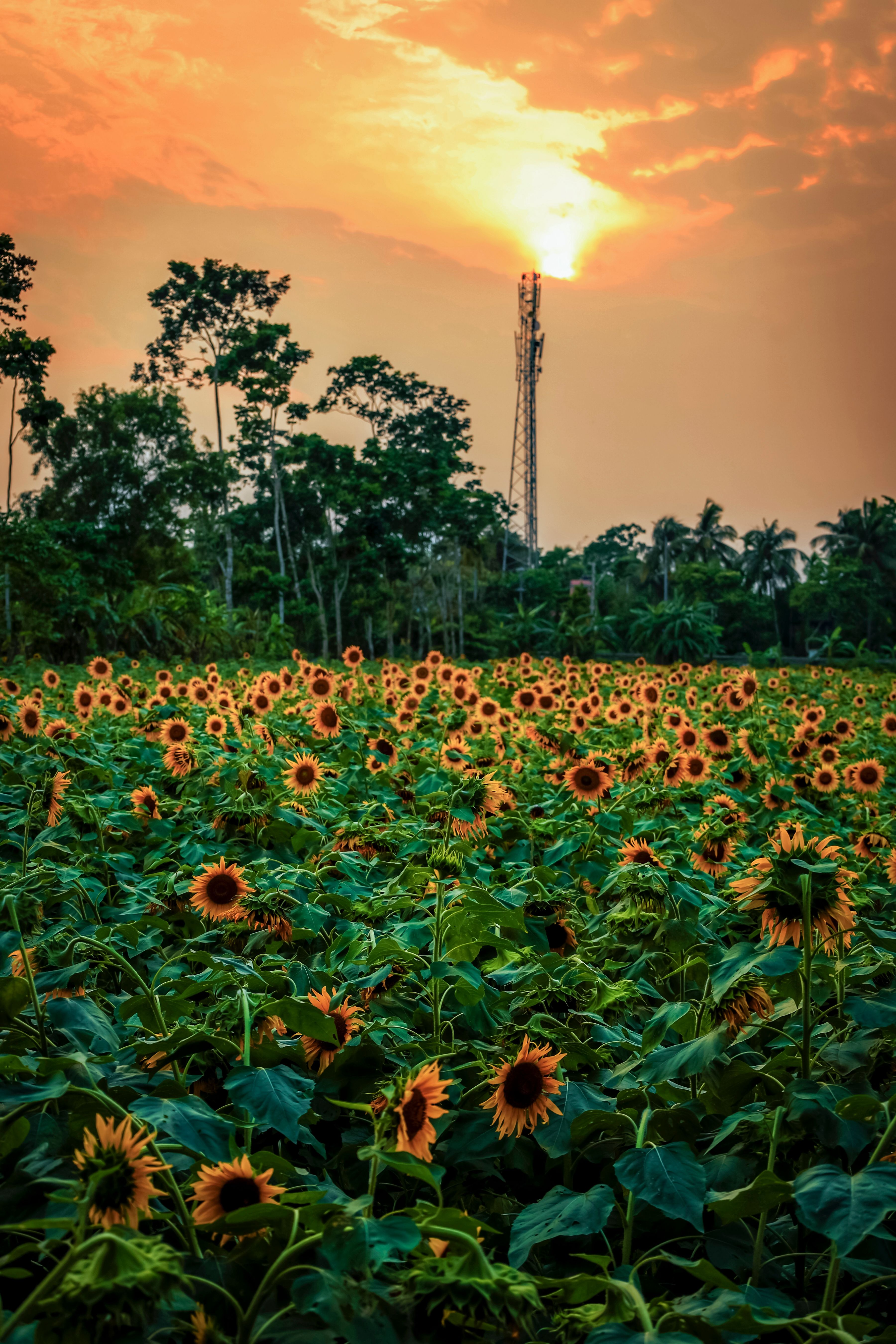
The sunlight was dwindling as it was nearly sunset, and the light was quite low to take a clear shot. However, I decided to show the exact state of the sky, smeared with some orangish clouds, without increasing the exposure too much to avoid unnecessary noise and terrible overexposure. So I decided to keep the lighting such that it mostly reflects the actual condition. The image shows a sunflower field that is understandably captured in the dying hours of sunlight.
What narrative thread connects the series of images titled 'Rituals by the River'?
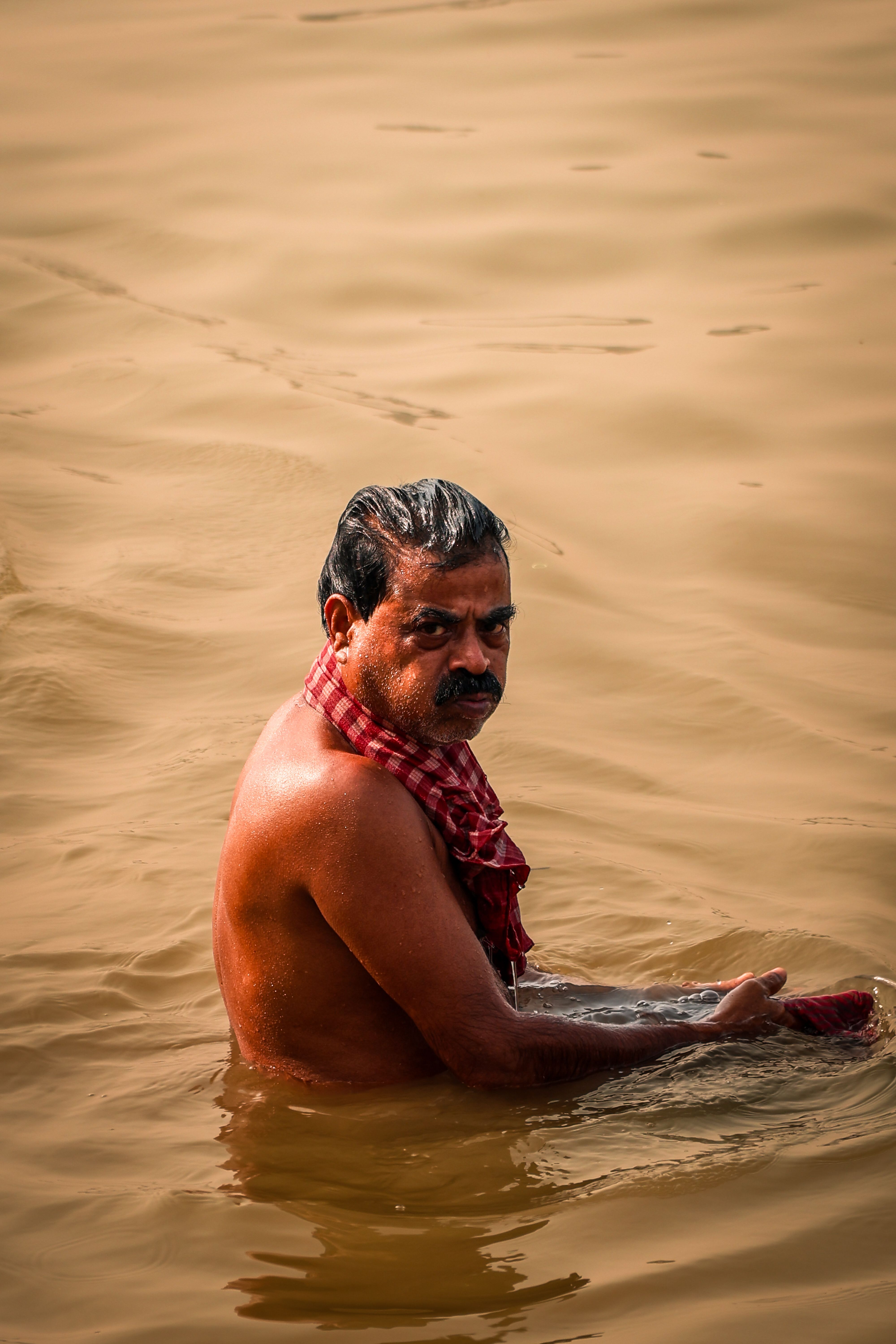
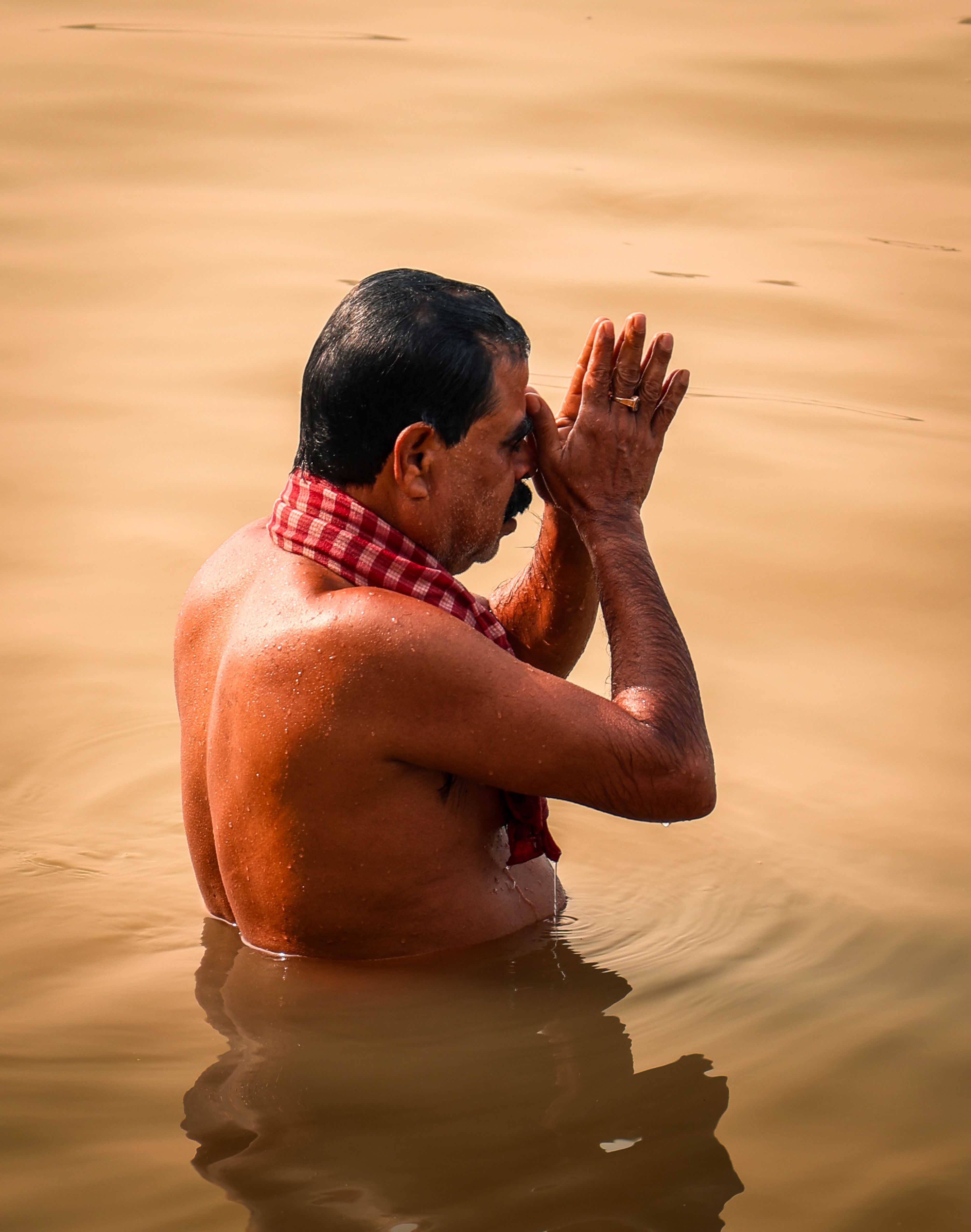
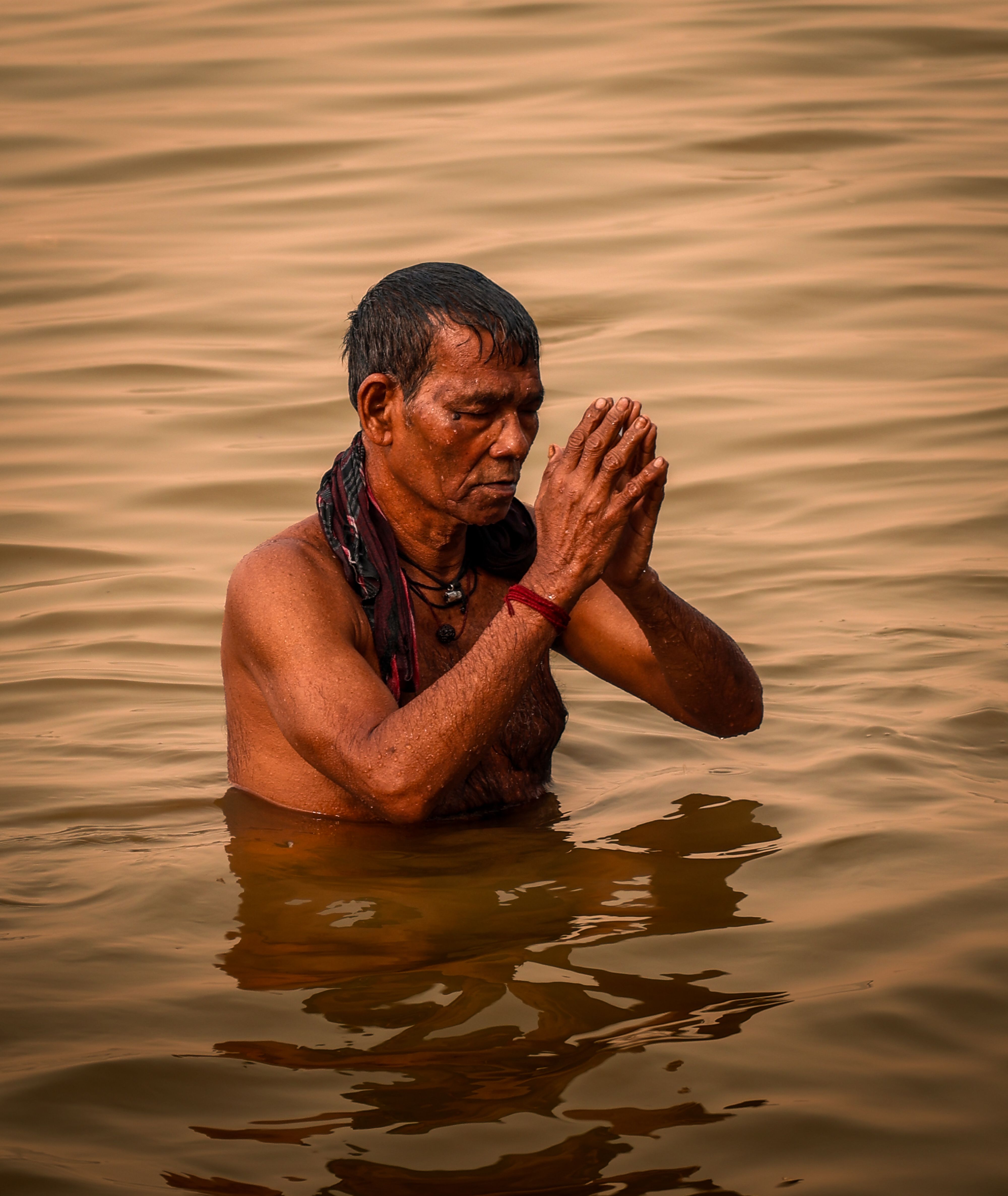
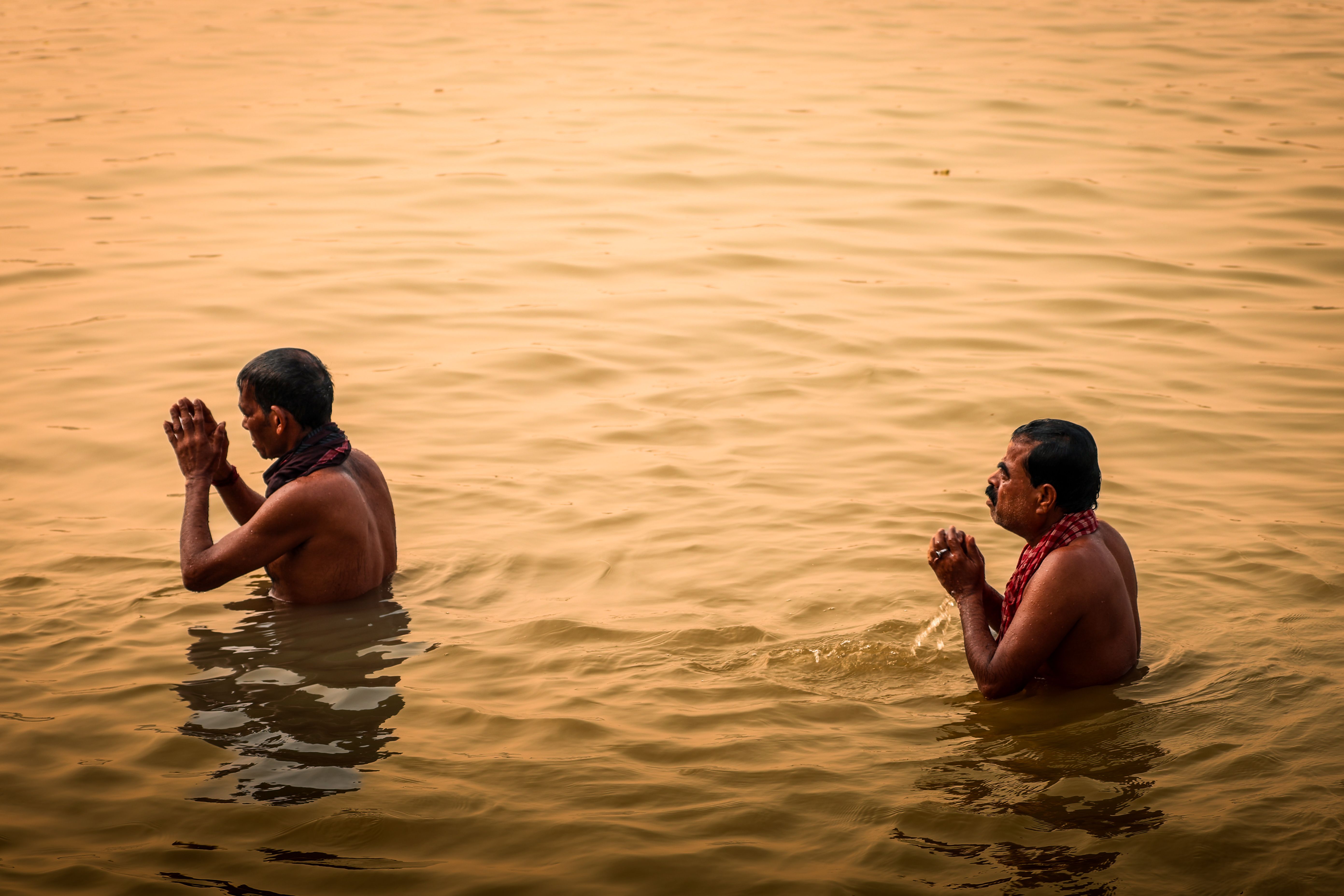
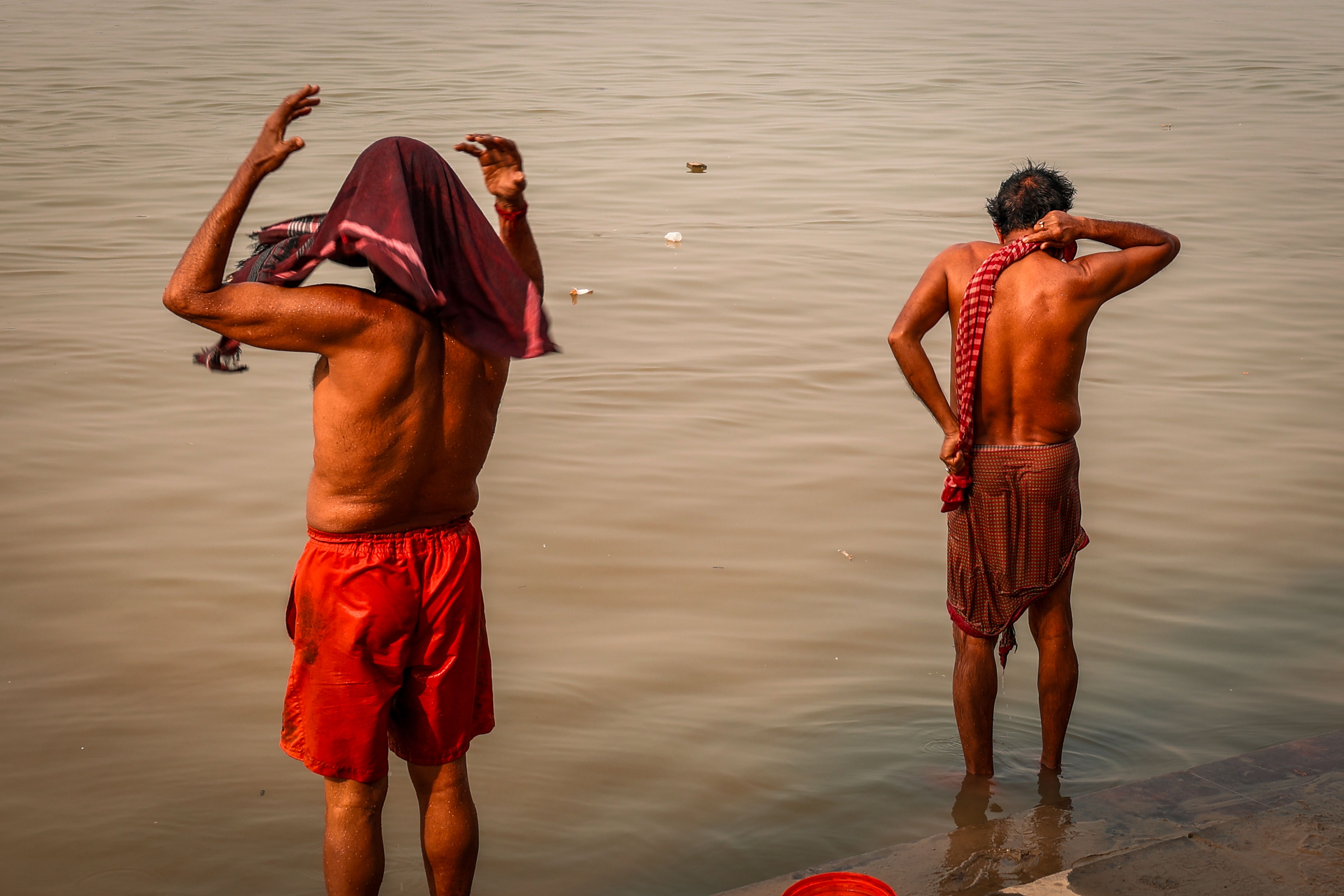
The rituals by the river. People come to the riverside to take a holy dip to absolve themselves of all earthly impurities and sins. While standing in the water, they offer their earnest prayers to the Almighty and wish for salvation. It's an act of devotion and atonement that reflects the religious beliefs of people in the magical power of the river.
Contact and Follow
Email: sappy8085@gmail.com
Instagram: sap_2_rshi