


Wildlife has been your passion for many years. Can you take us back to the moment it first took hold of you — what pulled you toward photographing the wild in the first place?
My journey into photography actually began with nature and landscape photography. I was always fascinated by light, scenery, and the outdoors. The turning point came just after the COVID restrictions were easing. I travelled to Kabini with my family, and during my morning walks around the property, I found myself surrounded by an incredible variety of birds. I started observing them more closely—their behaviour, colours, movements, and personalities—and felt naturally drawn to them.
What began as simple curiosity quickly turned into a deep interest. I found myself spending more time watching birds than photographing landscapes. The challenge of finding, observing, and capturing wildlife in its natural environment was incredibly rewarding. That trip sparked a passion that has only grown stronger over the years, eventually leading me into wildlife photography and the broader world of natural history storytelling.
Wildlife photography combines everything I love about photography—patience, observation, storytelling, and the unpredictability of nature. Once I experienced that, I was hooked.
You say your work leans toward fine-art wildlife photography rather than pure documentation. When did you first sense that a photograph of yours had crossed from record-keeping into something that made a viewer feel?
In the beginning, like many wildlife photographers, I was focused on documenting species and capturing sharp, well-executed images. The shift happened gradually as I started paying more attention to light, mood, composition, and the emotions a scene could evoke rather than simply the subject itself.
One of the first times I truly sensed this was when viewers responded emotionally to photographs that weren't necessarily about a rare species or dramatic action. Images such as an elephant family enveloped in dust and light, a lone bird framed in a minimalist composition, or an animal emerging from darkness seemed to resonate with people on a deeper level. They would talk about the feeling the image conveyed—the sense of calm, mystery, family, or resilience—rather than the technical aspects of the photograph.
That was when I realized that a successful wildlife photograph, at least for me, is not just a record of what was seen, but an invitation for the viewer to experience what I felt in that moment. Since then, I have consciously tried to create images that tell a story, evoke an emotion, or reveal a sense of beauty that goes beyond documentation. When someone pauses in front of an image and feels something, I know the photograph has achieved its purpose.
You describe light, composition, and storytelling as being every bit as important as the subject itself. How did you arrive at that philosophy, and how does it change the way you wait and watch in the field?
I think this philosophy comes from my background in landscape photography and architecture. Before wildlife photography became my primary focus, I spent years studying light, form, balance, and composition. As an architect, I was trained to look at relationships between elements within a space, and that way of seeing naturally carried over into my photography.
When I began photographing wildlife, I realized that a compelling image is rarely about the animal alone. A tiger is always a tiger, and a bird is always a bird, but what makes a photograph memorable is the way light interacts with the subject, the environment around it, and the story unfolding in that moment. The subject may attract attention, but it is the light, composition, and emotion that hold a viewer's attention.
This approach has fundamentally changed how I work in the field. Instead of constantly chasing subjects, I often spend time observing a scene and waiting for the right conditions. I look for interesting light, clean backgrounds, strong graphic elements, or behaviour that can add meaning to the frame. Sometimes I may watch the same animal for an hour or more, waiting for a particular gesture, interaction, or shaft of light that transforms an ordinary sighting into a stronger visual story.
Patience has become far more important than speed. The goal is no longer just to photograph wildlife, but to create an image that conveys a sense of place, mood, or emotion. When all those elements come together, the photograph becomes more than a record of an encounter—it becomes an experience that the viewer can connect with.
So much of your wildlife work is about animal behaviour and intimate moments in nature. What is it about those quiet, unrepeatable moments that keeps you coming back?
What draws me back is the privilege of witnessing something that may never happen in exactly the same way again. Wildlife is wonderfully unpredictable, and some of the most meaningful moments are not the dramatic hunts or confrontations, but the quieter interactions that reveal character, relationships, and emotion.
It could be an elephant family caring for a calf, a bird tending its nest, or a brief glance exchanged between two animals. These moments often last only a few seconds, yet they tell us something profound about the lives of creatures that share our planet. They remind us that the natural world is full of stories, many of which unfold unnoticed.
I also enjoy the challenge of anticipation and observation. Capturing behaviour requires patience and a willingness to spend time simply watching. The more time you spend with wildlife, the more you begin to appreciate subtle gestures and interactions that others might overlook. Those are often the moments that make the strongest photographs.
For me, wildlife photography is as much about connection as it is about imagery. When I capture one of these intimate moments, I hope viewers see more than just an animal. I hope they see a family, a relationship, a struggle, or a moment of tenderness that resonates with their own experiences. Those fleeting connections between the wild and ourselves are what keep me returning to the field again and again.
Please share "Dust & Light" with us.
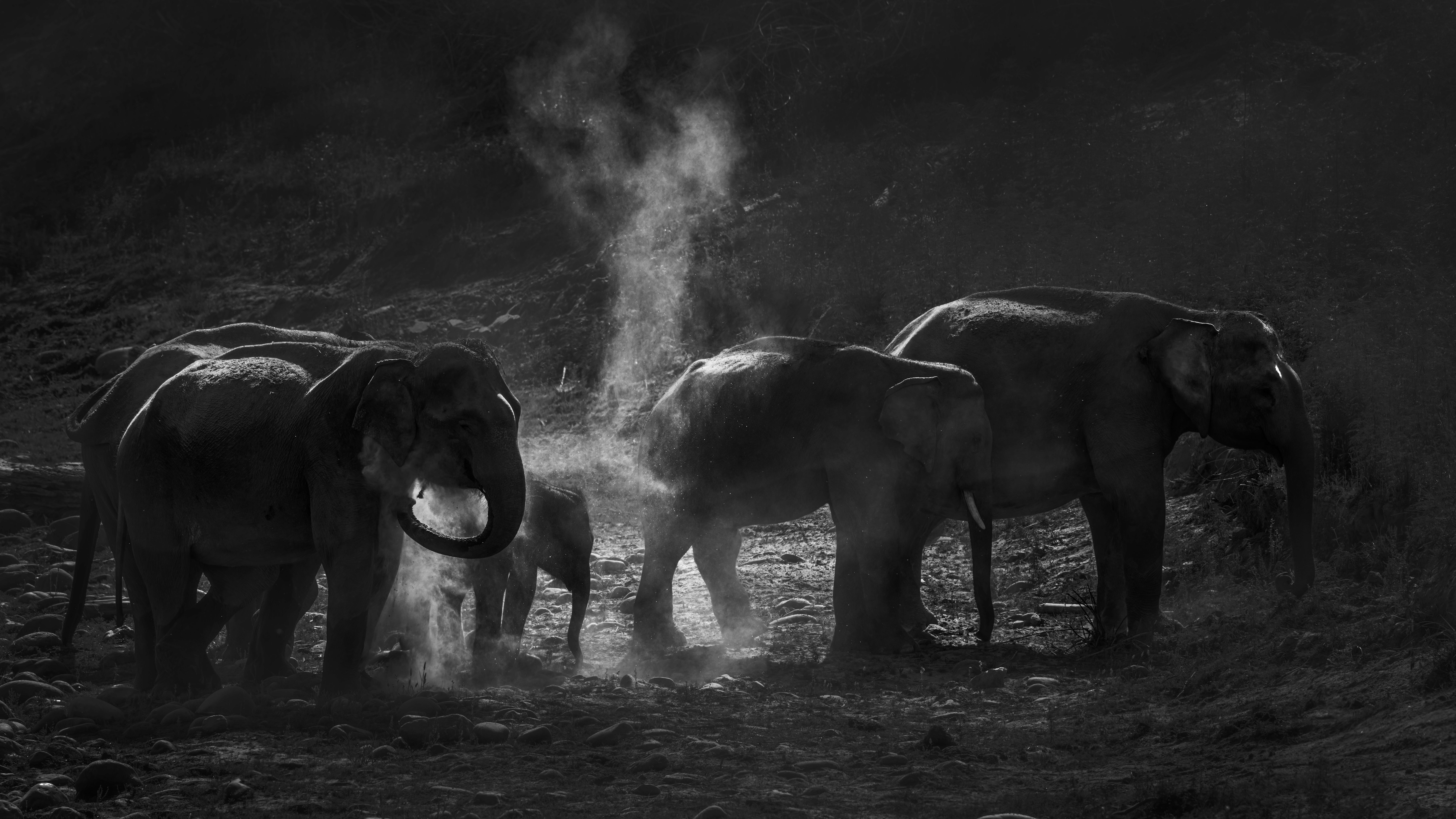
Tell us about "Dust & Light" — that elephant family in a morning dust bath. What was unfolding in front of you, and how did the light and the dust come together to make the image you were hoping for?
Dust & Light was photographed in the Dhikala zone of Jim Corbett on a cold winter morning. We came across an elephant family in a dry riverbed as they paused for a dust bath. The low morning sun behind them illuminated the dust, creating a beautiful glow and atmosphere.
What drew me to the scene was the calf standing safely between the adults, giving the image a strong sense of family and protection. I chose to include the entire group rather than focus on a single elephant, allowing the light, dust, and relationships within the herd to tell the story.
The moment lasted only a few seconds, but everything came together perfectly—behaviour, light, composition, and mood. For me, the photograph is less about elephants and more about family, connection, and the quiet beauty of life in the wild.
Now share "Flight Through Light" with us.
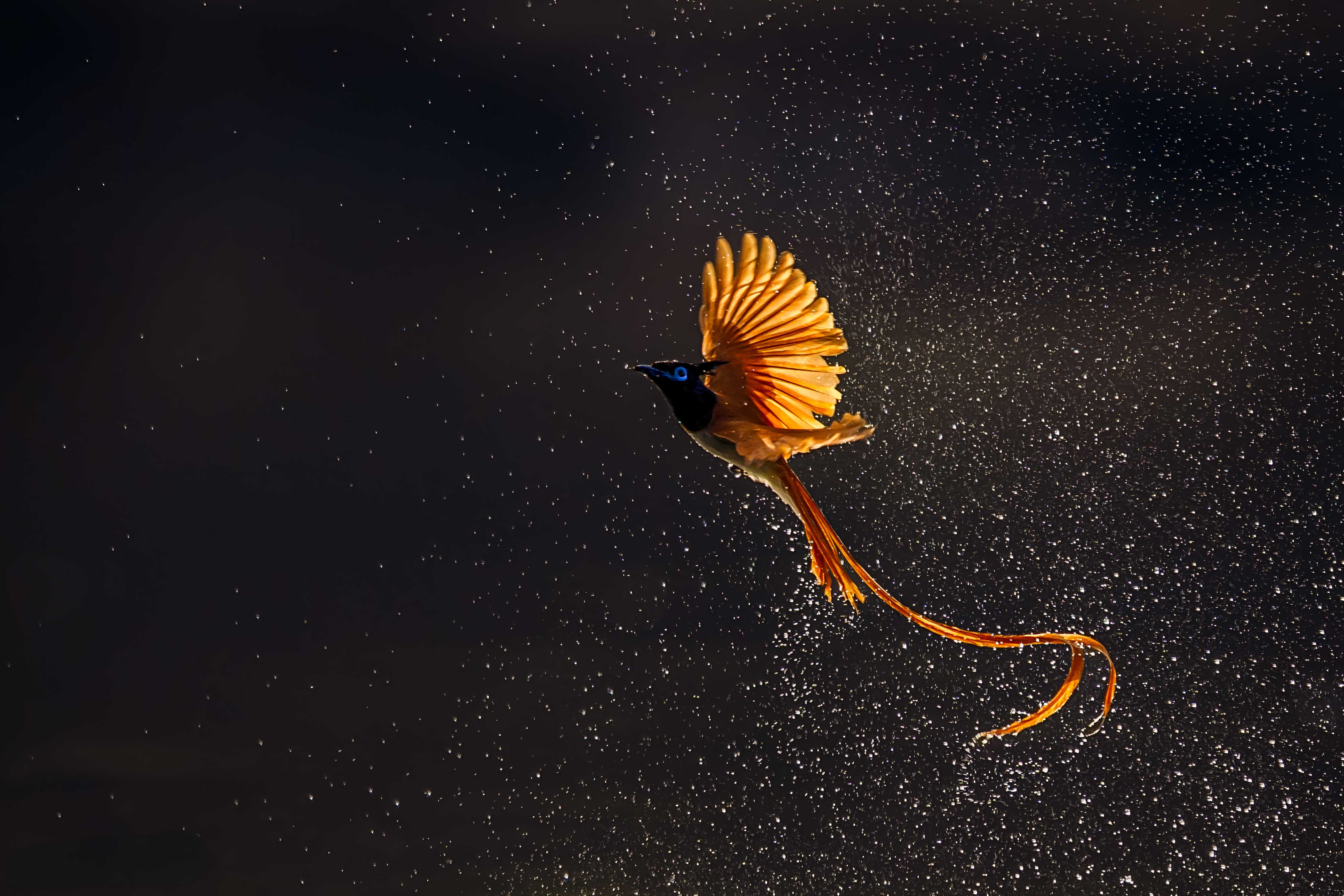
"Flight Through Light" catches an Asian Paradise Flycatcher suspended among sparkling droplets. How long had you been watching that bird, and what went through you the instant you knew you'd caught it?
Flight Through Light was photographed in Odisha on a trip I had undertaken specifically to photograph the Asian Paradise Flycatcher. I spent hours observing the bird around a pond, watching it repeatedly swoop down to the water and take off again in pursuit of insects.
What made the image special was the backlight. As the flycatcher lifted off from the pond, its chestnut-orange plumage and long tail streamers lit up like fire, while the water droplets around it sparkled like a field of stars. For a brief moment, it felt almost surreal.
When I saw the image on the back of the camera, I knew I had captured what I had travelled for. Everything came together in that split second—the glowing bird, the sparkling droplets, and the perfect wing position. It was one of those rare moments where preparation, patience, and luck combine to create something magical.
Share one more wildlife photograph that holds an intimate moment or a piece of behaviour you feel lucky to have witnessed.
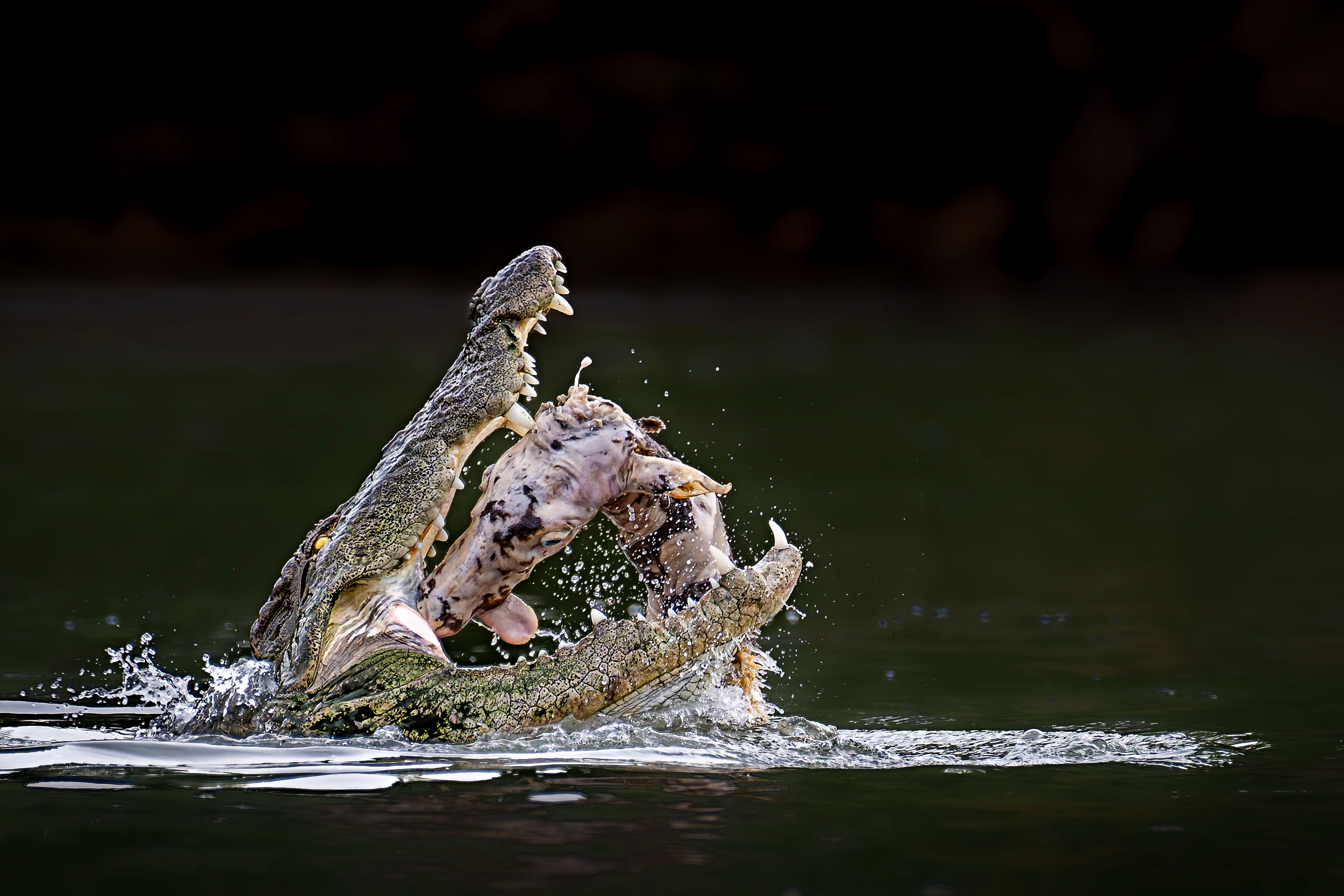
What was happening in that moment, and why does it stay with you the way it does?
The Last Bite was photographed at Bheemeshwari and remains one of the most intense wildlife moments I have witnessed. We had been watching the crocodile for some time when it suddenly exploded out of the water with its catch. The entire sequence lasted only a few seconds, but the power and raw energy of the moment were unforgettable.
What fascinated me was the combination of chaos and precision. Water was flying everywhere, the prey was still struggling, and yet for a brief instant everything aligned perfectly within the frame. Wildlife photography often celebrates beauty and grace, but moments like this remind us that nature is also about survival.
When I reviewed the image, I knew I had captured more than just an action shot. It told a complete story—the drama, the power, and the harsh reality of life in the wild. Those are the moments that stay with you long after the shutter has stopped clicking.
Share a street, documentary, or travel photograph from your more recent work.
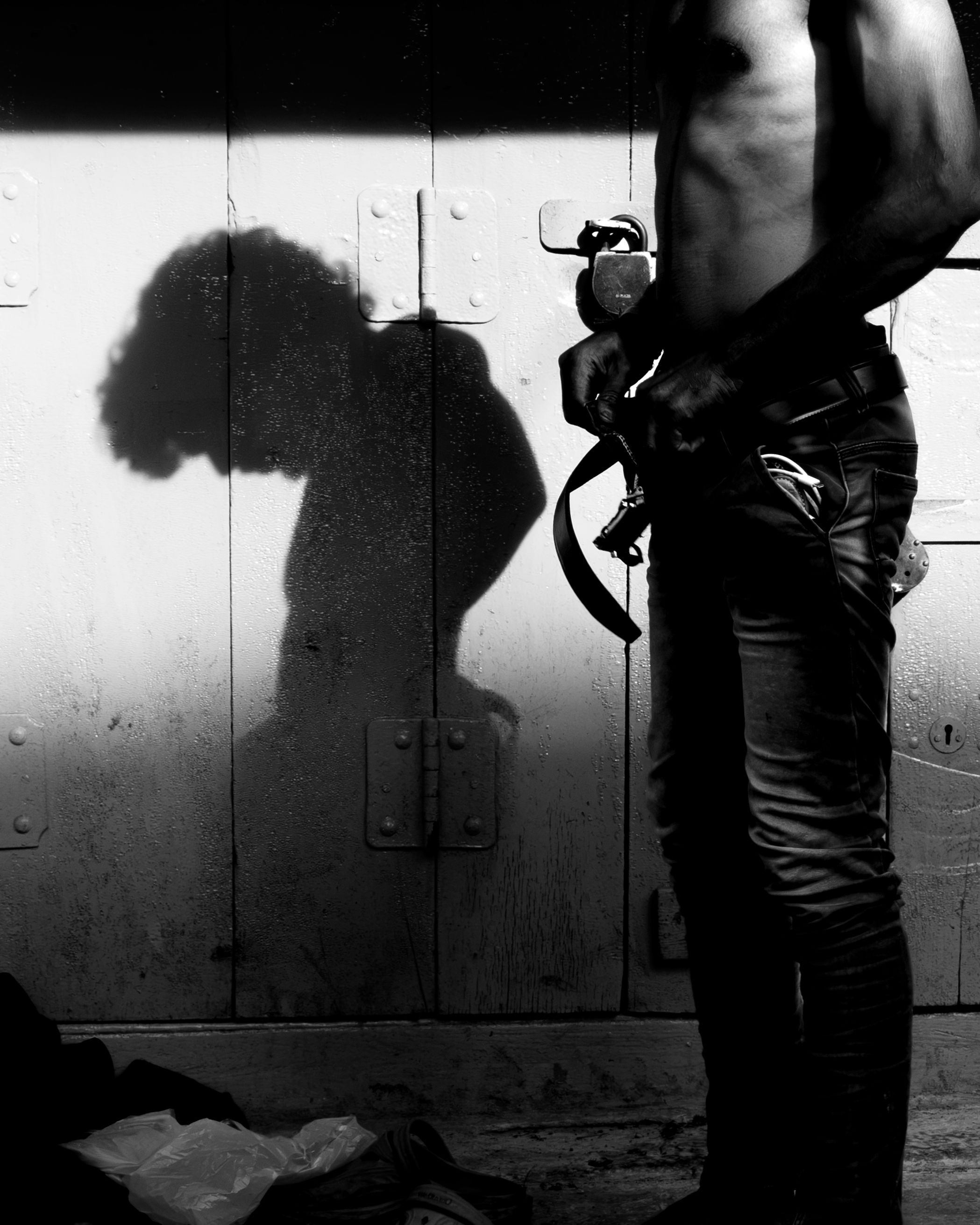
You've been carrying your wildlife storytelling approach into photographing people, cultures, and everyday life. In this image, how did that same instinct for light, composition, and story guide you?
This image was made in KR Market, Bengaluru, and for me it perfectly illustrates how my approach remains the same whether I'm photographing wildlife or people. I was immediately drawn to the striking light and the shadow cast on the door. Before I noticed the person, I noticed the shadow—it almost seemed to have a character and story of its own.
What interested me was the contrast between what was revealed and what was hidden. You see only part of the person, yet the shadow adds another layer to the narrative, inviting the viewer to imagine who they are and what their story might be.
In wildlife photography, I'm often looking for moments where light, form, and behaviour come together to create something beyond documentation. Here, instead of animal behaviour, it was human presence and gesture. The instinct was exactly the same: recognize the light, simplify the composition, and wait for the elements to align into a frame that sparks curiosity and emotion.
You mention being especially drawn to images that evoke a sense of place, whether in a remote wilderness or a bustling city. What are you actively exploring right now, and where do you hope this new chapter takes your work?
Right now, I’m actively exploring street and documentary photography while continuing my wildlife work. What excites me is the opportunity to tell stories in very different environments—whether it’s an elephant herd in a forest, a flower vendor in a market, or a fleeting interaction on a city street.
I’m particularly drawn to projects that capture the character of a place and the lives of the people who inhabit it. Markets, festivals, traditions, and everyday moments fascinate me because they reveal the culture and rhythm of a community in a very authentic way.
As I move forward, I hope to create a body of work that goes beyond genres. Whether the subject is wildlife or people, my goal remains the same—to create images that tell stories, evoke emotion, and encourage viewers to look more closely at the world around them. I see this new chapter as an opportunity to broaden my storytelling while staying true to the visual language that has shaped my photography from the beginning.
When someone stands in front of one of your photographs — wild or urban — what is the feeling you most want to leave them with?
More than anything, I want them to pause.
We live in a world where images are consumed in seconds and forgotten just as quickly. If someone spends a little longer with one of my photographs and feels a sense of wonder, curiosity, or connection, then I feel the image has succeeded.
Whether it's a tiger in a forest, an elephant family in the dust, or a stranger walking through a market, I hope the photograph encourages viewers to look beyond the obvious and connect with the story, mood, or emotion within the frame. I want them to feel as though they are sharing a moment that I was fortunate enough to witness.
Ultimately, my photographs are an invitation to slow down and appreciate the beauty, complexity, and interconnectedness of the world around us. If a viewer walks away feeling a little more observant, a little more curious, or a little more connected to nature and humanity, that's the greatest compliment I could receive as a photographer.
Contact and Follow
Email: subhashsaraff@gmail.com