

How did your journey as a street photographer begin?
It honestly started because I felt left out. Everywhere I looked, photography felt connected to expensive cameras, big lenses, and people who could afford that lifestyle. I couldn't. So the streets became the only place where nobody cared what camera you had. I started walking alone with my phone, capturing random moments without really knowing what I was doing. But slowly I realised the streets were teaching me more than any tutorial could. The chaos, expressions, silence, movement—everything felt real and unscripted. Street photography became personal for me because it reflected my own life in some way: confused, unnoticed, constantly moving, trying to find meaning in ordinary moments. While people were chasing technically perfect photographs, I was chasing feelings. I never entered street photography thinking I would become a photographer. I think I entered it because I was trying to find myself somewhere inside those streets.
What was the first moment that made you realize street photography was your passion?
I realised street photography was my passion when I started feeling emotions before pressing the shutter. At some point, I stopped going out to “take good photos” and started going out to observe life. The streets made me slow down and notice things most people ignore—loneliness in crowded places, silence between chaos, expressions that disappear within seconds. I became emotionally connected to those moments. That's when I understood this was more than photography for me. I wasn't just documenting streets; I was documenting human emotions and, somewhere unknowingly, parts of myself too.
How has your photography style evolved over the years?
My photography style evolved when I stopped photographing for validation. In the beginning, I was trying too hard—stronger edits, dramatic compositions, trying to create images that people would instantly like on social media. But after spending more time on streets, I realised the strongest photographs are usually the quietest ones—moments that don't scream for attention but stay with you emotionally. Now my work is much more observational and emotion-driven. I'm more interested in human behaviour, isolation, chaos, silence, and the relationship between people and their surroundings. I don't try to force stories anymore; I wait for them to naturally unfold in front of me. I think earlier I was capturing what looked interesting. Now I capture what feels honest.
What do you look for when capturing a street scene?
I look for moments that people usually ignore—real moments. Unplanned expressions, awkward pauses, chaos, isolation, human connection—things that exist naturally for a second and disappear forever. For me, a street scene is not about how beautiful the location is. It's about what is happening inside that frame emotionally. Sometimes nothing extraordinary is happening, but the feeling in that moment says everything. I think I'm less attracted to perfect scenes and more attracted to imperfect human moments that feel relatable and honest.
What photo best defines your street photography style?
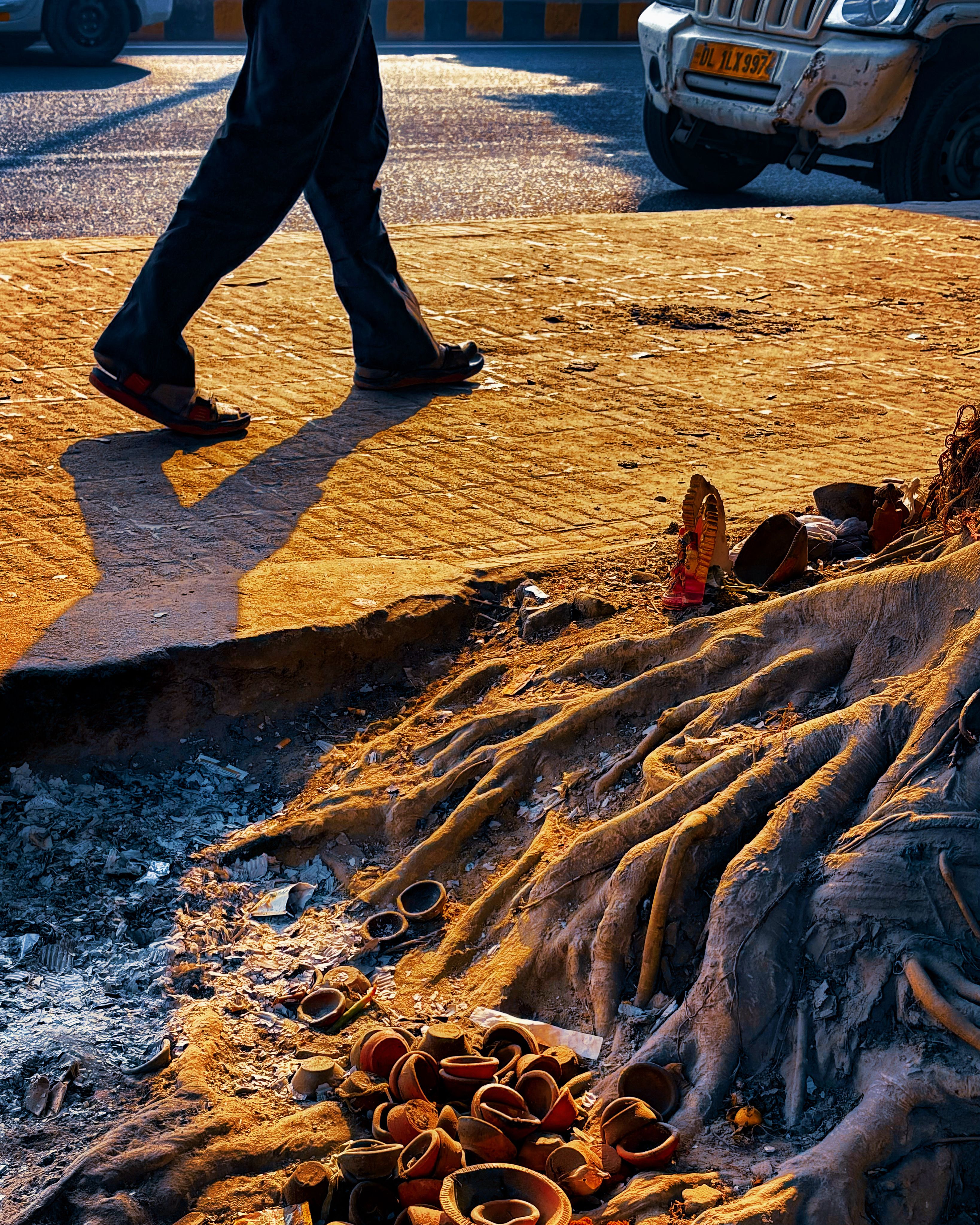
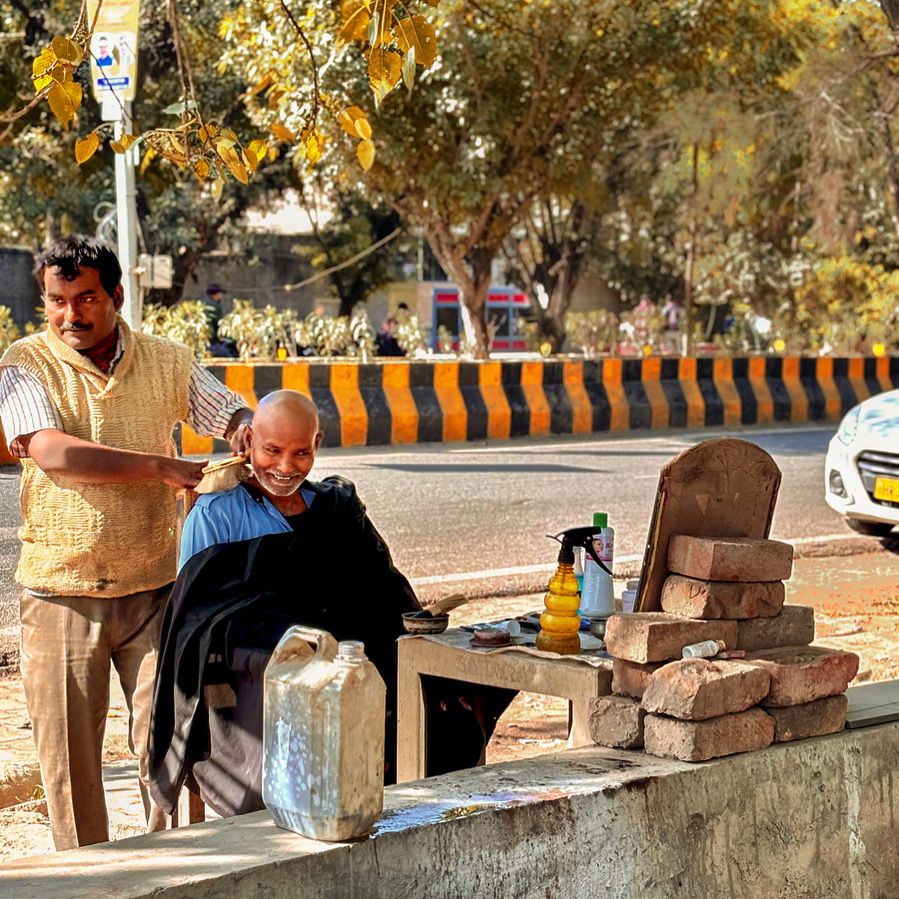
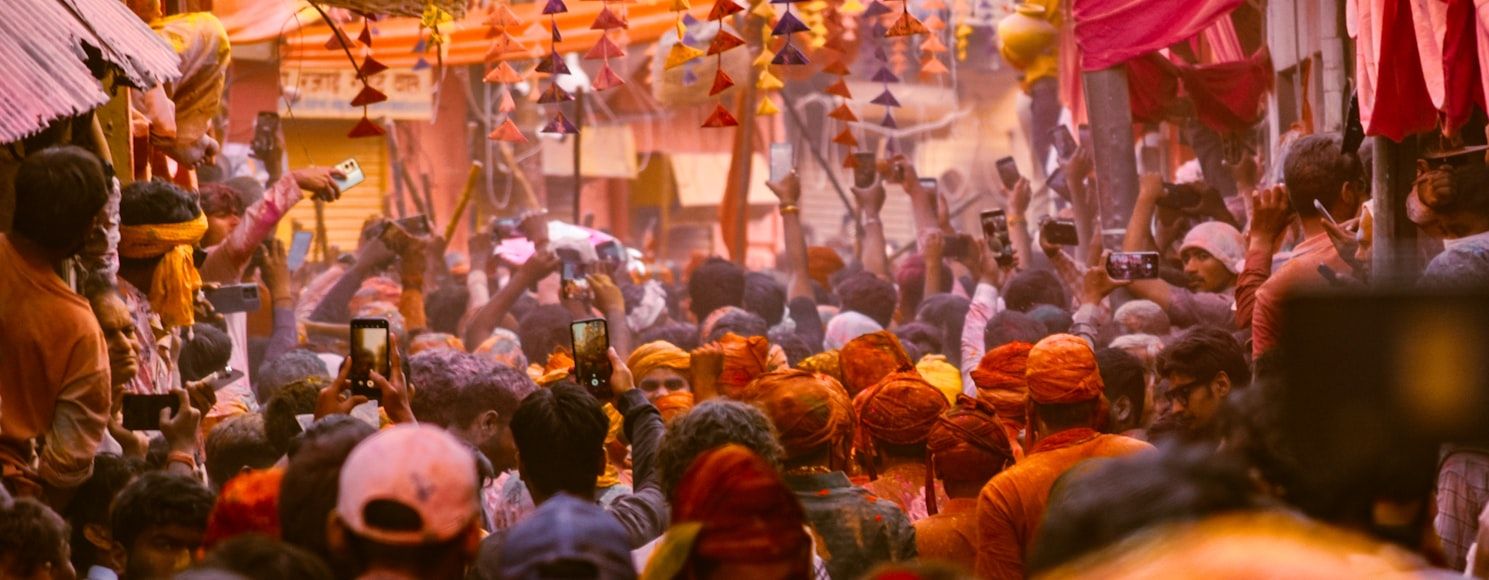
Photo 1: This photograph reflects how people experience the modern world today—living moments and documenting them at the same time. During the chaos of Barsana Holi, almost every hand was holding a phone, trying to preserve a memory before actually feeling it completely. That contrast between human presence and digital behaviour is what caught my attention. Photo 2: As the sun cast its warm rays upon the worn footpath, a lone traveler walked, his steps echoing a journey beyond the ordinary. Beneath a wise old tree, a small god statue stood silently, surrounded by unlit diyas waiting for the spark of enlightenment. The ground beneath them held the remnants of past flames, a reminder of life's transient nature. It was a story of a soul's pilgrimage, where every step hinted at a deeper connection between the earthly path and the spiritual destination. Photo 3: This photograph represents the simplicity and honesty of everyday street life. A roadside barber giving a haircut under a tree may seem like a normal scene, but for me these moments define the soul of the streets. There's trust, survival, routine, and human connection naturally existing without performance or attention. That authenticity is what I'm always searching for through my work.
Can you share a candid street moment you've captured that tells a story?
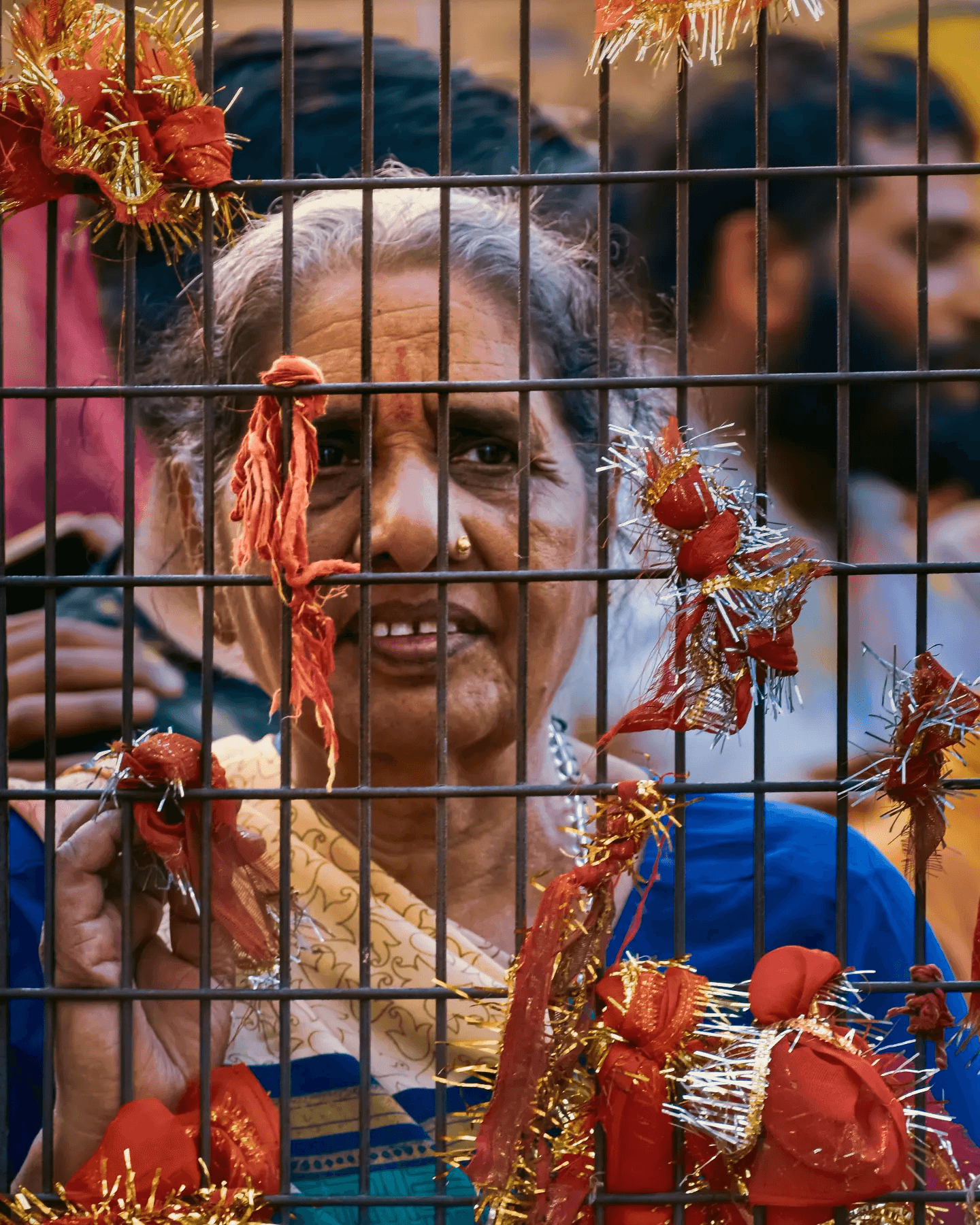
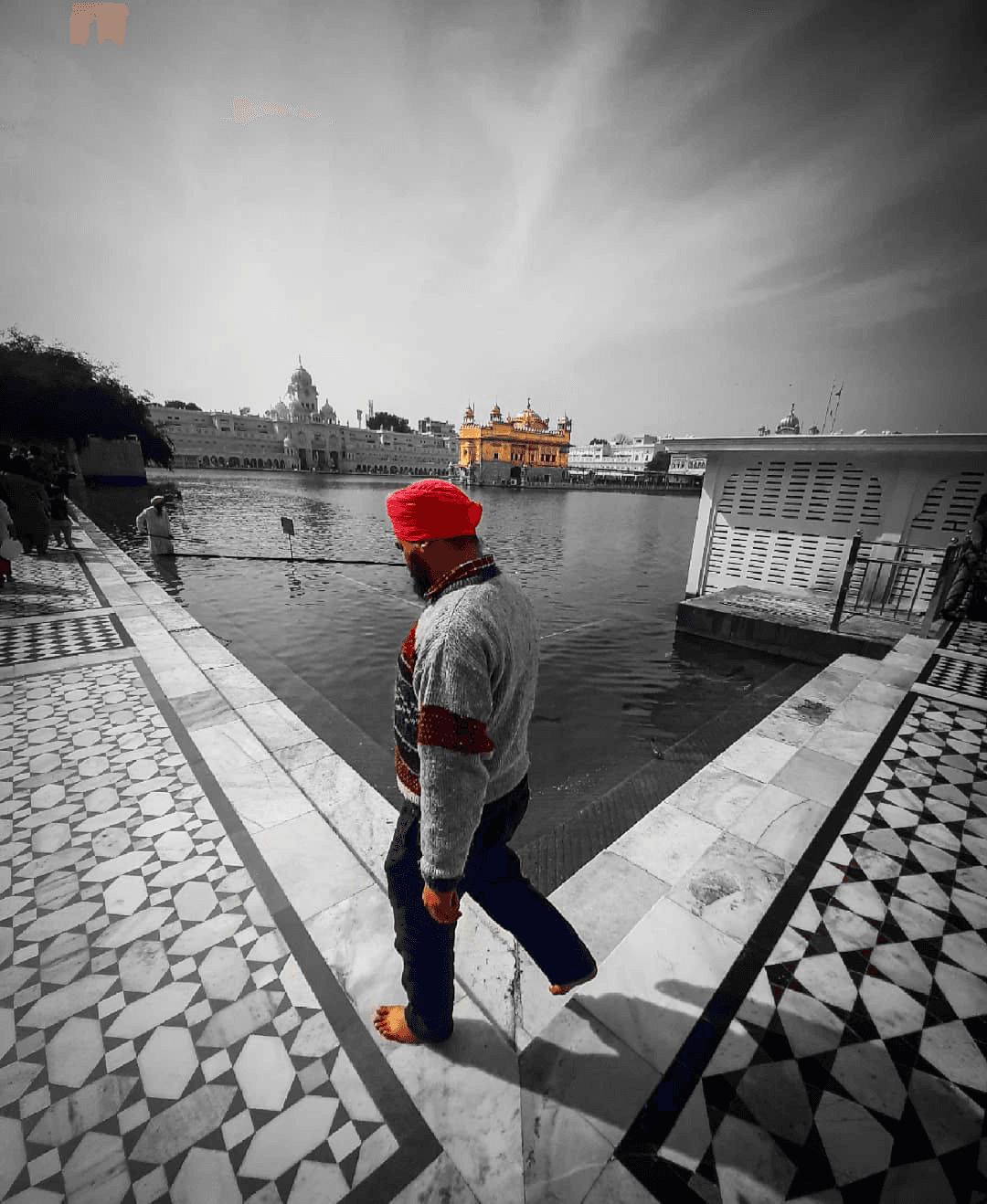
Photo 1: This frame felt brutally real to me. A woman standing behind metal bars inside a spiritual space—physically present among people, yet emotionally separated. It reflects how modern life has made people feel trapped in invisible ways. Everyone carries loneliness, pressure, and silence within themselves, even in places filled with faith and human presence. Photo 2: This photograph reflects how people still search for peace even in a world that never slows down. A barefoot man walking near the Golden Temple felt powerful to me because there was nothing extraordinary about the moment, yet it carried complete honesty. No attention, no performance—just a person lost in his own thoughts and faith while the world around him continued moving. What attracted me was the contrast between external chaos and internal silence. It felt less like a photograph about religion and more about the human need to find meaning, calm, and direction in the middle of modern life.
What's your favorite black and white street photograph, and why did you choose black and white for it?
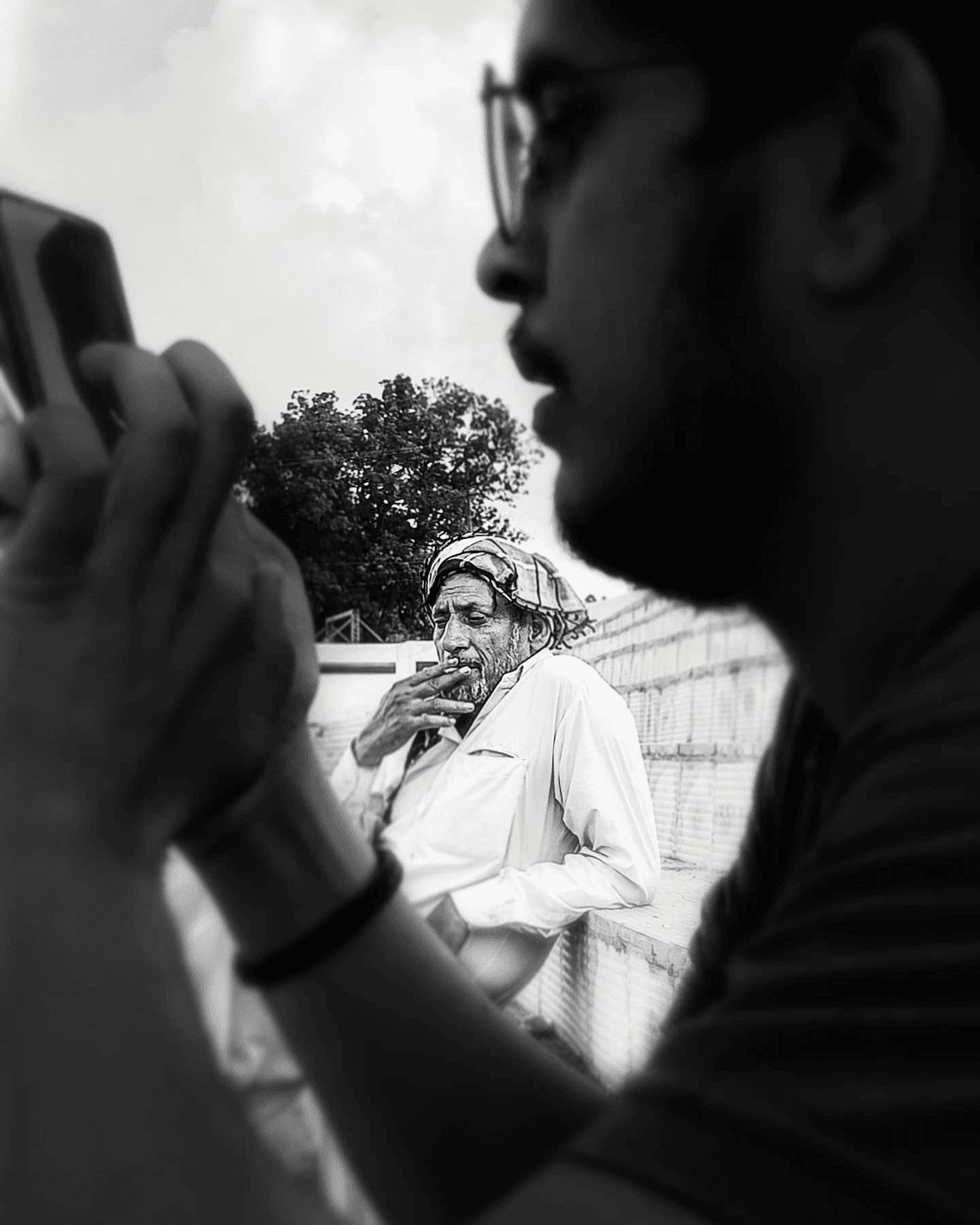
I converted this image into black and white because color would have softened the reality inside the frame. The photograph already had enough contrast—an older man sitting silently with a cigarette while someone from a younger generation is completely lost inside a phone screen. What felt real to me was the disconnect. Two people sharing the same space but existing in different worlds. One generation grew up sitting with silence, the other escapes into screens to avoid it. Black and white made the frame feel harsher, emptier, and more honest—exactly how modern life often feels today.
What photo shows your unique perspective on urban life, and what makes it unique?
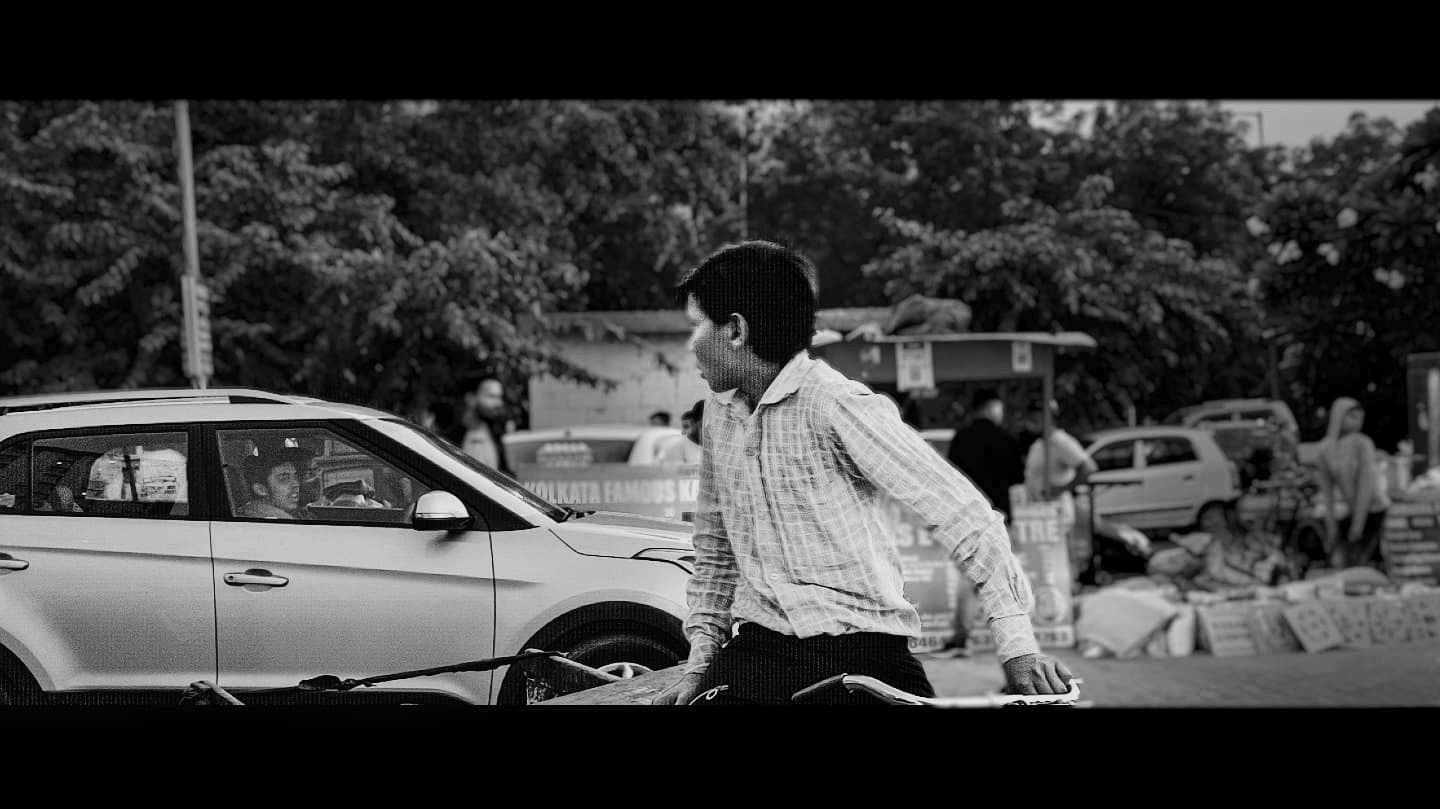
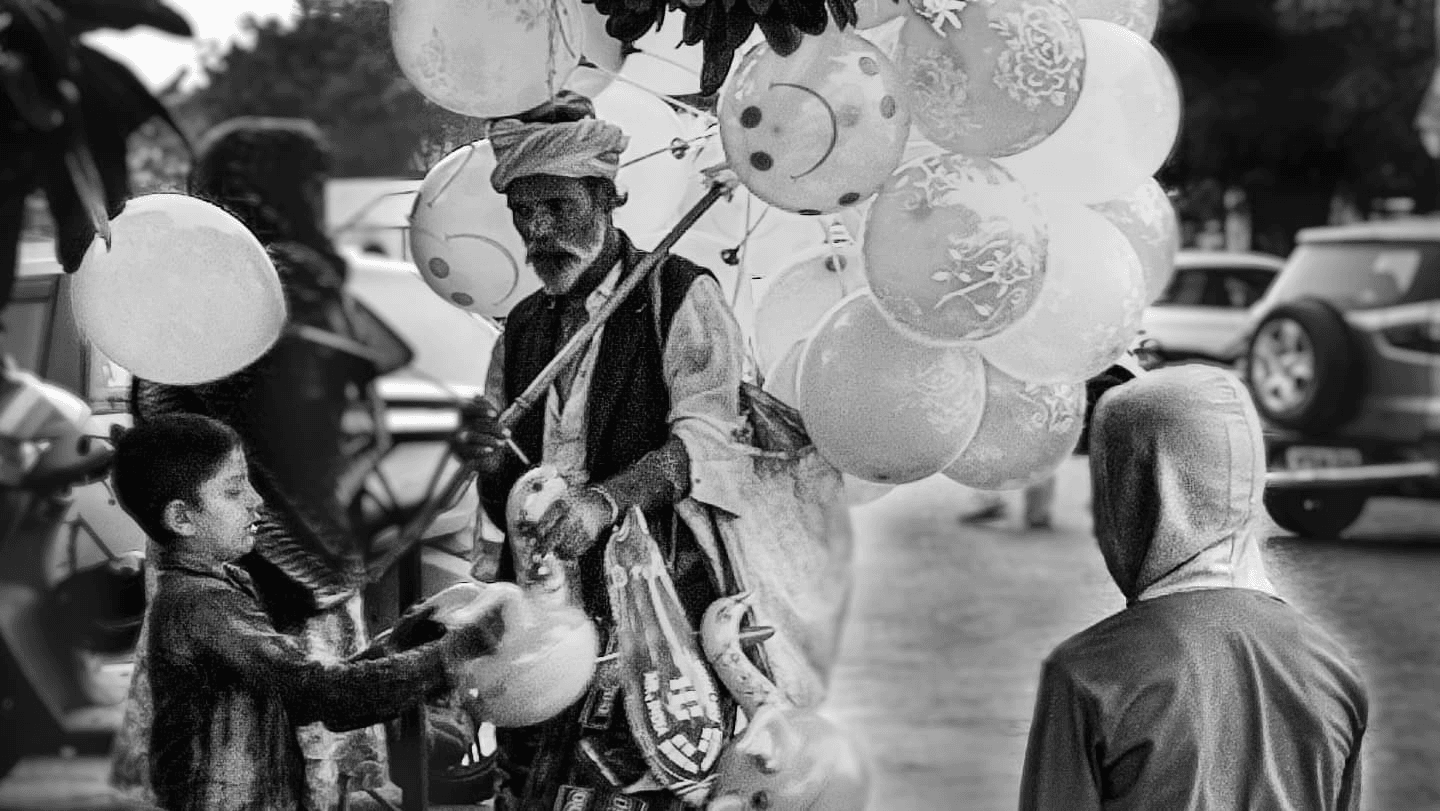
What makes these perspectives unique to me is that they are built around contrasts that quietly exist in everyday life but usually go unnoticed. In the first frame, a child on a bicycle and a man inside a car exist side by side on the same road, yet they represent completely different realities. One moving through life with privilege and comfort, the other navigating it with uncertainty and survival. I'm drawn to these silent social contrasts that naturally exist within public spaces. In the second frame, what interested me was the emotional contradiction. A man selling balloons—objects connected with happiness and childhood—carries an expression that feels tired and emotionally distant. Around him, children see joy, while he sees livelihood and survival. I think my perspective comes from observing these unnoticed tensions inside ordinary moments. I'm less interested in dramatic events and more interested in the quiet realities people subconsciously reveal in public spaces.
What challenge did you face technically or creatively, and how did you overcome it?
The biggest challenge for me was learning how to stay invisible while still being emotionally connected to the moment. Street photography is unpredictable—moments appear and disappear within seconds, and sometimes you only get one chance to capture them honestly. Another challenge was overcoming the fear of judgment. In the beginning, I used to feel out of place carrying a camera on the streets, especially when people around me didn't understand why I was photographing ordinary life. I overcame it by spending more time observing than shooting. Slowly, the streets taught me patience, timing, and confidence. Over time I stopped worrying about how people saw me and started focusing more on how I saw the world around me.
What image represents a turning point in your photography, and why is it significant?
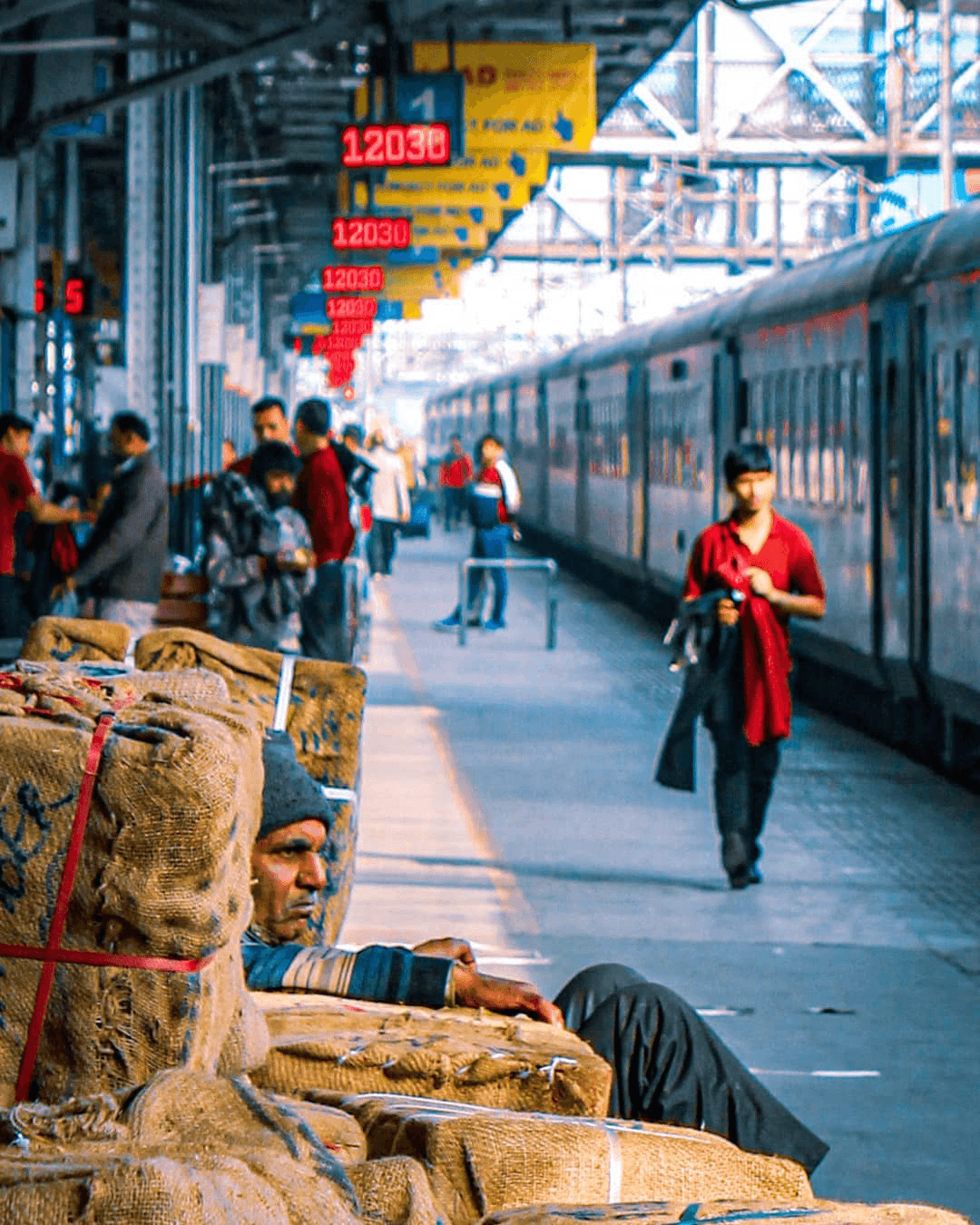
This image represents a turning point in my photography because it was around this phase that I stopped seeing photography as just a hobby and started understanding the emotional power of storytelling through ordinary moments. The frame itself is simple—a man sitting quietly at a railway station while life keeps moving around him—but for me it reflected something much deeper about loneliness, waiting, and unnoticed human emotions in public spaces. This was one of the moments where I realised I was more interested in stories and feelings than technically perfect photographs. Around the same period, Nikon Asia reached out to me for a campaign, which became one of the first major recognitions of my work. Coming from someone who started photography without professional equipment, that moment completely changed my confidence and perspective. It made me realise that vision and storytelling matter more than the gear you own. This photograph reminds me of the phase where I stopped chasing validation and started trusting my own way of seeing the world.
Contact and Follow
Instagram: https://www.instagram.com/sharmaprakharr
YouTube: https://youtube.com/@sharmaprakharr
Twitter: https://x.com/sharmaprakharr
Email: prakhar20in.sharma@gmail.com