


How did your journey as a music producer and rapper begin?
My journey as a music producer and rapper began with my love for Desi Hip-Hop. I grew up listening to artists like Raftaar, Emiway Bantai, Yo Yo Honey Singh, Seedhe Maut, Ikka, Badshah, and many others. However, the real turning point came in Class 12 when I first discovered the world of music production. That's when I learned that Honey Singh wasn't just a rapper—he was also a music producer. That completely changed the way I looked at music and inspired me to create my own sound.
Before that, I used to write songs in school just for fun, without thinking of it as a career. But after discovering music production, I realized I could combine songwriting with rap. I started practicing by rapping over type beats on YouTube, and the more I explored, the more passionate I became.
I then began learning Digital Audio Workstations (DAWs), starting with Ableton Live and later FL Studio. Since I couldn't afford them initially, I relied on free trials for several months. Eventually, after getting the Apple Student Bundle, I started using Logic Pro and took music much more seriously.
Alongside producing and rapping, I became deeply interested in mixing and mastering because I wanted complete creative control over my music. Today, I work as a music producer, rapper, songwriter, and mixing & mastering engineer, constantly learning and pushing myself to create better music. My name is Vardan Pandey, and this is how my journey began.
What was the first track or beat that made you feel like you were on the right path?
I made tracks like "Khurafati," "Tera Ho Jaana," and "Baatein Ansuni." Especially with "Tera Ho Jaana" and "Baatein Ansuni," this was new for me—I wrote, composed, and presented something that felt genuinely good. That experience made me sure I was on the right track.
How has your experience as a mixing and mastering engineer shaped your music production?
When I first started music production, I honestly didn't understand the importance of mixing and mastering. I used to think it was just about cutting frequencies and making a song a little louder. But once I started releasing my own music on YouTube, I realized how much of a difference a good mix and master actually makes.
That's when I decided to invest in learning the craft. I enrolled in Mix With Vasudev's mixing and mastering course, and it completely changed the way I approached music production. It taught me how every element in a song should work together to create clarity, emotion, and impact.
After completing the course, I mixed and mastered tracks like "Tera Ho Jaana" and "Ghar Wapsi." Although I haven't released many self-produced songs since then, those projects gave me the confidence to hear the improvement in my work and understand how much the final stage shapes the listener's experience.
Today, I enjoy mixing and mastering just as much as producing. For me, they're not separate processes—they're essential parts of creating great music. I often compare it to making a pizza: without the cheese, vegetables, and toppings, it's just dough. In the same way, a song without proper mixing and mastering is missing the flavor and emotion that truly connects with the audience. That's where the production comes to life and where an artist's vision is fully realized.
What does your typical creative process look like from beat-making to final track?
My creative process depends on the type of music I'm making. Since I started my journey as a rapper, I naturally began by producing rap beats, but over time I've also started creating melodic and romantic songs.
For rap tracks, I usually begin by selecting a BPM that matches the vibe I'm going for. Then I either create my own melody or browse Splice for inspiration. I enjoy using vocal chops because they add a unique texture to the beat. In fact, I used vocal chops in my track Wallmack Rap Battle and in several other productions. Once the melody is ready, I build the drum section with hard-hitting kicks, snares, and percussion. Sometimes, though, I reverse the process—I start with dark, bouncy drums and then write the melody around that groove.
After the beat is complete, I send it to an artist or collaborator. Once they record their vocals, I handle the entire post-production process, including mixing and mastering. We make revisions together until we're both happy with the final result, and then we release the song.
For melodic or lo-fi songs, my process is a little different because the emotion usually comes first. Sometimes I find a melody on Splice and start humming ideas over it until lyrics naturally begin to form. That's how I approached my unreleased song Dil Ye Dastake, where I worked as the producer, composer, lyricist, mixing, and mastering engineer.
Other times, the lyrics come before the music. For example, Tera Ho Jaana started with just the phrase "Tera Ho Jaana" repeating in my mind. I found the right scale for that melody, built the chord progression around it, and developed the song from there.
No matter how a track begins, my goal is always the same—to create music that feels authentic. Whether the inspiration starts with a melody, drums, or just a single line of lyrics, I let the idea guide the creative process until it becomes a finished song.
Tell us about the recent unreleased projects you've been working on.
I uploaded two different projects that showcase different sides of my work.
The first is a track called "Dil Ye Dastakein." It's a romantic song that I created for a short film being produced by my college seniors. On this project, I worked as the producer, composer, lyricist, and mixing and mastering engineer. The song takes inspiration from classic Bollywood music while blending it with a modern production style. It's currently in its final stages and is planned for release on Spotify next month.
The second upload is a hip-hop beat inspired by the production style of Tay Keith. After discovering his music and studying his production techniques, I was inspired by his hard-hitting drums, energetic bounce, and minimal yet powerful arrangements. I used those influences to create my own beat while adding my personal style and sound.
What techniques did you apply in the mixing/mastering example you uploaded?
For my latest mixing and mastering example, I uploaded "Khurafati," a hip-hop track that I created with my friend SHKLA. The production combines an Indian-inspired sound, featuring tabla and traditional elements, with modern hip-hop drums and hard-hitting 808s.
My mixing workflow starts with proper session organization. I reduce the gain of every track to create enough headroom, clean up unwanted audio, name and color-code the tracks, and group drums, instruments, and vocals into separate buses.
From there, I use EQ to remove unnecessary low-end rumble, reduce harsh frequencies, and clean up resonances so every element has its own space in the mix. I then apply compression to control the dynamics, especially on the vocals and drums, while keeping the performance natural and energetic. I also use a de-esser to reduce harsh "S" sounds in the vocals.
To create depth, I use dedicated reverb and delay buses instead of applying the effects directly to each track. Since the beat combines traditional Indian instruments like the tabla with modern drums, one of the biggest challenges was making both elements sit together without competing for the same frequencies. I carefully balanced the percussion, 808s, vocals, and melodic elements to maintain both clarity and impact.
Finally, during mastering, I made subtle tonal adjustments, controlled the overall dynamics, and brought the track to a competitive loudness while preserving its punch and energy. My goal was to give the song a clean, powerful, and commercially polished sound.
What's one piece of gear in your setup that you can't live without?
If I had to choose one piece of gear I couldn't live without, it would definitely be my headphones. While my MacBook is the heart of my setup, my headphones are the tool I rely on the most for making music.
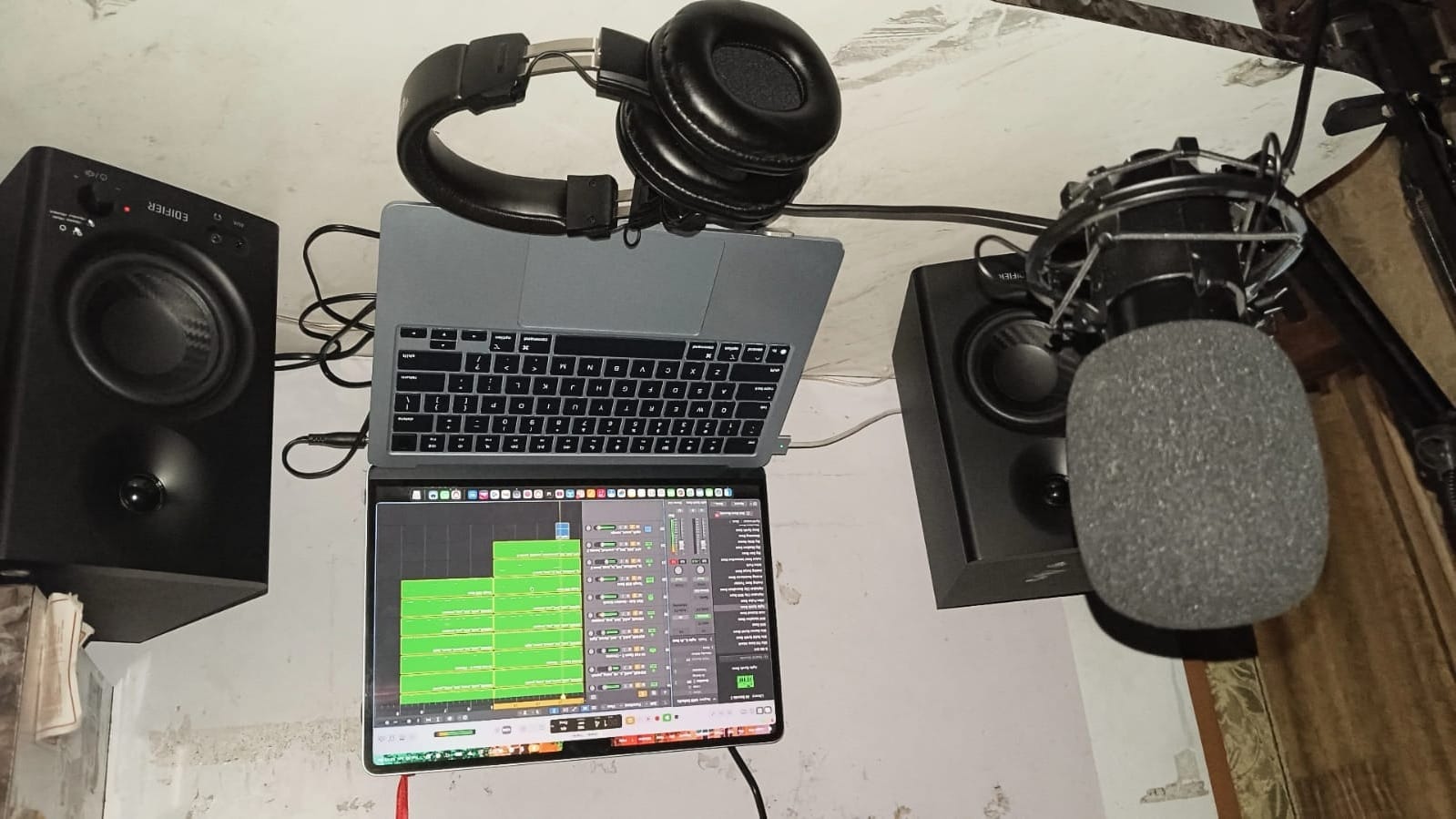
I actually started my entire music production journey with just a pair of headphones. For me, headphones aren't just another piece of equipment—they're where my music production journey began, and they're still one of the most important tools in my creative process.
What was the inspiration behind the vocals you recorded in that clip?
The main inspiration behind the vocals was to experiment with alliteration. I built the rap around repeated "P" sounds to create a catchy, rhythmic flow and make the lyrics more fun and engaging. Since "Sajan" is a fun hip-hop track, I wanted the vocal delivery to feel energetic, playful, and memorable.
What made that project special or challenging?
Tera Ho Jaana was a very special project for me because it challenged me in ways I hadn't experienced before. It was the first song where I put a serious amount of effort into the entire mixing and mastering process, applying everything I had learned. I spent a lot of time refining the vocals, balancing the instruments, and making sure every element fit together naturally.
Another challenge was blending a melodic, romantic sound with rap influences. I wanted both styles to complement each other without one overpowering the other, and finding that balance took a lot of experimentation.
What makes this project even more meaningful is the response it has received. Seeing listeners connect with the song and show it so much love has made all the hard work worth it. It gave me confidence in my abilities as a producer, mixing and mastering engineer, and songwriter, and it's a project I'm genuinely proud of.
How does the visual aesthetic complement your music's vibe?
The visual aesthetic represents the identity behind my first album, "Mai" (which means "Me"). The glowing purple artwork is the beginning of my journey as an artist.
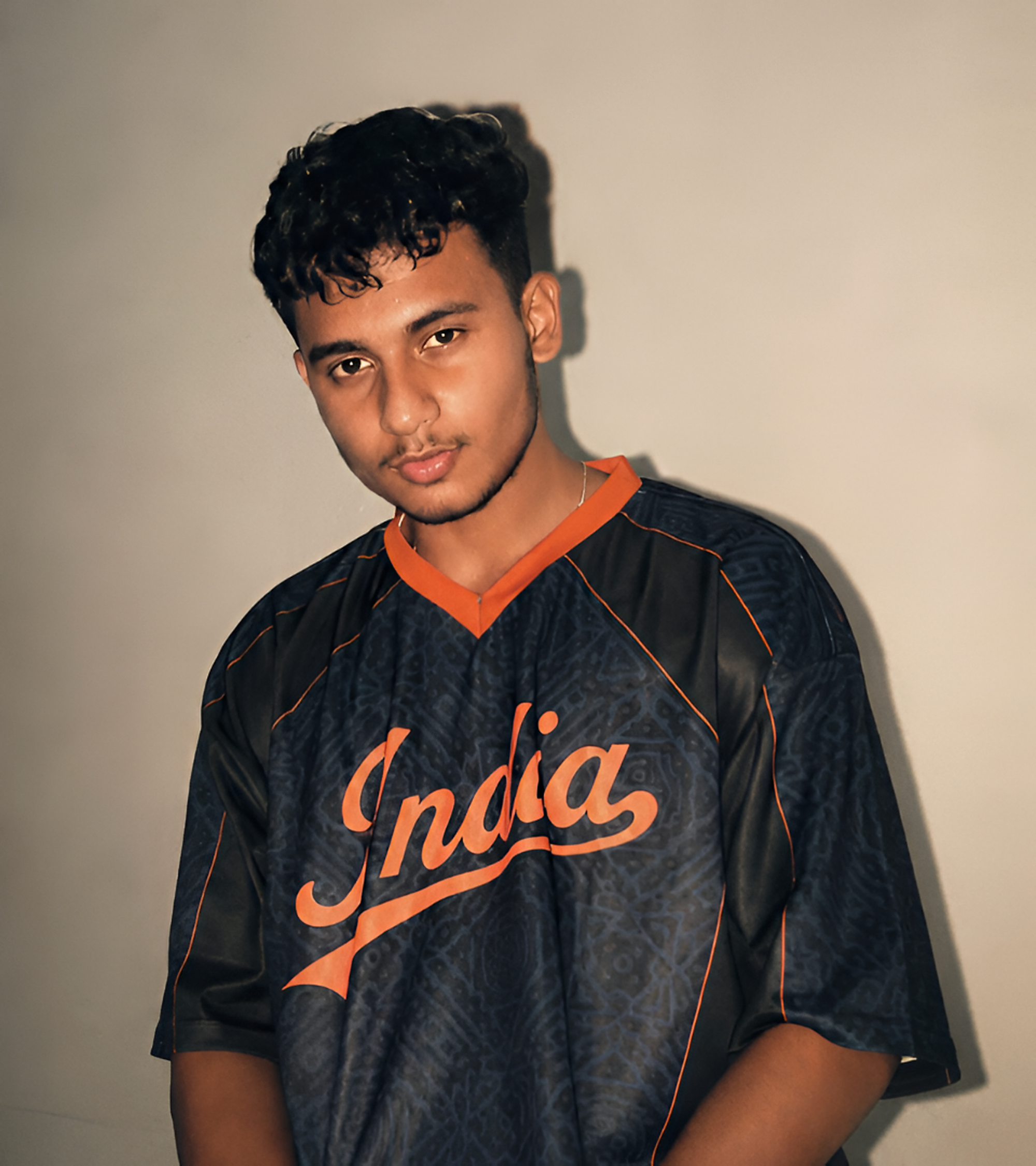
The album features four tracks that blend rap and melody while showcasing collaborations with four different artists. I wrote, produced, mixed, and mastered the entire project myself. Although it wasn't perfect technically, it was my first complete body of work, and that's what makes it special. The artwork reflects the idea of introducing myself to the world—this is who I am, this is my sound, and this is "Mai."
Contact and Follow
Email: vardaanp023@gmail.com
Instagram: https://www.instagram.com/vardaan_023/
YouTube: https://youtube.com/@vardaan_023?si=Nt-eybgtnhRFoh1H
Spotify: https://open.spotify.com/artist/5b7QL9W6Ct0JIB0UP3xaty