

Tell us about how your journey in music began.
My journey in music began more than 18 years ago with a guitar and an endless curiosity to understand what was possible with it. What started as a fascination gradually became a lifelong pursuit of sound, expression and experimentation. As I explored the instrument, I found myself drawn to the intensity of metal, while also becoming fascinated by the space and emotion of ambient music and post-rock. Over time, I explored genres such as ambient metal, post-rock, death metal, groove metal, progressive and extreme metal, alongside Indian classical, Carnatic and Western classical traditions. Rather than confining myself to one style, I wanted to understand what could happen when different musical worlds came together. That approach eventually shaped my identity as Chazz Eternity not simply as a guitarist, but as a composer, producer, performer and mentor. Over the years, I have performed in more than 350 shows, created original music and had the opportunity to teach and mentor thousands of students. My musical journey is also reflected in my instrumental concept album, Rhythms of Ruins, which draws inspiration from Lord Shiva and brings together elements of Indian classical and Carnatic music with Western classical influences and the sonic intensity of metal. For me, the goal has always been to create music that carries both technical depth and emotional meaning. When I look back, I don't see my journey as a straight path from learning guitar to becoming a professional musician. It has been a continuous process of discovering, unlearning, experimenting and finding my own voice. After more than 18 years, that curiosity is still the driving force behind my music. I believe the most exciting part of the journey is knowing that there is still so much left to explore.
What was the first guitar or instrument that inspired you?
The first instrument that truly started my journey was a Hobner acoustic guitar. It was my first introduction to the world of guitar, and that simple acoustic became the starting point for everything that followed. As I progressed, I moved to a Cort Zenox 42, a six-string electric guitar, which became an important part of my early development. I paired it with a Boss GT-100 and an Orange Crush CR12, and this setup gave me the opportunity to experiment with different tones, effects and styles of playing. My curiosity eventually took me into the world of extended-range guitars, where I explored an ESP LTD 8-string. It opened up a completely different sonic landscape and allowed me to experiment with heavier and lower-register compositions. After that, I explored a Grail 310CE semi-acoustic, which brought me back to a more organic and expressive approach to the instrument. Today, I play an Ibanez RG7421 seven-string, which is an important part of my current sound and composition. Its extended range gives me the flexibility to move between atmospheric textures, melodic passages and the heavier elements of ambient metal, death metal and groove metal. Looking back, each guitar represents a different chapter of my musical journey. Every instrument taught me something new and influenced the way I approach sound and composition. And I’m still exploring because for me, the journey with the guitar never really ends.
How have your musical skills and style evolved over the years?
My musical skills and style have evolved continuously over the years, mainly because I have never wanted to limit myself to one genre or one way of playing. In the beginning, my focus was primarily on learning the fundamentals of guitar—technique, rhythm, scales, chords and developing control over the instrument. As I became more experienced, I started exploring heavier styles and gradually developed an interest in death metal, groove metal, progressive metal and extreme metal. This phase taught me discipline, precision and the importance of technical control. With time, however, I realized that technical ability was only one part of being a musician. I became increasingly interested in ambient music and post-rock, where space, dynamics, atmosphere and emotion become just as important as speed and complexity. That contrast between heaviness and atmosphere became a significant part of my musical identity. My exploration also expanded into Indian classical, Carnatic and Western classical music. Studying these traditions changed the way I think about melody, harmony, rhythm and musical phrasing. Instead of seeing different genres as separate worlds, I started looking for ways to connect them. Today, my style is a combination of everything I have explored over the years technical guitar playing, heavy and extreme metal, ambient textures, post-rock elements, classical influences and melodic expression. My approach has gradually shifted from simply asking, “How difficult can I play?” to asking, “What does the music actually need?” I think that has been the biggest evolution in my journey. I am still developing technically, but my focus now is much more on creating a distinctive sound, communicating an emotion and telling a story through the instrument. For me, evolution as a musician means never becoming completely comfortable. There is always another technique to learn, another genre to explore and another sound waiting to be discovered.
What does your current creative routine look like?
My current creative routine is a balance between practice, creation, production and teaching. I still spend dedicated time with the guitar, working on technique, developing new ideas and constantly challenging myself as a player. I believe that even after years of playing, there is always something new to learn from the instrument. A significant part of my day is also spent composing and arranging music. Sometimes an idea begins with a guitar riff or melody, while at other times it starts with an emotion, an atmosphere or a particular feeling that I want to translate into sound. From there, I develop the idea through arrangement, sound design and production until it starts to take its own identity. Recording and production have become an important part of my creative process as well. I enjoy experimenting with tones, textures, dynamics and layers, especially when working with heavier and atmospheric styles. The studio gives me the freedom to explore ideas that may not always be possible in a live setting. Teaching and mentoring are another important part of my routine. Working with students keeps me connected to the fundamentals of music and, interestingly, often inspires my own creativity. Seeing how different musicians approach the same instrument gives me new perspectives. At the center of everything I create, however, is emotion and personal expression. I don't like forcing an idea simply to fit a genre or a technical expectation. I try to create music that feels honest to me. Whether it is an atmospheric passage, a heavy riff or a melodic section, I want it to communicate something. For me, creativity is less about following a fixed routine and more about staying curious, listening carefully and allowing an idea to develop naturally.
What does a live performance that represents your cinematic style look like?
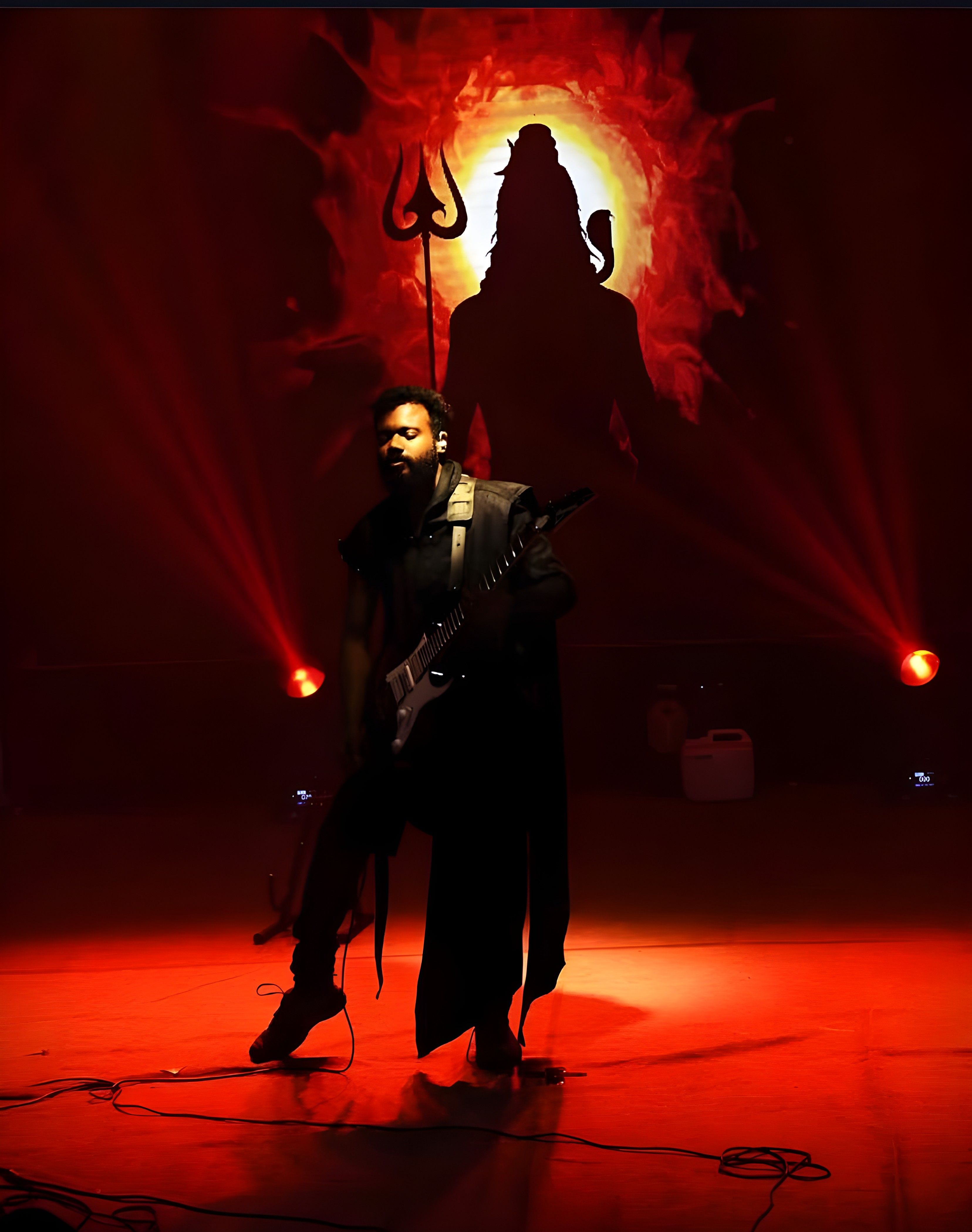
The live performance I uploaded is from Khasdar Mahotsav 2025 in Nagpur, performed on November 16, 2025, where I had the honor of performing as the opening act for Shreya Ghoshal in front of an audience of approximately 1.5 lakh people. It was one of the most significant moments of my musical journey. Standing on a stage of that scale and presenting my guitar-driven music to such a massive audience was both exciting and deeply humbling. Performing before an artist of Shreya Ghoshal’s stature also made the experience particularly memorable. What made the performance special was the contrast between my sound and the scale of the event. I was bringing my own style built around guitar, atmosphere, melody and the intensity of metal to an audience that had come together for a major live musical celebration. There is a completely different feeling when you perform for a crowd of that size. The energy from the audience becomes almost physical, and every note feels amplified by the atmosphere around you. It reminded me that music can connect people regardless of genre or musical background. For me, that performance represents much more than a large show. It is a milestone in my journey from years of practicing, experimenting and developing my own sound to finally standing on a major stage, opening for one of India's most celebrated singers, and sharing my music with around 1.5 lakh people. It is a memory I will always carry with me as Chazz Eternity.
What's the story behind your guitar setup or recording space?
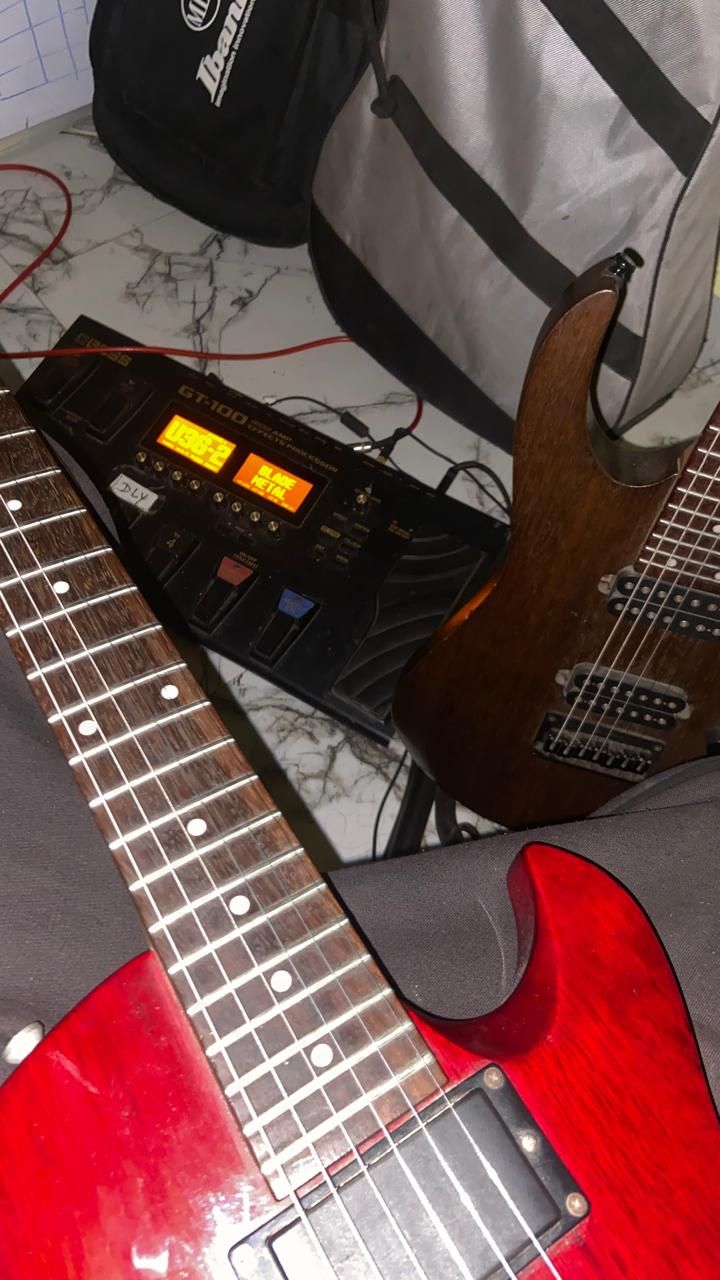
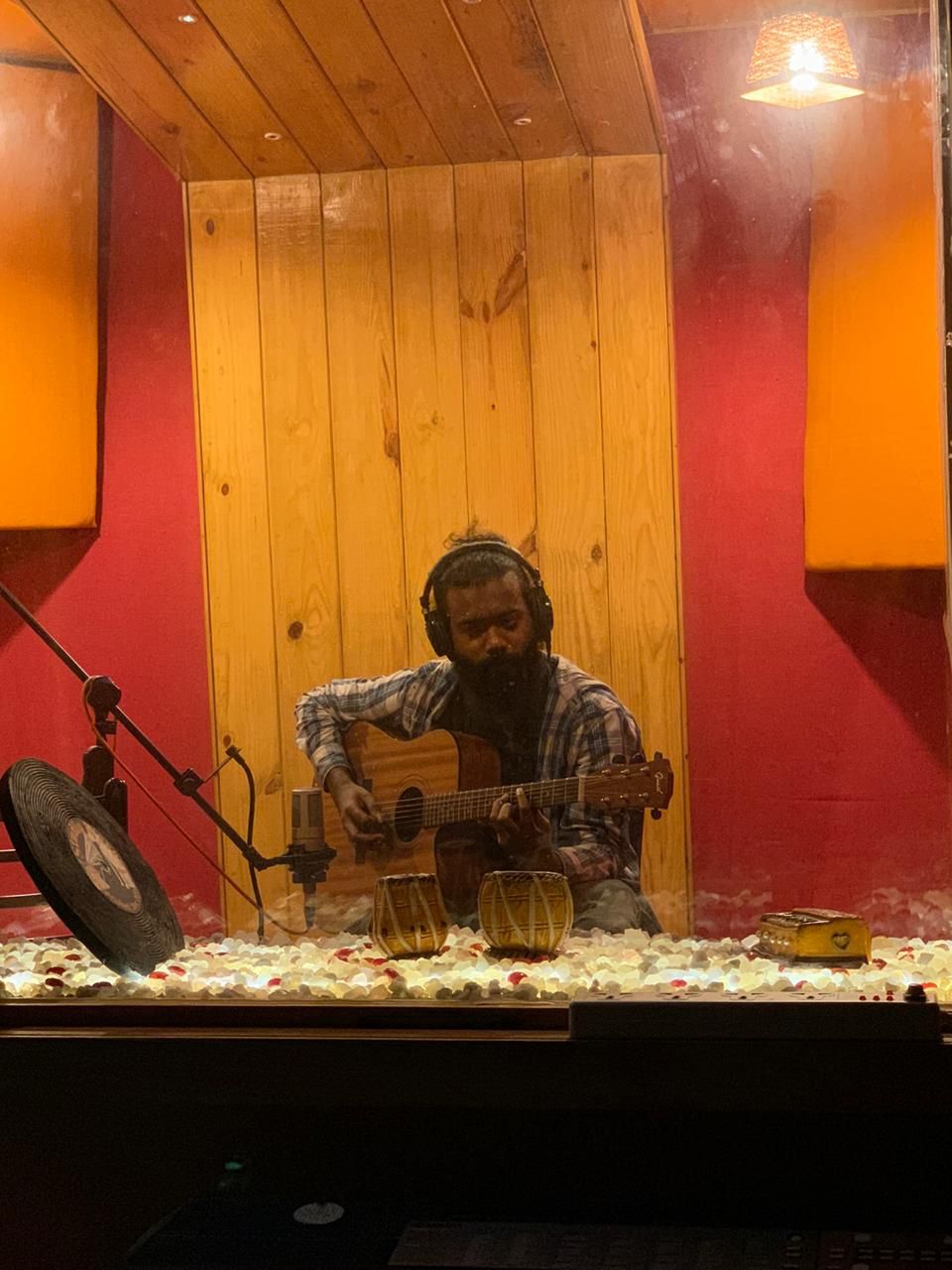
My guitar setup has evolved alongside my musical journey. I have always treated my gear as a creative extension of the instrument rather than simply a collection of equipment. Every piece has come into my setup because it helped me explore a particular sound or solve a particular creative need. At the centre of my current setup is my Ibanez RG7421 seven-string guitar, which gives me the extended range I need for the lower tunings and heavier textures that are an important part of my music. I use it across ambient metal, death metal, groove metal and other heavy styles, while also exploring more melodic and atmospheric ideas. For live and tone shaping, my Boss GT-100 has been an important part of my setup. It allows me to move between different tonal landscapes from clean and ambient sounds to heavier, more aggressive tones without losing the flexibility I need during a performance. My recording and production space has developed around the same philosophy: keeping the setup practical while leaving enough room for experimentation. I work with PreSonus AudioBox USB 96 and PreSonus Eris 3.5 monitors, along with my production environment and DAWs, to develop ideas from the first guitar take through arrangement, recording and final production. What matters most to me, though, isn't how expensive or complicated the setup is. It is what I can create with it. I have gone through several guitars and setups over the years, and each one has taught me something about tone, technique and composition. My recording space is essentially a laboratory for ideas. A riff can start on the guitar, evolve into an arrangement, and eventually become part of a much larger musical concept. That freedom to experiment is what makes the setup special to me.
What inspired the piece you just shared?
The piece I shared was a rough melody sketch rather than a fully developed composition. I wanted to capture a musical idea in its most natural form, without overproducing or overthinking it. The melody came from a simple moment of experimentation on the guitar. I was exploring a particular emotional feeling and allowed the notes to develop naturally rather than starting with a fixed structure or genre in mind. For me, these spontaneous ideas are often where the most interesting compositions begin. A simple melody can eventually grow into a much larger piece through harmony, rhythm, arrangement, sound design and production. What inspired this particular piece was simply emotion and personal expression. I wanted the melody to communicate a feeling on its own, even in its roughest form. The recording is only a starting point, but it represents the kind of musical ideas I enjoy exploring melodic, expressive and open to evolving into something much bigger.
Walk us through the creative process you showed in the upload.
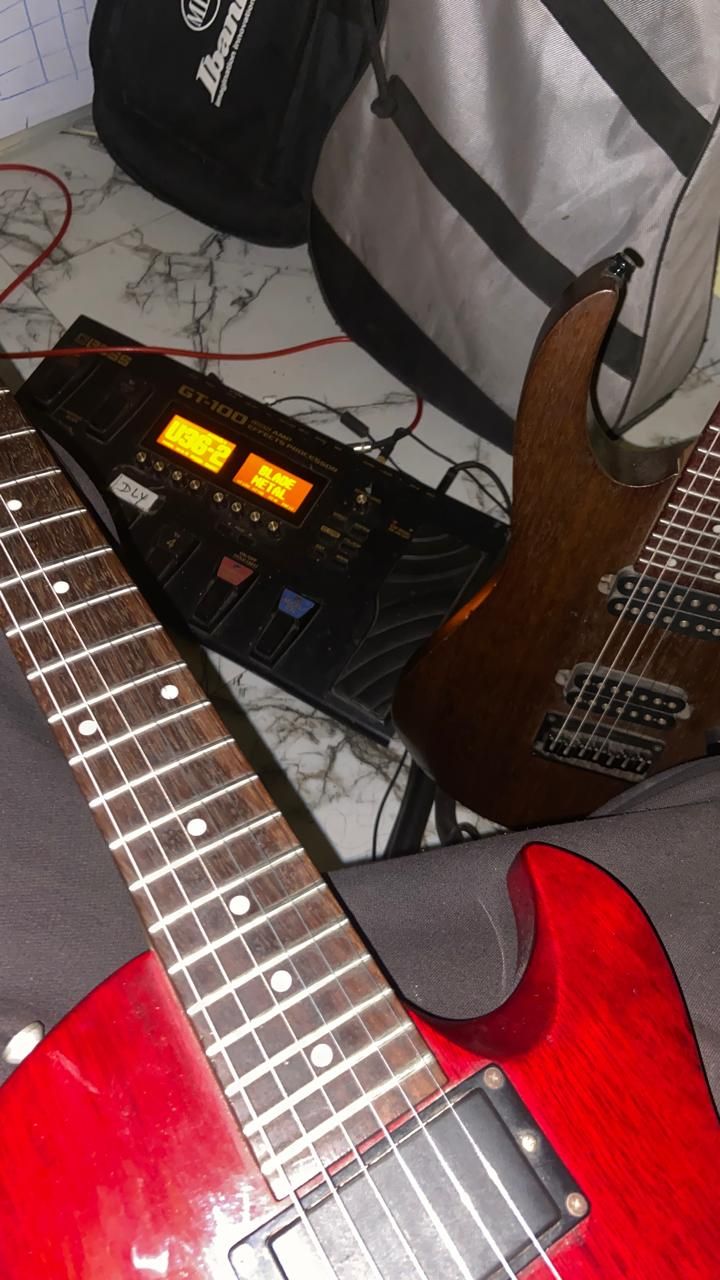
The creative process I showed in the upload is essentially where many of my musical ideas begin with a guitar, a tone and the freedom to experiment. I usually start by picking up the guitar and exploring different melodies, riffs, chord movements or textures without necessarily having a complete composition in mind. My Boss GT-100 becomes an important part of this stage because I can quickly experiment with different tones and effects and see how a particular musical idea feels sonically. I don't always begin with a fixed structure. Sometimes a small melody catches my attention, and I keep developing it. I may change the rhythm, experiment with different harmonies, explore different registers or simply play the same idea repeatedly until I find the emotion I am looking for. Once the core idea feels right, I start thinking about how it could develop into a complete composition—where the dynamics should change, where heavier sections could enter, where an atmospheric passage might work, and how the different parts can connect. The setup in the photograph represents that very raw and personal stage of my creative process. There is no elaborate production involved at that point. It is simply me, the guitar and the sound, trying to capture an idea before it disappears. For me, that spontaneity is important. Some of my most interesting musical ideas have started as simple guitar experiments that gradually evolved into something much larger.
How do you translate the mood in that photo into your guitar playing?
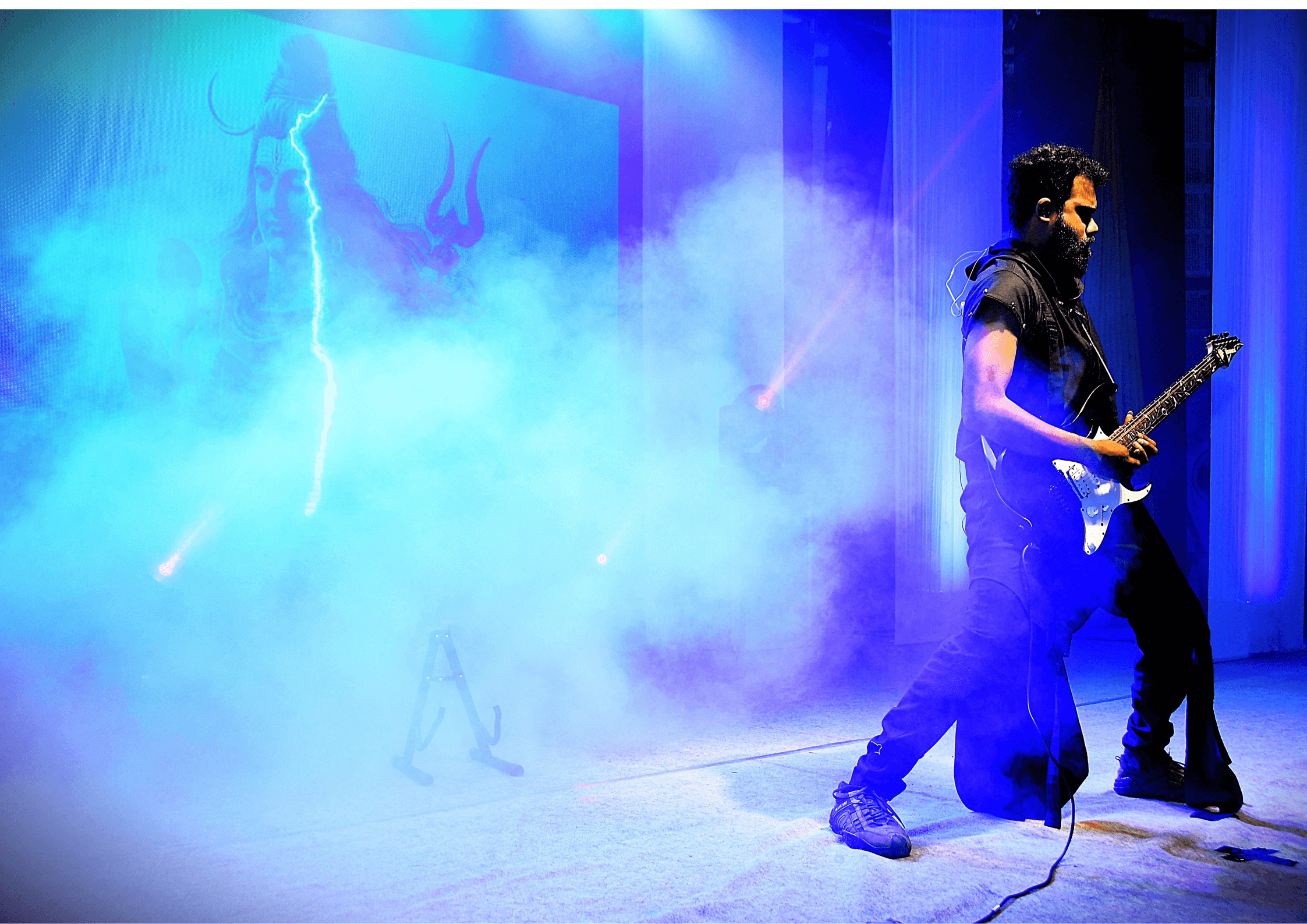
The mood in this photograph reflects a side of my music that is deeply connected to atmosphere, spirituality and intensity. The combination of the blue lighting, stage smoke, the presence of Lord Shiva in the background and the overall darkness creates a feeling that is both powerful and meditative. When I translate that kind of mood into guitar playing, I focus less on simply playing notes and more on creating an atmosphere. I use sustained notes, space, dynamics, bends, vibrato and carefully chosen melodies to allow the sound to breathe. I may begin with something slow and spacious and gradually build it into a heavier, more intense section. My approach to guitar is often about creating a contrast between silence and sound, softness and aggression, atmosphere and heaviness. That is where my interest in ambient metal and post-rock comes into play, while the heavier sections draw from death metal and groove metal. The spiritual element is also important to me. Lord Shiva has been a major source of inspiration for my music, particularly in Rhythms of Ruins. I don't necessarily try to translate spirituality literally into music; instead, I try to capture the emotions it evokes—stillness, power, destruction, transformation and transcendence. So when I look at this photograph, I don't hear a specific riff. I hear a soundscape something that begins almost like a meditation, gradually builds in intensity and eventually becomes powerful and overwhelming. That is how I try to approach the guitar: not just as an instrument for playing notes, but as a way of creating an atmosphere and telling a story without words.
How do you put your own spin on a cover?
I don't really approach music through covers. My primary focus has always been on original music and developing my own musical identity. Of course, playing other artists' music can be an important part of learning. It helps you understand different techniques, arrangements, tones and approaches to the instrument. But for me, the more exciting challenge is taking those experiences and using them to create something that is uniquely my own. I have always been more interested in asking, “What can I create with this instrument?” rather than simply recreating something that already exists. My work explores ambient metal, post-rock, death metal, groove metal and other influences, while also drawing from Indian classical, Carnatic and Western classical traditions. When I compose, I try to start from an emotion, an idea or a musical atmosphere and build from there. That allows the guitar to become a tool for personal expression rather than simply a medium for reproducing someone else's work. So while I respect the art of interpreting and reinventing covers, my own journey has always been centred around composition, experimentation and originality. I want people to recognise my music for its own voice.
Contact and Follow
Email: piyushbhute@gmail.com
Instagram: https://www.instagram.com/chazz_eternity_official/