

How did the Saraswati veena first come into your life?
My mother initiated me into learning the Saraswati Veena. My grandmother was a good Saraswati Veena player, but my mother couldn't learn it herself, so she wanted me to learn the instrument. That's how the veena first became a part of my life.
What's your earliest memory of sitting with the veena — the moment you felt it was going to matter to you?
In my childhood, at the age of 7, I was sent to a music class for the first time in our hometown. I saw five veenas in the classroom and was fascinated by their beautiful shape and ornamentation. When I took the instrument into my hands for the first time and plucked a string, I was deeply engrossed by its sound. That was the moment I decided this instrument was for me.
Carnatic music passes from guru to shishya — tell us about your veena teacher, Sri D Srinivas, and something he taught you that has stayed with you.
Initially, I was trained in Saraswati Veena and Carnatic vocals by many teachers. The most crucial part of my veena training was done by Sri D Srinivas Sir of Hyderabad, popularly known as 'Veena Srinivas' Sir. He is an All India Radio 'A' Top Graded artist and also a staff artist of AIR Hyderabad Station. I started my training with him during my MBBS days, and I am still learning from him. He is the recipient of the prestigious Sangeet Natak Akademi Award by the President of India for the year 2025. He is a very humble and down-to-earth person. He taught me the exact gist of Carnatic music — the 'Anuswaras' — and the basics of swarakalpana. These foundations helped me a lot to improvise various patterns of music on my own. My veena playing completely transformed to a professional level after taking classes from Sri D Srinivas Sir.
You're an ophthalmologist by profession and a veena player by passion — how do the two worlds sit together in an ordinary week for you?
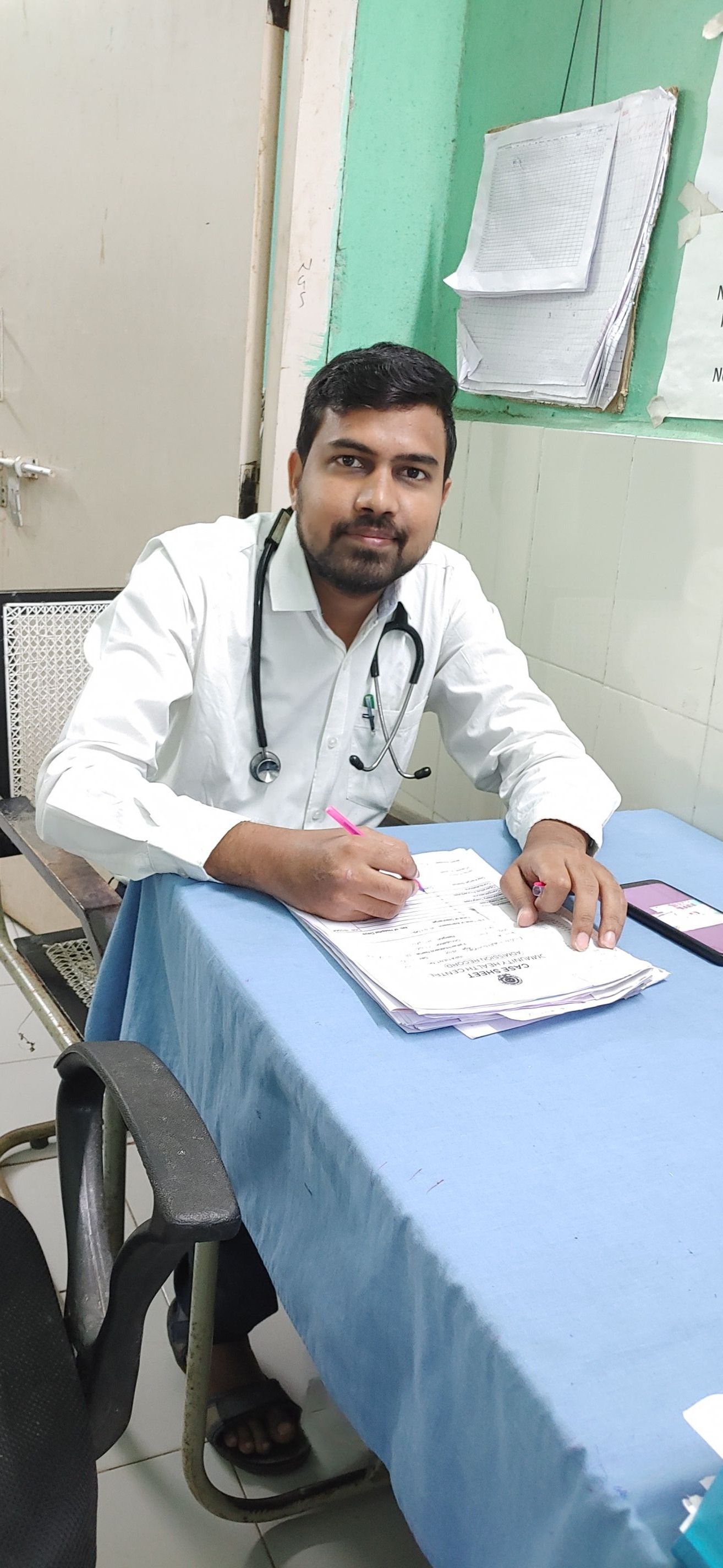
It's a very difficult and challenging task to manage two highly skilled and demanding full-time professions side by side. I made it a habit from my school days to divide specific time slots for my education as well as the veena. I was a gold medalist in both my MBBS and my MS Ophthalmology, and also a university topper. I am an ophthalmologist by profession and a musician by passion. I am currently working as Assistant Professor of Ophthalmology at Government Medical College, Srikakulam, Andhra Pradesh. I divide the week into two halves: three days concentrating on eye surgeries and academics, and three days on music during the evenings after my official duty hours are finished. I prefer to spend time with my family on Sundays.
Tell us the story of this particular veena and how long it's been your companion.
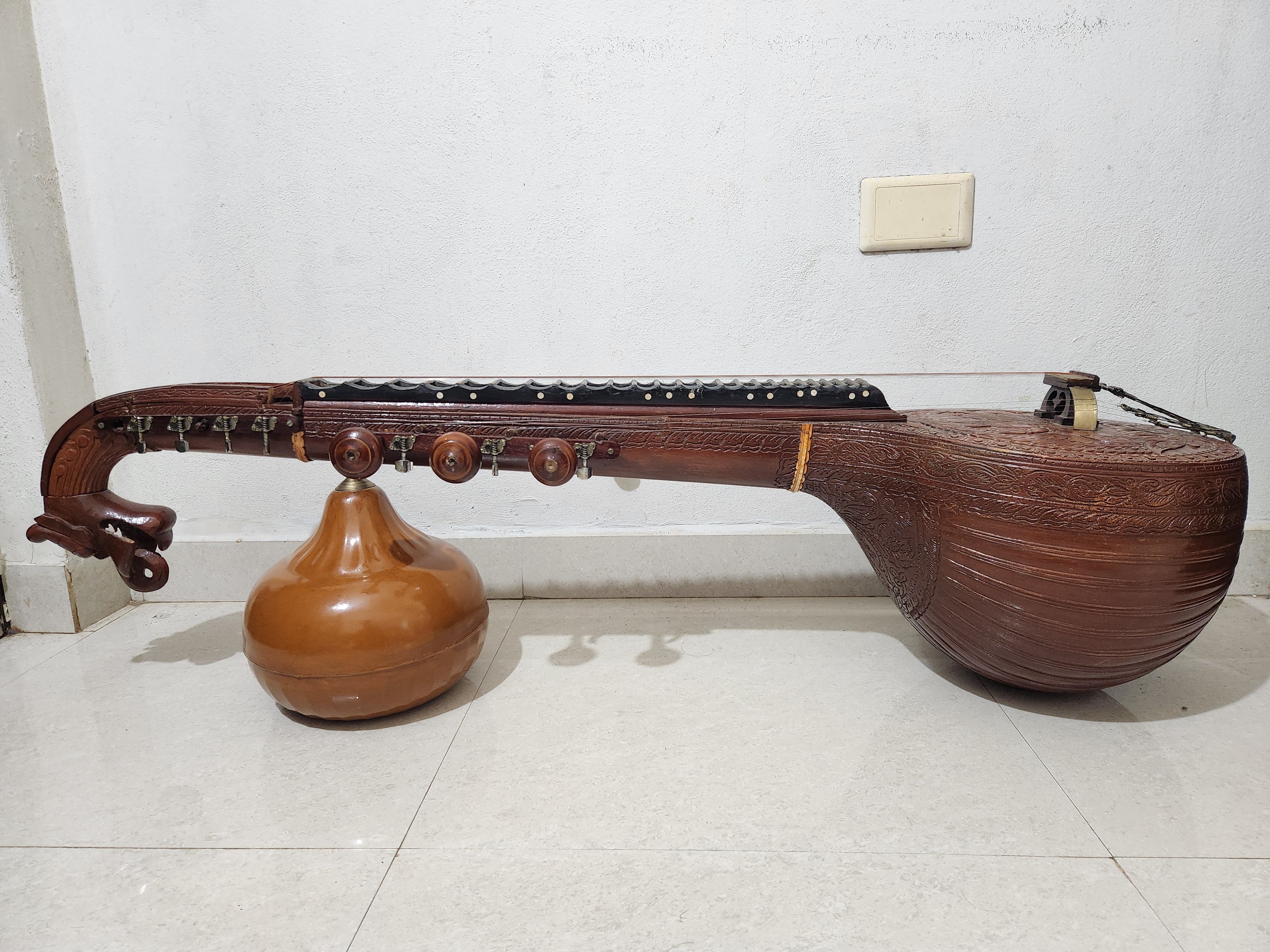
This brown-coloured, carved veena has been with me since 2010. I bought it from a musical instrument store in Chennai. It is a Thanjavur veena. There were nearly 100 veenas in the store, and I took around three hours to play each one by plucking the strings. I was enchanted by the sound of this particular veena and brought it home. It is said that the instrument selects the player, not the other way around, so I am blessed that this veena has chosen me, and I am forever grateful to it. In my initial days, I had a yellow-coloured Bobbili veena, which was my first veena and is still in good condition. Besides these two, I have another two veenas — one Bobbili and one Thanjavur — which I use for my students during classes.
What makes this performance special to you?
This concert was a National Music Festival conducted in Rourkela City, Odisha. I forgot to bring the scarf (duppatta) of my kurta pyjama set on the day of the concert. One of my co-musicians performing that day reminded me of my scarf just before the concert, but it was already late and the concert was about to begin, so I performed without it. You can see in the video, at exactly 4 minutes and 29 seconds, one of the organisers and audience members who were impressed by the performance brought a scarf and wrapped it around my neck and shoulders as a token of appreciation. I consider it God-sent. It was a very special moment as I finally finished the concert with a scarf on my dress, though I had forgotten it at home, almost 500 km away.
Which raga is this, and what draws you to it?
This is in Ragam Kalyani. The krithi is 'Nidhi Chaala Sukhama', composed by the great saint Thyagaraja and set to Misra Chaapu Talam. Kalyani is an amazing raga with a happy mood and is usually played on happy occasions, giving a pleasant feeling to the mind, which draws me to this beautiful ragam. In this rendition, I presented the entire krithi with Ragalapana (0 to 3:15), Taanam — a speciality of the veena — (3:19 to 6:30), the krithi (6:33 to 10:15) with Neravu (10:15 to 11:03), and swarakalpana (11:03 to 14:06) in two speeds, ending with a grand finale known as Mukthayi (13:43 to 14:06). This is the main item in a Carnatic music concert, and this is the pattern in which a main item is presented.
You've reimagined songs like 'Aradhya' and 'Chakori' on the veena — what makes a film melody feel right for the instrument?
The film songs that are serene and have an emotion or bhaavam linked to them are the ones most suited for the veena. The veena evokes a deep sense of emotion, whether it be happiness or pathos.
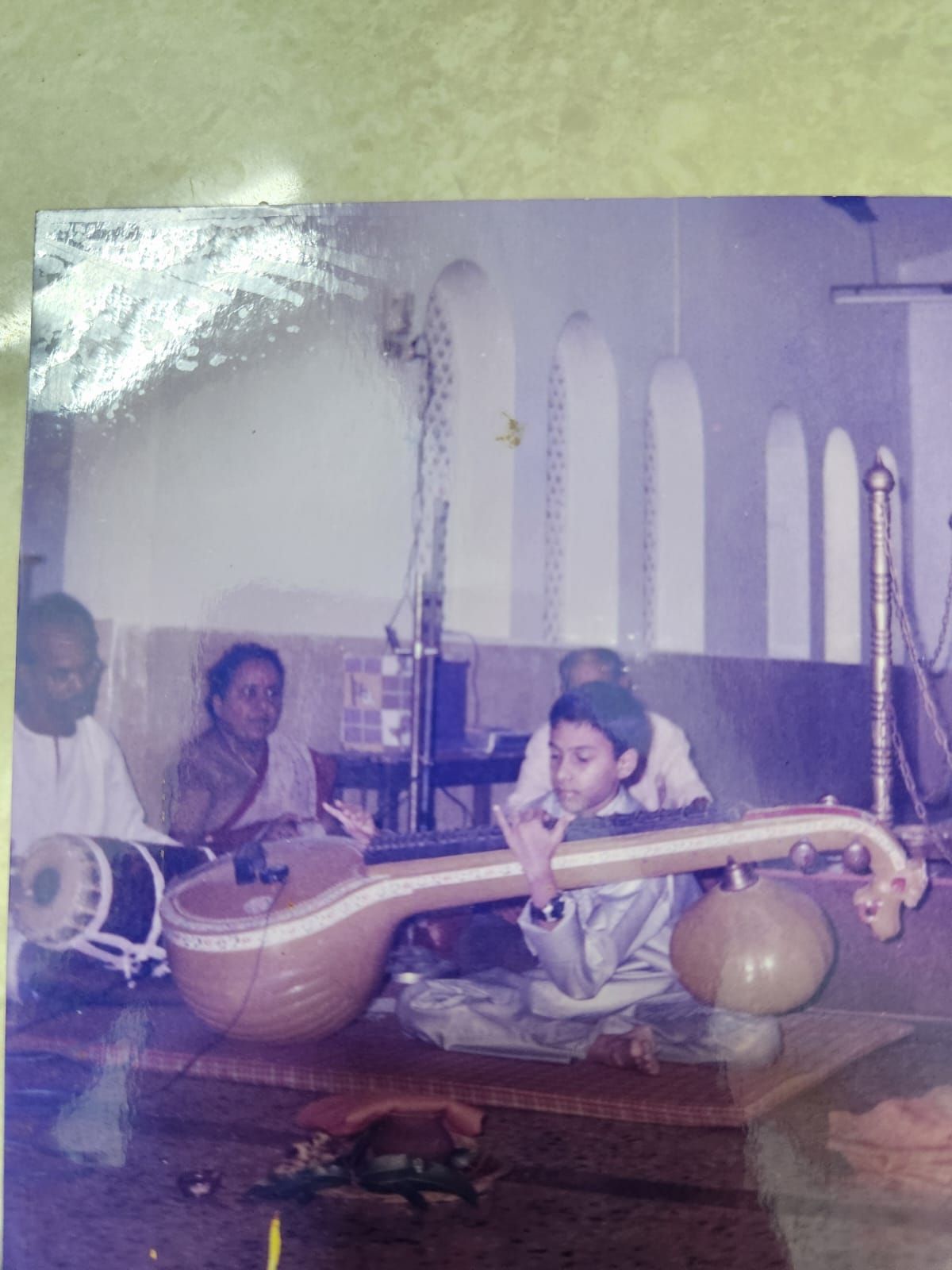
What do you remember most about the evening this was taken?
This picture was taken at a concert at Raghavendra Swamy Temple in Bhubaneswar, Odisha, when I was 10 years old. My mother was the main person who motivated me to learn the veena. She was my main support system for learning and performing veena music. Her name was Saraswati, and she was a pharmacist by profession. She put in a lot of effort when I was a small child, taking me to veena classes and carrying the instrument during concerts when I was too small to handle it on my own. We travelled to many cities across India for veena concerts. She passed away this year on July 6th, 2026, due to Chronic Kidney Disease because of diabetes. This concert is the only place where they allowed my mother to sit along with me on the stage. I used to perform there every year, and my mother used to accompany me on stage. Hence, this is the most memorable concert for me.
Tell us what you're working on here and why it excites you.
AI has made many tasks easier. A musician has many artistic visuals in his mind while performing music. AI has now armoured the musician to express the creative visuals in his or her mind by generating videos from the prompts given by the musician. I believe the prompts are the emotions and feelings of a person expressed in words, which are generated into pictures and videos by various AI platforms. I also believe the musical mind of an artist has inherent skills of writing and drawing. It excites me to work with AI and bring out these artistic memories in my mind and club them with my music so as to create a visual as well as an auditory feast for my audience.
When you imagine the kind of veena player you want to become, what feeling do you most want your music to leave with people?
I want my music to bring back the various memorable events in the lives of my audience and make them come alive. We often relate the music we are hearing to some happy, sad, or mixed incident of our life that has happened in the past. Music evokes a sense of peace and emotion that makes the audience and the performer get addicted to it. There is a flow of intense emotions while performing or listening to music, which elevates our subconscious mind to higher levels and gives a sensation of fulfilment and satisfaction to our soul. I want to make my music impress that feeling of contentment on my audience.
Contact and Follow
Email: rama93krishna@gmail.com
Instagram: https://www.instagram.com/rama.krishna.3382?stkn=NTM2ZXg0MnlvMmhj
YouTube: https://youtube.com/@rama93krishna?si=U_wL1FccA9bPXK00