

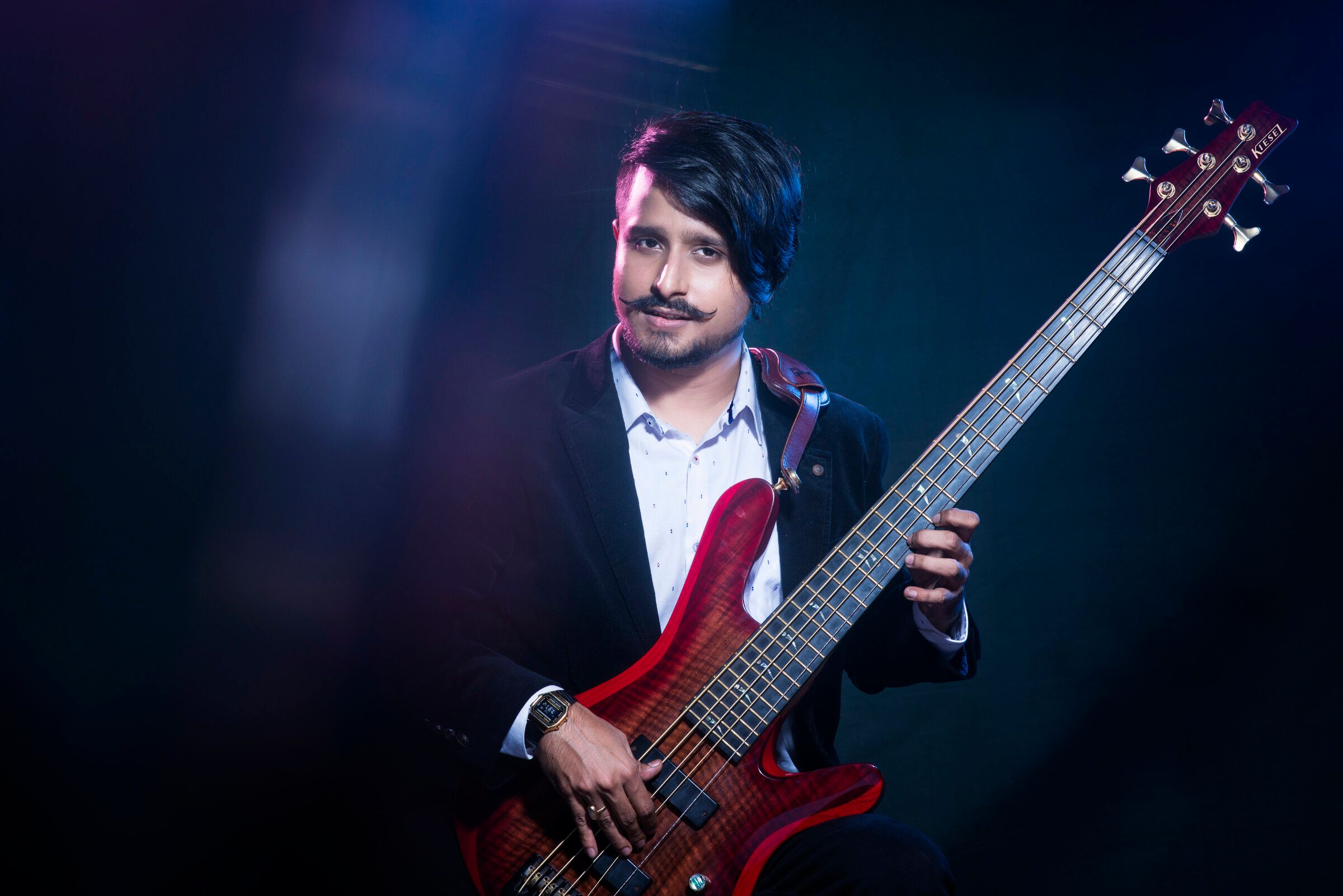
Bass player, producer and self-described “vibe curator,” Arnav Bachospati Chakraborty has spent his life in the space between rhythm and emotion. From learning on spool-tape recorders as a child to founding his boutique label Gunzooloo Records, from the Bangla band circuit to a 30,000-strong satsang crowd with his spiritual rock band The White Band, his story is one of fusion in every sense — of cultures, generations and technologies. He has shared the stage with names like K.K., Zubeen Garg and Salim–Sulaiman, and a film track he played on has, he says, crossed 200 million views. We spoke to him about the bass, the business of music, and his AI-cinematic fusion single “Black Gold.”
How did your journey in music begin, and what inspired you to become a music producer and fusion bass player?
Music honestly started as a feeling — an instinctive connection to rhythm, melody, and emotional storytelling through sound — before it became a profession for me. Growing up, I was always surrounded by different kinds of sounds: Indian music, film songs, rock bands, live instruments, recording studios and live concerts. I got obsessed with how music could instantly change your mood or make you feel connected to something bigger without saying a single word. That diversity shaped my musical identity early on and naturally led me toward experimentation and fusion-based expression.
My journey with music actually started way before I even understood what music production was. When I was around 2–3 years old, I used to sit near my window setting up old analog voltmeters, switches, wires and mechanical gears, imagining I was controlling an entirely different world with those tools, flying like a pilot. Looking back now, I think that curiosity for sound, systems and creation was always inside me.
Later, my father introduced me to music lessons with a keyboard player, arranger and recording artist named Mr. Nitu, and that changed everything. I became fascinated watching him create music using rhythm sequencers, drum machines, vintage keyboards and analog recording gear. While teaching me, he also showed me how songs were made and recorded on spool tapes in the old-school way. I was exposed to that world from a very early age until I was around 10, and it honestly felt magical.
That experience opened up a completely different universe for me. I didn't just fall in love with music — I fell in love with the process behind creating sound.
Years later, around 2018, when digital music production completely took over the scene, that childhood fascination came back stronger than ever. Around the same time, a producer friend from the USA, Mr. Sayanesh Mitra, really sparked my passion for music production. I remember being blown away by his studio setup and the world around it. For someone who grew up fascinated by analog gear, it felt like stepping into a dream.
What really amazed me was seeing legendary studio equipment like the Pultec EQ, Manley VOXBOX, J37 Tape Machine, TASCAM consoles and GENELEC monitors — not just as physical hardware, but also recreated inside modern DAWs through software plugins. It was crazy to realize that the classic analog sound I grew up admiring could now exist inside a computer while still carrying similar character and emotion. The whole vibe of a professional studio — the gear, the workflow, the sound design possibilities — completely pulled me in.
That inspired me to take production seriously. I wanted full control over my sound, arrangements, textures and mixes, so I started learning music production through Apple Logic Pro. Eventually, I became officially certified by Apple and fully dedicated myself to music production, recording and mixing.
Today, whether I'm playing bass or producing records, I still carry that same excitement I had as a kid experimenting with machines and sound — just now with the ability to turn those ideas into music that connects with people across different cultures and generations.
I loved how the bass sits in the middle of rhythm and emotion at the same time. It's not always the loudest instrument, but it's the energy that holds everything together. That really matched my personality as a musician.
Over time, performing live, jamming with different artists and being part of studio sessions made me curious about what happens behind the scenes of a song. I didn't just want to play bass — I wanted to build sound, shape emotions and create entire musical experiences. That's what pulled me into music production and mixing.
Fusion music became a natural direction for me because I never liked putting music inside one box. I grew up listening to so many styles, so blending Indian elements with modern grooves, cinematic textures, funk, rock and electronic sounds felt authentic to who I am. I was also lucky to have been blessed by world-class artists — some of them Grammy-nominated and winning — who gave me the opportunity to perform with them: Pandit Subhen Chatterjee, Pandit Vishwa Mohan Bhatt, Pt. Tanmoy Bose, Ravi Verma, Amyt Dutta.
For me, music is all about connection. Whether I'm playing bass on stage or producing in the studio, the goal is always the same — to create something real that people can feel, relate to, and carry with them.
When was the first time you realized you could make a career out of music?
I think I realized music could truly become my career long before I officially accepted it myself. I was already performing professionally while I was still in school. Back then, I used to participate in a lot of inter-school music competitions, and over time our performances started getting attention. Later in college, we continued competing in festivals against other bands and kept winning consistently.
At some point, word started spreading in the local music scene about this young bass player who was performing beyond his age, and I slowly began getting calls for professional gigs. One show led to another, then another, and before I knew it, music had already become a huge part of my everyday life.
I was honestly lucky to grow up during a time when the Bangla band scene and live music culture in India were thriving. Live gigs, college festivals, band competitions, studio sessions — the whole ecosystem was alive with energy. But at the same time, I believe years of deeply learning and experiencing music naturally pushed me toward this path. It never felt forced.
Interestingly, I also completed Hotel Management from IHM Kolkata and worked as a chef in a five-star property for a while. That phase taught me discipline and professionalism, but the job was extremely demanding — almost 15 hours a day — and for nearly six months I had to step away from music completely.
That was the moment everything became clear to me.
When I couldn't play music, I realized how empty I felt without it. It wasn't just a hobby anymore, or even just a profession. Music had become a core part of my identity and personality. Even though I'm someone who enjoys learning different skills and can adapt to many things, without music I genuinely feel lifeless.
Music is my lifeline. It's the one thing that has stayed constant through every phase of my life, and I honestly can't imagine myself existing without it.
How has your experience in the music industry grown over the years, especially as a vibe curator?
I realized that music is much more than just playing notes correctly. What really stayed with me was the ability to create a feeling — an atmosphere people could emotionally connect with. That's how I slowly grew into the role of a vibe curator.
Over the years, I've had the opportunity to curate and perform across a wide variety of musical spaces. I've worked on projects where Rabindrasangeet was blended with modern production, jazz harmony and classical interpretations. I've also explored Indian classical fusion, Bengal and Indian folk fusion, live band culture, college festival circuits, and collaborations with electronic music producers, as well as setting the mood for film BGM. Every genre and collaboration taught me something different about audience energy, storytelling and sound design.
One thing I've always believed is that music should evolve with time while still respecting its roots. I enjoy taking traditional sounds and presenting them in a way that feels fresh and relatable for younger listeners without losing the soul of the original music.
Being connected with many young artists and musicians from Bengal and around the world also helps me stay creatively updated. I constantly listen to new sounds, discover emerging trends, explore modern production techniques and experiment with different sonic textures. I never want my music or productions to feel outdated or repetitive. Whether it's analog-inspired warmth, electronic elements, live instrumentation or cinematic soundscapes, I'm always trying to push my sound forward while keeping it emotionally authentic.
For me, vibe curation is really about understanding people — what they feel, what moves them, and how music can bring different generations and cultures together in one shared experience.
What music business strategies have you found most effective for promoting your work?
Over the years, I've realized that making great music is only one part of the journey — understanding how to position, protect and market that music is equally important in today's industry. The modern music business is no longer just about releasing songs; it's about building an ecosystem around your art.
That's why I've always focused on upgrading myself not only creatively, but professionally as well. I've completed courses in Music Business from Berklee, composition studies inspired by creators like Amit Trivedi, and AI visual generation and prompting through Microsoft programs. I'm deeply interested in how music, branding, technology, visuals and audience psychology now work together in the digital era.
One of the biggest strategies that helped me grow was building my own identity and boutique record label, Gunzooloo Records. Creating the brand gave me creative independence and helped me think beyond just being a musician. It allowed me to approach music more strategically — from artist development and collaborations to branding, release planning and long-term catalog building.
I also believe strongly in understanding the business side of music ownership. Registering with organizations like IPRS and learning about publishing rights, royalties, licensing and sync deals became very important for me as I grew in the industry. Today, sync opportunities for films, ads, OTT platforms, gaming and digital content are huge for independent artists and producers, and I think musicians should understand the value of their intellectual property from the very beginning.
Digital marketing has also become a major tool. Targeted YouTube and Instagram campaigns, short-form content, performance clips, studio reels and visual storytelling are extremely powerful today. Younger audiences often discover music through reels, trends and playlists before they even search for an artist directly. So creating music that emotionally connects with that audience while still maintaining authenticity has been very effective for me.
Playlist pitching is another major strategy I believe in. Getting your music into the right playlists can organically introduce your sound to completely new listeners across different countries and demographics.
Collaborations and partnerships have played a massive role in my journey. Whether it's working with live musicians, electronic producers, folk artists, visual creators or independent performers, collaborations help expand creativity and audience reach at the same time. Some of the best opportunities in music still come through genuine creative relationships and community.
For me, the most effective strategy has always been balancing artistry with adaptability — staying emotionally real while evolving with technology, platforms and changing listener behavior. That balance is what keeps music relevant and helps build something sustainable for the long run.
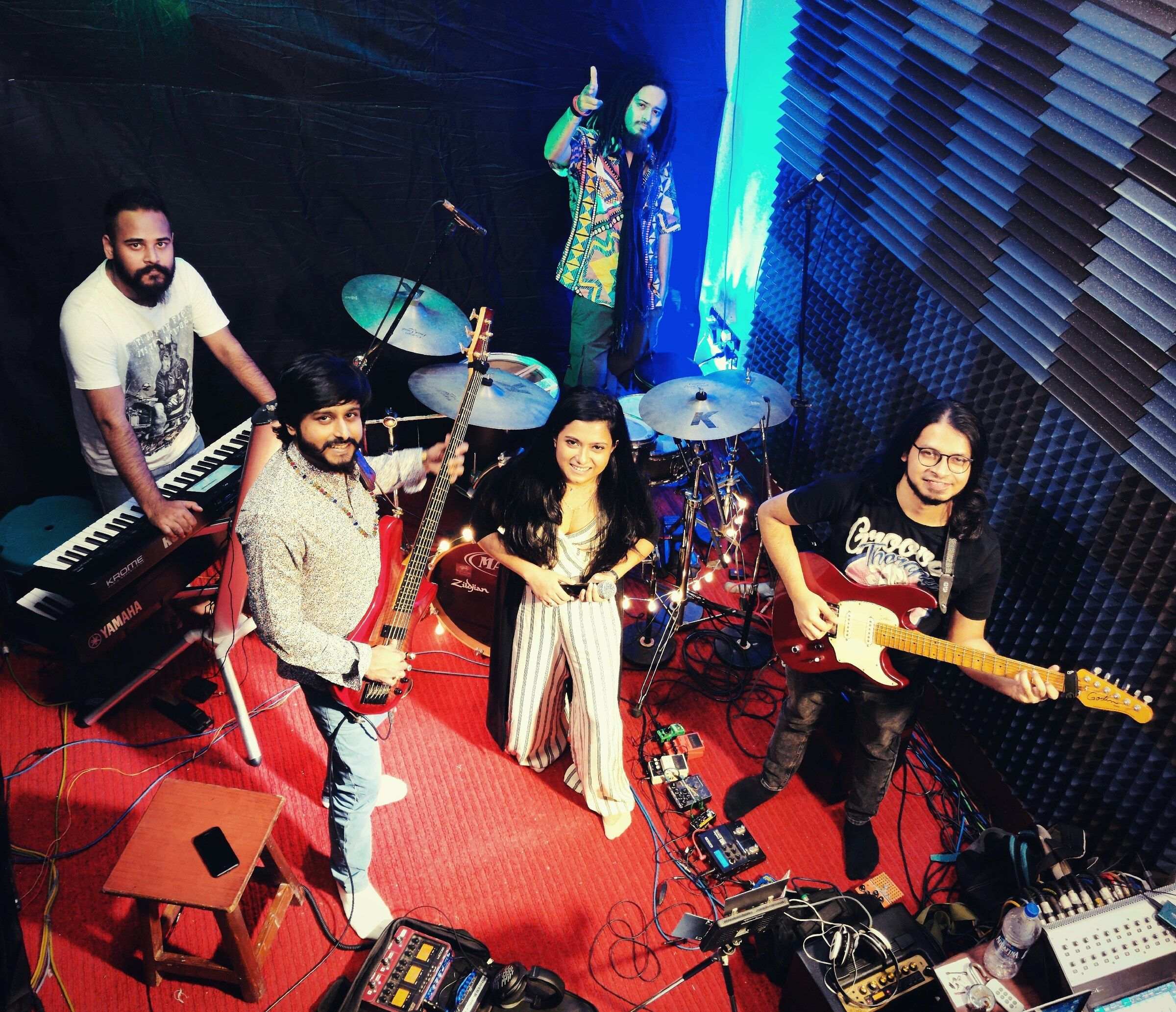
Tell us about “Black Gold” — the track and the inspiration behind it.
"Black Gold" is a high-energy fusion track that blends the warmth of raw, human-recorded analog music with the futuristic visual language of AI cinematography. The song combines cinematic string arrangements, heavy hybrid synths, deep funky basslines and soulful RnB-inspired vocals to create a sound that feels both emotionally organic and sonically modern.
The inspiration behind the track came from the idea of merging two worlds I deeply connect with — classic analog musicality and next-generation digital creativity. Having grown up around old-school recording culture while also embracing modern production technology and AI-driven visual tools, I wanted "Black Gold" to represent that crossover artistically.
This project is especially personal for me because it also marks my first AI-generated and AI-edited music video. I used cutting-edge AI tools to create visuals that reflect the multidimensional layers, textures and emotional intensity of the track. Instead of using AI as just a gimmick, I approached it like a creative extension of the music itself — shaping visuals that move with the vibe, energy and cinematic atmosphere of the song.
Collaborating with Grammy-nominated artist Mishell Ivon brought another powerful layer to the record. Her soulful vocal delivery and emotional songwriting added depth, character and an international sonic appeal that perfectly matched the vision of the track.
At its core, "Black Gold" is about evolution — respecting the soul of live musicianship while exploring the limitless possibilities of modern technology, independent artistry and visual storytelling.
What makes your bass performance unique to your style?
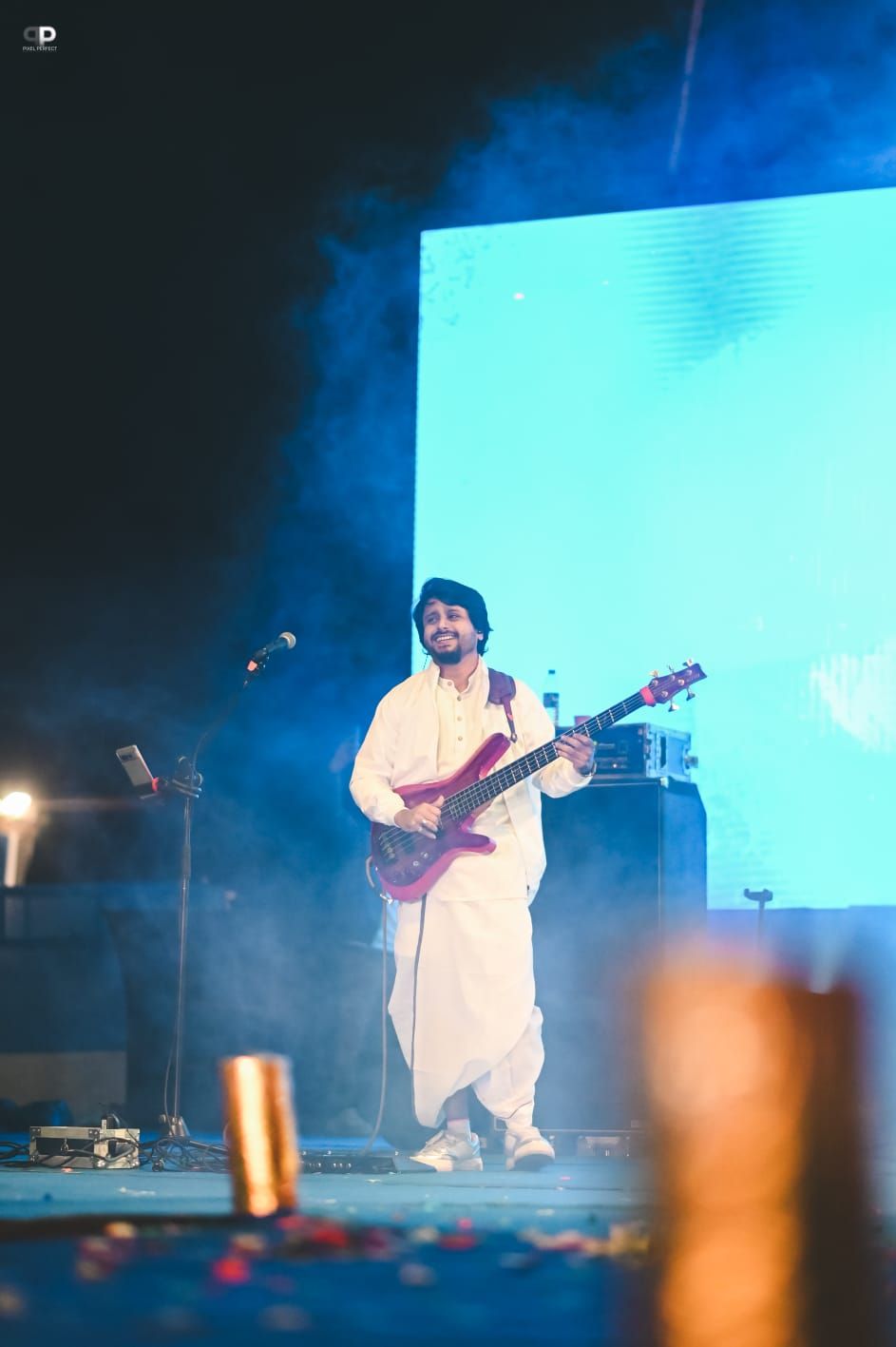
The balance between groove, emotion and atmosphere. I've never looked at the bass as just a supporting instrument playing root notes in the background. For me, the bass is a storyteller — a certain role you play in a musical situation. It controls movement, energy, tension and feel within a track.
My playing style comes from a mix of influences: Bangla band culture, Indian classical and folk fusion, funk, jazz harmony, cinematic music, RnB and modern electronic production. Because of that, I naturally approach bass lines in a very hybrid way. Sometimes the bass is rhythmic and aggressive, sometimes melodic and emotional, and sometimes it works almost like a cinematic layer inside the arrangement. It goes beyond just bass guitar.
Another thing that shapes my sound is my background as a producer and mix engineer. I don't just think like a bass player while recording — I think about how the bass will interact with the kick, vocals, synths, strings and the overall emotional space of the track. So my tone choices, dynamics, phrasing and groove are always designed to serve the vibe of the song rather than just showing technical ability.
I also grew up during both the analog and digital eras of music, so I love combining the warmth and imperfections of old-school live playing with modern sound design and processing techniques. That combination gives my bass performances a very organic but contemporary feel.
In tracks like "Black Gold," for example, the bass is not just holding the rhythm — it becomes part of the cinematic energy of the song. It adds movement, attitude, sensuality and emotional depth at the same time.
At the end of the day, I think my style is less about playing fast or flashy and more about making people feel something through groove and texture. That visceral, emotional connection is always my priority.
Describe your creative workspace and how it influences your music.
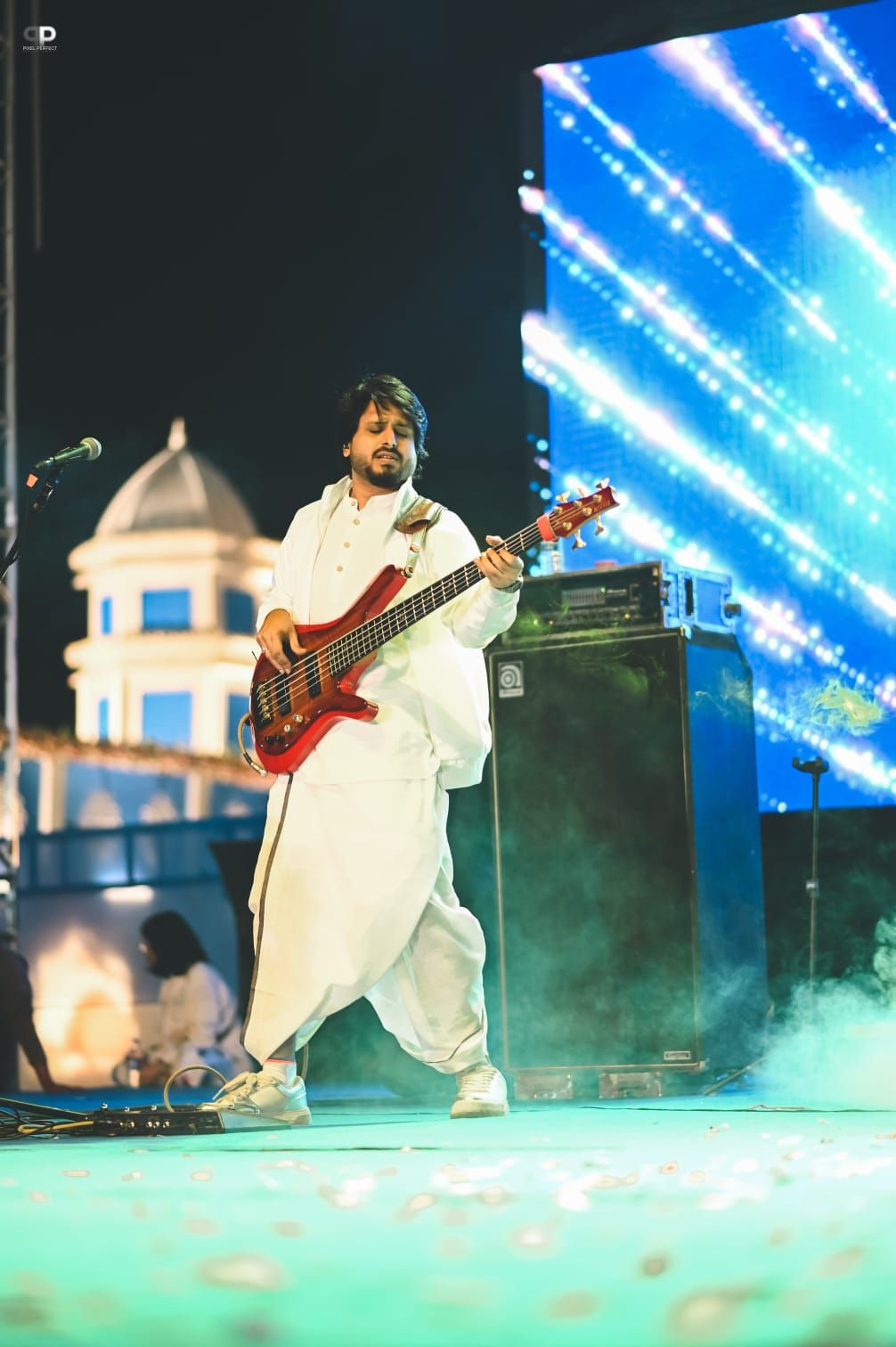
I've built a space where I can freely move between playing bass, producing music, arranging compositions, designing sound textures and even creating AI-driven visuals without breaking the creative flow. One of the most powerful influences on my creativity recently has been joining India's unique spiritual bhakti rock band from Deoghar, The White Band. Being part of this project has honestly been one of the most soul-enriching and uplifting musical experiences of my life. Under the guidance and curation of Reverend Pujyapada Abinendranath Chakravarty, the band blends spirituality, devotion, rock energy and original compositions in a way that feels deeply transformative.
We have toured extensively across India, and more than 40 original compositions are already prepared. The music carries a very pure emotional and spiritual energy while still having the power and scale of a live contemporary band. Playing this music has changed me not only as a musician but also as a human being. It reminded me that music can heal, elevate and connect people on a much deeper level beyond entertainment.
That experience has had a huge impact on my creative space and mindset. Today, whether I'm producing fusion music, cinematic tracks, electronic collaborations or spiritual compositions, I always try to create sound that feels emotionally honest, uplifting and immersive. My workspace is where all these worlds meet — technology, live musicianship, spirituality, experimentation and storytelling — and that combination continues to shape my music every single day.
In recent years, my workspace has also evolved into a multimedia creative lab where audio, visuals, storytelling and technology come together. While working on projects like "Black Gold," I was simultaneously producing music, mixing, recording bass, generating AI visuals and editing cinematic sequences from the same environment. That freedom to build an entire artistic universe independently has been incredibly inspiring for me.
How do you approach fusion in your music, and what elements do you combine?
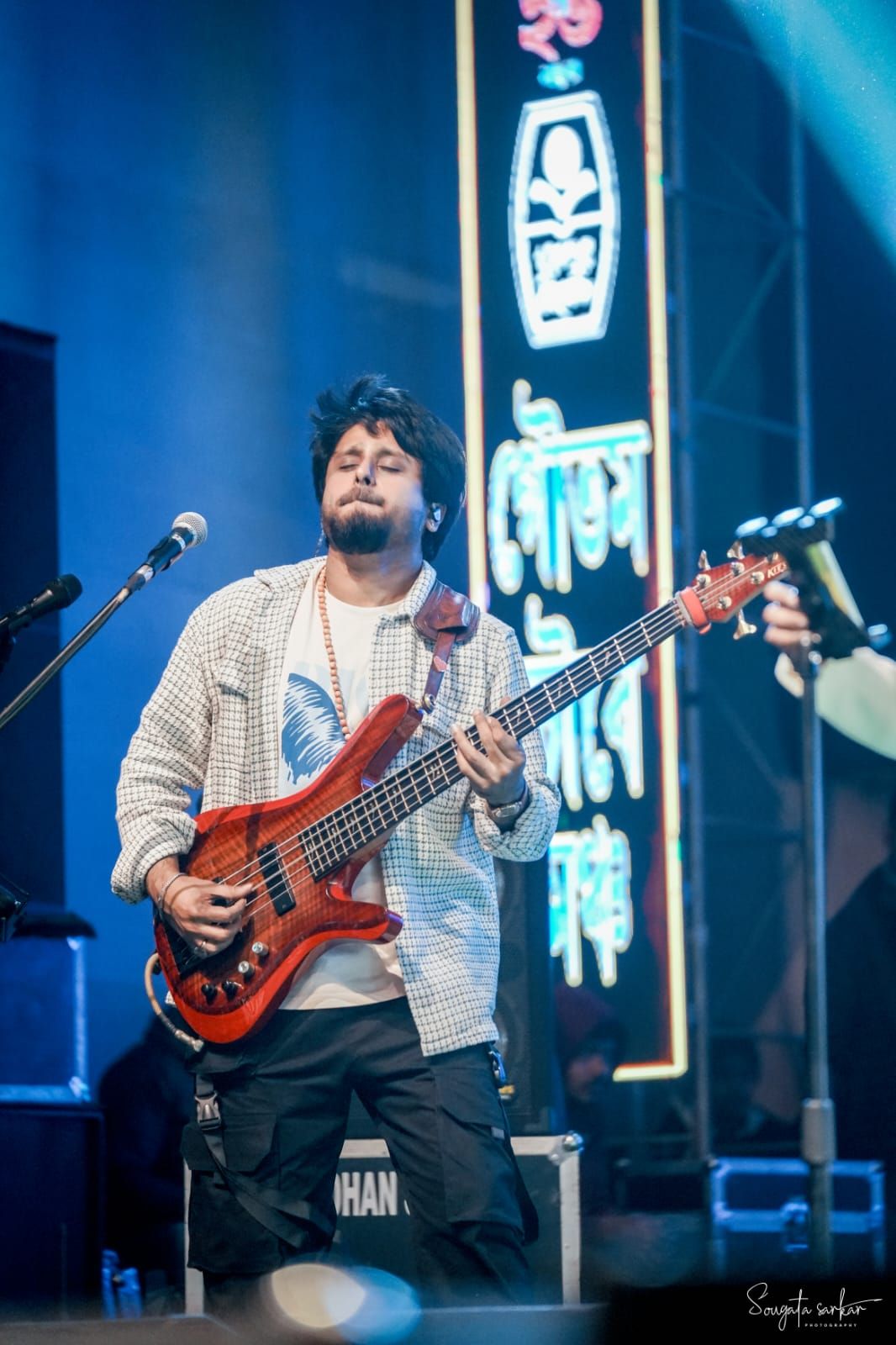
In my work, I often blend Indian classical melodies and folk textures with modern groove-based production, cinematic arrangements, jazz harmony, deep funk-inspired basslines, hybrid synths, electronic elements and live instrumentation. I enjoy creating music where traditional emotion meets contemporary energy in a way that still feels relatable to younger audiences.
A major part of my understanding of fusion came from performing and collaborating with legendary musicians and influential bands over the years. I've had the honor of working alongside Grammy-winning artists like Pt. Vishwa Mohan Bhatt and Grammy-nominated percussion maestro Subhen Chatterjee through his iconic band KARMA, which has been one of India's pioneering fusion bands for more than four decades. Being around artists of that caliber deeply shaped my understanding of musical discipline, improvisation, cultural fusion and live musical communication.
I was also associated with legendary Bangla bands like Parashpathar and Mohiner Ghoraguli, and artists like Bonnie Chakraborty and Rathijit Bhattacharjee, who are individually respected names in the world of film music and composition. Experiences like these exposed me to different creative ecosystems — from large live audiences and complex arrangements to studio professionalism and cinematic storytelling through music.
Another important influence on my fusion approach has been my recent journey with The White Band from Deoghar, a unique spiritual bhakti rock band curated and guided by Reverend Pujyapada Abinendranath Chakravarty. That project showed me how spirituality, devotion, rock energy and contemporary musical arrangements can coexist beautifully while still feeling emotionally pure and uplifting.
As both a bass player and producer, groove plays a central role in my fusion style. No matter how many genres or traditions are blended together, the rhythm and emotional flow must feel natural. I always focus on creating an immersive vibe where listeners can emotionally connect first, while also discovering deeper musical layers with every listen.
I also love combining the warmth of analog-inspired live musicianship with modern digital production, cinematic sound design and evolving technologies like AI-assisted visuals. So for me, fusion is not just cultural — it's also a fusion of generations, technologies, emotions and artistic philosophies.
At the end of the day, my goal is to create music that feels timeless yet current — something that can connect people across cultures, age groups and musical backgrounds through emotion and vibe.
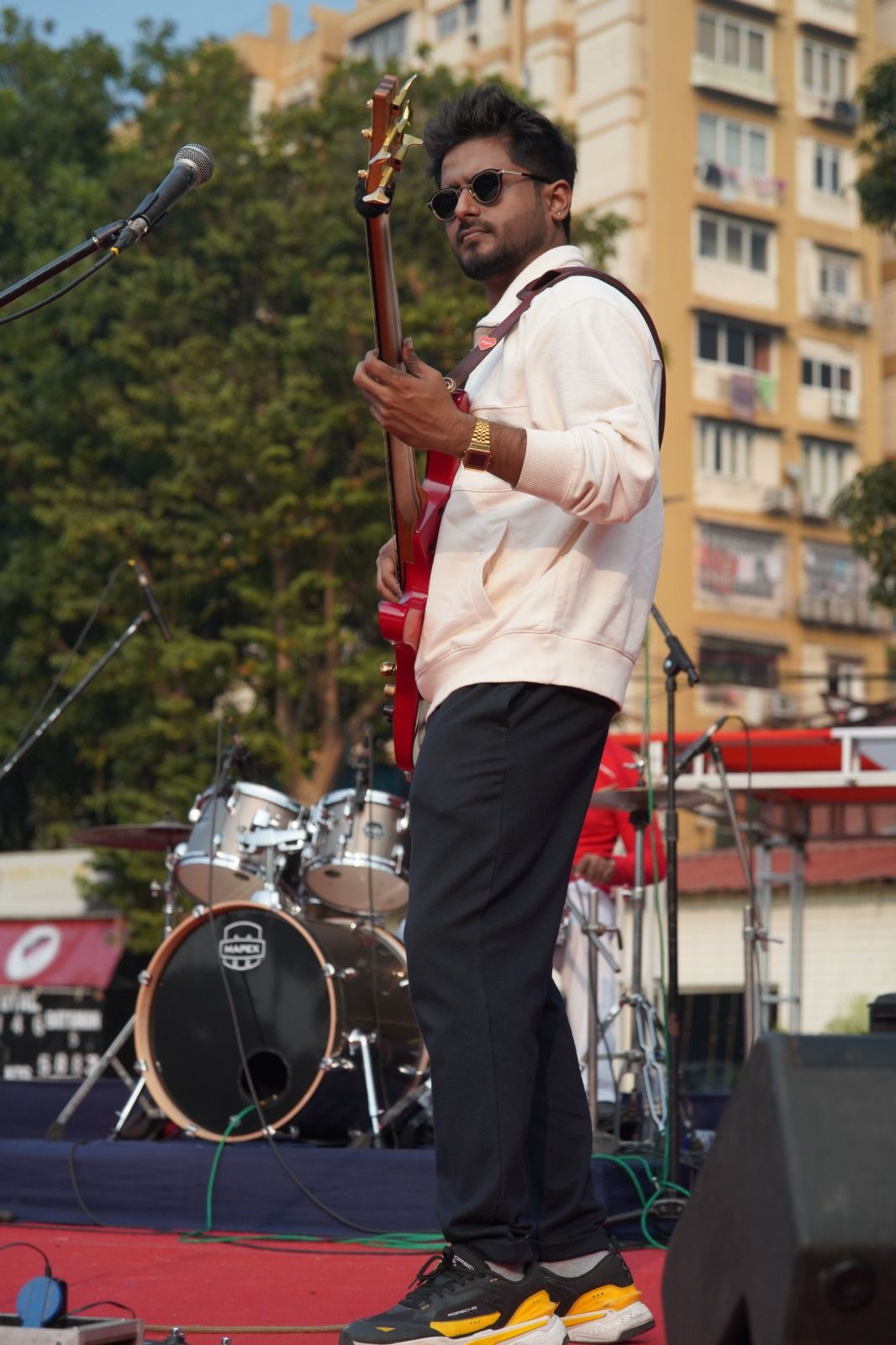
You've shared the stage with some remarkable names. Where has the bass taken you?
Across a lot of stages, and alongside some artists I still can't quite believe I've played with. One of the film tracks I've played on has crossed over 200 million views. I've performed at the Zee Bangla Saregama finale with K.K. and the live band, played a concert with Zubeen Garg to a sea of people, and recorded on a Salim–Sulaiman Sprite ad as well as an Akriti Kakkar song. I've also played the NH7 Weekender festival with Zoo.
I'm the founder-bassist of The White Band, a very popular spiritual bhakti rock band from Deoghar Satsang, where we perform for audiences and satsangis numbering over 30,000. And I'm the bassist of the legendary Bangla band Parashpathar.
Honestly, there are many more stories, international tours and videos I could share — maybe we can take it forward another day. Thanks for listening.