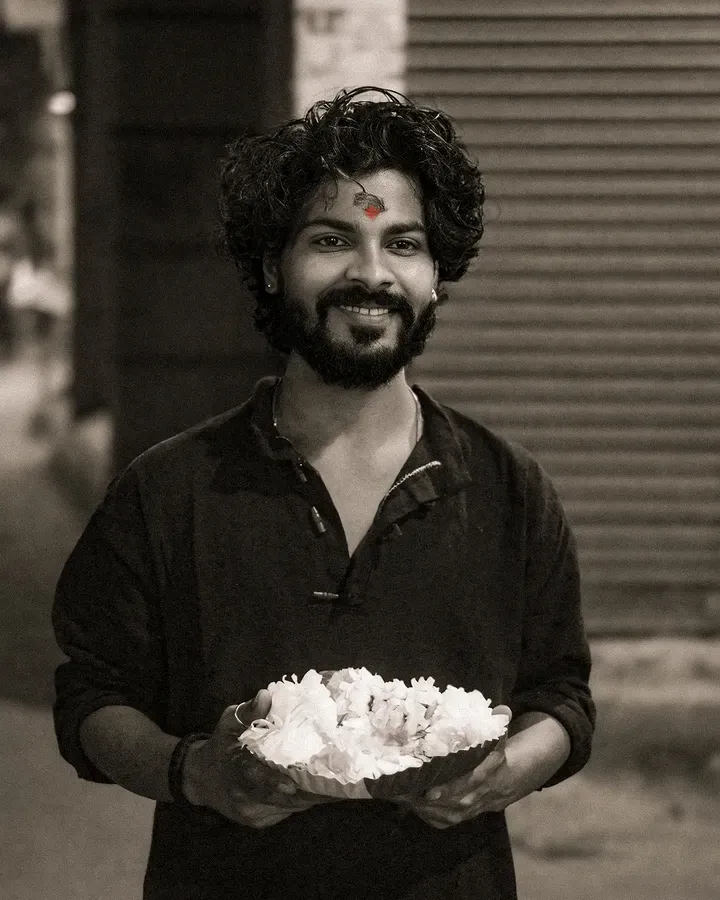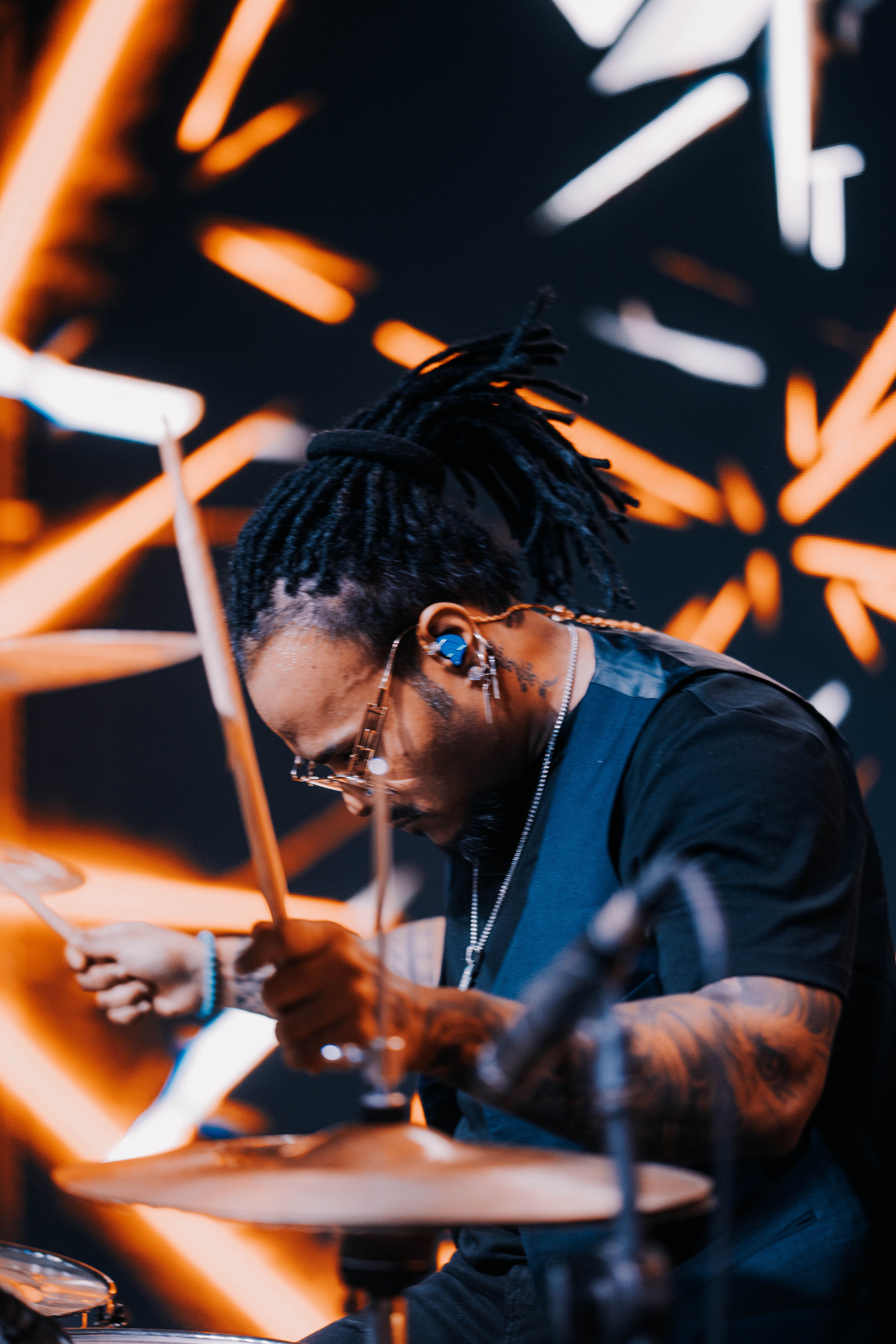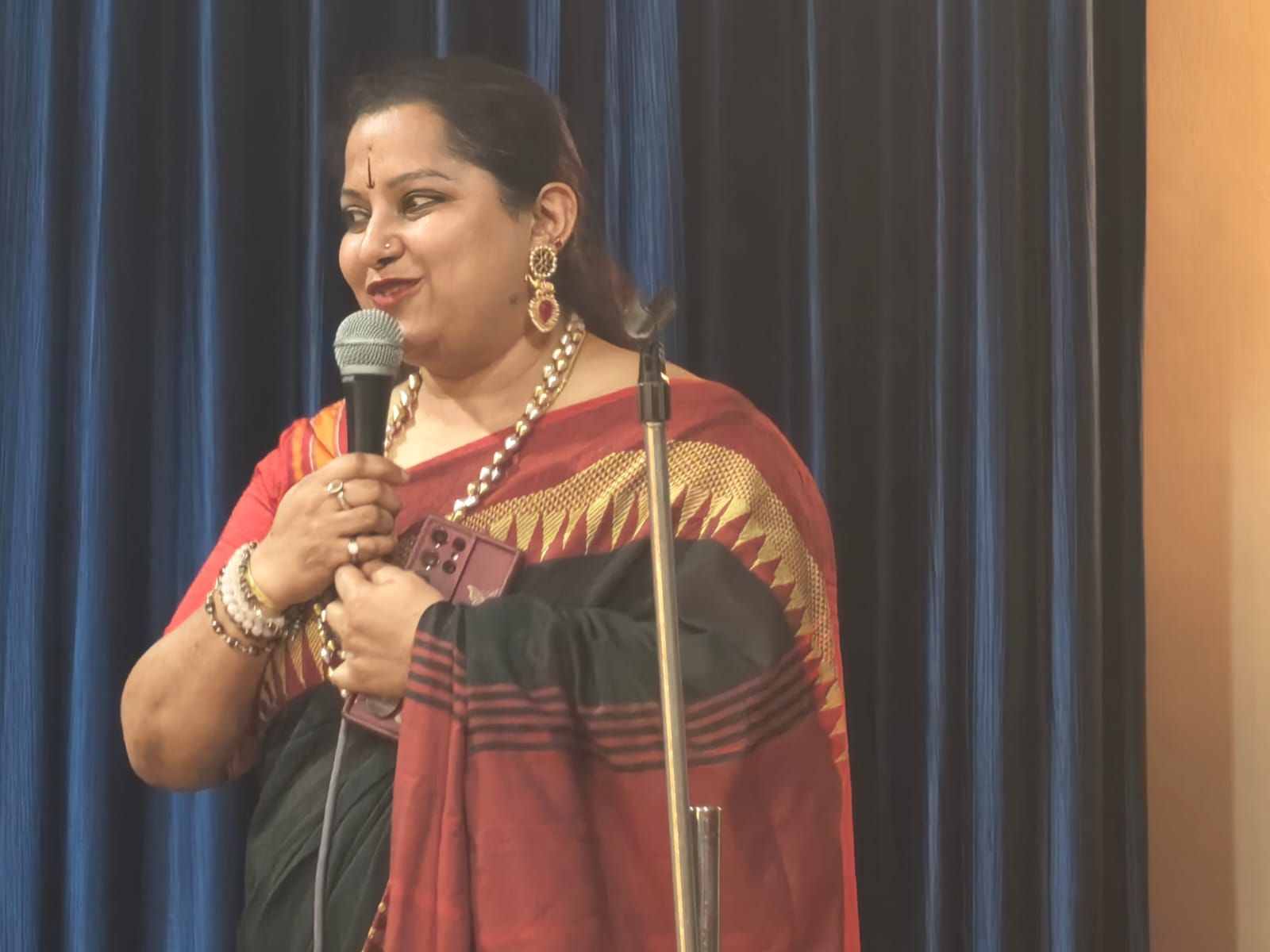


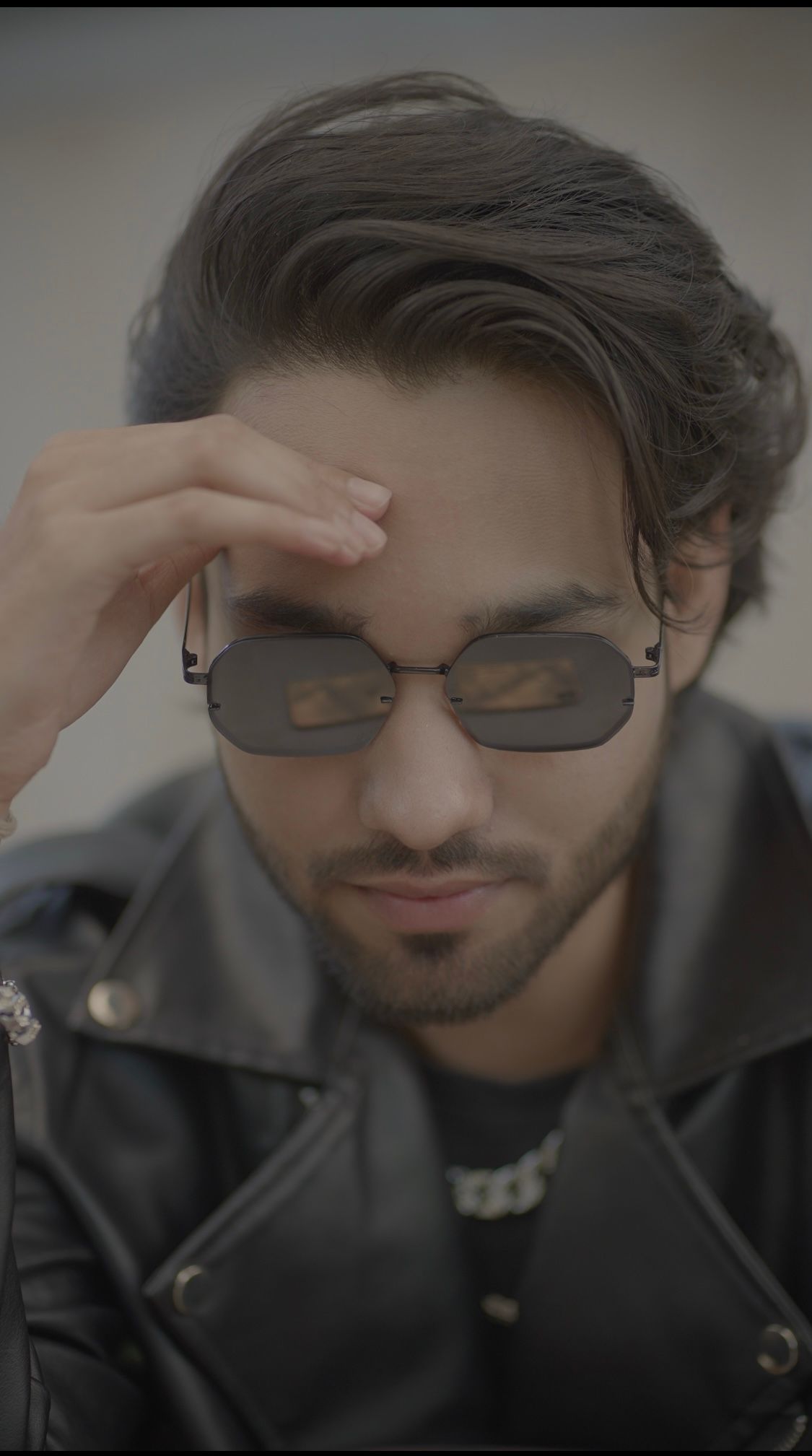
Before "KZee" existed, who was the kid making sounds in his head? Take us back to the moment music stopped being something you listened to and became something you had to make.
Before KZee, there was just Kshitij — a kid who would make sounds, melodies, rhythms and entire songs in his head without even realizing that he was creating music. Music wasn't just something I listened to; it slowly became something I needed to express. I didn't start making music because I wanted to become KZee. KZee was born because that kid inside me needed a voice.
Rap in India often comes with expectations about how it "should" sound. When did you realize your melodic, sung-and-rapped, emotional version was your strength and not a compromise?
I realized it when I stopped trying to fit into what I thought rap was supposed to sound like. I've always connected more with melodies, emotions and storytelling, so naturally my music became a blend of singing and rap. At first, I wondered if that made me less of a rapper, but eventually I understood that it was actually what made me different. I don't want to sound like what rap 'should' sound like — I want to sound like KZee. The melodic, emotional side isn't a compromise for me; it's my identity.
Your music lives between rapping and singing. When a new idea lands, does it arrive as a melody first or as words first — and how do you know which one to trust?
Most of the time, it starts with a melody. I'll have a tune or a certain feeling in my head first, and then I start finding words that fit that emotion. Sometimes a line or a thought comes first, but I usually trust the melody because it tells me what the song wants to feel like. I don't really force myself to decide whether something should be rap or singing — I follow whatever feels natural, and that usually tells me which direction to take.
R&B and emotional textures clearly run through you. Whose voice or record first made you feel that music is allowed to be this vulnerable?
I think Michael Jackson was one of the first artists who made me understand that vulnerability could be powerful. The emotion in his voice, the way he could tell a story through melodies, and how he wasn't afraid to be sensitive really stayed with me. Later, R&B artists helped me understand that same vulnerability in a more modern way. That's something I want to bring into my own music too — being honest about emotions instead of always trying to sound tough.
What does that setup in the photo — the one where you actually make your music — look like, and what's the one thing you genuinely can't make a song without?
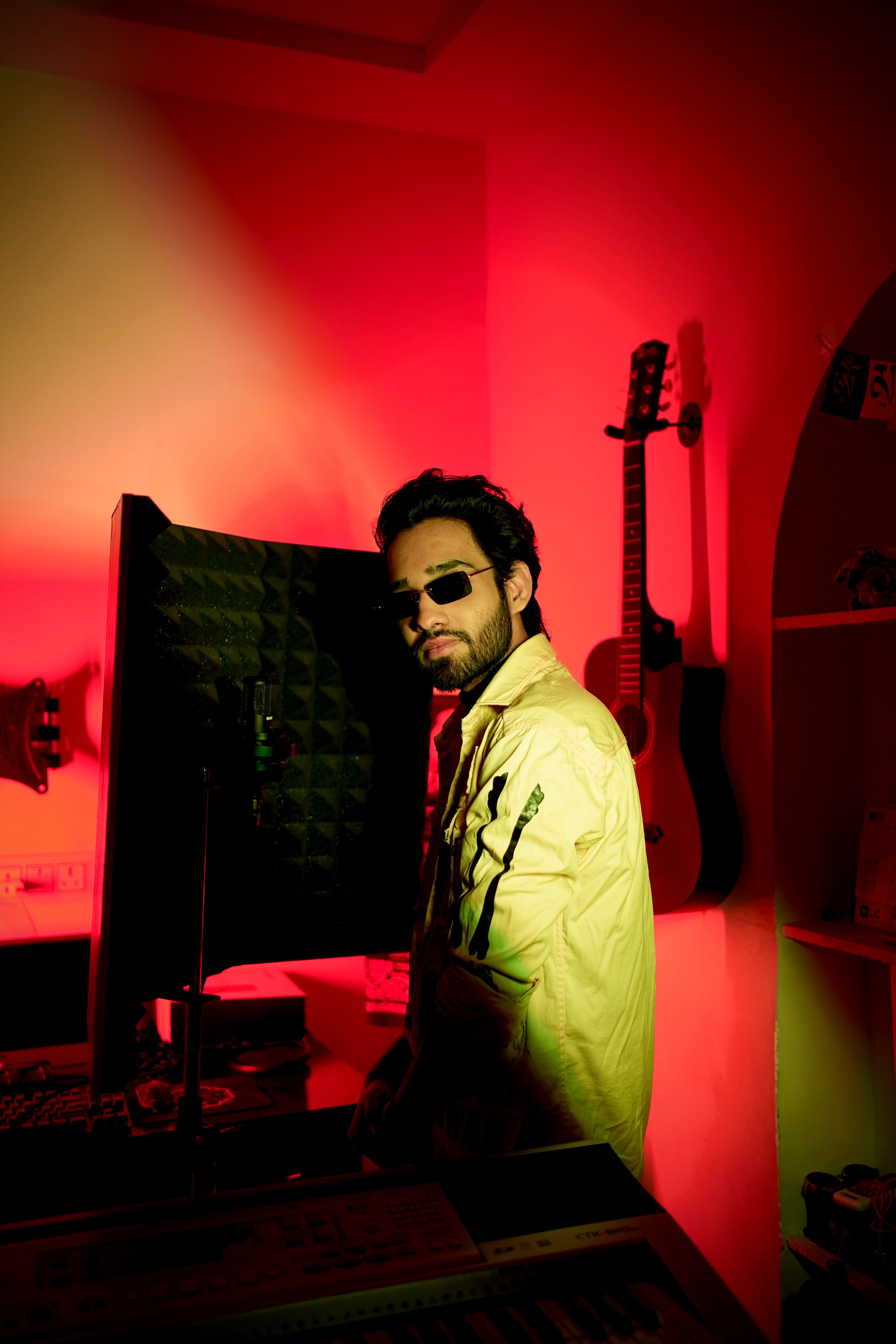
Honestly, I can make a song without a lot of things, but I can't make one without my headphones and that quiet space where I can get lost in my own head. My setup is important, but the most important thing is the feeling and the idea. If I have a melody or emotion stuck in my head, I need to record it immediately — because sometimes the smallest idea can turn into the whole song.
What does an emotion have to feel like before it's ready to become a KZee song? Is there stuff you won't write until enough time has passed?
For me, an emotion has to feel real before it becomes a KZee song. I don't want to write just because something happened — I want to understand what it made me feel and what I'm trying to say through it. Sometimes I write immediately because the emotion is raw and that honesty is what the song needs. But there are also things I need to sit with before I can turn them into music. With certain emotions, time gives me perspective, and perspective helps me tell the story without just reacting to it. So I don't really wait for the pain to disappear — I wait until I understand what it means.
What does that behind-the-scenes moment say about how you actually work when no one's watching?
I think that moment says I'm much more obsessed with the process than people probably realize. When no one's watching, I'm still replaying the same verse, changing one word, trying a different flow, recording again and again until it feels right. Sometimes it's frustrating, but I don't really know how to leave a song alone until I feel like I've given it everything. I'm still figuring things out, but that's probably what defines how I work — I care about the small details, even when nobody else will notice them.
Walk us through one track that almost didn't survive — what nearly made you scrap it, and what saved it?
There have definitely been songs where I felt like something was missing and almost gave up on them. One track in particular went through multiple versions — I kept changing the vocals, melody and production because I wasn't sure if the emotion was coming through the way I imagined it. What saved it was going back to the original idea instead of trying to make it sound perfect. I realized the raw emotion that made me start the song in the first place was the part I was slowly removing. Once I brought that feeling back, the song finally started sounding like me. Sometimes a song doesn't need to be completely rebuilt — it just needs you to remember why you started it.
When a song is fighting you and won't come together, what's your move — push through, walk away, or start something new?
I usually push through first, but if I feel like I'm forcing it, I walk away for a while. Sometimes the best thing you can do for a song is stop touching it. I'll go live my life, listen to something completely different, and come back with fresh ears. And sometimes, if it still doesn't feel right, I'll start something new. I don't see that as giving up — every unfinished idea teaches me something that eventually finds its way into the next song.
What's the story behind that performance — what was going on for you in that moment?
I've spent so much time making music alone, questioning myself and wondering if people would ever connect with what I create. So standing there and actually seeing people listen, react and feel the music made everything feel real for a moment. I was nervous, but more than anything, I felt grateful. It reminded me why I started making music in the first place.
You're building this yourself, no label machine behind you. What's the freedom in that — and the part nobody warns you about?
The biggest freedom is that every decision is mine. I can make the music I believe in, choose how I want to present it, and move at my own pace without anyone telling me what KZEE should sound like. But the part nobody really warns you about is that you're also responsible for everything — the music, the money, the promotion, the mistakes, the late nights and the doubts. There's no one else to blame when something doesn't work. But honestly, I think that's also what makes the journey meaningful. I'm building KZEE from the ground up, and every small win feels like it belongs completely to me.
What does making melodic hip-hop from India let you say or feel that you couldn't if you were making it anywhere else?
Making melodic hip-hop from India gives me a connection to my own experiences, culture and the way I grew up that I don't think I could recreate anywhere else. India has so many different sounds, languages, emotions and stories, and I can bring all of that into music while still making it feel modern and personal. I'm not trying to copy what hip-hop sounds like somewhere else — I want to show what it feels like when someone from here expresses those emotions in their own way. For me, that's what makes KZee different.
Is there a language, a city sound, or a memory from home that quietly lives inside your music, even if no one else would catch it?
Definitely. A lot of my music carries little pieces of where I come from — the way people speak, the atmosphere of my city, the memories I grew up with. Even when I'm not directly talking about home, those things naturally influence the way I write and feel music. There are certain emotions and moments from growing up that probably only I would recognize, but they still find their way into my songs. I think that's what makes the music personal — not everything has to be obvious for it to be there.
Describe the project behind that visual — what makes it matter to you more than the rest?
This project matters to me because it feels like a real piece of where I am right now — not just a song or a visual, but a chapter of my life. A lot of what I'm creating comes from things I've actually felt and experienced, so putting it into a visual makes those emotions even more real. What makes it different from the rest is that I'm not trying to make something just because it looks or sounds good. I want people to see a part of KZEE that they might not know yet. It's personal, and I think that honesty is what makes it special to me.
Is there a lyric you've written that you're almost nervous for people to hear because it's that honest?
"Meri Jaan" is probably the song that makes me the most nervous because it came from a real place. Some of the lyrics are about feelings and moments I actually experienced, so when people hear them, they're not just hearing a story I created — they're hearing a part of my life. That's what makes it uncomfortable, but also why the song means so much to me. I remember writing those lines and thinking, 'Am I really going to let people hear this?' But I realized that if I'm going to make emotional music, I have to be willing to be honest too. "Meri Jaan" is one of those songs where I didn't hide behind the character of KZee — I let people hear Kshitij.
What is the dream collaboration you haven't manifested yet — the one that would make you sit back and go "okay, we made it"?
There are a few artists I'd love to collaborate with, but the dream would be someone whose music I've genuinely looked up to and who can bring something completely different to my sound. That kind of collaboration would make me sit back and think, 'Okay, we really made it.' But honestly, the biggest part of that dream isn't just getting the feature — it's reaching a point where that artist hears KZEE and genuinely wants to be part of the song. That would mean more to me than just having a big name on the record.
What are you chasing on your next releases that your older songs didn't quite get to?
With my next releases, I'm chasing a version of myself that feels more complete. My older songs were about finding my sound and figuring out what KZee could be. Now I want to go deeper — stronger melodies, better storytelling, more emotion, and production that feels bigger without losing the rawness. I'm also trying to experiment more and take risks instead of repeating what already worked. I want each new release to feel like a step forward, not just another song.
Finish this for us: "If people remember one thing about KZee, I hope it is ______." — and why that, over everything else?
If people remember one thing about KZee, I hope it is that he was always real. I want people to feel that the music came from a genuine place — the emotions, the stories, the melodies, even the imperfections. More than the numbers or the fame, I want my music to make someone feel understood. If someone can hear a KZee song years later and say, 'I've felt this too,' then I've already achieved what I wanted.
Contact and Follow
Email: Kshitijvwasnik@gmail.com
Instagram: https://www.instagram.com/_kshiteez_wasnik?igsh=bTF1bHVtNzJzdWE5&utm_source=qr
Spotify: https://open.spotify.com/track/5qQtga1MSYig4y6rgXMJQ0?si=fav-VCYJQnmTIVSUi7ZIog&utm_source=copy-link