

What sparked your initial interest in street documentary and travel photography?
My interest in street photography came from the love for my city. I am a Calcuttan by birth, but I grew up outside owing to my circumstances. During 2013-2014, when I started photography, I was exposed to street photography, and then the love affair with this art form began—which is going strong so far.
When was the first time you felt you captured a truly powerful or meaningful image, and what was it?
My first meaningful image was captured in 2016 when I covered Muharram. I photographed a 10-12 year old kid slashing his own back with a sharp zanjira or chain. It made me think about a lot of things—how we are born without an identity, and as soon as we arrive, our caste, religion, economic status, everything is marked. That moment really stayed with me.
How has your photography style and approach evolved over the years?
Earlier, my photography was whimsical yet simple in terms of frames, and I also had a lot of crudely processed photos. But with time, I learned to take a pause, filter, process better, and choose the best from my gallery. However, it is a work in progress since I am not a good curator, but it is something I am actively working on. I try to adopt a documentary-style approach with a bit of storytelling and minimal processing.
What drives you to continue documenting street life and travel stories?
The variety and unpredictability of it all. The same place, but each day something is different—the color, the shadows, the people. That is what makes me thrive. Also, when we travel and document, we learn more about a place than we could as a tourist. I try to see my city as a traveler and a strange place as a resident.
Tell us about the photo that best represents your street documentary work.
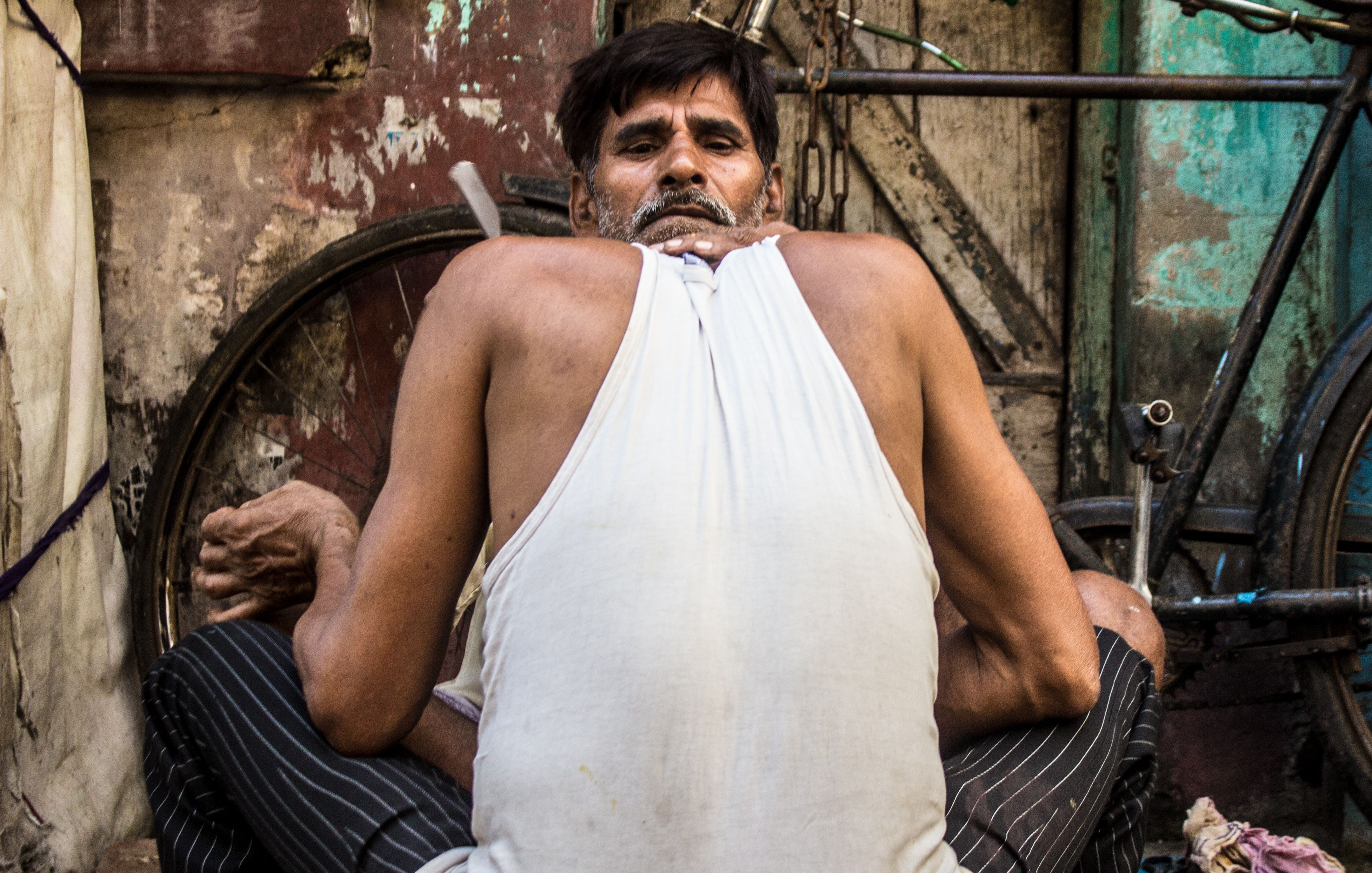
This is my so-called "shot to fame" or some may even call it my "one trick pony." But this is the first image that got me some recognition at the national level. I was strolling through the lanes of Kumartuli in Kolkata just before Pujo in 2017. I happened to see a barber shaving a man's head by bending the head fully forward, while the man sat in front of him. I immediately thought this would look funny from the front. I went behind the customer and observed for a good 10-15 minutes and came back with this image. The rest is history.
What makes this travel photo significant in your journey as a photographer?
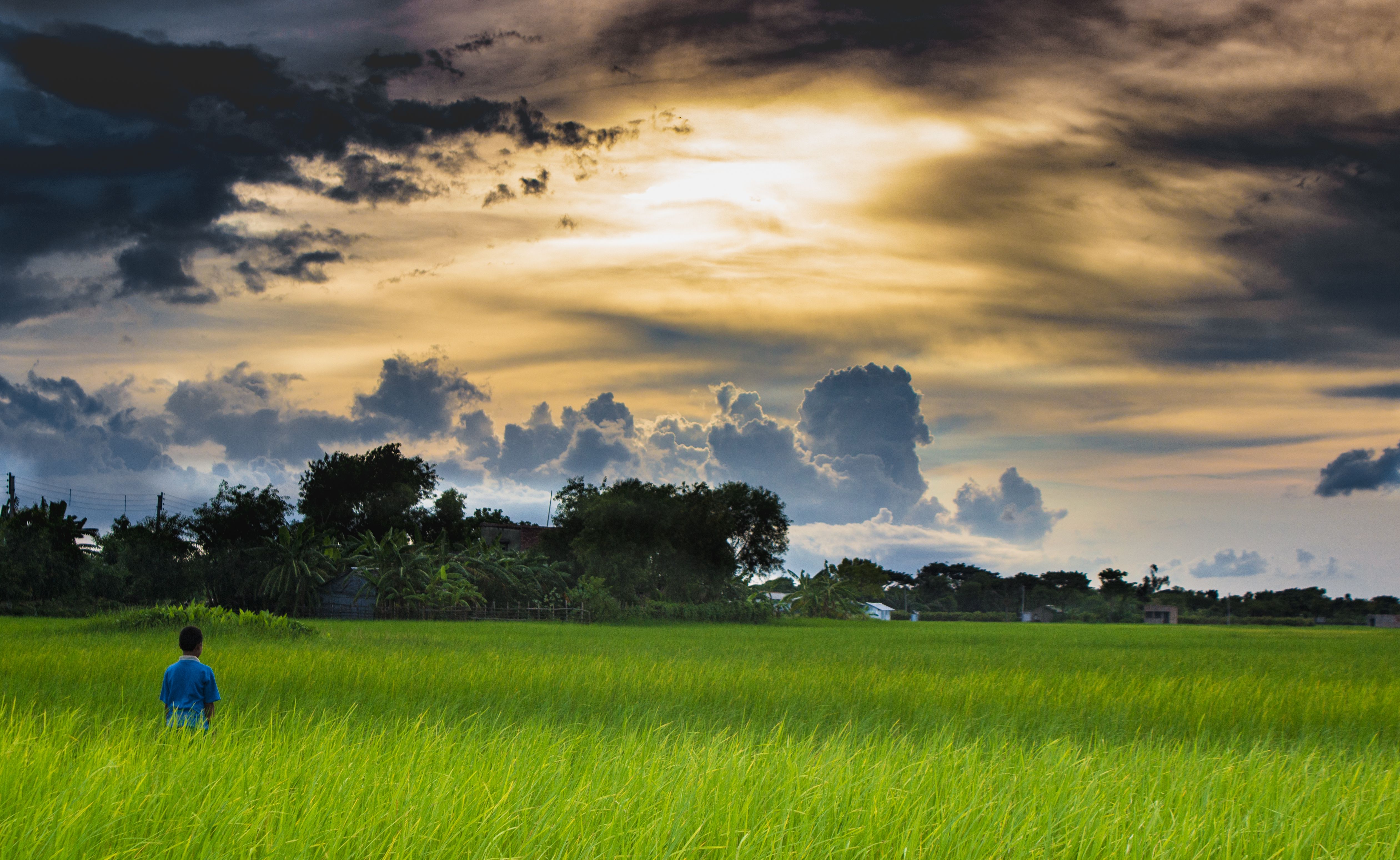
This photograph holds a special place in my journey as a photographer because it reminded me of Satyajit Ray's Apu Trilogy, particularly the sense of wonder and discovery that runs through those films. When I saw the lone boy standing in the vast green field, with dramatic clouds gathering overhead, I was immediately transported to that world. The scene evoked memories of Apu and Durga running through the fields, full of curiosity and excitement. I even noticed a cloud formation that looked like a horse, which added to the sense of imagination and storytelling unfolding before me. What made the moment memorable was the feeling it gave me. For those few minutes, nothing else seemed to matter. I felt a sense of happiness and childlike wonder, as if I had stepped into one of Ray's frames and was witnessing a small piece of magic in real life. Capturing that feeling is what makes this photograph significant to me.
Walk us through the interaction that led to this candid portrait of a stranger.
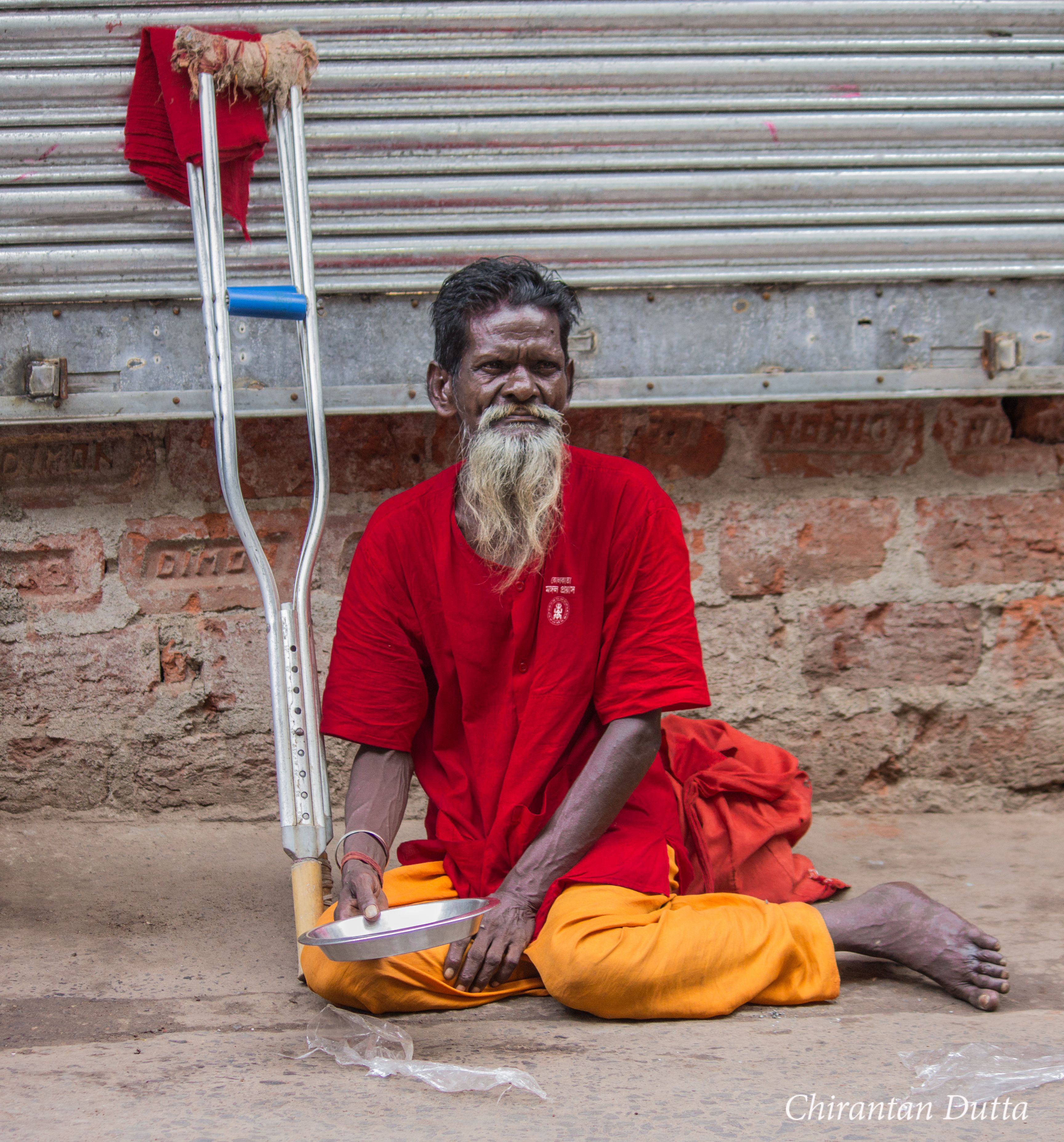
I was in Tarapith and was going out in the evening with my family. I had my camera. This man was sitting opposite the front gate of our hotel. I saw him and was surprised that his hair is black but his beard is white—differently aged. It was a juxtaposition of nature. I didn't have to do anything. Hence the shot.
How did you compose this image to emphasize the interplay of light and shadow?
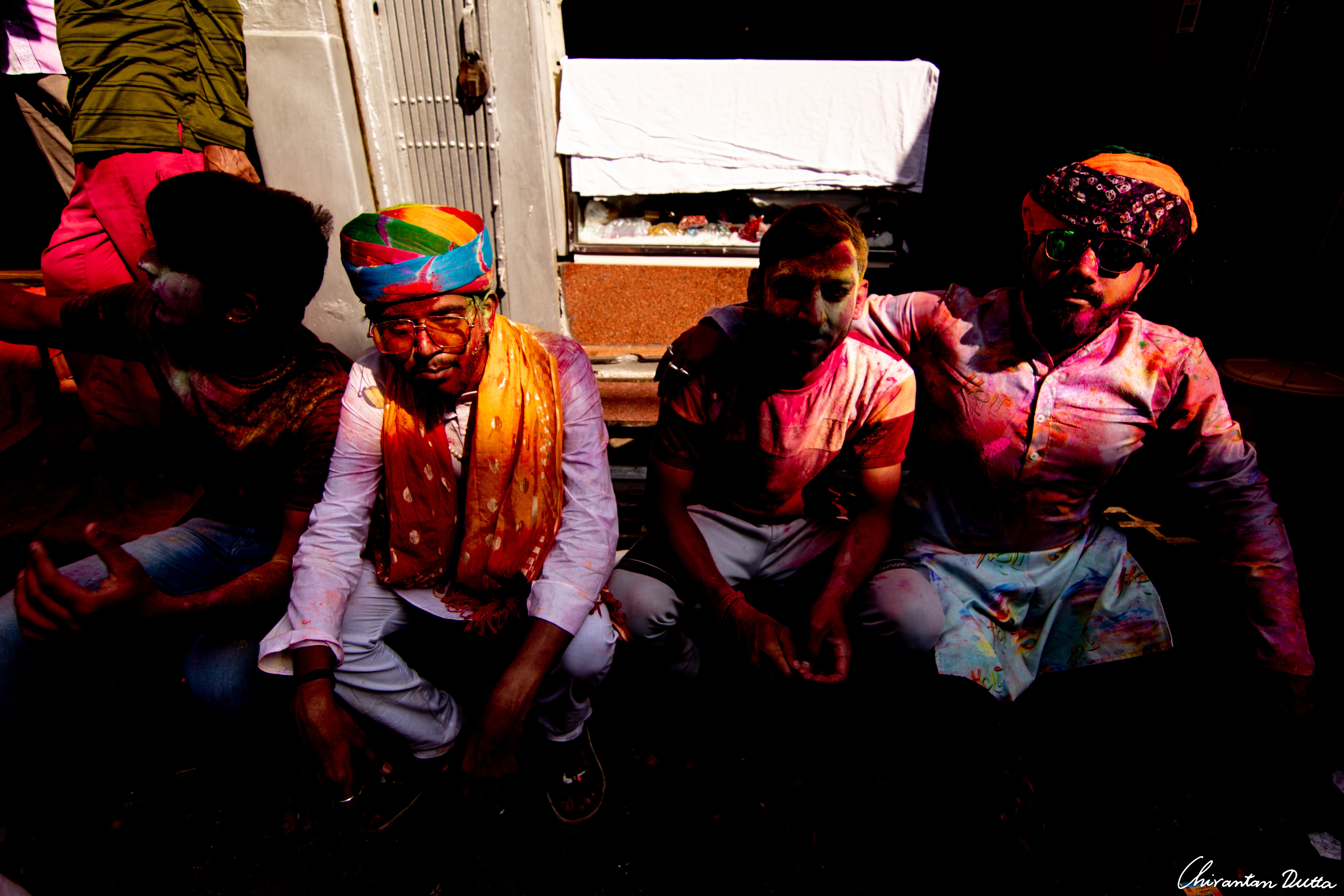
I was drawn to the way the harsh afternoon light was cutting across the scene. During Holi, colour is everywhere, but what caught my attention here was how the light was selectively revealing those colours while leaving large parts of the frame in shadow. Instead of exposing for every detail, I chose to preserve the contrast. The darkness became as important as the light. For me, the photograph is less about documenting Holi in a literal sense and more about capturing the interplay between light, shadow, colour, and human presence. The strong contrast was a conscious choice to convey the intensity and atmosphere of the moment as I saw it.
Why did you choose that color or monochrome treatment for this particular scene?
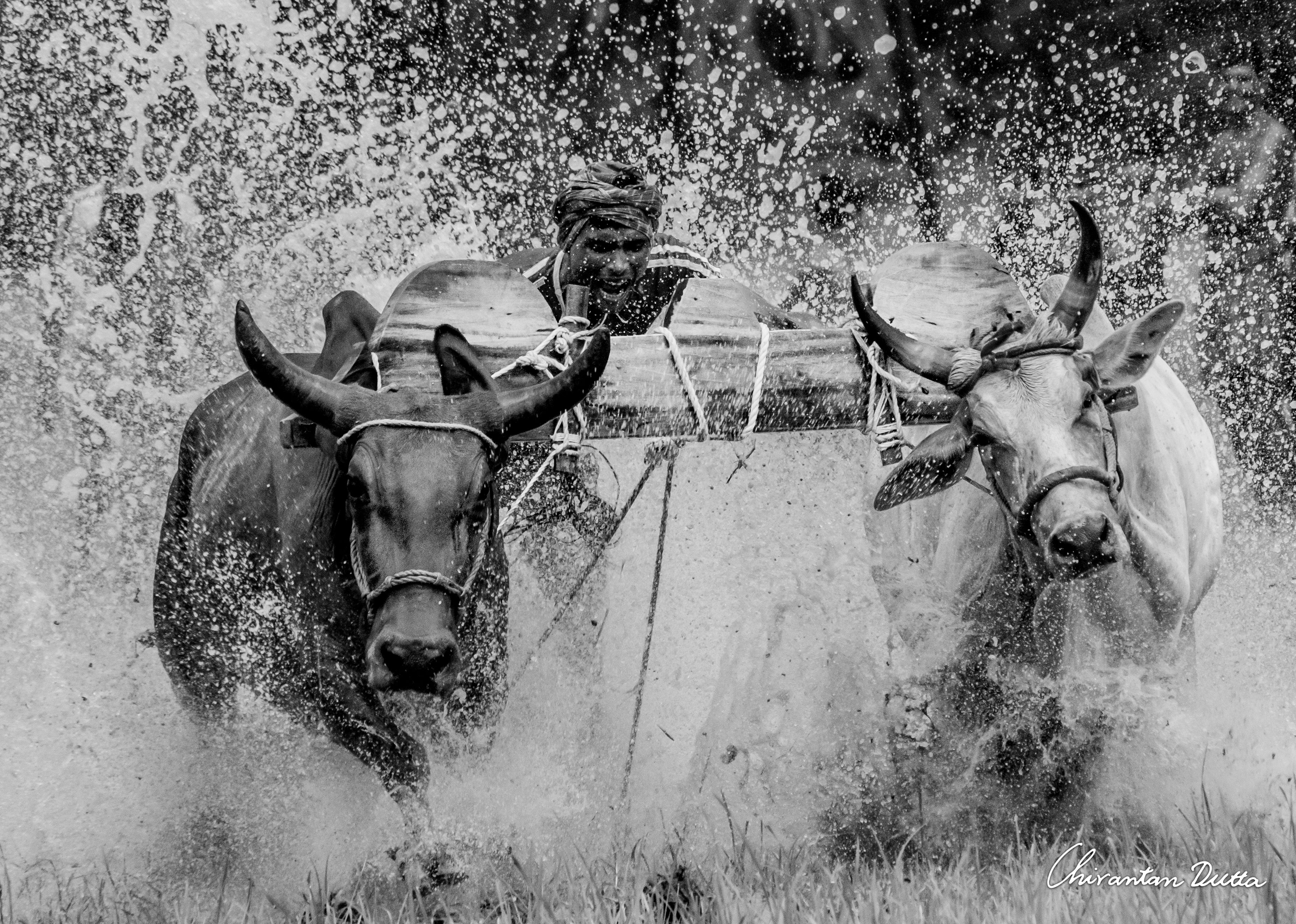
I chose a monochrome treatment for this image so that the viewer focuses on the expression of the rider and the intensity of the bulls charging through the water. The splashing water, flying droplets, and the patterns created by the grass add an extra layer of visual interest and help convey the energy of the moment. Removing colour helps minimise distractions from the rider's clothing or the green grass in the foreground. It allows the focus to remain on the action, the emotion, and the connection between man and beast. For me, this image is all about the raw power, determination, and adrenaline of the moment. Nothing else.
What was the biggest challenge you faced while shooting in that environment, and how did you overcome it?
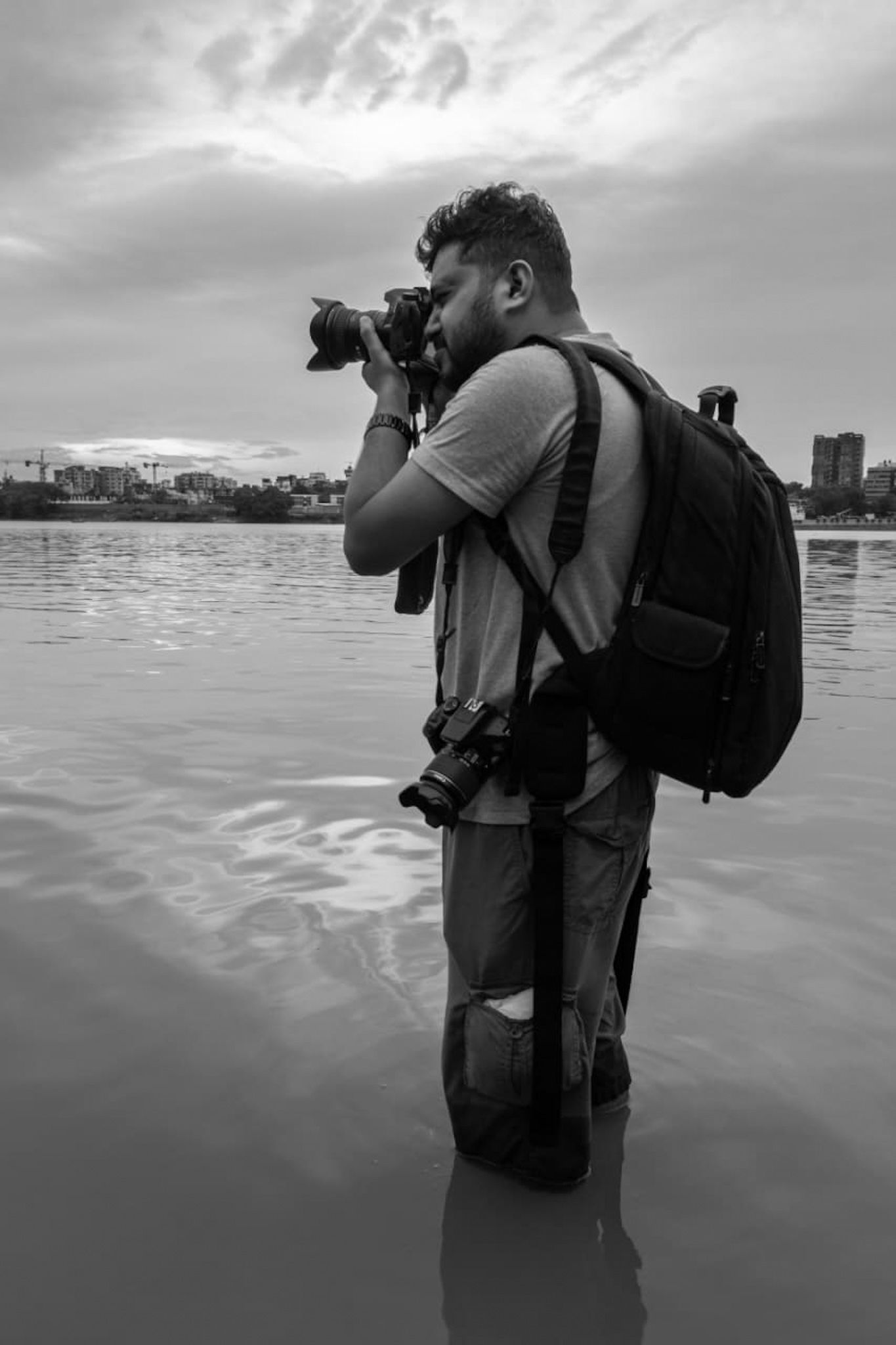
The biggest challenge was the crowd gathered along the edge of the water during Dashami. From the shore, my view was constantly obstructed, making it difficult to get a clean frame. To get an unobstructed perspective, I had to move deeper into the water with my camera gear. The riverbed was quite slippery, so every step had to be taken carefully. After spending a long time shooting in the water, I did slip and fall while coming back to the shore. Fortunately, my backpack took most of the impact, and neither I nor my gear suffered any major damage. Looking back, it was a small price to pay for the perspective and images I was able to capture that day.
What drew you to this moment, and what do you hope viewers take away from it?
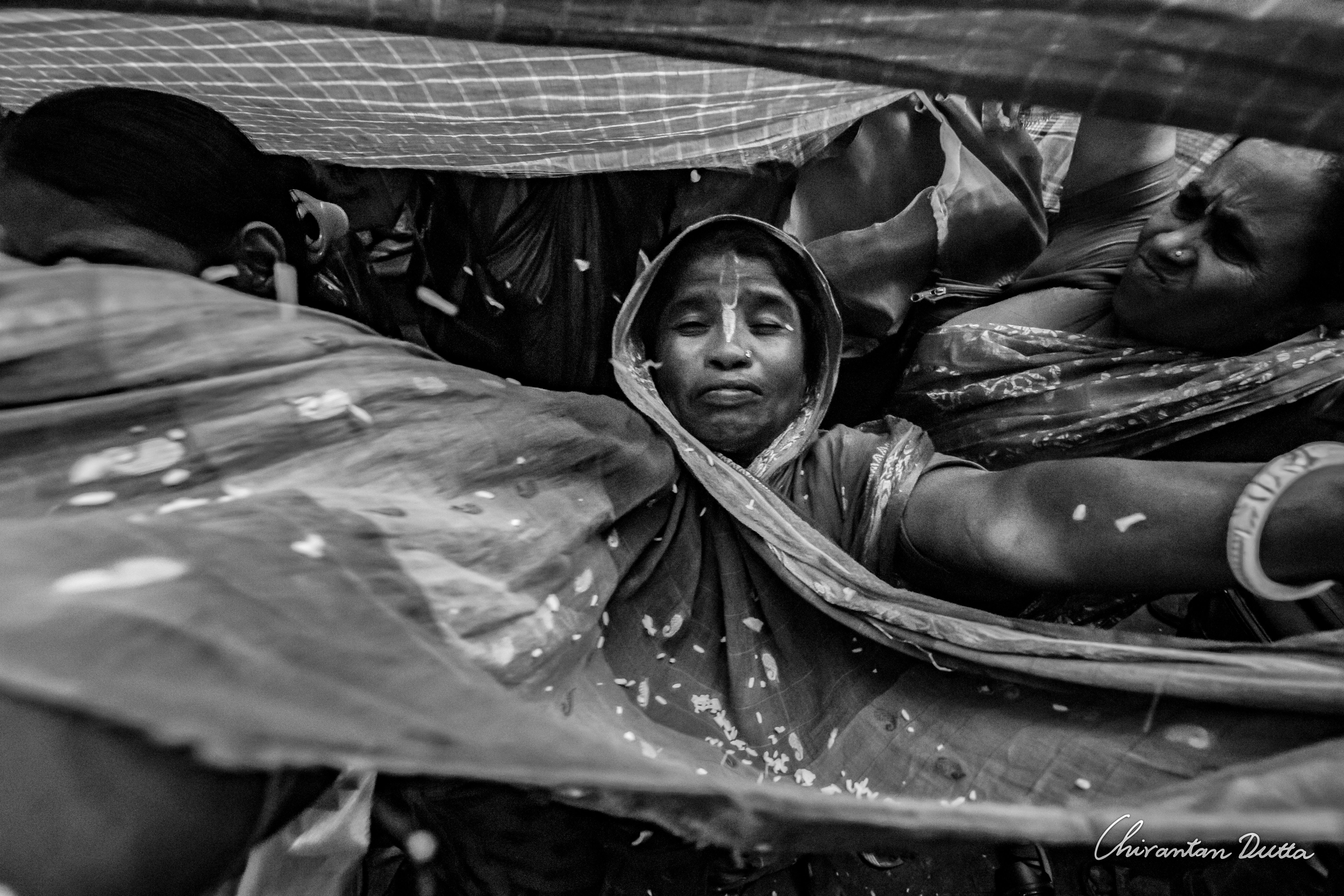
This moment drew me in because it captured the raw energy and devotion of the Horir Loot tradition during Annakut. Amid the crush of people reaching for the blessed offerings, I noticed the woman at the center. Despite the physical chaos around her, there was a striking sense of focus and surrender in her expression. As a photographer, I am often interested in moments where individual emotion emerges from a collective experience. Here, surrounded by outstretched arms, falling grains, and the pressure of the crowd, her face became a powerful symbol of faith, participation, and belonging. I hope viewers take away an appreciation for the intensity and humanity of such traditions. Beyond the spectacle, this photograph is about devotion, community, and the lengths people will go to be part of something they deeply believe in. It is a reminder that faith is often experienced not in solitude, but in shared moments of joy, struggle, and connection.
Contact and Follow
Email: chirantan.dutta870@gmail.com
Facebook: https://www.facebook.com/Chirantan0516
Instagram: https://www.instagram.com/chirantandutta/