

Tell us about your journey as a young writer and naturalist. How did you first get interested in documenting urban wildlife?
My journey as a young writer and naturalist began with a simple curiosity about the living world around me. Growing up in IIT Bombay Campus, I gradually realised that wildlife was not something found only in forests and national parks—it was all around us, in balconies, in backyards, in lakes, gardens, campuses and neighbourhoods. I became fascinated by the birds and other animals sharing our urban spaces, and I started observing, photographing, storytelling and documenting them. My journals filled up with sketches and stories.
The IIT Bombay campus became an especially important part of this journey. What began as informal observation gradually developed into a more structured project, 'My Friendly Neighbours: Animal Biodiversity of IIT Bombay', through which I documented the wildlife I encountered and explored how humans and animals coexist in an urban ecosystem. I also participate in citizen-science activities such as documenting in iNaturalists, eBirds, participating in the Great Backyard Bird Count and regularly undertake nature walks and biodiversity observations in Mumbai.
Writing became my way of making sense of these observations and sharing them with others. I enjoy turning a field observation into a story that is both engaging and informative. My essay "Spotting the Spotted Owlet", which won Second Prize in the IIT Bombay Biodiversity Lab Essay/Creative Writing Contest, was one such experience. I have also written "A Walk down the Hills of Amboli," which was featured in The Hindu In School.
Over time, I have tried to bring together writing, photography and documentary storytelling. My YouTube channel, Lens N Light by Diptarko, allows me to share wildlife stories through video, while my photography has helped me notice details that might otherwise go unseen. My First Prize in the WWF-India Infographics Contest and Third Prize in the BNHS Urban Wildlife Photography Contest 2025 reinforced my belief that even an ordinary urban wildlife encounter can tell a powerful conservation story.
My interest has also become more grounded through formal learning. I completed the BNHS Naturalist Training and Leadership Workshop and the BNHS Leadership Course in Biodiversity Conservation, which have helped me develop a more scientific approach to field observation and conservation.
Today, I see myself not just as someone who observes wildlife, but as a wildlife storyteller. I want my writing and photographs to help people—especially young people—pause, look more closely at the nature around them, and understand that protecting biodiversity begins with noticing and valuing what already lives alongside us.
What experiences have shaped your storytelling approach over the years?
My storytelling has evolved through a combination of curiosity, observation, writing, photography, citizen science, environmental learning, and direct experiences with nature. I have always enjoyed creating stories, but over the years I have learned that the most meaningful stories often begin with simply paying attention.
My early experiences with creative writing shaped the imaginative side of my storytelling. At a young age, I received national-level recognition in TIFR’s COVID-Gyan competitions for both science-fiction story writing and poster design. Writing my book, The Test of Time, further taught me how to build characters, imagine different worlds and communicate ideas through stories.
As my interest in nature grew, my storytelling became more observational. Documenting the animals and birds around IIT Bombay through my project ‘My Friendly Neighbours: Animal Biodiversity of IIT Bombay’ made me look more closely at urban wildlife and the ways in which animals adapt to living alongside people. I am also one of the Founding Members of the Wildlife Club at Oberoi International School, JVLR, which has given me another platform to share my interest in wildlife and conservation with my peers.
An important part of this journey has been my active contribution to global citizen science. Through iNaturalist, I have contributed 1,798 biodiversity observations covering 377 species, including 1,175 Research Grade observations verified by the iNaturalist community. This has taught me that documenting nature is not only a personal creative pursuit; careful observations can also contribute to a larger scientific understanding of biodiversity.
Field experiences have also influenced the way I write. A nature walk in Amboli, for example, became “A Walk down the Hills of Amboli,” where I combined personal observations with photographs and information about the region’s biodiversity. My presentation on the Little Rann of Kutch during a school field trip similarly allowed me to turn a firsthand experience of a unique ecosystem into a story that could create conservation awareness among my classmates.
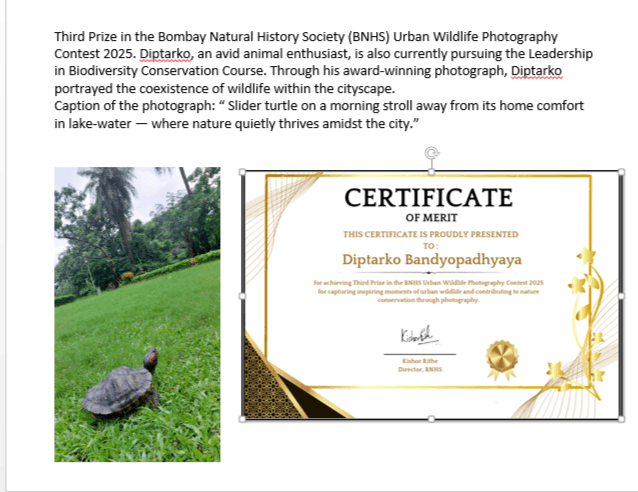
Photography has changed my storytelling in another important way. Winning Third Prize in the BNHS Urban Wildlife Photography Contest 2025 encouraged me to look for small, fleeting moments of coexistence—for instance, a turtle moving away from its familiar lake habitat. Photography taught me patience: sometimes the story emerges only when you wait, observe and allow the animal to behave naturally.
My journey has increasingly connected storytelling with environmental education and advocacy. Presenting “Inclusive Ecological Learning in the Anthropocene” at the 23rd Kaleidoscope Conference 2026, Faculty of Education, University of Cambridge, on 29 May 2026, helped me think about how ecological knowledge can be made more inclusive and engaging for learners.
Similarly, participating in the Harvard PAIR Sustainability Impact Summit (HSIS) at FLAME University, Pune, from 3–5 August 2026, where my SDG 4 team received a Certificate of Merit for the “Most Impactful Team Award” and a full scholarship to attend the Harvard Project for Asian and International Relations (HPAIR) Conference, broadened my understanding of how collaboration, communication and storytelling can contribute to meaningful social and environmental impact.
Another important milestone was receiving 1st Place in the Global Tiger Day 2026 “Roar for Conservation: Exploring India's Tiger Reserves Through Infographics” contest, organised by WWF-India’s EIACP Programme Centre–Resource Partner under the aegis of MoEFCC and the Government of India’s Mission LiFE initiative. This experience showed me the power of combining visual communication, research and conservation messaging to make complex environmental subjects accessible to a wider audience.
My training with the Bombay Natural History Society, including the Naturalist Training and Leadership Workshop and the Leadership Course in Biodiversity Conservation, has added a more scientific dimension to my storytelling. It has encouraged me to combine wonder with accuracy and to understand the ecological context behind what I observe.
Finally, making documentaries, giving school talks and sharing wildlife stories through my YouTube channel have taught me to think about the audience as well as the subject.
So, my approach today is a blend of the imagination of a writer, the patience of a photographer, the curiosity of a naturalist, the discipline of a citizen scientist, and the responsibility of an environmental communicator. I try to tell stories that are scientifically grounded but still personal and accessible—stories that make people pause, look more closely at the natural world around them, and realise that biodiversity is not “somewhere out there,” but an integral part of the world we share.
What challenges have you faced as a student balancing writing, photography, and conservation work?
One of the biggest challenges has been finding the time to pursue my interests alongside the hectic schedule and rigorous demands of the IB curriculum. Balancing academics with writing, photography, field observations, nature walks and conservation-related activities requires careful planning and discipline.
There are times when assignments, assessments and school commitments take priority, and I have to postpone a writing project or wait for another opportunity to photograph or observe wildlife. Fieldwork, in particular, requires patience—you cannot always fit nature into a convenient timetable. A bird or animal does not appear simply because I have an hour free!
I have therefore learned to make the most of the small windows of time available to me. A short nature walk, an unexpected wildlife sighting on the IIT Bombay campus, or even observing birds around home can become an opportunity to learn and document. I also try to connect my academic learning with my interests wherever possible, rather than seeing them as separate activities.
The challenge has ultimately taught me time management, patience and prioritisation. More importantly, it has shown me that pursuing something I genuinely care about does not always require large amounts of time—it requires consistency. Even amidst a demanding academic schedule, I try to keep observing, writing and learning from the natural world.
What do you hope to achieve through your work in the next few years?
Over the next few years, I hope to develop my work as a young naturalist, writer and wildlife storyteller and reach a wider audience, especially young people. As the founder of Biodiversity Buddies, I also hope to build a community that encourages young people to observe, understand and care for the biodiversity around them.
I want to continue documenting urban biodiversity through writing, photography and short documentaries, while developing a deeper scientific understanding of wildlife and conservation. My experiences with nature documentation and BNHS training have strengthened my interest in the field, and I hope to pursue Environmental Sciences in the future, building a strong academic foundation for my conservation work.
Through Biodiversity Buddies, I want to make conservation accessible, engaging and youth-driven. I believe young people can play an important role in creating awareness when they are given the opportunity to observe nature, learn from it and share their experiences.
Most importantly, I want my work to turn observation into awareness and awareness into action. If my stories, photographs, films and initiatives can make someone pause, notice a bird in their neighbourhood, appreciate an overlooked species, or think differently about urban wildlife, I would consider that a meaningful achievement.
In the longer term, I hope to bring together Environmental Sciences, storytelling and conservation, using creativity and the collective enthusiasm of young people to build a stronger connection between communities and the natural world.
Which photograph best represents urban wildlife in your eyes, and what's the story behind it?
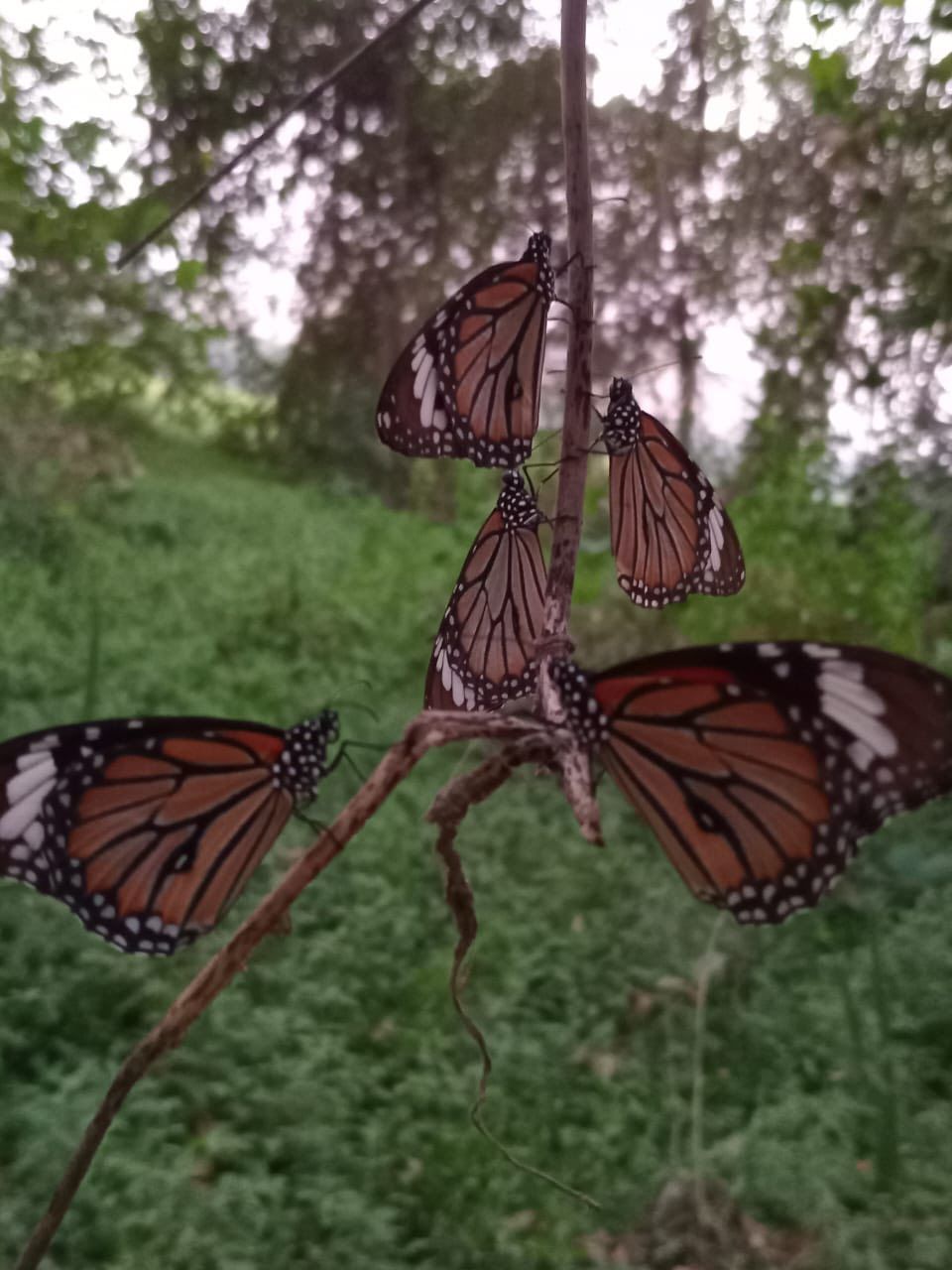
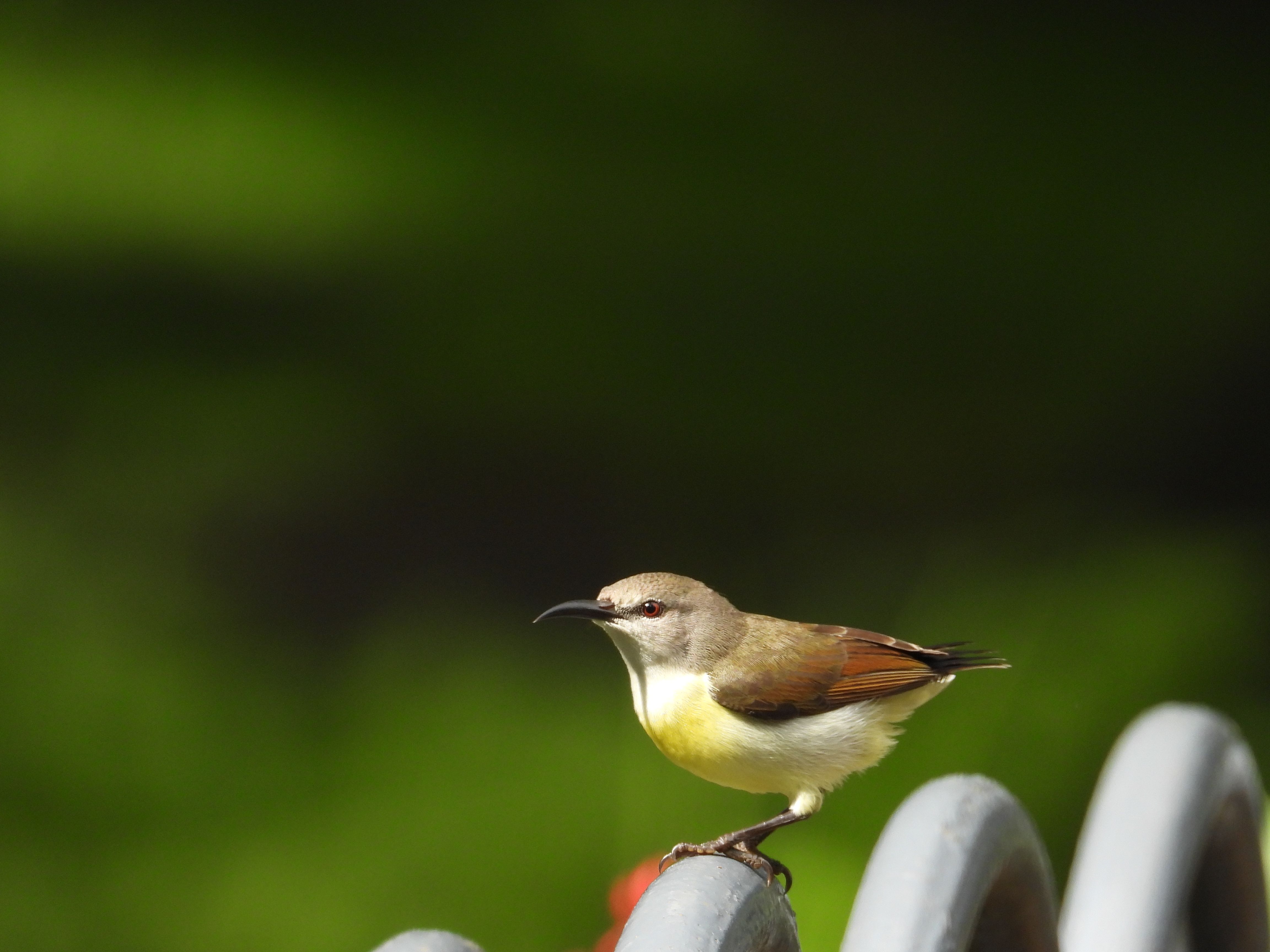
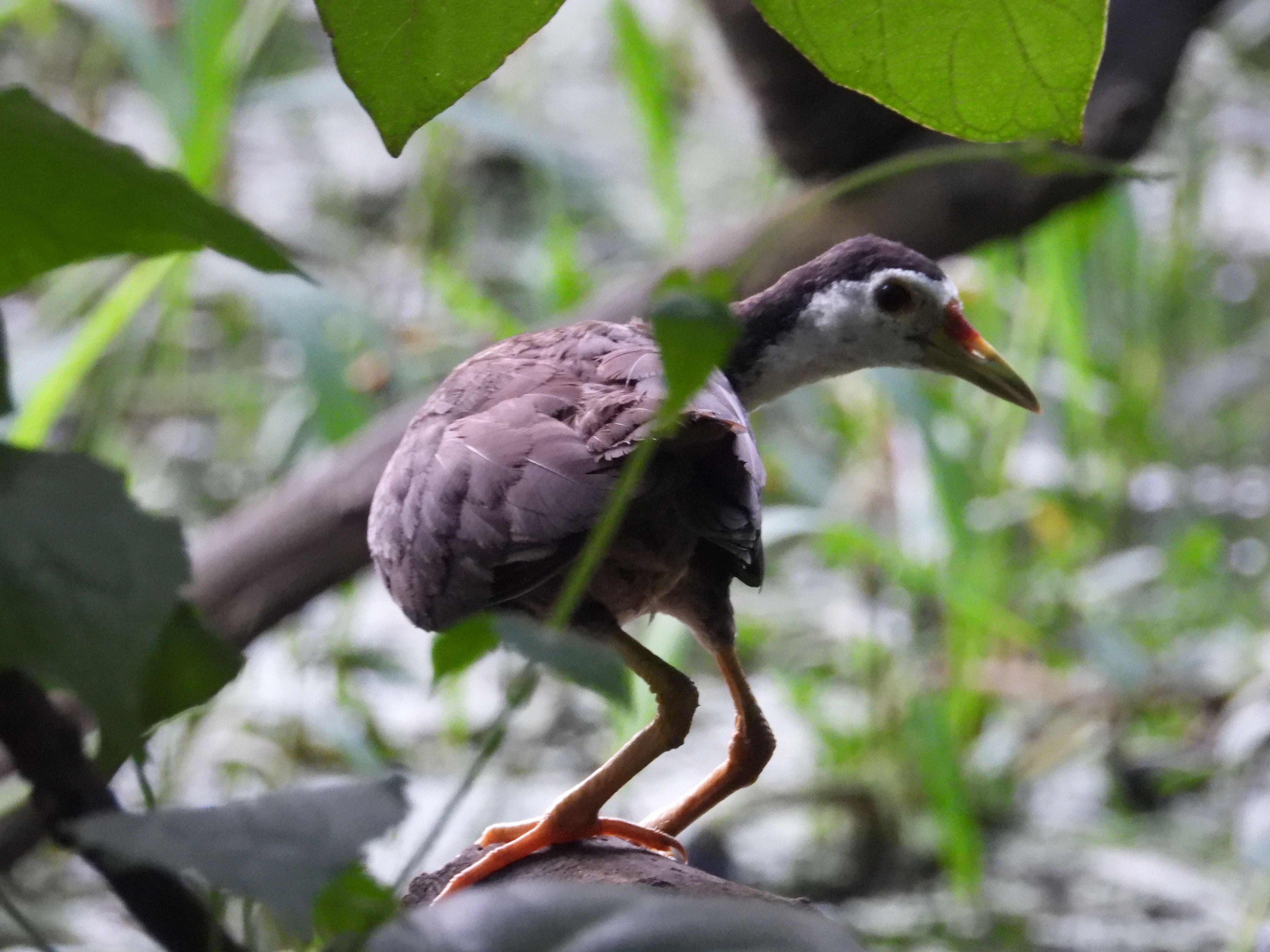
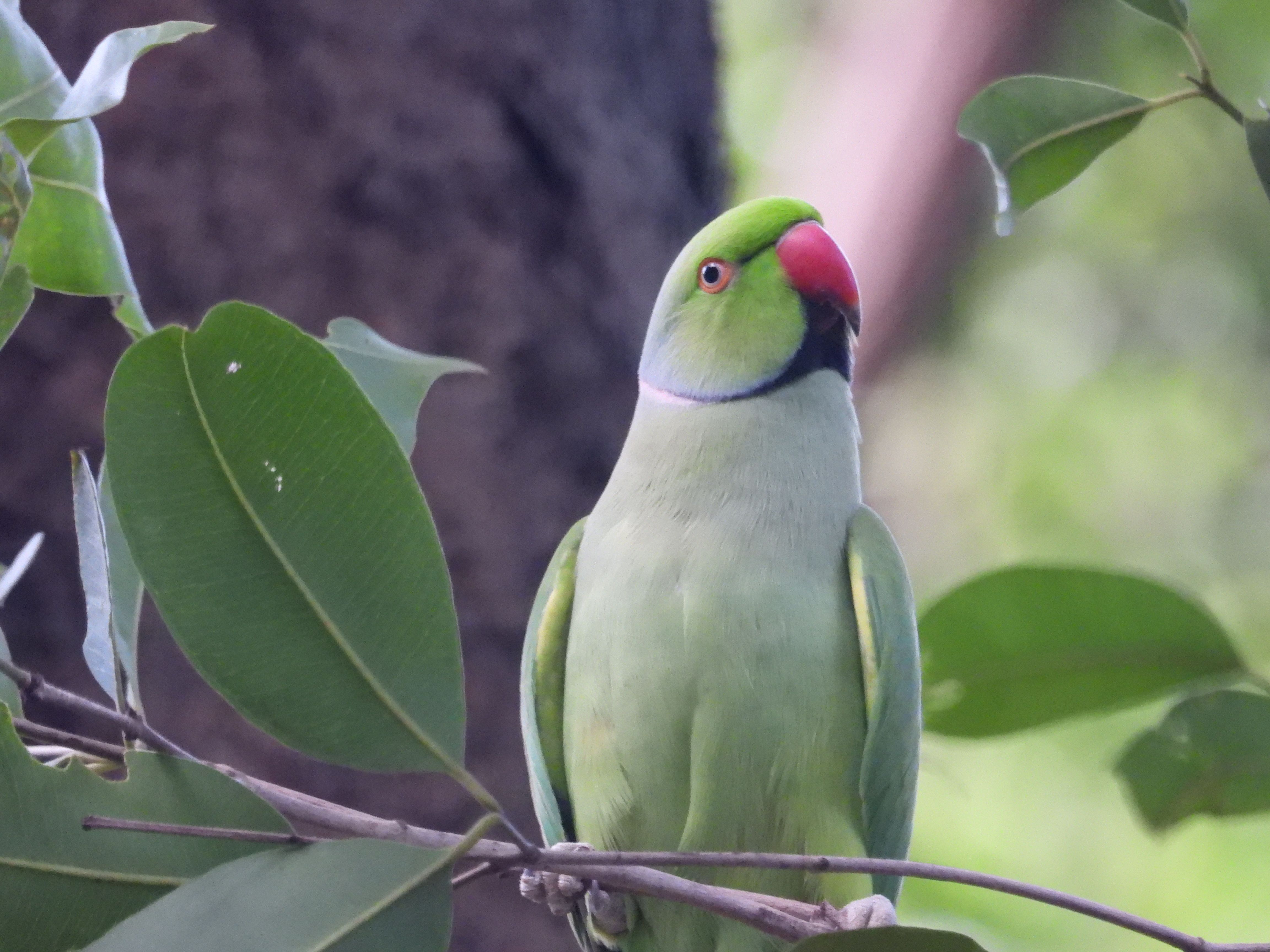
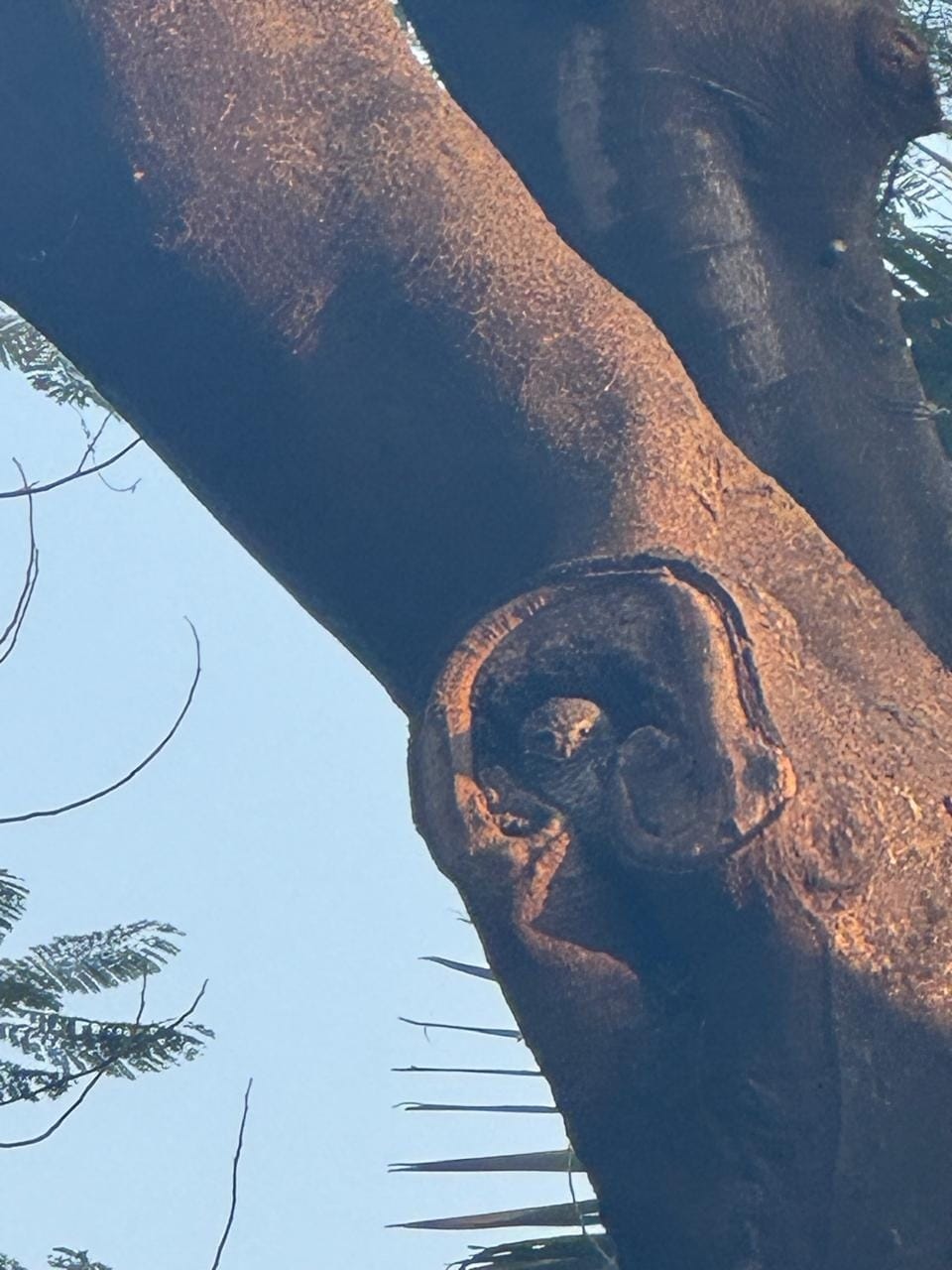
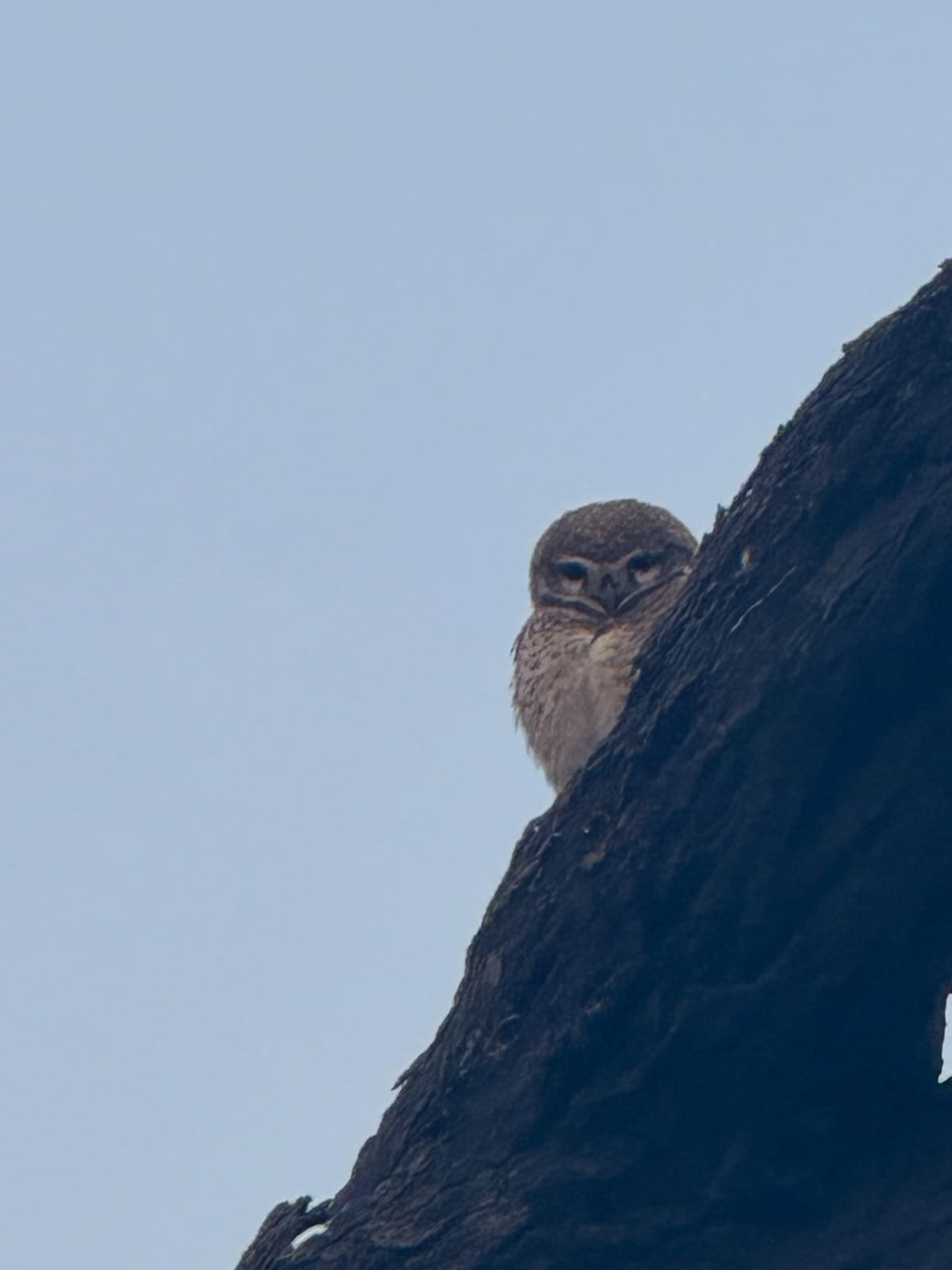
Spotting the Spotted Owlet
It was 13th October, 2025. I was walking, torch in hand, looking for the Spotted Owlet. I was waving it around, searching for a small brownish owl possibly perched on a branch. But there were none, or so I thought.
The crickets had just began their concert, coupled with the monotonous croaking of the night-frogs. Suddenly, I began to hear a distinctive, bouncy bark. An interrogative "उठ…उठ…उठ" repeated at irregular intervals, as the bells of the Padmavati temple on the IIT Lakeside tolled in the distance. It was the Scops-Owl! I was very, very, excited as I had never seen - or heard - one before.
An owlet in its daytime roost, a tree cavity. "उठ…उठ…उठ…उठ…उठ…उठ…" it continued. Then I heard the cackling of the Spotted Owlet - transcribed as a harsh and screechy "cheevak, cheevak, cheevak". It was quite close by. Now I was in a dilemma. Should I find the Spotted Owlet? Or look for the Scops-Owl?
As I heard both the owls, and was excited about both - I didn't know which one to turn to. Well, I didn't have to choose, because as I turned and pointed my torch at a branch randomly - there it was! A Spotted Owlet with bright yellow eyes and Eugene Levy-like eyebrows. It stared but didn't seem to care regarding the torch at all.
In Bengali, these owls are called "কোটরে পেঁচা" (literally "cavity owl"). Seeing them sleeping in cavities of trees, I could understand why they got that name. "Oh my GAWD!" said I. Crickets chirped. The "उठ" of the Scops-Owl. More crickets. Eight seconds passed. Another "उठ". "গাড়ি দেখো পেছনে." said my father. Indeed, a vroom was heard and a car passed by. The owl, disturbed, flew off! Still, we could observe it for 45 seconds. That was truly amazing.
From then on, I realised: "The woods are lovely, dark and deep." But how many of our promises to them do we keep? Alas, only a few. So I have resolved to maintain aviofauna's habitat around us.
Nearly two months later, my wish came true once again—when I met a beautiful relative of the Spotted Owlet at Keoladeo National Park in Bharatpur.
Some encounters stay with you. Others return, quietly, when the time is right.
Could you share a video clip that showcases your wildlife storytelling, and what creative choices did you make in it?
My interest in biodiversity did not begin with research articles or statistics, but with observation. While spending time on the IIT Bombay campus nature trails and Sanjay Gandhi National Park (SNGP) field camp, I started noticing small but significant details — the call of a coucal hidden in dense shrubs, egrets resting near water bodies, butterflies moving between flowering plants, and even occasional sightings of reptiles. However, when I discussed these encounters with friends and peers, many of them were unaware of the species around them. Most associated wildlife with distant forests or national parks, not with a technical institute campus located within Mumbai. This disconnect between everyday experience and ecological awareness made me question how much people truly understand about the biodiversity that exists around them.
As I explored further, I learned that IIT Bombay hosts more than 800 documented species of flora and fauna, making it one of the biodiversity hotspots within the urban setting of Mumbai. Yet there is no structured, publicly accessible platform that presents this ecological wealth in an organised and engaging format for students and visitors. This gap between ecological richness and public knowledge became the foundation of my investigation.
The project is to create a documentary about the biodiversity of Mumbai designed for general citizens, filling a critical gap identified after analyzing existing documentaries. The core goal of this documentary is to enable conservation awareness for all the biodiversity of Mumbai.
My documentary will help protect Mumbai's nature by showing people the amazing wildlife that lives right in their own backyard. Many people who live in this busy city don't realize that leopards, jackals, and flamingos are their neighbors, so my film will act like a giant window into this hidden world. When people see these animals on screen, they start to care about them and realize that the city isn't just made of buildings and roads. By making the animals look like characters with their own lives and families, I can turn wildlife that looks scary into something the public wants to love and keep safe. The film will also act as a piece of evidence to help save the green spaces we have left, like the forests and the muddy shores. I plan to show exactly how these habitats work and why the animals need them to survive, which makes it much harder for people to ignore the damage caused by pollution or new construction.
Finally, I want my documentary to reach the people who make the big decisions, like city planners and government leaders. By showing the beauty and the benefits of our local nature, I can convince them that a healthy environment makes Mumbai a better place for humans to live in, too. My film will create a record of what we have right now so that we don't lose it forever without anyone noticing. Once people see Mumbai's wild side, they will feel proud of it and work together to ensure it stays around.
What writing sample would you like to share, and what inspired that piece?
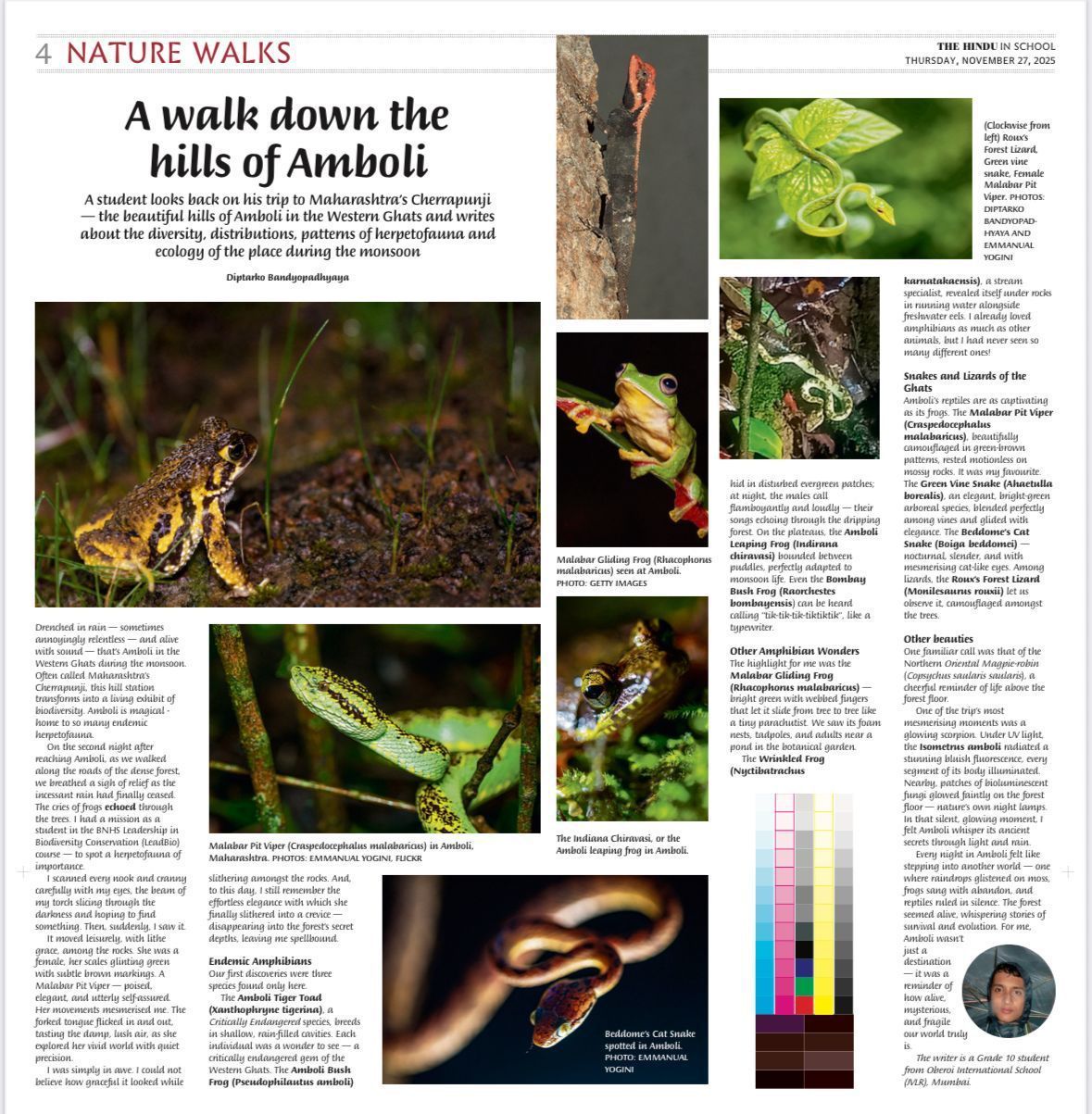
Herpetofauna in Amboli Mountains during monsoon
Monsoon transforms the misty mountains of Amboli in Sindhudurg district, nestled in the Western Ghats of Maharashtra into a biodiversity wonderland, particularly for herpetofauna, lots of Amphibians (Amphibia) and Reptiles (Reptilia): including endemic plateau dwellers, such as the Amboli tiger toad (Beduka amboli) and Amboli leaping frog (Indirana chiravasi).
Endemic amphibians which we sighted in Amboli botanical garden: Amboli Tiger Toad (Eukaryota Animalia Chordata Amphibia Anura Bufonidae Beduka amboli) — Critically Endangered, known only from Amboli. Amboli Bush Frog (Eukaryota Animalia Chordata Amphibia Anura Rhacophoridae Pseudophilautus amboli). Amboli Leaping Frog (Eukaryota Animalia Chordata Amphibia Anura Ranixalidae Indirana chiravasi).
Snakes we sighted: Malabar Pit Viper (Eukaryota Animalia Chordata Reptilia Squamata Viperidae Craspedocephalus malabaricus). Green Vine Snake (Eukaryota Animalia Chordata Reptilia Squamata Colubridae Ahaetulla borealis). A. borealis, is endemic to sites, including Amboli. Beddome's Cat Snake (Eukaryota Animalia Chordata Reptilia Squamata Colubridae Boiga beddomei).
Other amphibians we sighted: Malabar Gliding Frog (Eukaryota Animalia Chordata Amphibia Anura Rhacophoridae Rhacophorus malabaricus) — tree-dwelling, breeds in rain puddles under canopy; glides between trees; we saw egg clutches, tadpoles and adult frogs near the pond in the botanical garden. Wrinkled Frog (Eukaryota Animalia Chordata Amphibia Anura Nyctibatrachidae Nyctibatrachus karnatakaensis) — stream shore specialist; we observed emerging tadpoles under rocks in flowing streams.
In Amboli Forest Park, located off Chalkul (Chaukul)-Amboli Road — we spotted pit vipers, vine snakes, endemic frogs, fluorescent scorpions, caterpillars and toads during our night trek of 3 hours among roads, streams etc. One of the most memorable sightings that evening was Isometrus amboli (Buthidae = Arrowbreasted Scorpions). When illuminated with a UV flashlight, the scorpion glowed due to fluorescent compounds in its exoskeleton—a distinct bluish-green glow—highlighting its segmented body and tail. We even saw bioluminescent fungi on the roadside forest floor, nature's natural lantern.
Can you share a photo from one of your nature walks that you found inspiring, and what makes it special to you?
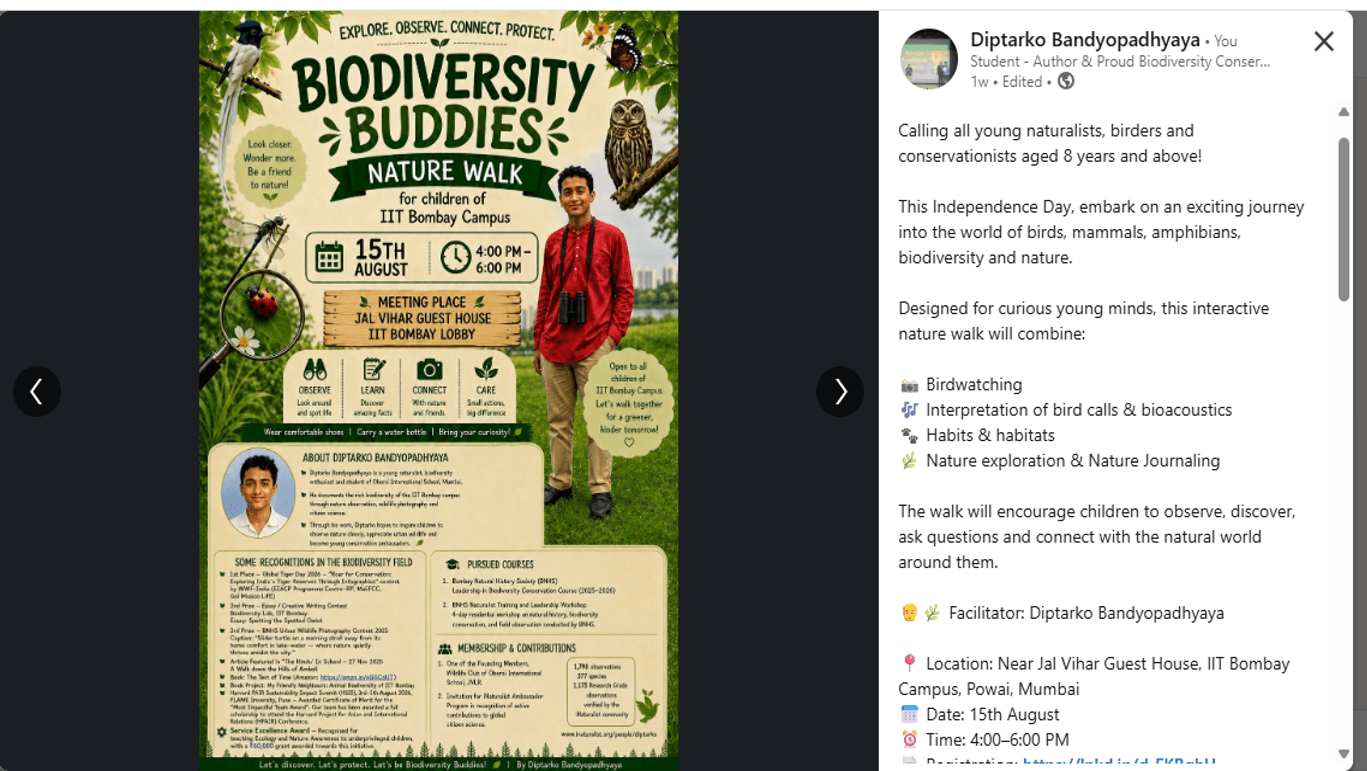
I am particularly interested in biodiversity, environmental conservation, and creating awareness among children about the importance of protecting nature. I would like to build upon my interest in environmental issues through Biodiversity Buddies, an initiative I founded to create awareness about biodiversity and conservation among children. I use engaging ways of communicating environmental concepts to younger students, such as interactive activities, presentations, storytelling, educational materials, and biodiversity-related projects.
How do you integrate photography and writing in your storytelling?
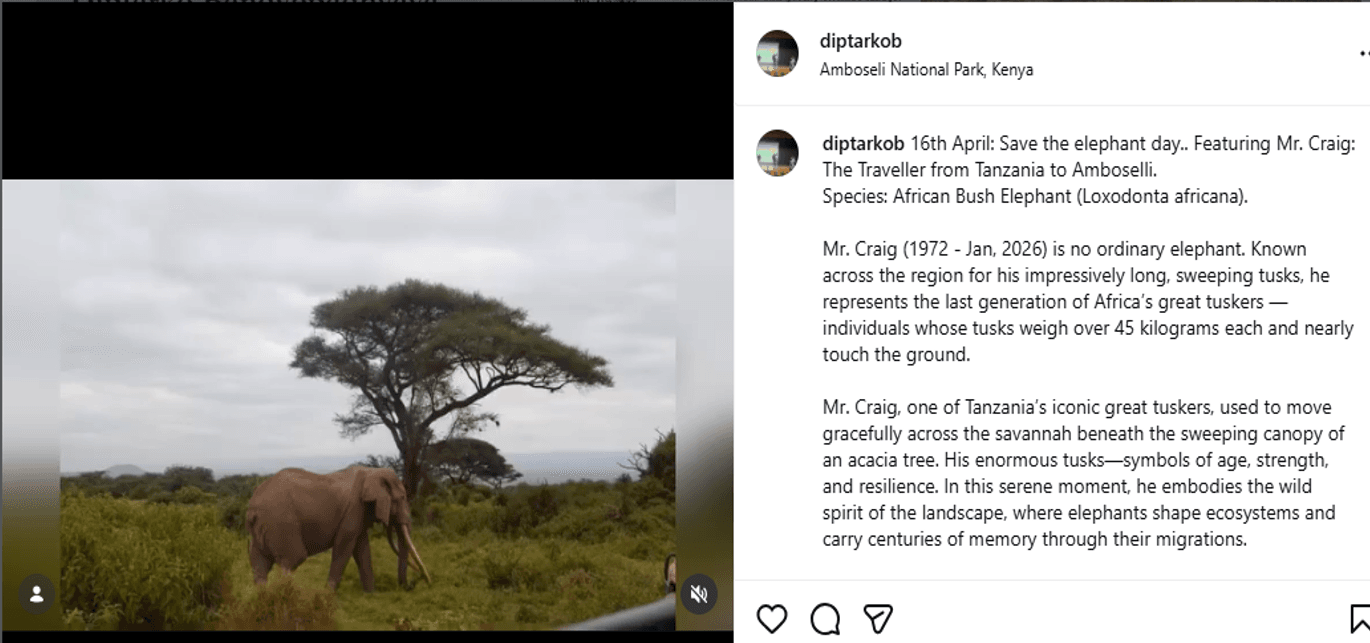
For me, photography and writing are two complementary ways of telling the same story. A photograph captures the moment, while writing provides the context, emotion and meaning behind it. I often begin with an observation in the field—a bird, an animal, or a small moment of interaction between wildlife and its surroundings. Photography helps me pause and notice the details, while writing allows me to explore what that moment tells us about the species and its environment.
My experience with urban wildlife has taught me that even an ordinary sighting can become a meaningful story. For example, my photograph of a slider turtle during a morning walk, which received Third Prize in the BNHS Urban Wildlife Photography Contest 2025, was accompanied by a caption reflecting on the animal moving away from its familiar lake habitat and the quiet presence of nature within the city.
I also use this combination in my documentary and biodiversity projects. While documenting 'My Friendly Neighbours: Animal Biodiversity of IIT Bombay', photography helps me record what I encounter, while writing helps me communicate the larger idea of human–wildlife coexistence in an urban ecosystem.
Ultimately, I don't see photography and writing as separate activities. The camera helps me observe; writing helps me reflect; and together they help me tell a story that can connect people with nature. Through this approach, I hope to make wildlife storytelling both visually engaging and meaningful, while encouraging people—especially young people—to look more closely at the biodiversity around them.
What piece of your work best represents your connection to conservation, and what message does it carry?
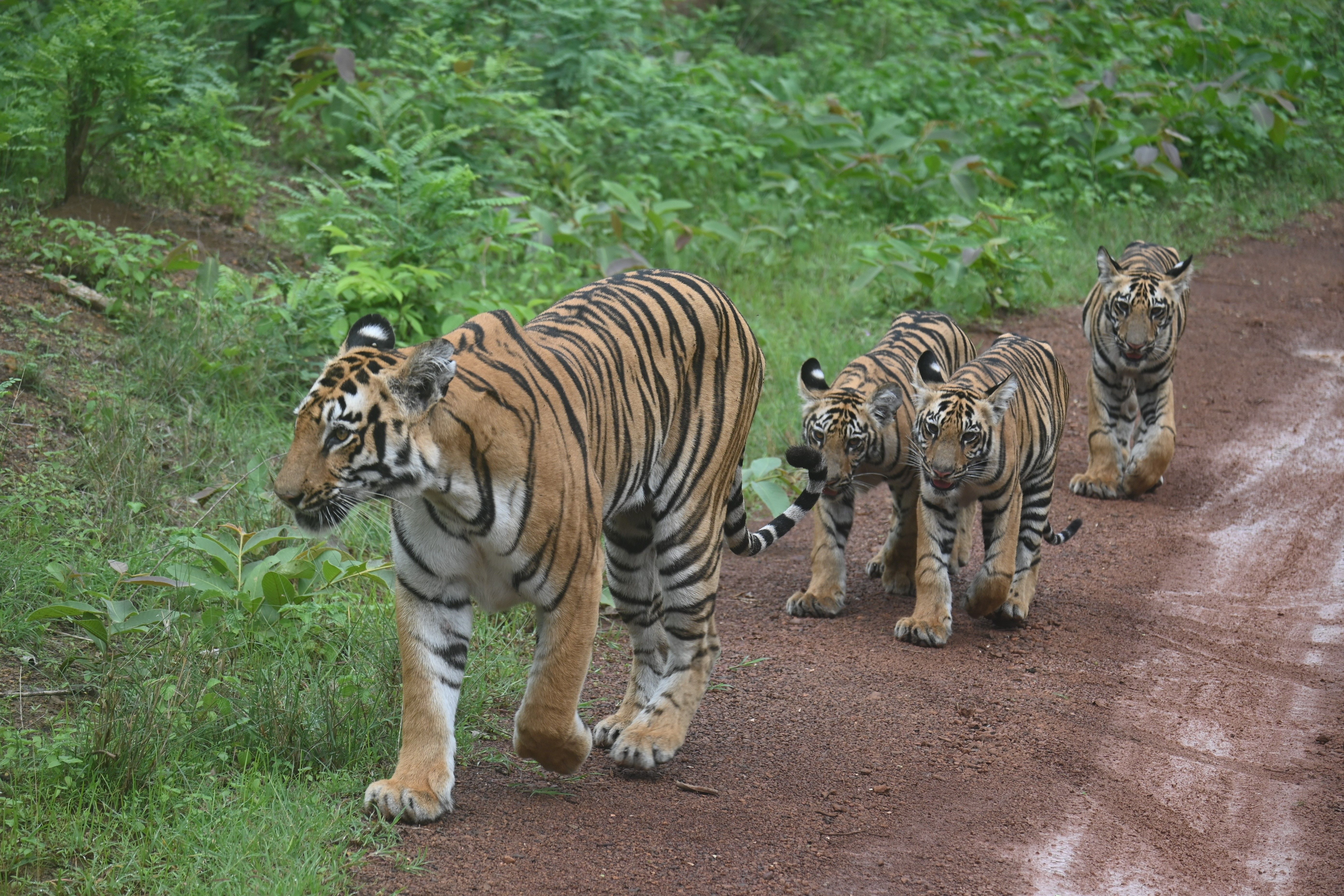
Category: Animals in Their Habitat · Species: Bengal Tiger (Panthera tigris tigris) · Location: Kolara Chauradeo Buffer Zone, Tadoba National Park · Date of Capture: 18-07-2026 · Camera: Nikon Z 30
Mamma and the baby, together these two explore the sights and smells of the jungle – lost in their own world, oblivious of us visitors, but supreme and royal masters of their surroundings. The second and third cub also joined them soon. Her three siblings were quick on Junabai’s trail, but the fourth cub lagged behind slightly, some 30 meters away, unable to catch up. So it uttered a hoarse, throaty sound, which immediately signalled Junabai to stop, and then the fourth cub quickly caught up with mother and three siblings.
My work on tigers and cubs in Tadoba focuses on the delicate balance between protecting a species and protecting the ecosystem that allows it to thrive. A tigress with her cubs represents not just the beauty of wildlife, but the future of the tiger population. Every cub that survives contributes to the continuity of a species and the ecological health of the forest.
Through my storytelling and photography, I want to highlight that tiger conservation is much more than protecting an iconic animal. It involves protecting forests and prey populations, maintaining safe habitats and corridors, reducing human–wildlife conflict, preventing poaching, and ensuring that wildlife and local communities can coexist.
My presentation, "Lens N Light: The Hidden Gem of the Little Rann of Kutch — Wildlife," was created during our school trip to the Little Rann of Kutch to share what I observed and build awareness about conservation among my classmates. I wanted to show them that even an arid landscape can support extraordinary biodiversity and that protecting these ecosystems is as important as protecting forests.
The Little Rann of Kutch, a Ramsar Wetland and part of the Indian Wild Ass Sanctuary, along with surrounding areas such as Dasada, plays an important role in sustaining migratory bird populations. Through my presentation, I highlighted both the ecological richness of the region and the challenges threatening this fragile ecosystem.
I focused on key conservation priorities such as protecting critical habitats, monitoring migratory birds, promoting responsible eco-tourism and sustainable livelihoods, combating desertification and the impacts of salt extraction, managing water resources, and creating awareness among local communities.
I also spoke about the major conservation challenges, including habitat degradation from salt extraction, human–wildlife conflict, climate change and changing water availability, and poaching.
The central message of my presentation was that conservation cannot happen without people. Protecting wildlife means protecting habitats while also engaging and supporting the communities that live alongside them. The biodiversity of Dasada and the Little Rann of Kutch demonstrates the remarkable ecological richness of arid landscapes, and I wanted my classmates to understand that these seemingly barren landscapes are actually vibrant ecosystems that need our attention and care.
Ultimately, I hope my presentation encouraged my classmates to look beyond what they see on the surface—to recognise the hidden life of the Little Rann of Kutch and our responsibility to conserve it for future generations.
Can you show us a photo or video of you in action, and what's the story behind it?
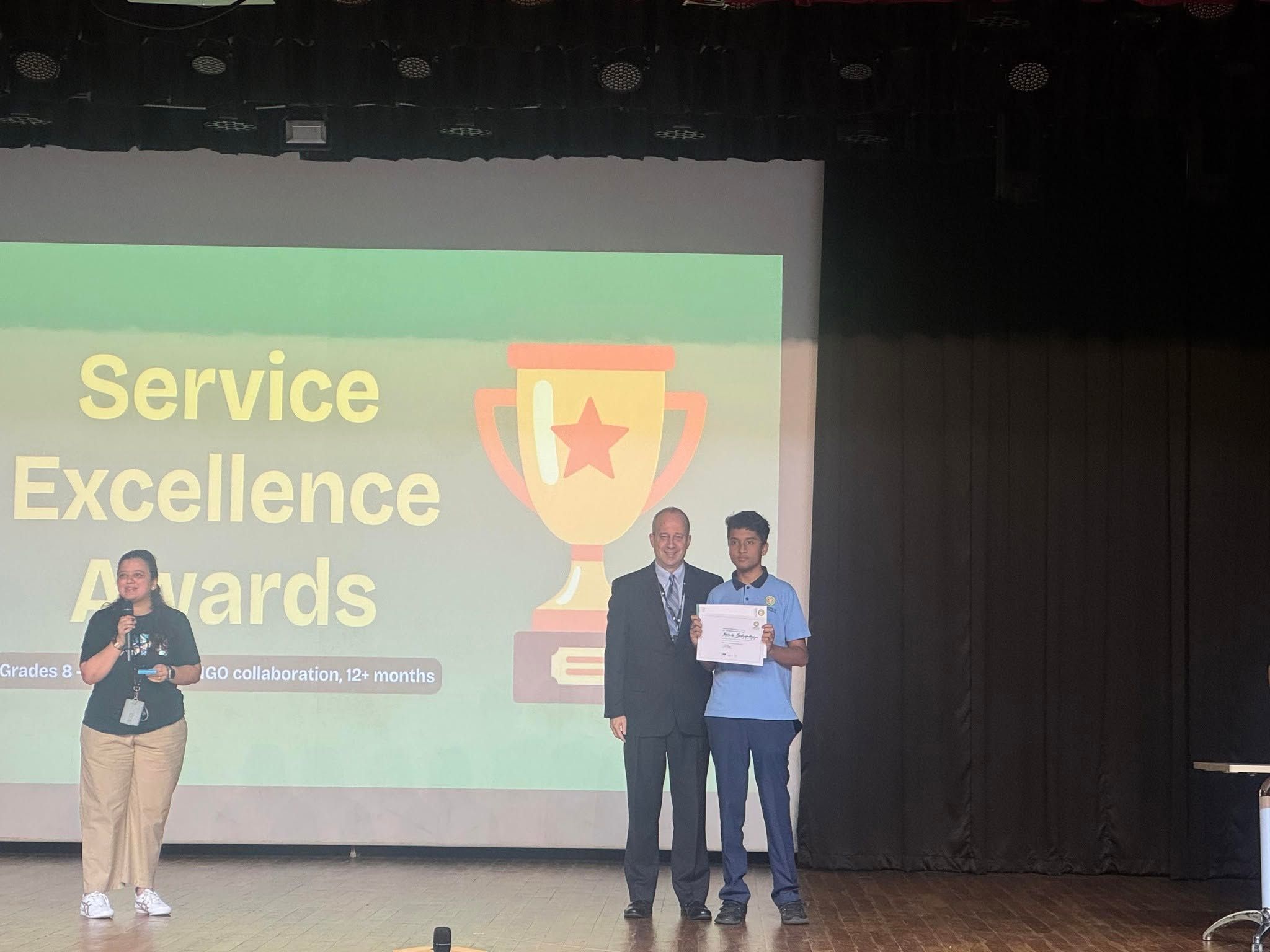
The photograph and video capture a particularly meaningful moment in my journey of community service—the Oberoi International School Service Excellence Award 2025–26 ceremony. The award recognised my sustained involvement in volunteering at Aman Day Care Centre, where I volunteered for over a year, working with children from Grades 3–8.
At Aman Day Care Centre, I taught Mathematics, English, Hindi, Ecology and Chess, while also developing interactive quizzes, puzzles and differentiated learning activities to make learning engaging and accessible in a multigrade classroom. The experience taught me that education is not just about teaching a subject; it is about understanding each child, finding creative ways to communicate, and making them feel confident about learning.
Receiving the Service Excellence Award was therefore much more than a personal achievement. The INR 60,000 grant awarded towards supporting the initiative made the recognition even more meaningful, because it provided an opportunity to extend the impact of the work beyond my individual volunteering.
So, when I look at that photograph or video, I don't just see an award ceremony. I see a reminder of the children, the lessons we shared, and how volunteering taught me that even small, consistent efforts can create meaningful change.
Contact and Follow
Email: diptarkobandyo@gmail.com
Instagram: https://www.instagram.com/diptarkob/?hl=en
YouTube: https://www.youtube.com/@diptarkoactions
LinkedIn: https://www.linkedin.com/in/diptarko-bandyopadhyaya-7675a9227/
iNaturalist: https://www.inaturalist.org/people/diptarko