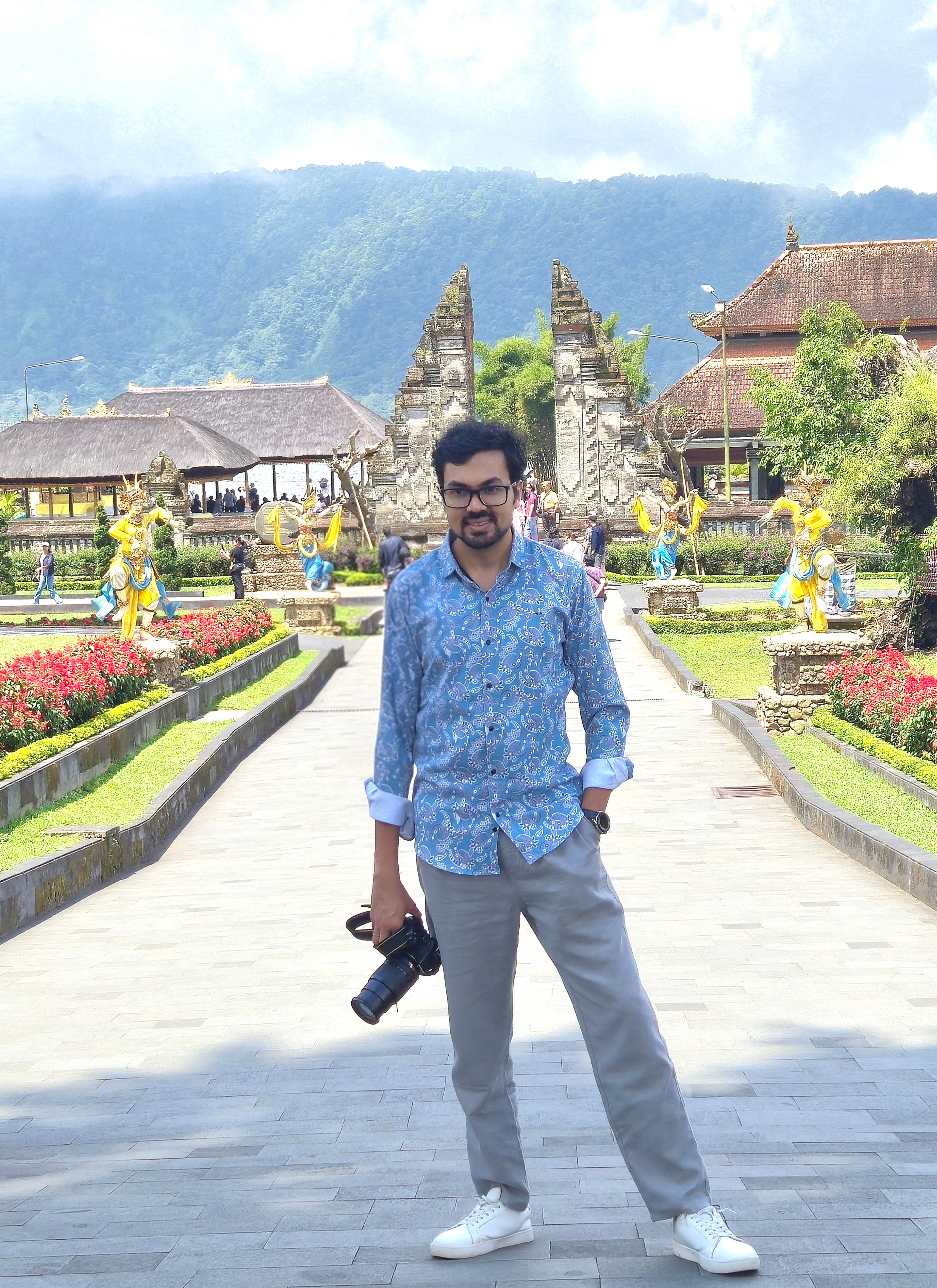



How did your journey into wildlife and travel photography begin in the Nilgiris?
My journey into wildlife and travel photography began in the Nilgiris, a place where nature is not something distant; it is part of everyday life. Growing up surrounded by dense forests, misty mountains, and rich biodiversity naturally drew me closer to the wild. More specifically, it started in Coonoor, my hometown in the Nilgiri Hills, a place that naturally keeps me calm and connected to nature. From a young age, I used to travel in and around the Nilgiris, exploring the forests and landscapes that make this region so unique. Living near the diverse ecosystems gave me the invaluable opportunity to observe wildlife in their natural habitats, which became the foundation for my passion and my craft.
Tell us about a time in the field when you felt you had truly captured a 'decisive moment' with wildlife.
I was in a safari jeep when a young elephant suddenly noticed me and charged toward the vehicle out of curiosity and excitement. Before the situation could escalate, the mother elephant calmly stepped in. She gently knocked the young one on its head, signaling it to stop, and guided it to stand beside her. Immediately, the herd responded by forming a protective circle, placing all the younger elephants safely within the group. Watching this moment unfold was incredible—it was so relatable. The protectiveness and the intelligence of the elephants were amazing to witness and capture, perfectly illustrating the complex social bonds within the herd.
Over the years, which skill has grown the most for you: composition, fieldcraft, or working with light?
My composition and fieldcraft have improved significantly over time. Learning to see things from different angles and perspectives has helped me develop a much stronger sense of composition in my photographs. At the same time, patience and field awareness have played a major role in honing my fieldcraft. Spending extensive time in the wild has taught me how to read the environment, understand animal behavior, and anticipate moments before they happen. This combination of a creative eye and practical wilderness skills has been fundamental to my growth as a photographer.
What's one personal habit that helps you stay patient and observant while waiting for the perfect shot?
One personal habit that helps me stay patient and observant in the wild is spending time quietly observing the environment before even thinking about taking a photograph. I make a conscious effort to pay attention to the small details—the movement of leaves, distant sounds, bird calls, and subtle changes in light. This practice of being calm, present, and ready for anything has helped me immensely. It allows me to connect with the scene, understand the rhythm of the wild, and be prepared to capture a moment when it naturally arises, rather than forcing it.
Which photograph from your portfolio do you consider your strongest wildlife image, and what makes it special?

This photograph was taken in the serene Kodaikanal Pine Forest during a cold evening. The weather was chilly, and two monkeys were actively playing among the branches of the tall pine trees. As the temperature dropped, they began interacting closely, hugging and staying near each other to keep warm. In this moment, one monkey gently held the other, creating a beautiful scene of warmth and friendship between them. It's a tender, spontaneous interaction that speaks to the social bonds in the animal kingdom, all set against the quiet, misty backdrop of the pine forest.
Could you share a travel photograph that best captures your sense of place and the experience of the journey?

This photograph captures the essence of a wildlife safari moving quietly through the forest of Mudumalai National Park. An open safari jeep travels slowly along a narrow dirt trail, surrounded by dense foliage. For me, this image conveys that travel is not just about reaching a destination; it's about the experience along the way. It shows the anticipation, the slow immersion into nature, and the feeling of being a small part of a vast, living landscape. It's a reminder to savor the journey itself.
Walk us through your editing process. What were the key adjustments you made to transform this raw shot into your final image?


For this before-and-after pair, the top two edits were exposure and light. I adjusted the exposure to enhance the overall brightness and clarity of the image, ensuring the subject was properly lit without losing detail in the shadows or highlights. I also worked on the light balance to bring out the natural tones and mood of the scene. These adjustments were crucial for transforming a flat, raw file into a vibrant final photograph that accurately reflects the atmosphere and energy I witnessed in the field.
What does a challenging day in the field look like for you, and how do you adapt to the conditions?
During a safari in Mudumalai National Park, I encountered a herd of elephants moving through the forest. I was trying to photograph them, but the situation was quite challenging. The light was slightly harsh since it was during the daytime, and both the elephants and the safari jeep were constantly moving. To adapt, I had to work quickly—adjusting my shutter speed to freeze motion, carefully tracking the animals' movement, and waiting for moments when they paused or changed direction. By combining these quick technical adjustments with patience and careful observation of the elephants’ movement patterns, I was able to capture the scene despite the difficult, dynamic conditions.
What's in your bag for a typical safari or trek? What are your non-negotiable essentials?

My top five essentials are a battery backup, a telephoto lens, a monopod, extra memory storage, and a water bottle. A battery backup is crucial because you never know how long you'll be out in the field waiting for the right moment. The telephoto lens allows me to capture wildlife from a respectful distance without disturbing them. The monopod provides essential stability for sharp shots, especially with heavy lenses. Ample memory storage means I never have to worry about missing a shot due to a full card. Finally, a water bottle is a simple but vital piece of gear for staying hydrated and focused during long hours in often harsh conditions.
Could you share an image where composition is the central strength, and explain your creative choices?

In this image, I was deliberately arranging the main subjects—two peafowl—along a diagonal tree branch that runs across the frame. This diagonal line naturally guides the viewer’s eye from the lower left toward the upper right of the image, creating a dynamic flow. I also consciously used the negative space around the birds to emphasize their elegance and isolation within the scene. To time the moment, I waited patiently for both birds to be positioned in a visually pleasing way along that leading line, with their poses complementing each other, before pressing the shutter.
What differences in behavior or environment do you hope viewers see when comparing these two documentary images?


From my experience in the field, I want viewers to notice the distinct differences in behavior and environment. Elephants in Mudumalai National Park, with its open scrublands, tend to be calmer and more visible around humans. In contrast, elephants in the dense, misty shola forests of the Nilgiri Hills are often more elusive and behave differently due to the thicker cover and different terrain. The light also plays a role—it can be softer and more diffused in the forest versus the often sharper, more direct light in the open grasslands. These images highlight how the same species adapts its presence and behavior to two unique landscapes.
Contact and Follow
Email: vishalviahal7004@gmail.com
Portfolio/Social: vdotphotographi