

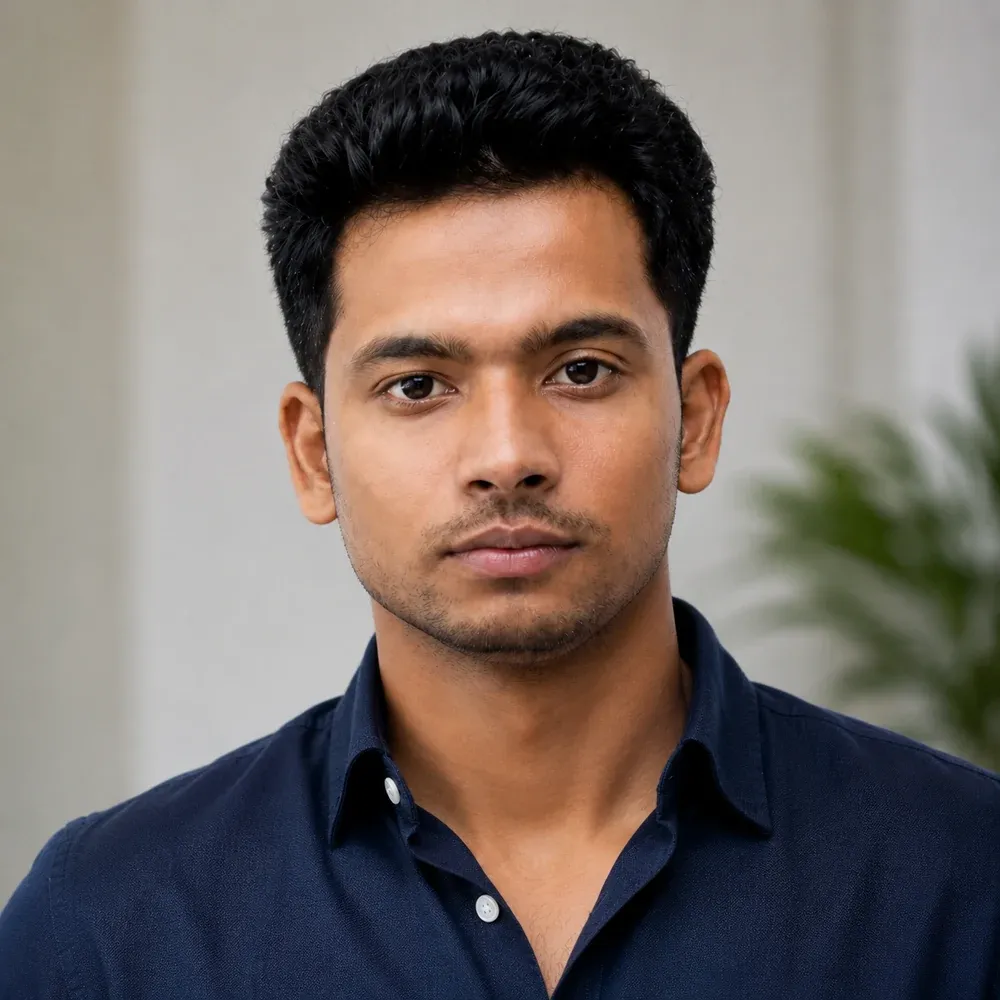
Take us back to the very beginning of FliqaIndia in Kolkata — what was the first spark that made you want to build a creative studio rather than just shoot on your own?
The first spark behind FliqaIndia came from something I kept noticing around me in Kolkata: there was no shortage of talented photographers and creative professionals, but the industry itself was highly fragmented. Great talent existed everywhere, yet clients often struggled to find reliable creative professionals, while photographers struggled with visibility, consistent opportunities, and a structured way to grow.
I loved photography, but I soon realized that I did not want to build something that depended only on me being behind the camera. I wanted to create something larger—a platform where creative talent, technology, and real opportunities could come together.
That idea became the foundation of FliqaIndia. We started with photography and creative services, focusing on making the experience more organized, accessible, and dependable for both clients and creators. Over time, the vision naturally grew beyond being just a creative studio. We began thinking about the entire ecosystem around a creative professional: how they find work, manage clients, deliver their work, use technology, build credibility, and grow their career.
Kolkata is where that journey began, and it shaped a lot of our thinking. We started locally, but from the beginning, the ambition was much bigger than one city. The goal was to build an ecosystem that could connect creative professionals and customers across India while using technology to solve the everyday challenges of the creative industry.
Looking back, the real first spark was not simply a desire to take better photographs. It was the belief that creativity deserves better infrastructure, better opportunities, and a stronger ecosystem around it. That belief eventually became FliqaIndia.
Was there one early project that felt like a turning point — the moment you realised FliqaIndia could really become something?
Yes. One of the biggest turning points was when we started getting projects where clients were not simply looking for a photographer—they were trusting us with their entire visual story.
That was when I realised FliqaIndia could be much more than a photography studio. We could build a professional creative ecosystem that connects clients with the right talent, manages projects at scale, and uses technology to make the entire experience better.
That early trust from clients gave us the confidence to think beyond individual shoots. It made the vision feel real: FliqaIndia could become a platform that makes professional photography and creative services more accessible, organised, and scalable.
Your bio talks about "creating memories and crafting moments." What does that idea actually mean to your team on set, day to day?
For us, "creating memories and crafting moments" is not just a line in our bio—it is a principle that influences how we approach every project.
On set, it starts with understanding people before picking up the camera. Whether we are documenting a wedding, a personal celebration, a brand event, or a commercial project, we first try to understand what the moment means to the people involved. The emotion, relationships, atmosphere, timing, and even the small unscripted details often matter more than a perfectly posed frame.
We also believe that meaningful moments cannot always be manufactured. Our job is to create the right environment, observe carefully, anticipate what is about to happen, and be ready when something genuine unfolds. Sometimes the photograph that becomes most valuable to a client is not the one we planned—it is a fleeting expression or interaction that lasted only a few seconds.
Day to day, "crafting" also means taking responsibility for everything around that moment: preparation, communication, creative direction, coordination, consistency, editing, and final delivery. Creativity is important, but so is making the entire experience comfortable and dependable for the client.
Ultimately, our goal is simple: years later, when someone looks at an image created by FliqaIndia, we want them to remember not only how that moment looked, but how it felt.
That, to us, is the difference between simply taking photographs and creating memories.
You cover everything from weddings to corporate films to drone work under one roof. How do you keep a single FliqaIndia signature across such different kinds of shoots?
The subject may change, but our way of seeing a story does not. That is how we try to maintain a FliqaIndia signature across very different kinds of work.
A wedding, a corporate film, a travel story, or an aerial sequence naturally requires a different visual language. We do not believe in forcing the same editing style, colour palette, or shooting technique onto every project. Instead, we begin by asking the same questions: What is the story? Who is it for? What should the audience feel, and what moments will communicate that most honestly?
From there, the treatment changes according to the project. At a wedding, we may focus on relationships, expressions, traditions, and moments that cannot be repeated. For a corporate film, clarity, purpose, people, and brand identity become more important. With travel and drone work, scale, movement, atmosphere, and a sense of place may lead the storytelling.
What remains consistent is our approach—thoughtful preparation, strong composition, attention to genuine moments, visual consistency, and careful post-production. We also work with a structured creative process so that even when different photographers, filmmakers, editors, or specialists are involved, everyone understands the brief and the standard we are trying to achieve.
For me, the FliqaIndia signature is therefore not a preset or a particular camera technique. It is the balance between storytelling, emotion, technical discipline, and reliability.
I would rather have people recognise our work by the care behind it than by a filter applied to it. If very different projects can still leave the audience feeling that every frame had a reason to exist, then we have maintained our signature.
Which wedding film are you especially proud of, and what made it stand out?
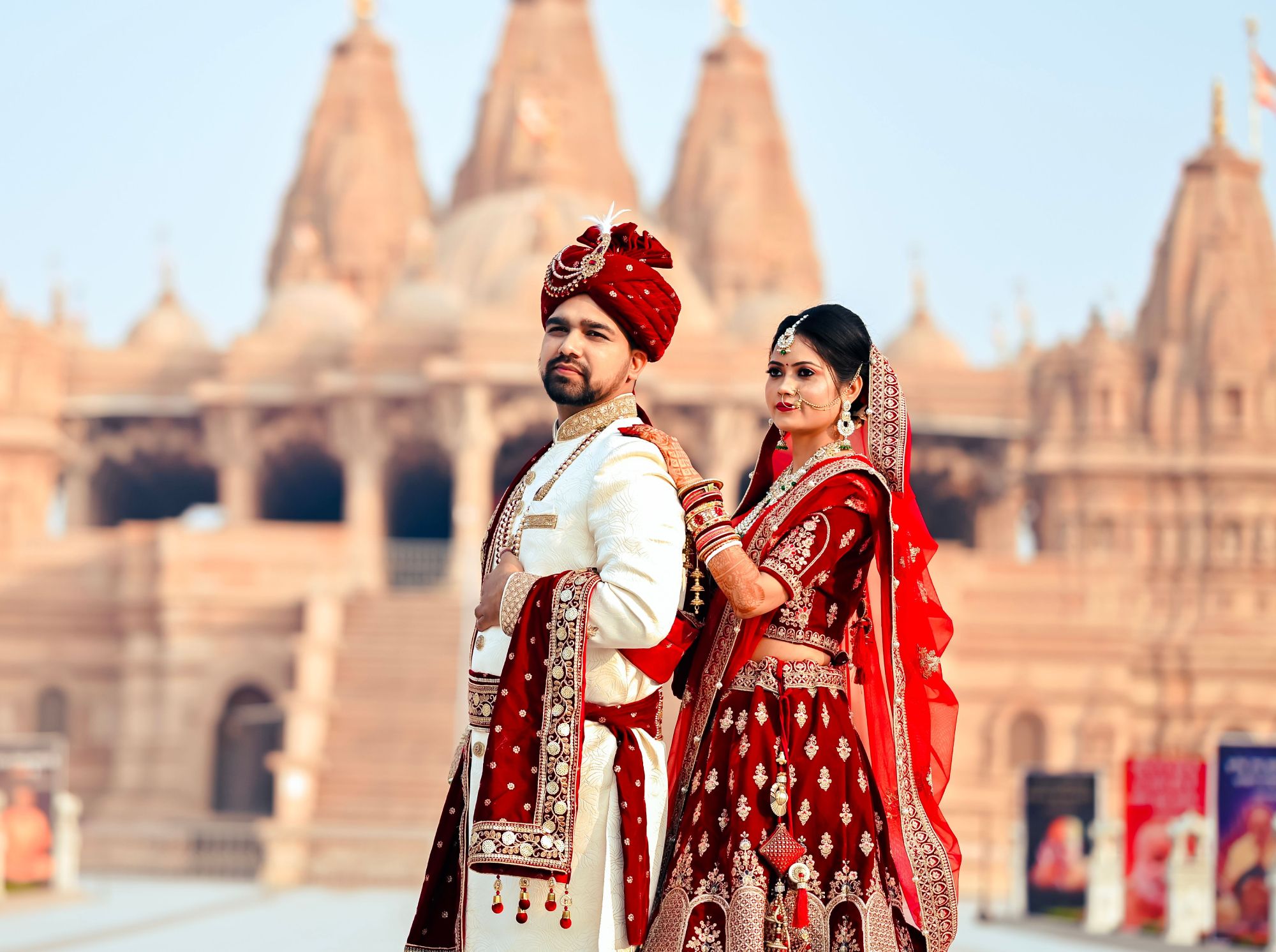
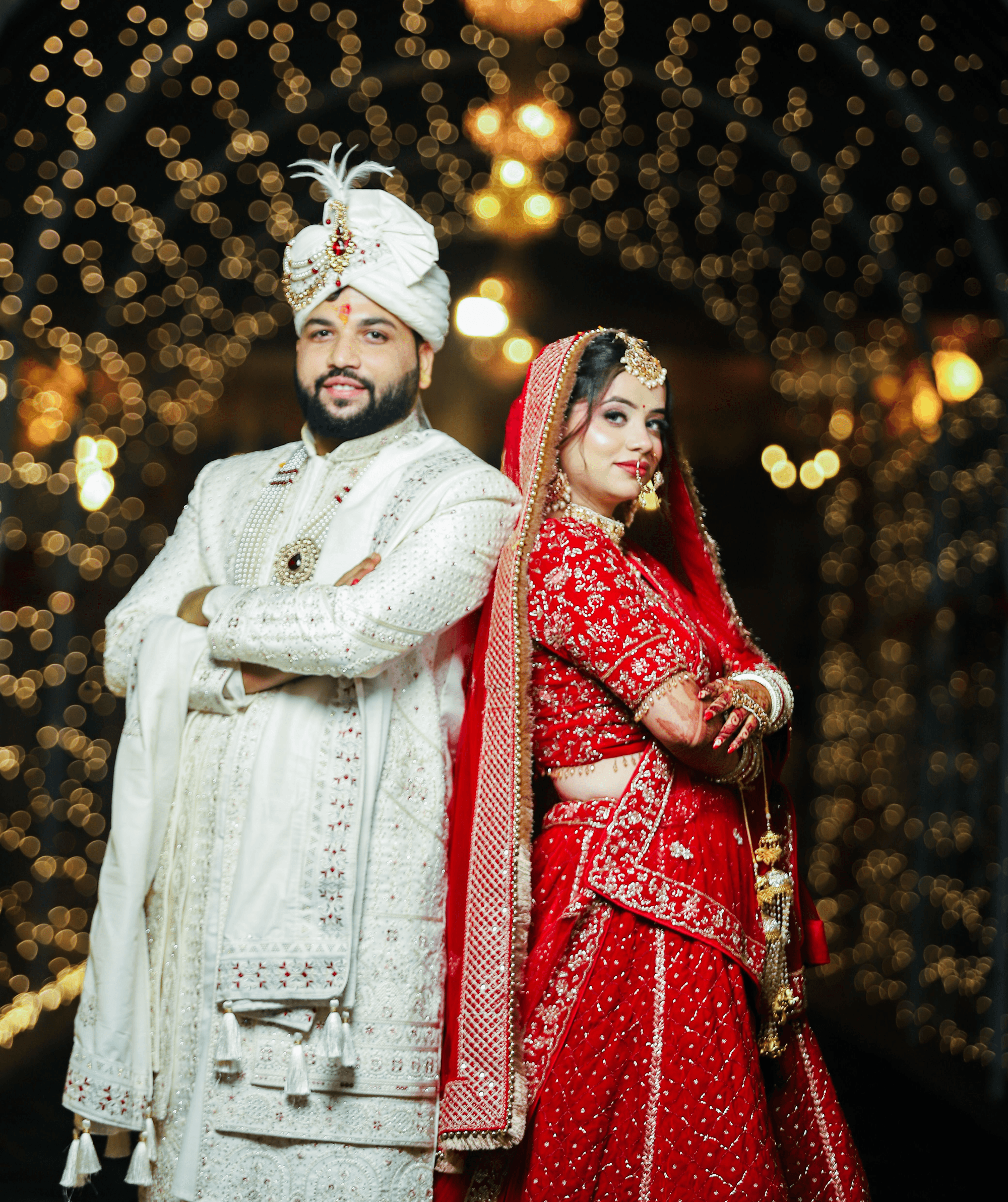
What was it about this couple's day that shaped how you filmed and edited it?
What shaped our approach most was how naturally the day unfolded. There was a genuine warmth between the couple, their families, and the people around them, and we quickly realised that the strongest story was already happening in front of us. We did not need to manufacture it.
So rather than turning the wedding into a series of staged shots, we focused on observing. We looked for the small things—the anticipation before a ceremony, a glance between the couple, laughter with friends, the reactions of parents, and those quiet moments that can easily disappear when everyone is focused on the larger celebrations.
That also influenced how we filmed. We tried to remain unobtrusive during emotional moments and used more direction only when it genuinely added something visually. The intention was always to let the couple experience their wedding rather than feel as though they were performing for the camera.
The same philosophy carried into the edit. Instead of simply presenting the day as a chronological sequence of events, we built the film around its emotional rhythm—moving between energy, intimacy, celebration, and quieter moments. Music, natural sound, pacing, and transitions were chosen to support that journey rather than overpower it.
For us, the finished film needed to do more than show them what happened. We wanted it to bring back what the day felt like.
That is ultimately what shaped both the filming and the edit: preserving the personality of their wedding instead of imposing our own version of what a wedding film should be.
What's a favourite frame or clip from your Royal Enfield corporate work in Kasol?
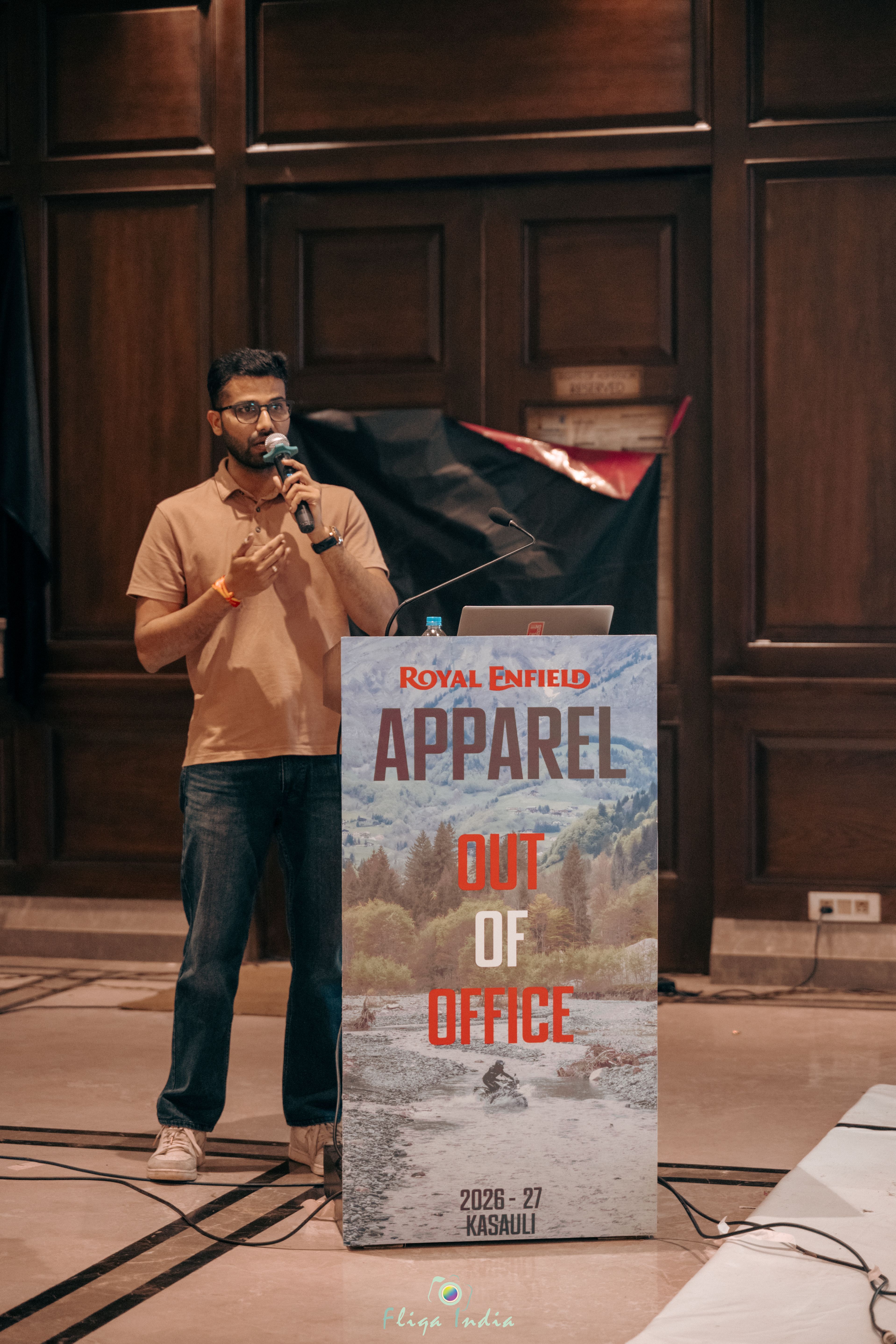
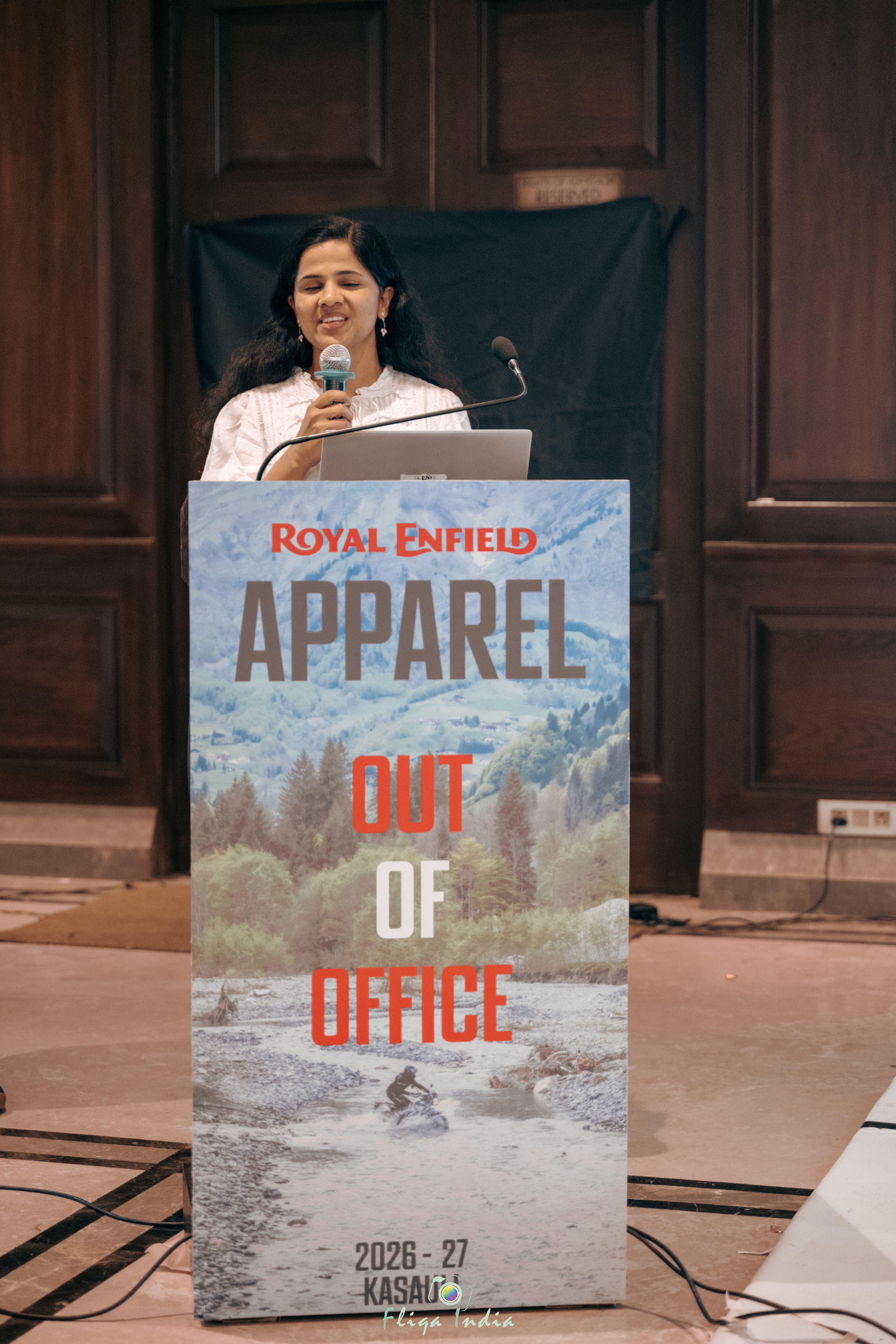
How is capturing a brand's corporate event different from covering a wedding for your team?
For our team, the biggest difference is not the camera or the equipment—it is the purpose behind the story we are documenting.
A wedding is deeply personal. We are documenting relationships, traditions, anticipation, laughter, and emotions that often happen only once. In that environment, our team tries to be as unobtrusive as possible, allowing genuine moments to unfold naturally while still giving creative direction when it is needed.
A corporate event requires a different mindset. Before we begin shooting, we need to understand the brand, the objective of the event, the audience, and how the final content will be used. We are not only capturing what happened; we are creating visual assets that may later represent the brand across social media, campaigns, internal communication, PR, or marketing.
That changes what we look for. Along with people and emotions, we pay close attention to branding, products, speakers, audience engagement, key interactions, venue scale, important stakeholders, and the overall energy of the experience. Timing and coordination also become critical because certain moments cannot be recreated.
With projects such as Royal Enfield, this becomes especially interesting because the brand already has such a strong visual identity. Our responsibility is to respect that identity while still bringing FliqaIndia's storytelling perspective to the coverage.
But whether we are covering a wedding or a corporate event, one principle remains the same: understand why the moment matters before deciding how to capture it.
If we do that well, the final photographs or film do more than document an event—they communicate what it felt like to be there.
What's a drone shot from your Kerala aerial reel that you love?
What did shooting Kerala from above let you show that a ground-level camera never could?
Shooting Kerala from above changed the way we understood the landscape. At ground level, you experience Kerala in beautiful fragments—a winding road, a stretch of backwater, a tea garden, a village, a coastline, or people moving through their everyday lives. From the air, suddenly all of those fragments become part of one larger story.
What fascinated us most was the relationship between nature and human life. We could see roads weaving through dense greenery, settlements forming around water, boats moving across the backwaters, plantations following the contours of the land, and tiny human movements surrounded by an enormous landscape. Those patterns are almost impossible to appreciate from ground level.
Drone cinematography also gave us a sense of scale. A person, vehicle, or boat that feels significant from the ground can become a small element within Kerala's vast natural environment. That contrast created some of the most powerful frames for us.
But we never wanted the drone simply to provide a spectacular aerial shot. We wanted every movement to reveal something—geography, scale, connection, or a transition in the story.
From the ground, we could capture moments within Kerala. From the sky, we could show how those moments belong to Kerala.
That wider perspective is what made the aerial work so special for us.
What's a behind-the-scenes moment of the FliqaIndia team at work that you'd like to share?
Who's in this shot, and what role does each person play in bringing a project to life?
This video captures our team in the middle of a real production, and what I like about it is that you can see how collaborative the process actually is.
Different members of the team are working simultaneously—our photographers are looking for strong compositions and genuine moments, while the cinematography team is capturing movement and the same scene from different angles to build a more complete visual story. Other team members support the production by coordinating shots, monitoring what is happening around the set, and making sure important moments are not missed.
What may look like several people simply holding cameras is actually a coordinated process. Each person is thinking differently: one may be focused on a wide establishing frame, another on expressions and details, while someone else is capturing movement that will help connect the sequence during editing.
That coordination continues after the shoot, when our editors and post-production team bring all of those perspectives together into one consistent final story.
At FliqaIndia, bringing a project to life is never the work of one camera or one person. It is the result of multiple creative perspectives working toward the same story.
What's a reel where the edit itself is something you're really proud of?
What was the trickiest part of the edit on this one, and how did your post-production team crack it?
The trickiest part of this edit was creating a sense of scale and movement without letting the aerial footage become repetitive. Varanasi has so much visual character that the challenge was not finding beautiful frames—it was deciding how to connect them into a story.
Our post-production team focused heavily on pacing. We selected aerial movements that complemented one another, matched direction and motion between shots, and used the music and sound design to control when the edit should feel energetic and when a frame needed more time to breathe.
Colour was another important part of the process. We wanted to preserve the natural character of the river, architecture, boats, and landscape while giving the entire reel a consistent cinematic feel.
We also tried to use transitions with restraint. Rather than relying on effects, we looked for natural connections through movement, composition, scale, and perspective so that one shot could lead organically into the next.
The breakthrough was treating the drone not simply as a camera in the sky, but as a storytelling tool—using altitude, movement, and perspective to gradually reveal Varanasi.
That is what ultimately brought the edit together.
What are you creating right now or about to release?
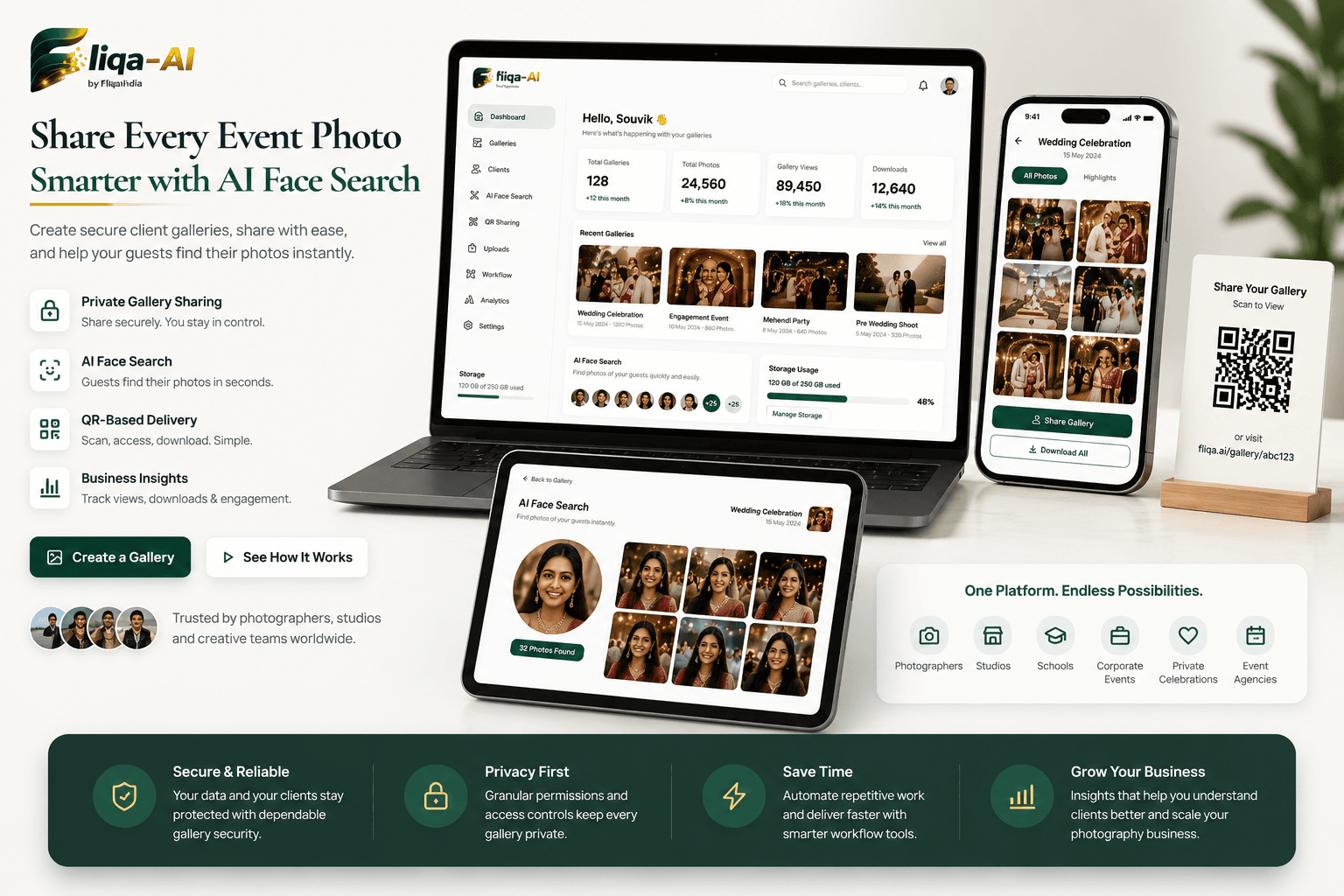
What has you excited about this new piece?
What excites us most about Fliqa AI is that it solves a problem we have experienced ourselves in the photography industry.
Capturing great photographs is only one part of the job. After an event, photographers and studios still have to organise thousands of images, deliver them securely, help clients find their photos, manage downloads, and create a professional experience after the shoot.
With Fliqa AI, we are bringing those steps into one connected workflow. Features such as private client galleries, QR-based sharing, AI Face Search, organised delivery, and gallery insights are designed to make the process simpler for creative professionals and more convenient for their clients.
What makes this especially exciting for us is that FliqaIndia is no longer only using technology to improve our own creative work—we are beginning to build technology from our real experience in the industry that can help other photographers and creative teams as well.
For us, Fliqa AI represents the next chapter of FliqaIndia: moving from creating great visual experiences to also building the tools that help the creative industry work smarter.
Looking ahead, where do you dream of taking FliqaIndia next — a kind of project or client you'd love to shoot but haven't yet?
My dream for FliqaIndia is much bigger than working with one particular client or completing one dream project. I want to build something that can change how professional photography and visual storytelling are experienced, delivered, and built as a career.
On the creative side, I want FliqaIndia to become one of the most trusted photography and visual production brands to emerge from India—known not only for weddings, but for destination photography, commercial campaigns, corporate productions, travel, fashion, automotive, hospitality, films, and large-scale visual projects. I would love to see our teams creating across India and eventually around the world, while maintaining the same standard of storytelling, reliability, and human connection.
But becoming a great photography company is only one part of the dream.
Over the years, I have realised that the creative industry needs more than talented people with cameras. Photographers and filmmakers need opportunities, technology, professional systems, stronger client experiences, and an ecosystem that allows them to build sustainable careers. Clients, on the other hand, need an easier and more dependable way to discover, book, work with, and receive their work from creative professionals.
That is the larger direction in which we are building FliqaIndia.
Through Fliqa Partner, I want us to create a strong professional network where photographers, filmmakers, drone operators, editors, and other creative talent can access meaningful projects, build credibility, and grow with us.
Through Fliqa AI, we are exploring how technology can improve what happens after the camera stops shooting—from intelligent photo discovery and private galleries to sharing, delivery, and better digital workflows for photographers, studios, and their clients.
Through Fliqa Studio, I want to make the professional photography experience more connected—from discovering and booking a service to managing the production and ultimately delivering the finished memories or creative assets to the client.
And I see all of these not as separate businesses, but as parts of one larger FliqaIndia ecosystem: clients create the demand, creative professionals bring the vision to life, our production network helps execute it at scale, and technology makes the entire journey smarter and more dependable.
One of my biggest dreams is to take this ecosystem far beyond the cities where we began—to build a strong creative network across India and, eventually, create opportunities and productions internationally. I want a talented photographer in a smaller city to have access to opportunities that may once have seemed out of reach, while a client or global brand can come to FliqaIndia and confidently execute a creative project across locations through one trusted ecosystem.
Of course, there are still dream projects I would love to shoot—global automotive campaigns, destination productions, major sporting and cultural events, luxury and hospitality campaigns, international weddings, and visual stories in extraordinary locations around the world. I want FliqaIndia's work to stand alongside the best creative production coming from anywhere.
But if you ask me about the ultimate dream, it is not simply to become the biggest photography company.
I want FliqaIndia to become one of the world's most trusted ecosystems for photography and visual creativity—where someone can come with a story, find the right creative talent, produce it professionally, use technology to manage and deliver it beautifully, and where the people behind the camera can build meaningful careers along the way.
If we can build that, then FliqaIndia will have achieved something far more meaningful than creating beautiful photographs. We will have helped build an infrastructure around creativity itself.
We started by capturing moments. The dream is to build an ecosystem that creates opportunities, empowers creators, serves clients, and takes Indian visual creativity to the world.
Contact and Follow
Email: support@fliqaindia.com
Website: FliqaIndia.com
Instagram: instagram.com/FliqaIndia
YouTube: youtube.com/FliqaIndia
Facebook: facebook.com/fliqaindia