

Your bio says you document your own chaos in monochrome. When did street photography first become the way you make sense of it?
Street photography was never something I set out to pursue. For the longest time, I was only interested in photographing what felt safe — landscapes and loved ones. But when I began taking early morning walks, I couldn’t look away from the quiet friction of the city starting its day. It started as an impulse to freeze moments I didn’t want to forget, and quickly became an indispensable ritual. Translating those street scenes into black and white gave structure to the internal rush — it turned everyday external movement into a quiet language where my own chaos could finally breathe.
Do you remember the first candid frame that made you think "this one's mine"? Tell us about it.
I remember it distinctly: an early morning, still half-asleep streets, and a young boy running down an alley with pure, uncalculated momentum. I didn’t overthink it — I just raised my phone, hit the shutter and immediately felt the spark. That was the moment casual observation turned into an obsession with the street. That single frame set the tone for everything I shoot today — a constant search for the quiet poetry, unexpected motion, and raw fragments of life that unfold right before our eyes.
What shaped your eye for black and white — what made you want to strip the colour out?
Street life, for me, has always felt wonderfully out of time. Color anchors an image firmly in the present, but stripping it down to black and white unlocks a classic, vintage soul that raw street moments deserve. It isolates the light, the grit, and the unvarnished mood. Because that experience is multi-sensory for me, I treat music as an extension of the monochrome frame — attaching a track to my posts on Instagram captures the cadence of the street and translates the exact retro frequency I was feeling when I hit the shutter.
Peddapuram shows up in your captions. What keeps pulling you back to shoot your own streets in Andhra?
There’s a distinct honesty to a place you’ve lived and worked in every single day. I spent three years in Peddapuram with my family, and it was along those quiet morning routes that my entire visual journey kicked off. What began as daily walks quickly evolved into a dedicated street photography ritual after that first spark of a frame. Shooting my own streets keeps pulling me back because familiarity reveals what a quick visitor misses — the quiet textures, the unscripted warmth, and the timeless simplicity of life waking up to a small town in Andhra.
Which monochrome street frame feels most like your signature?
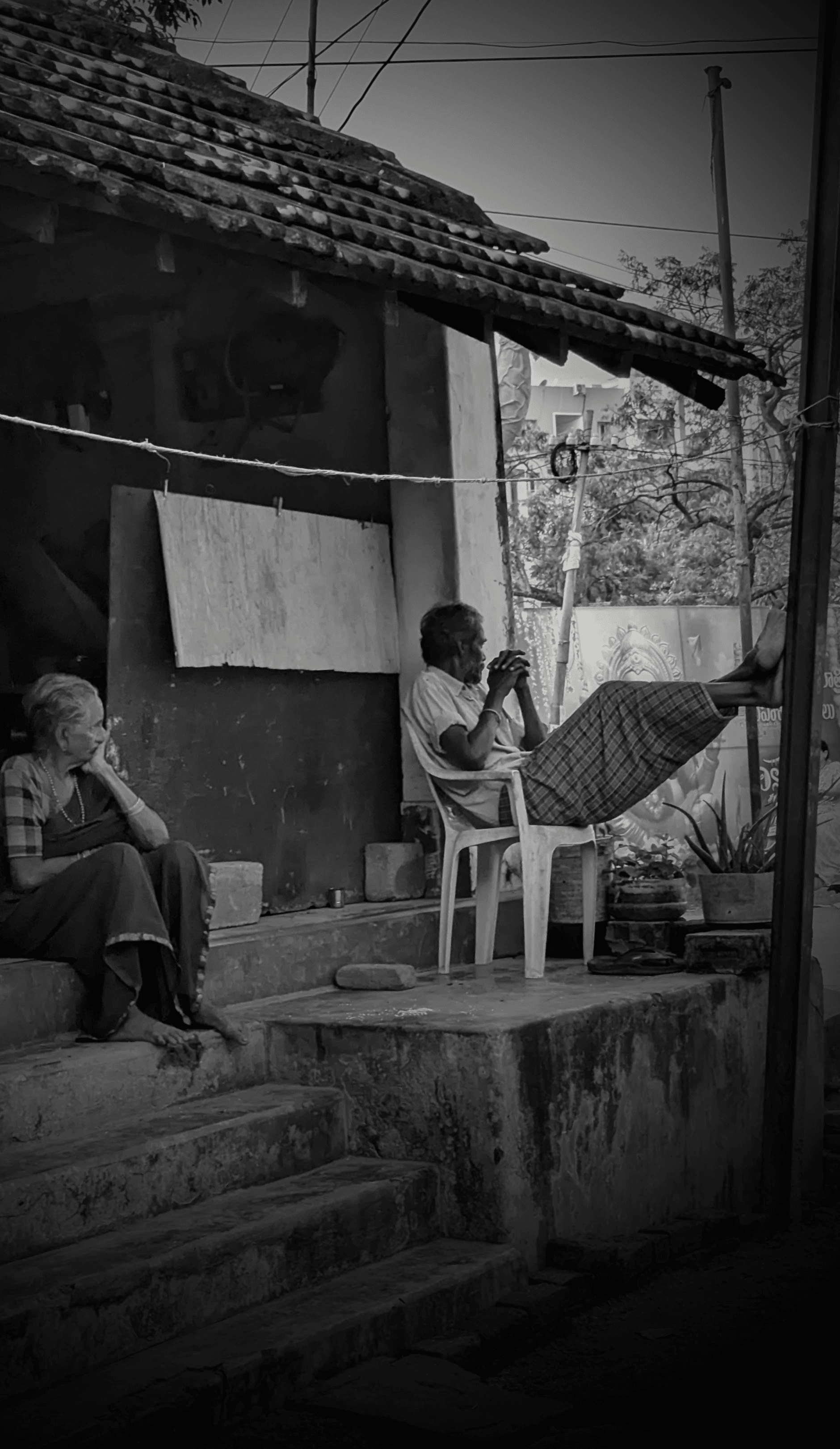
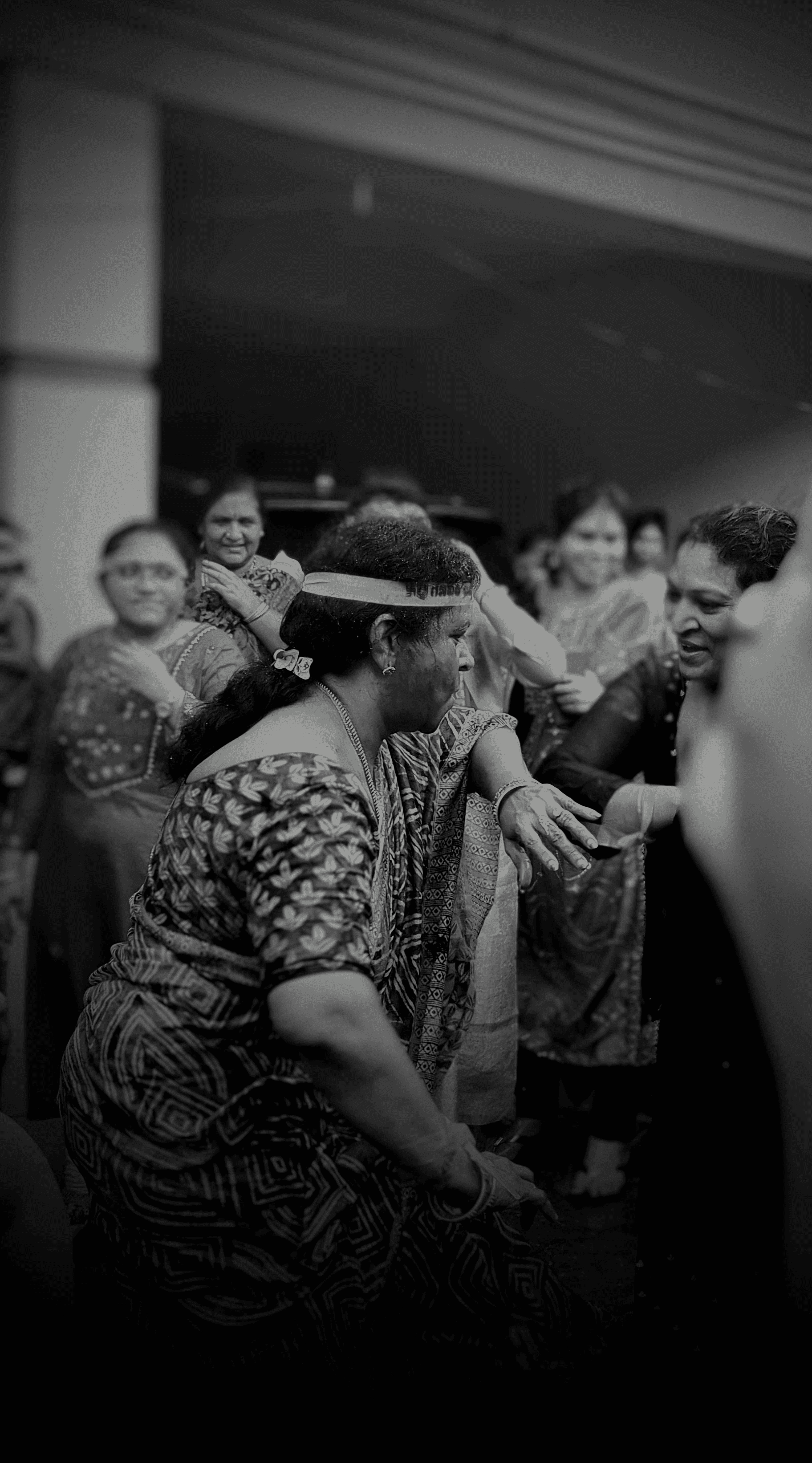
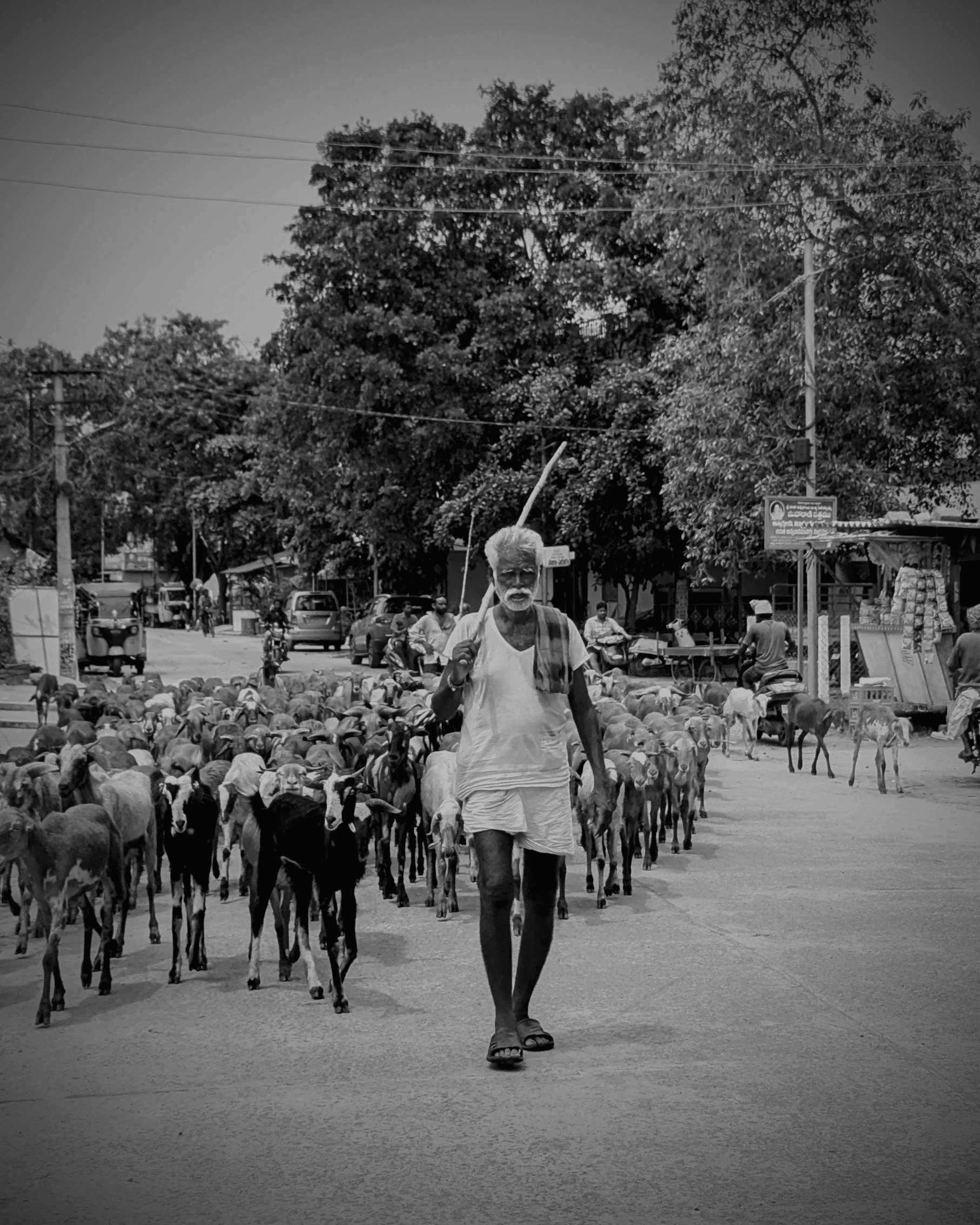
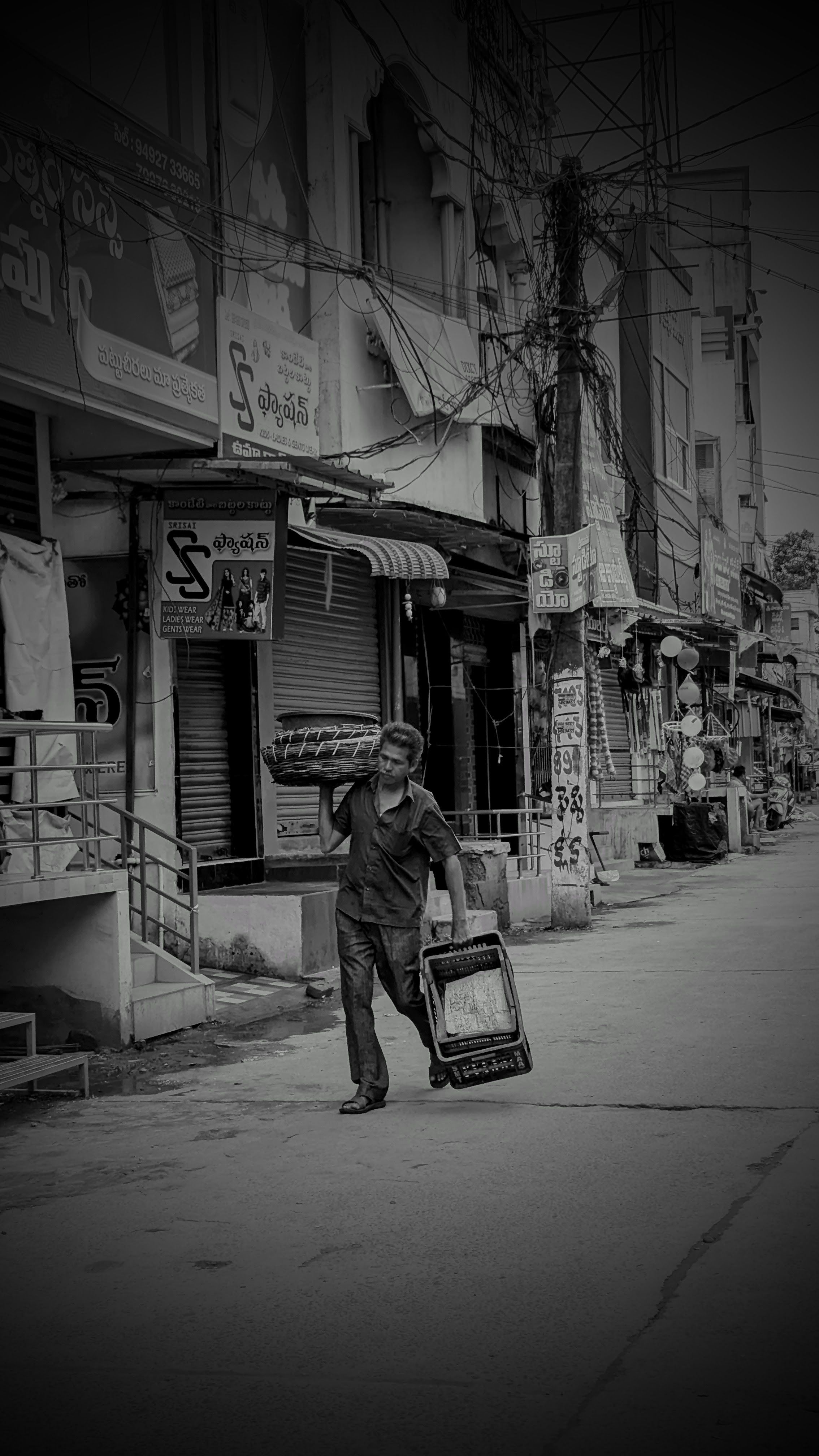
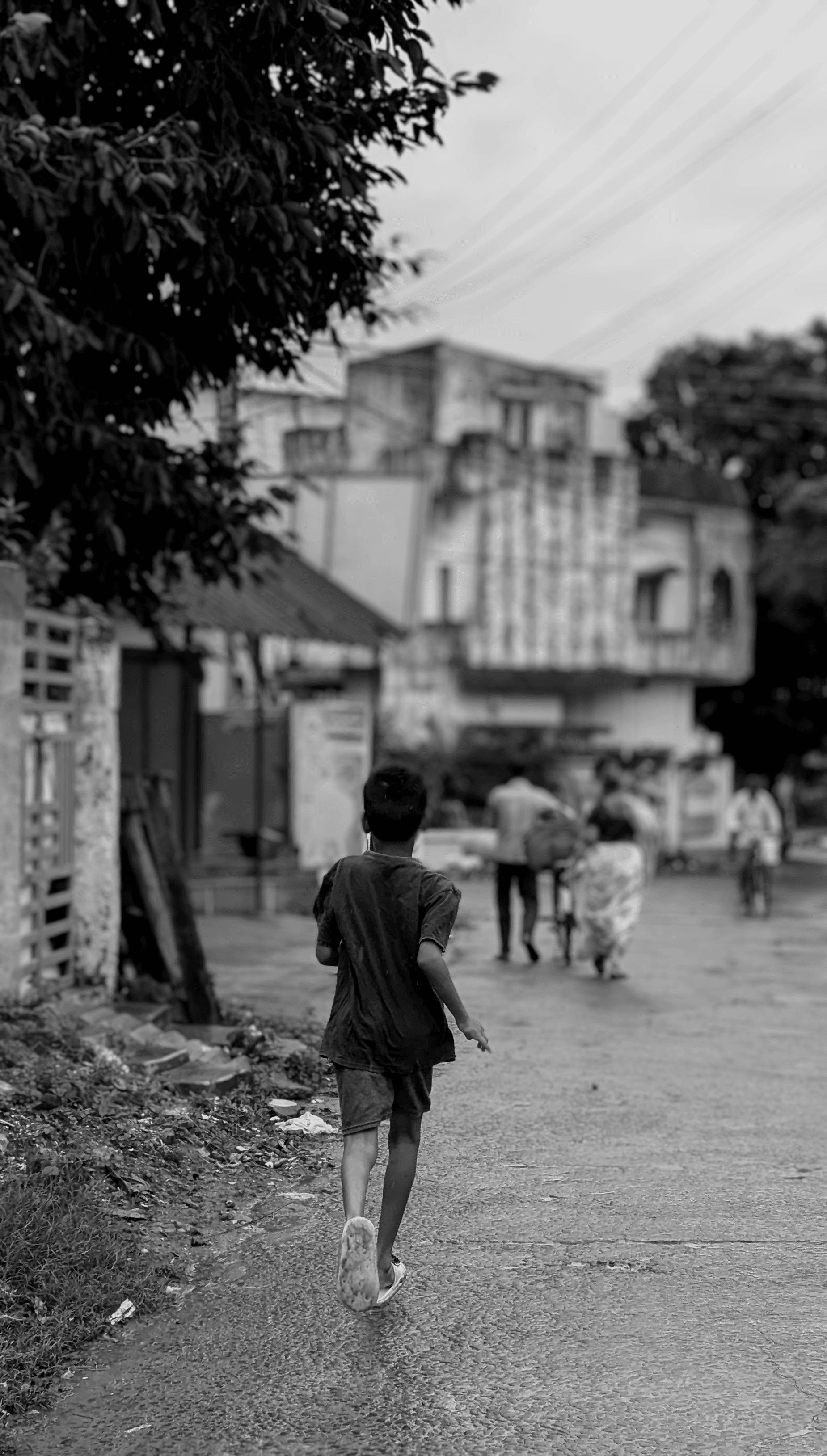
Each of these frames stayed with me because they hold lived experiences rather than staged moments. The shot of the boy running down the street was where it all began — the very frame that sparked my obsession with street photography and taught me to anticipate fleeting gestures. As I turned my lens closer to home, I began noticing the quiet rhythms that define everyday life: the elderly couple seated on their verandah, sharing a silence so complete and untroubled by digital noise that it became an anchor of calm for me. Then there are the town's working mornings — the man balancing cargo through silent storefronts, an essential routine you only understand when you watch a place wake up day after day. Contrasting that stillness is the raw, electric energy of my mother caught mid-dance during our Ganesh Chaturthi celebrations, completely lost in the rhythm. Even the tense moments have an indelible memory attached — like stepping squarely into the path of an elderly herder and his flock, gripping the camera while the goats surged right past me. Street photography, to me, isn’t about observing from a distance; it’s about sharing the pulse of that exact second.
Which candid shot had the timing come together perfectly?
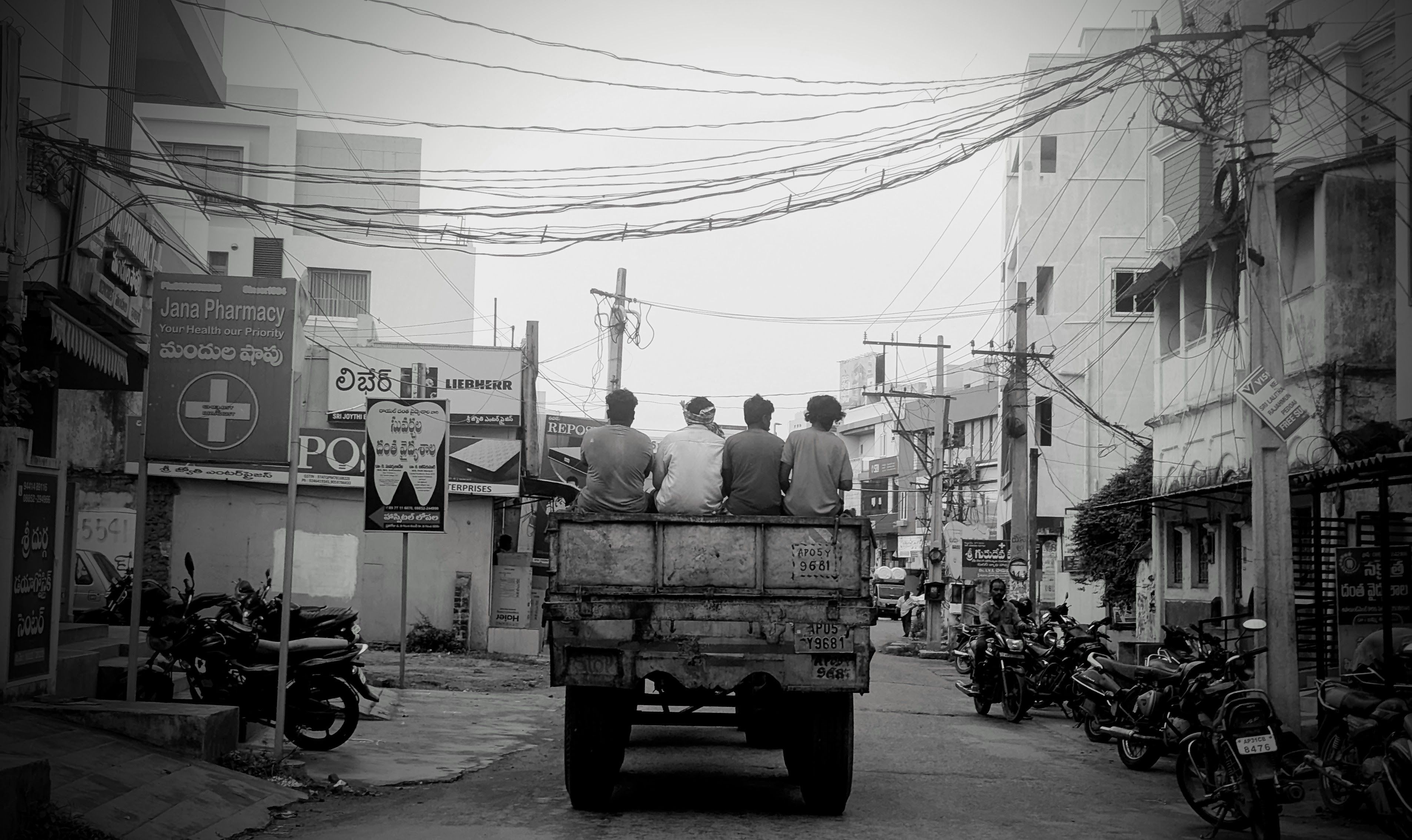
Pure instinct. I was actually on my way to work when I spotted them sitting scattered in the back of the cart. For a second, I hesitated — wondering whether it was worth pulling out the camera. But right as I decided to take the shot, they all settled into the exact same posture, looking straight ahead in unintentional symmetry. A split-second, candid alignment where the street simply fell into rhythm before my eyes — proof that you should never hesitate when your gut tells you to click.
What do you love about working the streets with just your Pixel 7?
Simplicity is at the core of my work — everything is shot on my Google Pixel 7 on my daily walks. I own a Nikon DSLR, but bulky gear can feel intrusive on the street. With a phone, I’m not a photographer disrupting a space, I’m just another person passing through. That complete lack of friction lets me move fast, stay discreet, and capture authentic, split-second moments without gear getting between my eyes and the frame.
Which frame are you really proud of?
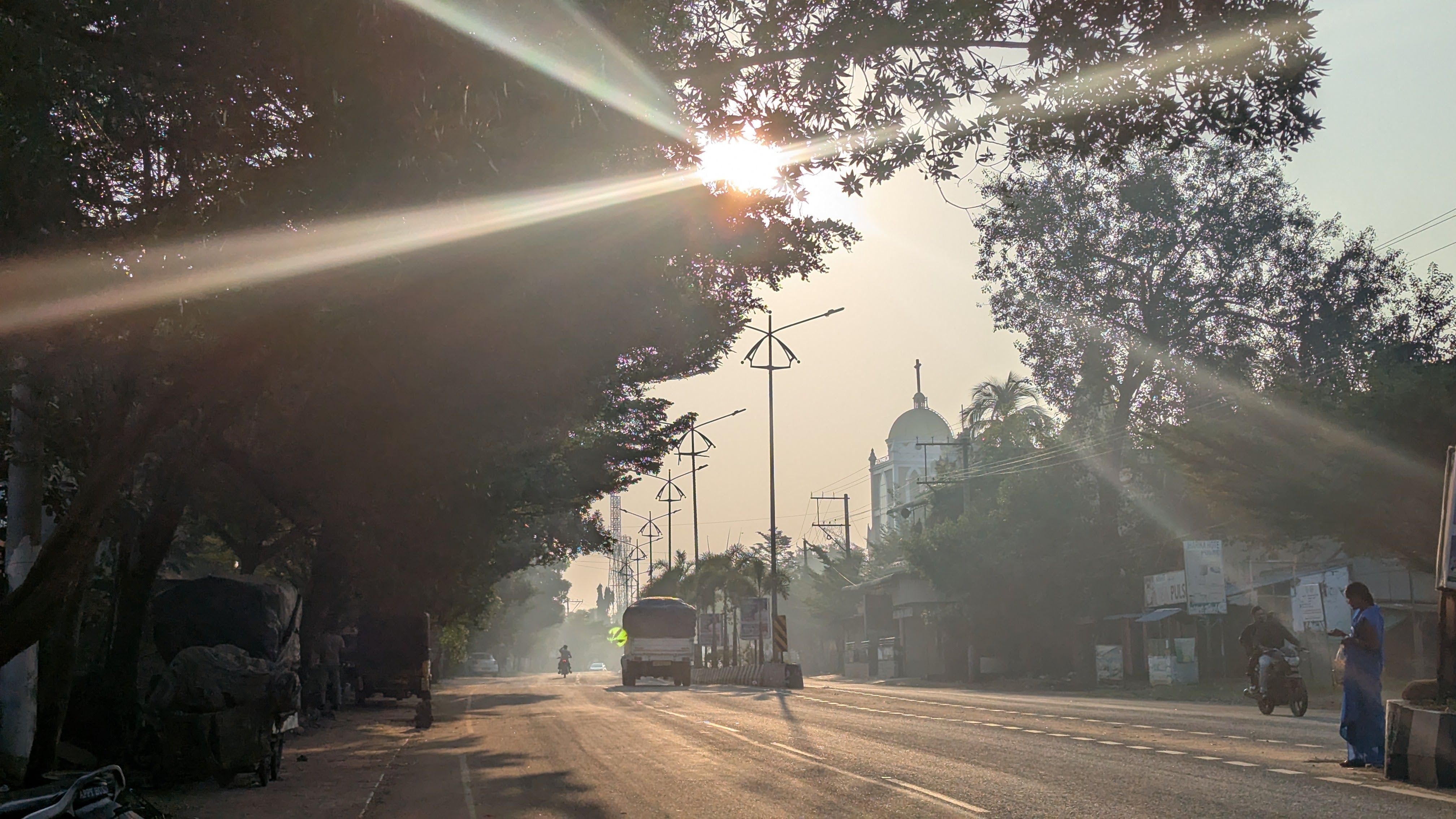
Initially I was even surprised that I actually captured this frame. I loved how I could actually capture the blinding rays burst through the trees, bathing the morning mist and street silhouettes in brilliant golden light. Probably the only non monochrome clicks of my entire series.
Where did you find your "gola"?
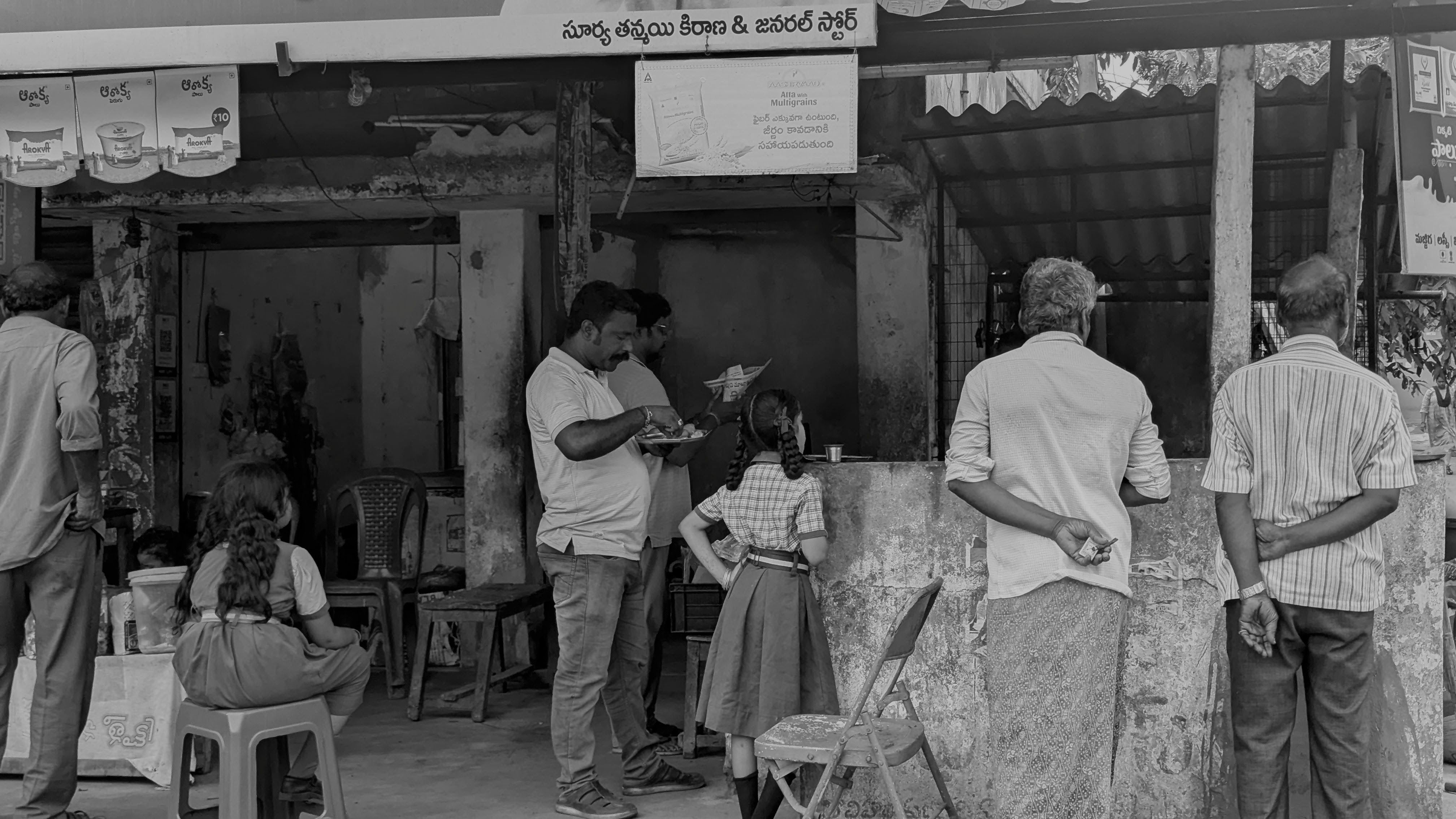
To me, the 'gola' isn't about noise — it’s about absorption. Evadi gola vadidi captures the idea that everyone is wrapped up in their own reality. In this frame, you see that dynamic unfold naturally: people waiting for their morning tiffin, others already mid-bite, schoolchildren heading out for the day. No one is performing for a camera; everyone is simply anchored in their morning routine. That authentic, unposed human texture is the soul of my page.
What are you working on or hoping to shoot next?
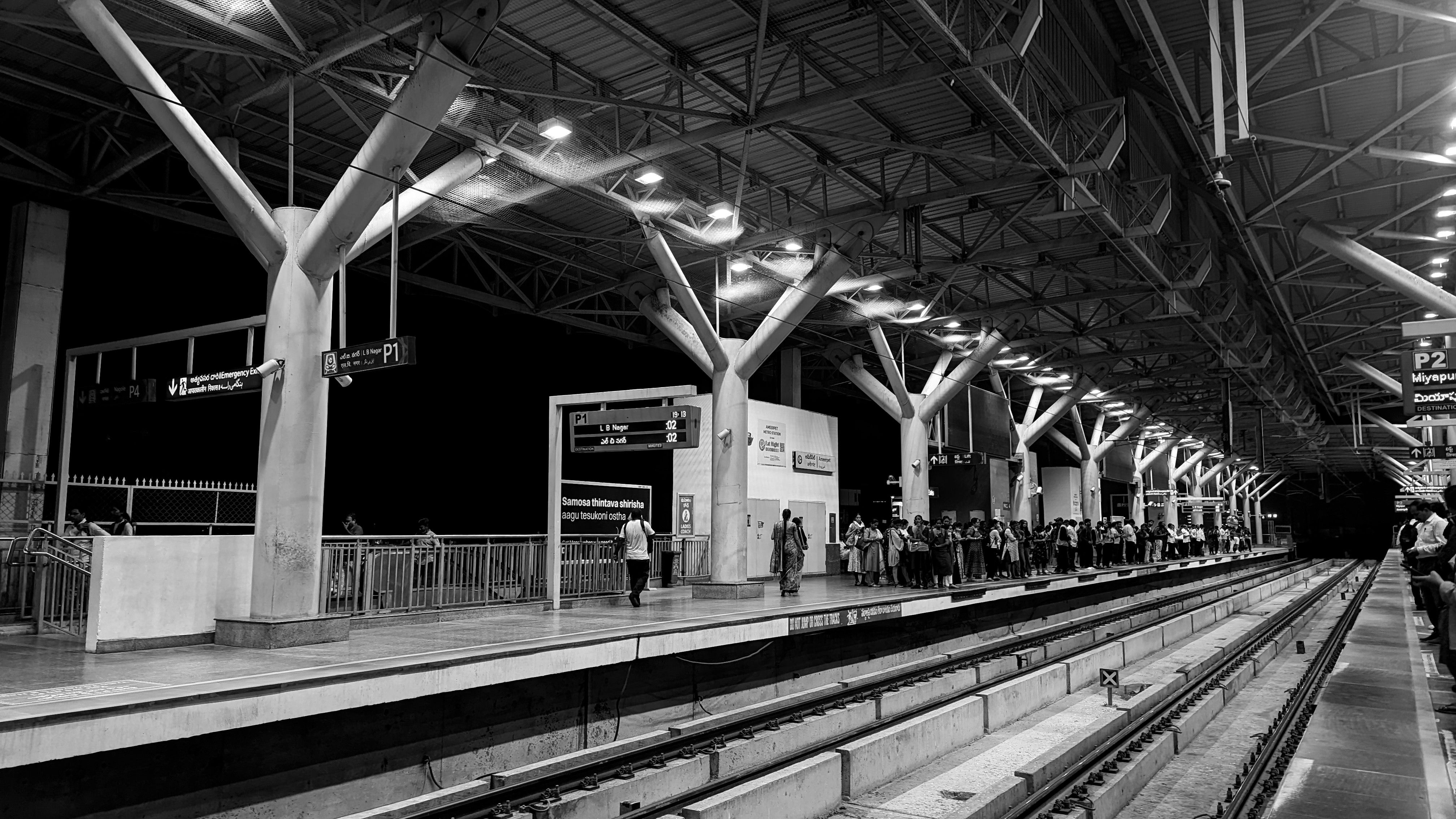
The transition to a big city has shifted my gaze toward urban transit and metro stations. It’s far more crowded and unpredictable than the quiet streets I started on, which makes reading the scene a lot harder. But that’s what makes it exciting. I love throwing myself into spaces that force me to learn on my feet, and capturing the energy and individual stories inside that daily urban commute is what I’m eager to explore next.
When someone stops and really looks at one of your monochrome frames, what do you hope they feel?
A sense of slowing down. Today’s world is overwhelmingly loud and fast-moving, but these monochrome frames are rooted in quiet rhythms. I hope they remind people of a time when stillness felt natural — evoking a nostalgia for simple mornings, empty afternoons, and that deep, unbothered peace we so often forget to make room for.
Contact and Follow
Email: nikitayamini369@gmail.com
Instagram: @evadi.gola_vadidi