

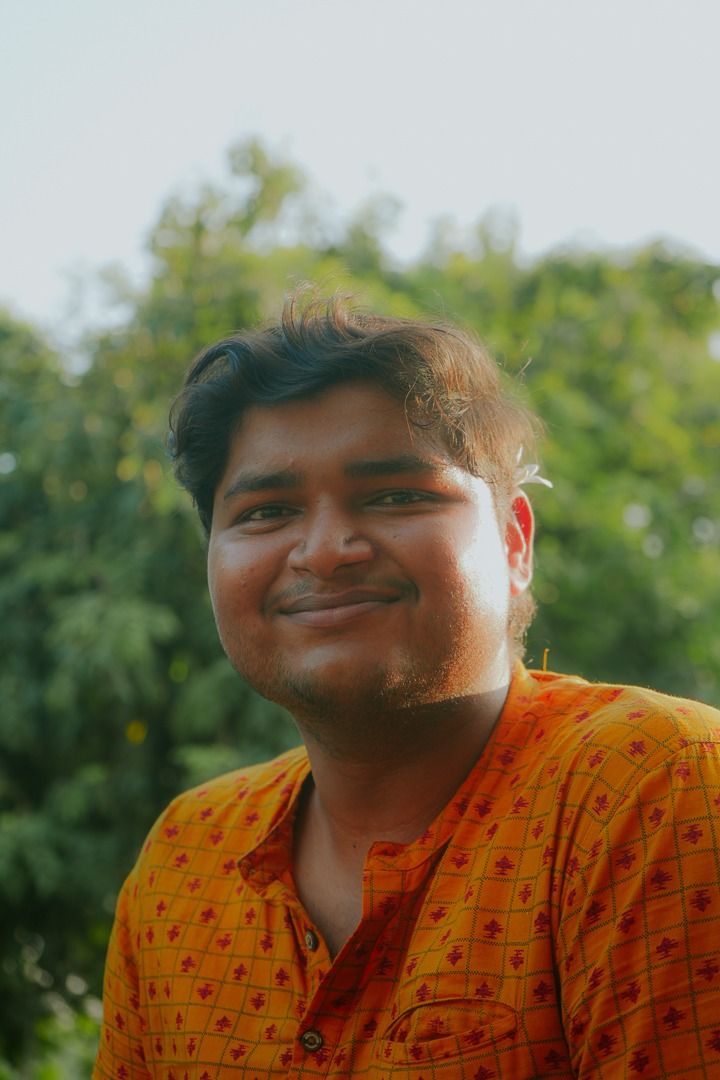
How did your journey as a photographer begin, and what first drew you to the art?
My photography began long before I understood photography itself. I never set out to master apertures or compositions — there was simply a restlessness in me, an itch to seize whatever I saw that felt worth telling, worth turning into a frame that could speak. So I clicked, endlessly and ignorantly, on nothing more sophisticated than a phone, knowing none of the vocabulary, but trusting all of the instinct. The real turning point came three years ago, when I joined college and set my sights on the photography society. The selection ran three rounds deep, and I made it through only two — yet I refused to let the story end there. I wrote a heartfelt appeal to the then-president, and that one earnest message earned me what the process hadn't: a direct audience with the core team. I was selected, and that interview became the threshold between someone who merely photographed and someone who finally began to see. What drew me in, and still does, is the quiet craft of it, how something already sitting in plain sight can be lifted, through a frame and a little patience, into something beautiful enough to be shared. I fell as much for that act of seeing as for the hours spent afterward editing, coaxing a photograph into the story it was always trying to tell.
What was the first photograph you took that made you feel like this was your calling?
I'll be honest, I can't trace the very first photograph that made me feel this was my calling. That moment has dissolved somewhere into the early, unremarkable frames every photographer shoots before they learn to see. But if there's one instance I return to whenever I'm asked this, it's the photograph I made of the I'timad-ud-Daulah tomb in Agra, that intricately inlaid marble mausoleum often called the "Baby Taj," its surfaces worked in pietra dura as fine as lacework. I'd posted it on my page without any real expectation. Then PixElation, my college's photography and videography society, reshared it on their Instagram page, and something in me shifted. It wasn't just the visibility; it was the quiet confirmation that the frame had actually worked, that I'd managed to translate what I saw into something worth someone else's attention. I remember feeling, almost absurdly, like I'd been lifted onto the seventh cloud. That was the day the pursuit stopped feeling like a hobby and started feeling like a calling.
How has your perspective on photography grown and evolved over the years?
My relationship with photography has moved through fairly distinct phases over the last three years, each one nudging me toward a more deliberate way of seeing. It began instinctively, the way most photographic journeys do — I photographed anything that struck me as aesthetically pleasing, with little regard for craft or intention. Beauty alone was justification enough. The next phase was observational, almost apprentice-like. I started watching a more seasoned photographer in my society at work, studying his choice of frame, his patience with light — and tried to replicate, or at least approximate, what he created. The imitation taught me more about discipline than originality ever could have at that stage. Things sharpened once I owned a camera of my own. I gravitated toward product photography, which demanded a different kind of attention altogether, control over light, composition, stillness. It was an unglamorous but valuable apprenticeship in precision. Eventually I arrived at street photography, which remains my favorite genre and one I still practice with the same intensity. There's an adrenaline to it that nothing else replicates, the awareness that a moment, however ordinary, won't offer itself twice. It asks for instinct over control, and it has changed how I move through the world even without a camera in hand. The most recent shift has been less about technique and more about restraint. I once shared almost everything I shot. Now I post only the frames I'm convinced are complete, fewer images, but each one earned.
What motivates you to shoot street and travel photography specifically, and how do these genres challenge you?
What draws me to street and travel photography is, at its core, a pursuit of moments that linger, frames that stay with you long after the shutter has closed. There is also a quieter, more human motivation behind it: the rare satisfaction of a stranger's appreciation when they witness something genuine that you've created. Few things rival that feeling. But beyond gratification, these genres carry a kind of philosophical weight. They have a remarkable way of rendering you insignificant against the scale of what you're photographing. Moving through people, places, and situations shaped by India's many cultures and beliefs has a humbling effect, it keeps you grounded, reminding you that you are a witness, not the subject. The challenges, though, are very real. The moment you step onto the street with a camera, you become conspicuous, drawn into stares, sometimes outright hostility. There's a constant, quiet negotiation playing out in your mind: you spot a fleeting, perfect frame, but capturing it candidly risks being noticed, and with that, the real possibility of resentment or rebuke. Learning to navigate that tension, between the photographer's instinct and the subject's dignity, is, in many ways, the truest test these genres pose.
Which photo do you feel best represents your style and vision as a photographer?
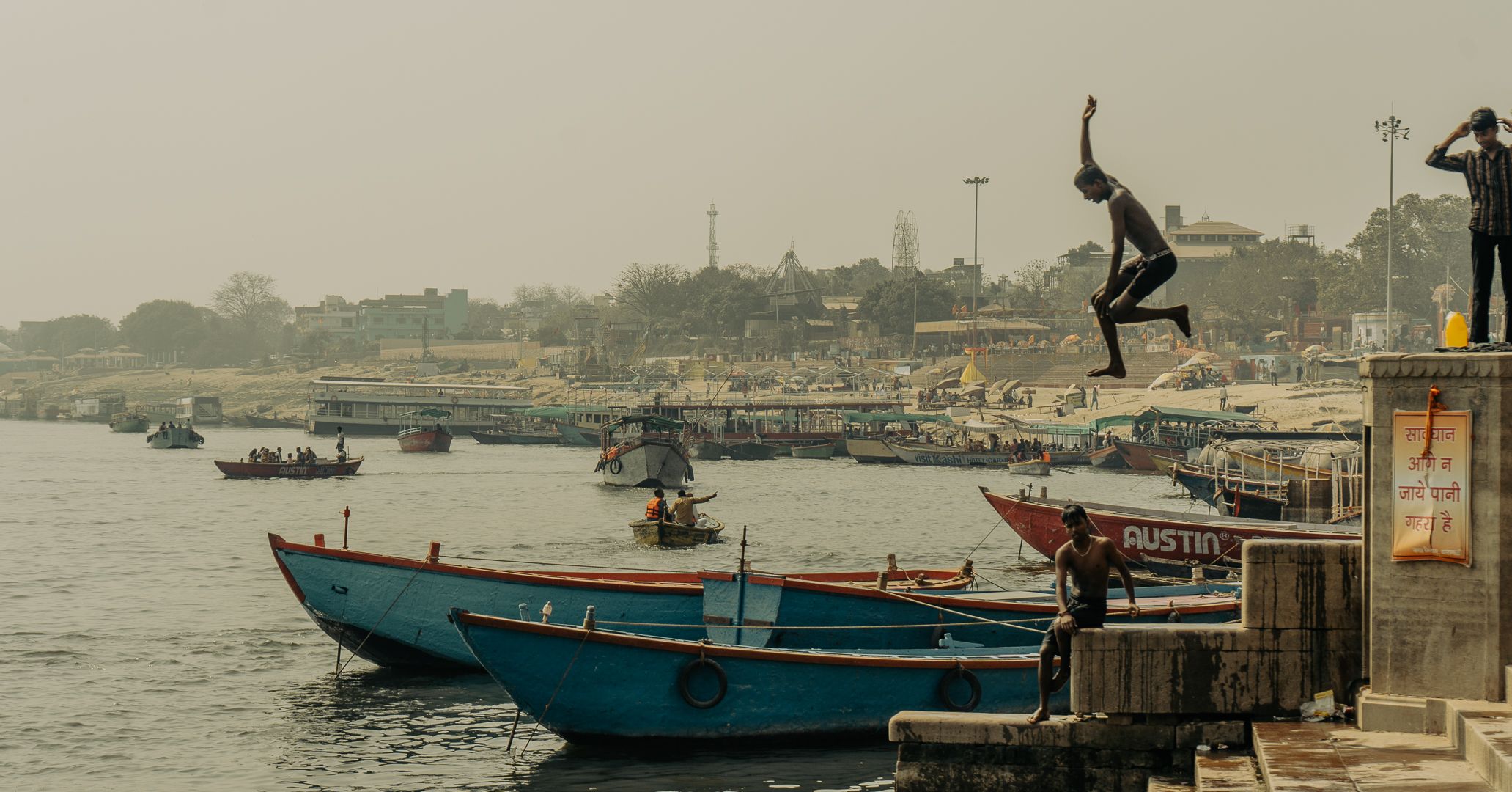
This photograph was the reward for a forty-minute vigil endured in the merciless heat of a March afternoon along the ghats of Varanasi. Atop a slender, pillar-like outcrop, a knot of boys gathers every scorching afternoon, diving into the holy waters of the Ganges to escape the sun and sharpen their swimming. I was merely passing through, trusting, as any street photographer learns to, that Varanasi's ghats never disappoint. The moment I paused and raised my camera, the boys froze mid-play, as though sensing the lens and conspiring against it. I waited. Patience outlasted their wariness, and at last one boy broke from the huddle, ran, and leapt, his body suspended mid-air against the unmistakable arched silhouette of Banaras's ghats. That fraction of a second became the photograph, a boy in flight, framed by centuries-old stone arches, the punishing heat dissolving into the cool promise of the river below.
Can you share a street photograph that captures a candid moment and tell us the story behind it?
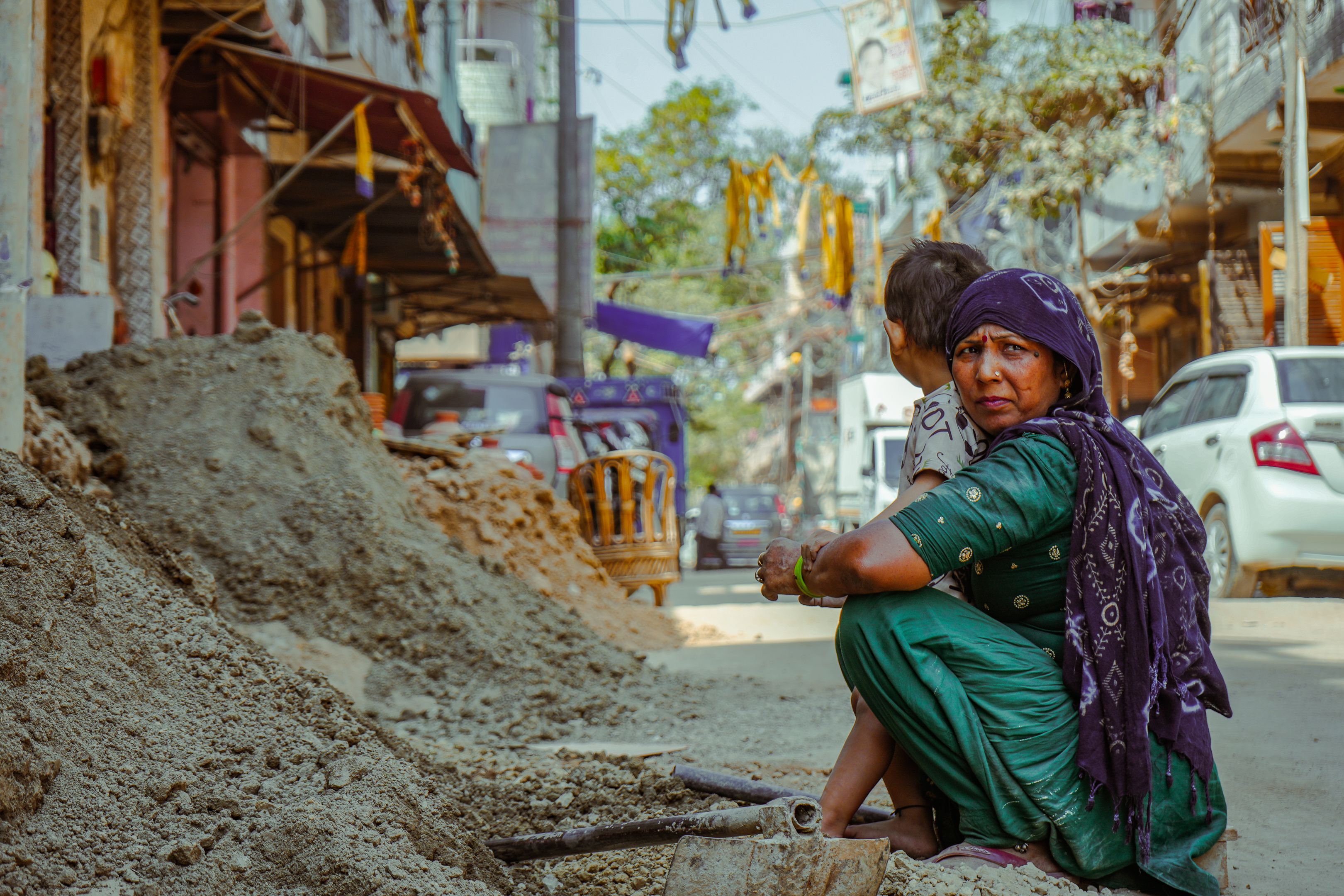
This photograph was taken on a scorching July afternoon in Delhi's famed potters' colony, a quarter where entire families labour over clay from dawn to dusk, shaping the earth into vessels that will carry water, grain, and incense into homes across the city. The woman in the frame had stepped out to gather mud, the same mud her husband would later turn into pots upon his wheel. As she worked, her son came running to her in tears, fresh from a quarrel with a neighbour's child. It was in that fleeting, unposed moment that the photograph found her: mother, worker, and wife, all three present at once, a confluence rarely caught within a single frame.
Tell us about a travel photograph that showcases the culture or landscape of a place you've visited.
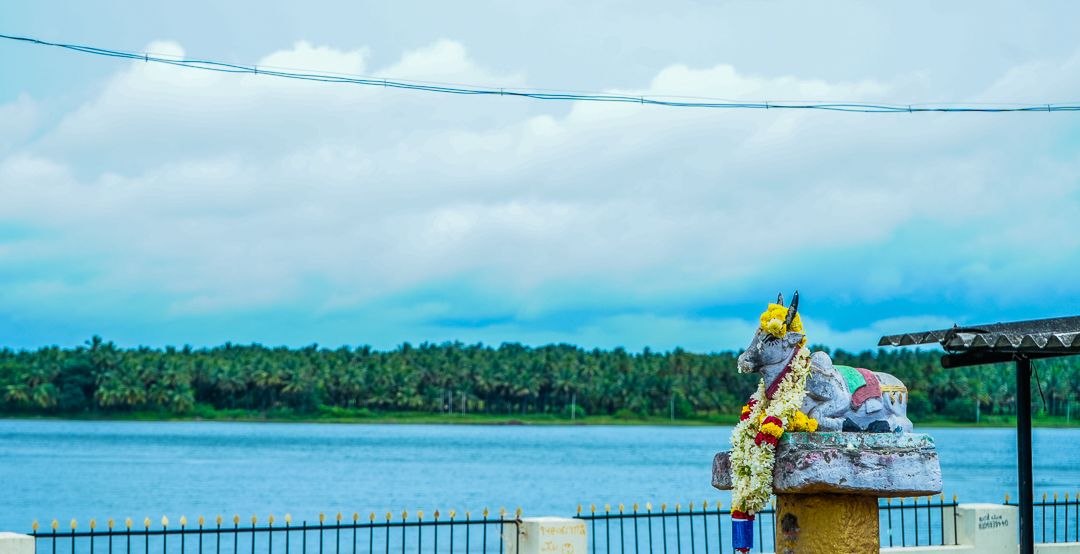
This photograph was taken in a small village tucked deep within Karnataka's Malenadu region, captured while driving through its dense, verdant forests during the onset of monsoon, on the road connecting Mysore to Shravanabelagola. The Malenadu belt is blessed with a rugged, untamed beauty, where rolling greenery meets rocky terrain at every turn. Amid this natural splendour, the local villagers, rooted deeply in their faith, have raised many small temples, modest in scale, yet striking in their setting. This particular photograph was taken at one such temple, perched on the banks of a clear blue lake at the edge of a village. The journey itself, from Bangalore to Mysore and onward to Shravanabelagola, was a deeply enriching one, it gave me the chance to speak with the locals and witness how their faith lends them a quiet contentment and sense of purpose in life.
Walk us through your editing process for a photo, and what does it add to your work?
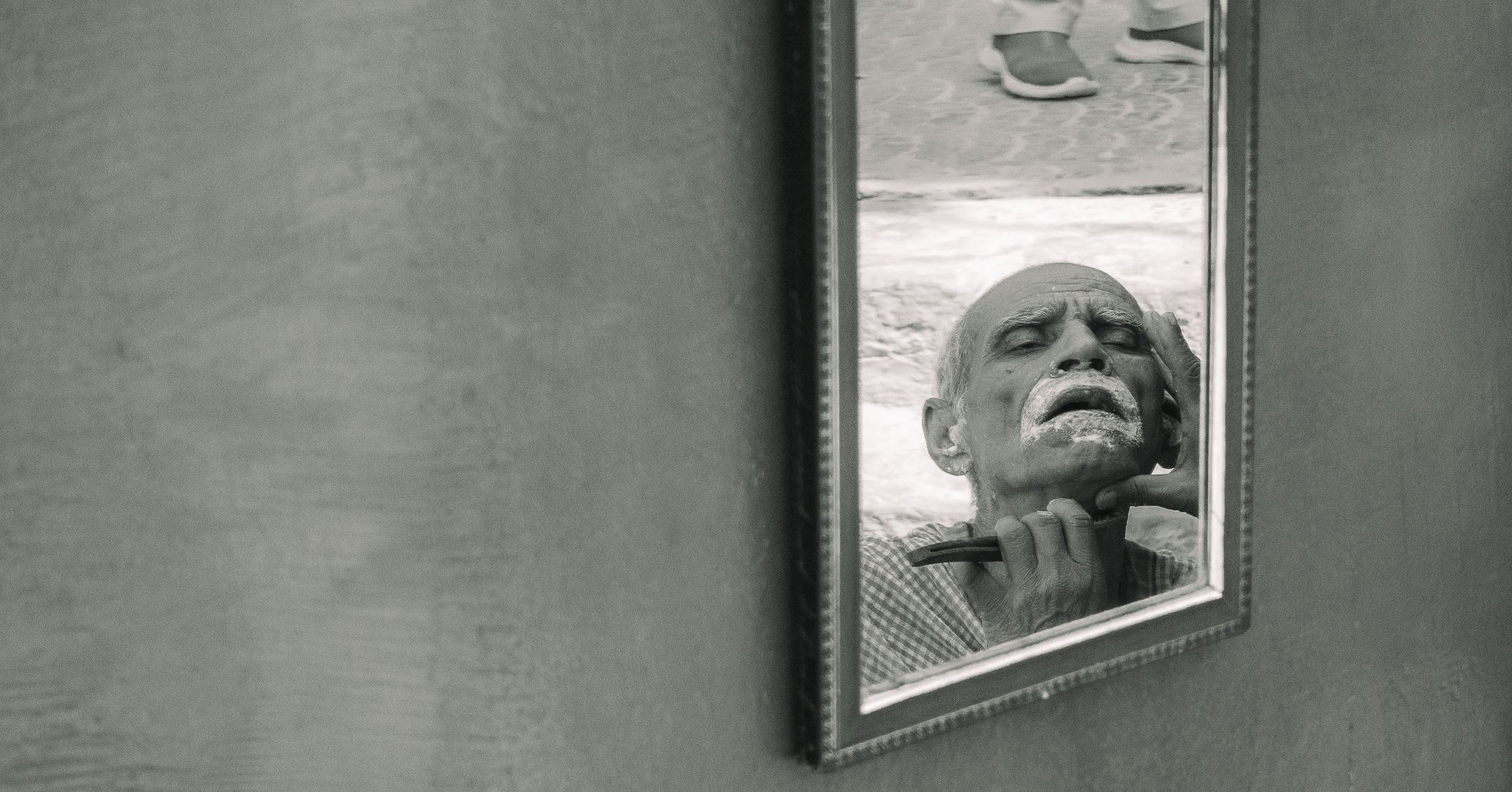
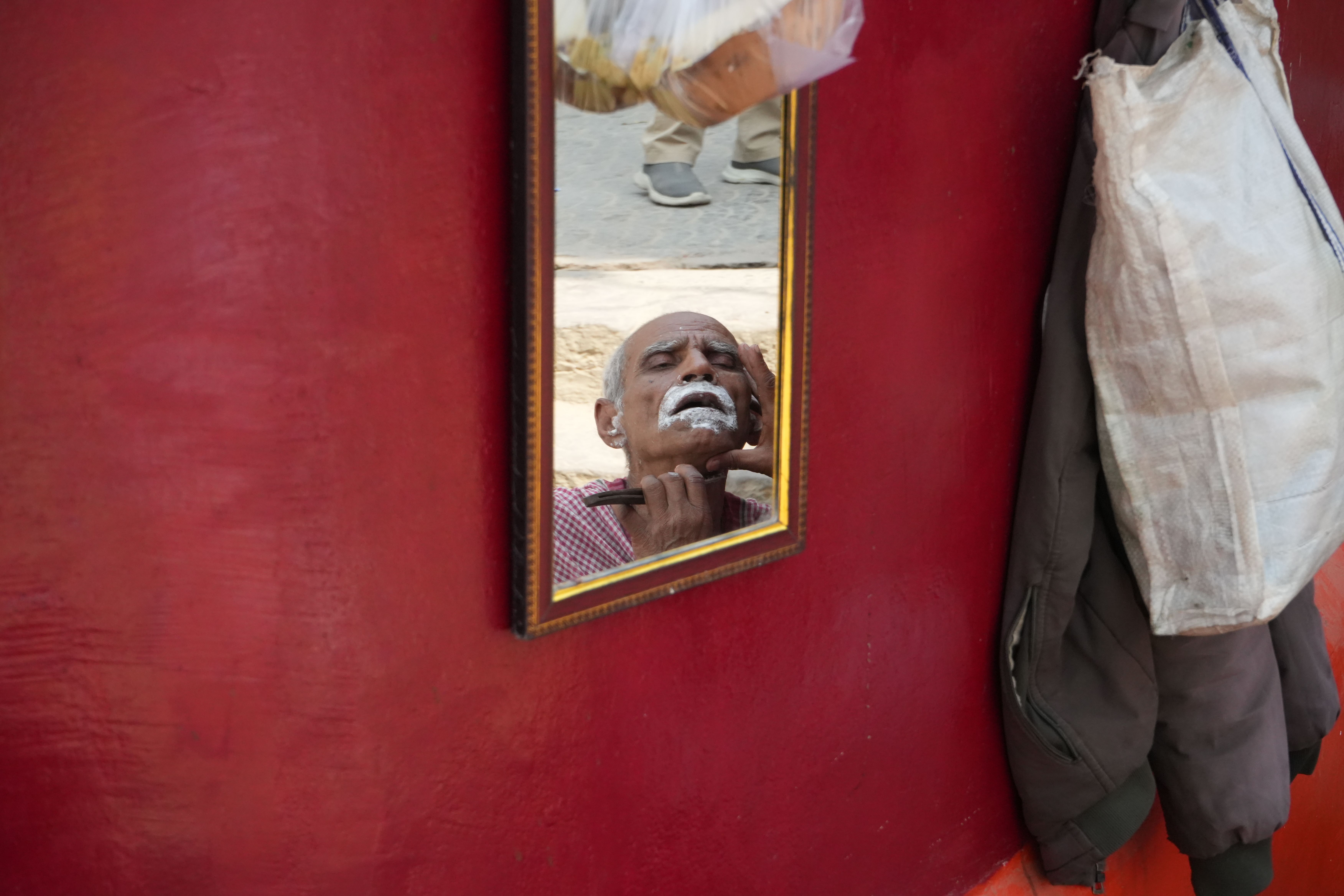
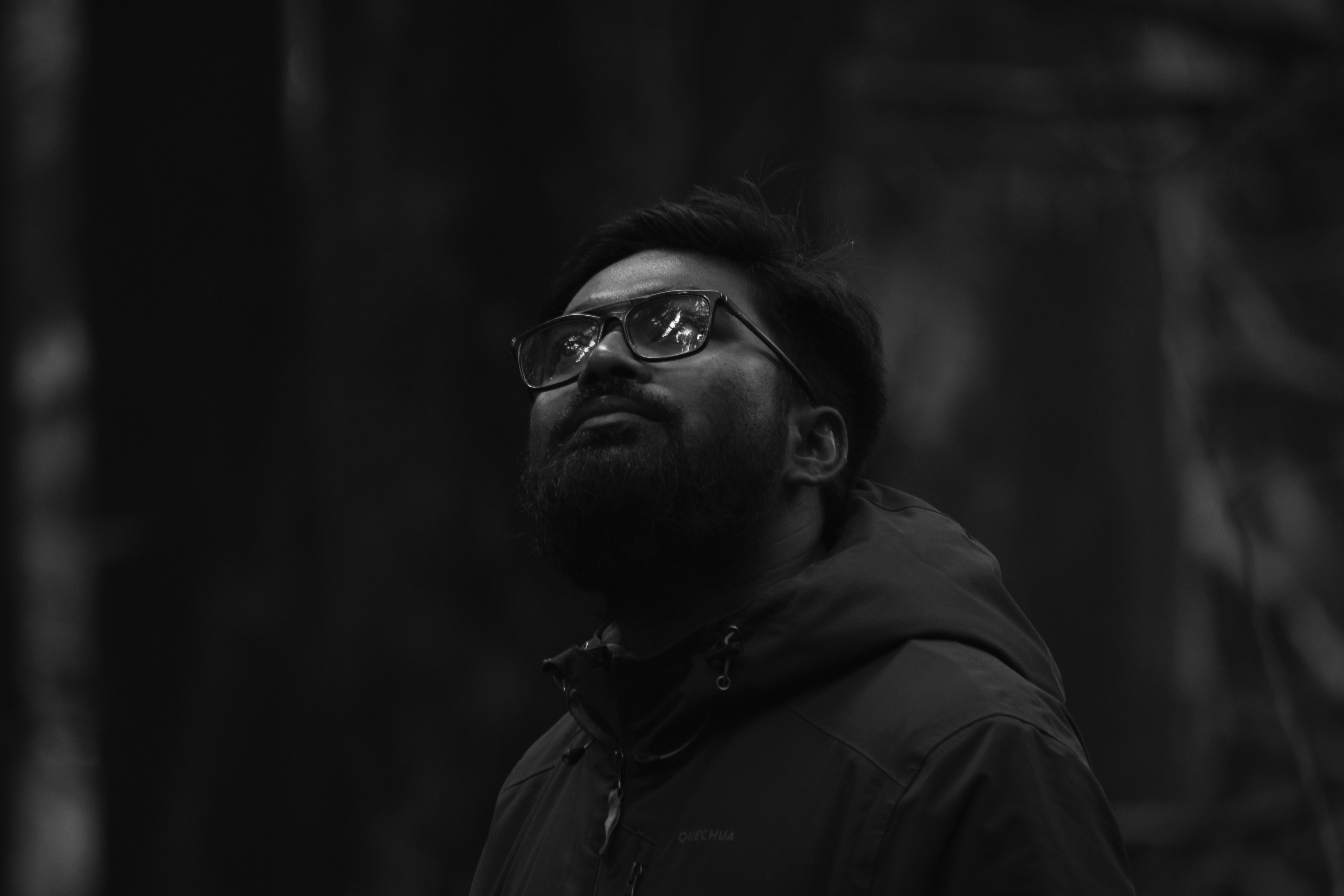
The primary software I rely on, like most photographers, is Adobe Lightroom Classic, among the most versatile and intuitive editing tools available, striking a fine balance between utility and ease of use. For more intricate or experimental edits, I occasionally turn to Adobe Photoshop. The raw frame of this photograph contained several distracting elements that diffused the viewer's attention. To draw the eye immediately to the subject within the mirror, I cropped the image to a suitable aspect ratio, paring away these distractions. The negative space surrounding the subject further isolates his presence, lending the composition a quiet emphasis. Portraits such as this one, I often render in black and white, monochrome possesses an almost alchemical quality, drawing out the subject's emotion with a depth that color rarely achieves.
What's a photo that challenged you technically or creatively, and how did you overcome it?
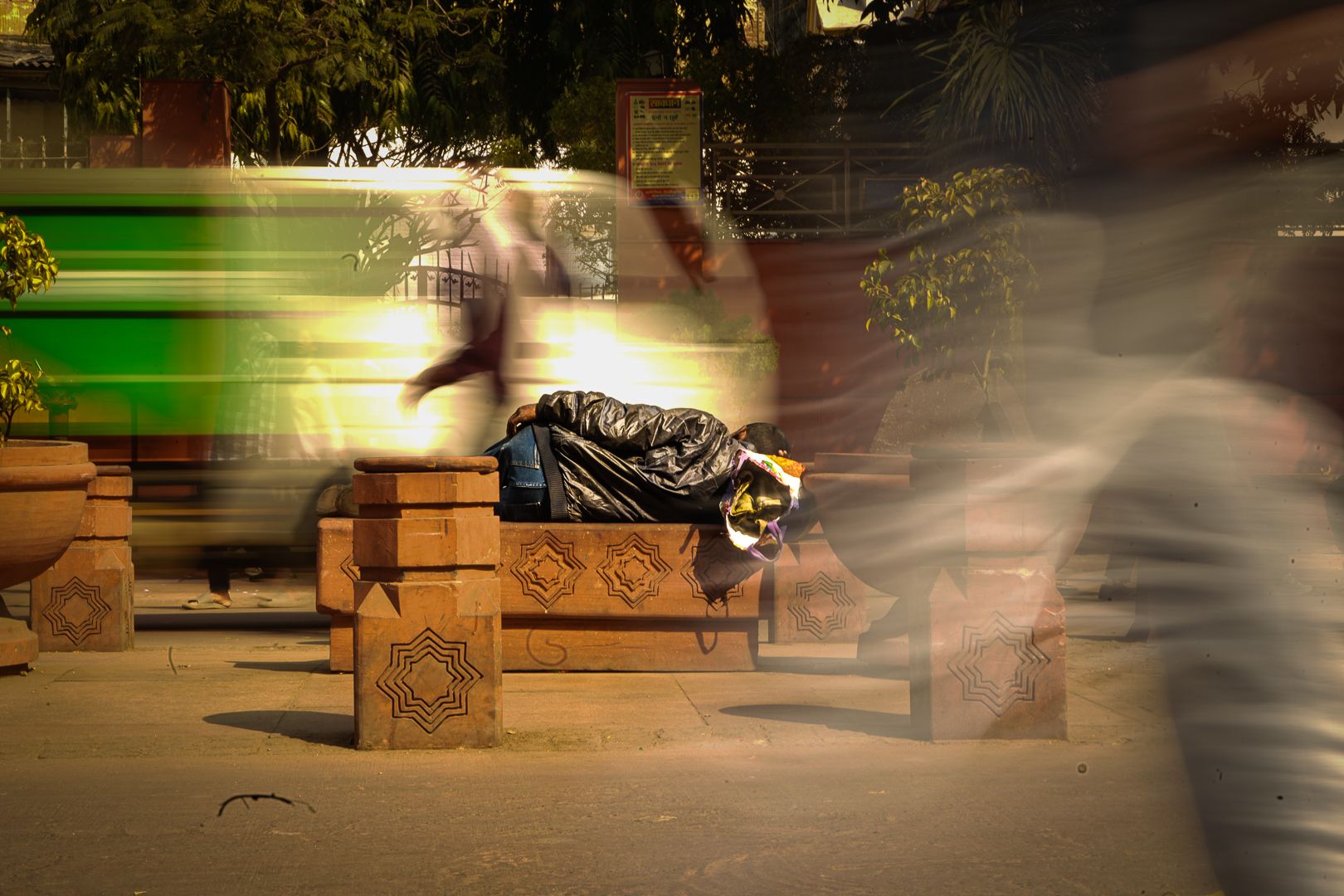
This photograph was taken in the thick of Chandni Chowk, Old Delhi, a market whose mornings unfold with relentless, restless energy. Photographing anything amid that crush of bodies and noise is, in itself, a constant negotiation with chaos. What caught my eye was a man asleep on a street bench, entirely undisturbed by the tumult around him. He offered a striking juxtaposition, stillness suspended within motion, and I knew the only way to convey it was through a slow shutter, letting the crowd dissolve into blur while he remained sharp, almost defiantly calm. The shot, however, did not come easily. Without a tripod, every steadying breath mattered, shoulders collided with mine, curious onlookers paused to stare, and each disturbance threatened to shake the frame and undo the moment. I finally found stillness by resting my camera against a parked motorcycle, anchoring the same calm I was trying to capture in him. The final image was chosen from forty-five frames, forty-five attempts to hold onto one fragile second of peace within the city's clamor.
Contact and Follow
Email: kostheta007@gmail.com
Instagram: https://www.instagram.com/kostheta1729?igsh=MXR0cGV6M3NxdXhnOA==