

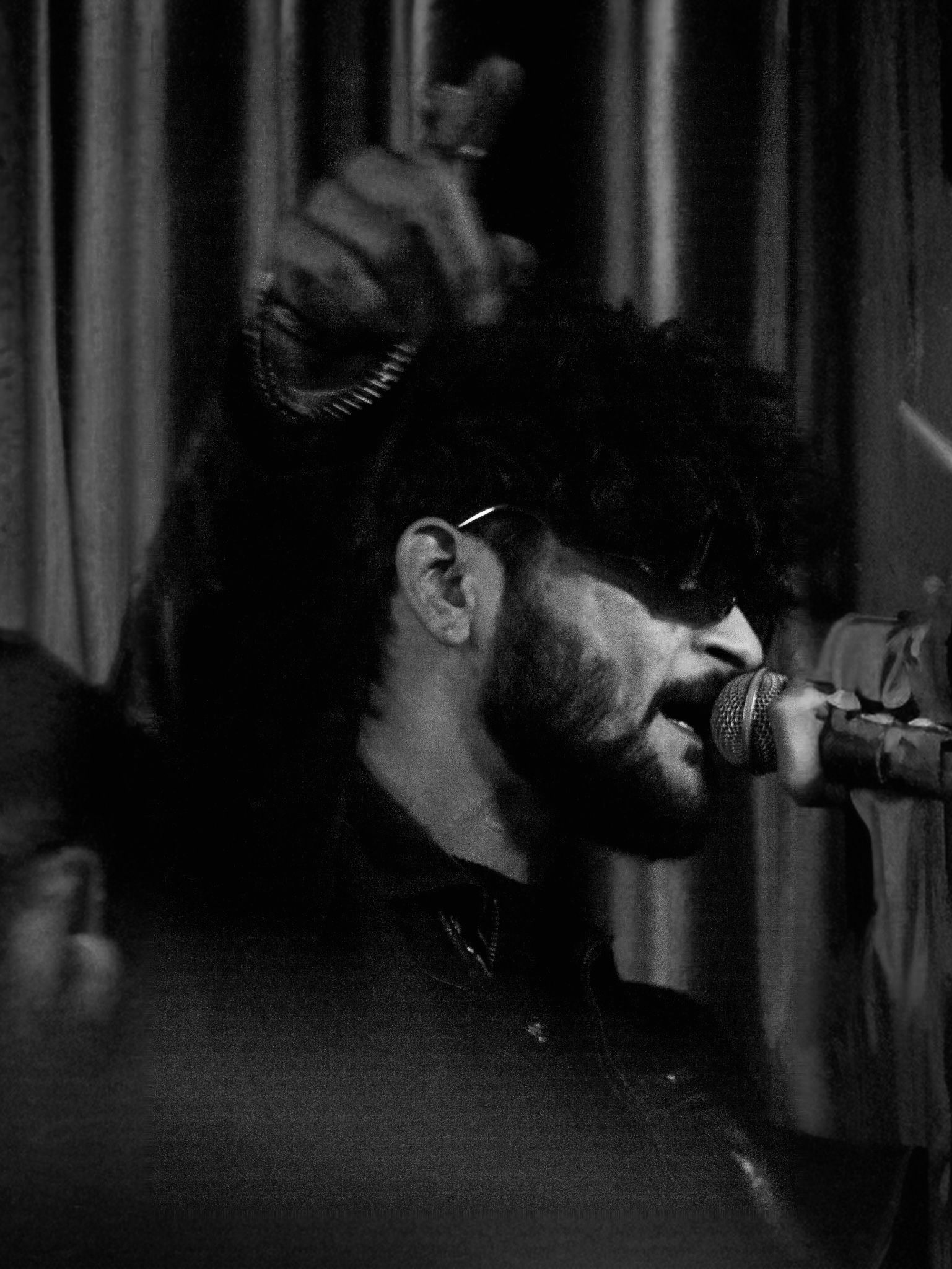
Take us back to the very beginning — how did rap first find you in Greater Noida, and what was the moment you knew you wanted to make music yourself?
My journey with rap started in Kanpur, where I grew up and where my love for music slowly turned into something I wanted to pursue seriously. I’ve always been connected to music, but around 2022, I decided to stop just listening to it and start creating it myself.
Since then, I’ve been learning everything on my own — writing, recording, producing, mixing and finding my own sound. Moving to Delhi gave me a completely different environment and exposed me to new artists, sounds and experiences, while Kanpur has always remained an important part of who I am and where my story comes from.
Over the years, I’ve tried to document different phases of my life through my music. I released projects like From Now Until Forever, Pieces of Me, and eventually my mixtape Profit From The Pain. Each project represents a different stage of my growth, both as an artist and as a person. My music is basically a diary of everything I’ve experienced, felt and learned along the way.
I don’t think there was one particular moment when I decided I wanted to make music. It was more of a gradual realization — the more I wrote and recorded, the more I felt that this was something I genuinely needed to do. What started in Kanpur in 2022 has now taken me to Delhi, and I’m still building, experimenting and trying to become a better artist with every release.
For me, rap isn’t just about making songs. It’s about telling my story, representing where I come from, and turning my experiences into something other people can connect with.
Do you remember the first bar or hook you ever wrote that made you think 'okay, I've actually got something'? Tell us about it.
I remember it clearly. In 2022, I released a song called “Waaste,” and it unexpectedly started getting a lot of attention. The song crossed 10,000 streams, which felt huge to me at that time.
What made it special was that I was still figuring everything out as an independent artist. I didn’t have a big team or a major push behind me — seeing people actually discover the song, listen to it and share it made me feel like maybe I really had something here.
Looking back, 10K streams might sound like just a number, but for me it became one of those moments that gave me the confidence to keep going. Streaming has become even more competitive since then, and as an independent artist, getting 10K streams on a song can be difficult. So “Waaste” crossing that number early in my journey is still something I’m proud of.
Who shaped your sound early on — the artists, producers, or people around you that you keep coming back to?
Early on, my sound was shaped by the artists I grew up listening to and the people around me who encouraged me to take music seriously. I was always drawn to artists who could turn their personal experiences into music and make their stories feel real rather than just trying to make a song.
As I started making music myself, I began taking inspiration from different artists, producers and sounds, but I also wanted to develop something that felt like me. Coming from Kanpur and later moving to Delhi exposed me to very different musical environments, and both places influenced the way I write and approach music.
I think the biggest influence on my sound has ultimately been my own experiences. Every project has taught me something new, and I keep coming back to the idea of making music that feels honest, personal and connected to where I come from.
You produce as well as rap — how did you get into making your own beats, and how does wearing both hats change the way you write?
I got into producing because I wanted to understand the music beyond just writing and rapping. As an independent artist, I didn’t always have access to producers or the resources to turn every idea in my head into a song, so I started learning how to make beats myself.
Over time, production became a major part of my creative process. Being able to produce and rap gives me the freedom to build the entire atmosphere of a song around what I want to say. I can start with a feeling, create a sound around it, and then write my verses and hooks according to that mood.
I think wearing both hats has made my writing more connected to the production. I’m not just writing lyrics and then finding a beat for them — the beat, the flow, the lyrics and the emotion can all develop together. It also makes me more experimental because I can change the production whenever the writing takes me somewhere different.
Let's talk about 'Hatiyakand' — the track that earned you runner-up at the WallMag Rap Awards. What is the song about, and what were you going through when you wrote it?
“Hatiyakand” came from a frustration with a certain side of the hip-hop scene where a lot of rappers were focused mainly on flexing and showing off. Me and my friend, and a great artist, Pranay Joshi, wanted to approach it differently.
We wanted to make a track that was purely about the craft — our writing, flows, delivery and rap skills. There wasn’t a need to prove anything through materialistic things; we wanted the music itself to do the talking.
The track was produced by my good friend and an amazing producer, T Cee, who really understood the energy we were trying to create. “Hatiyakand” became a very important song for me because it represented what I love about hip-hop: lyricism, skill, competition and the freedom to express yourself.
Winning runner-up at the WallMag Rap Awards with a song that was so focused on the craft made the recognition even more meaningful for me.
Walk us through your creative space — where do you write and record, and what does that corner look like where the mixtape came together?
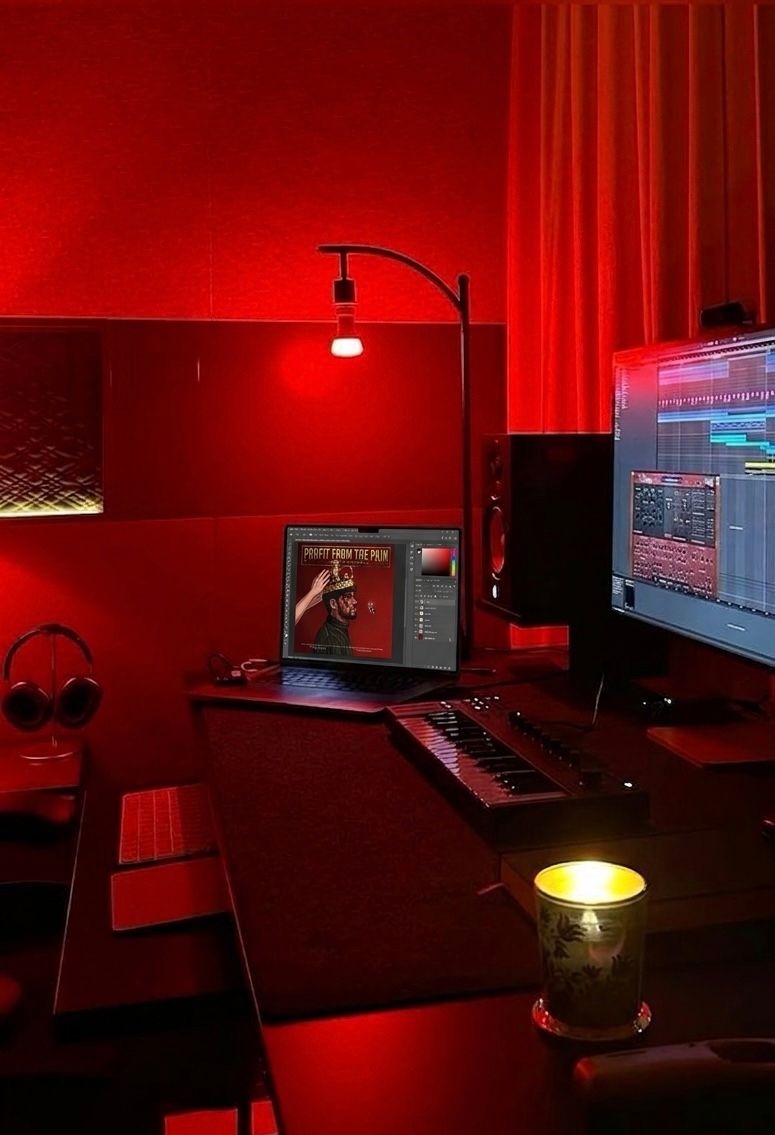
You've said Profit From The Pain is '8 months of our lives recorded' — walk us through what those eight months actually looked like day to day.
Those eight months were honestly one of the most intense periods of my life. There was a lot going on personally, especially with my past relationship, my struggles and everything I was dealing with mentally. Instead of keeping all of that to myself, I put it into the mixtape.
What makes Profit From The Pain special is that I made the entire project with my closest friends. I collaborated with artists like Samarth OG, Pranay Joshi, Armadok, Elim5k, Paraj and Mirage, and worked with producers like T Cee and Kanishk. They’re not just collaborators to me — they’re my homies, and we were all part of the same journey.
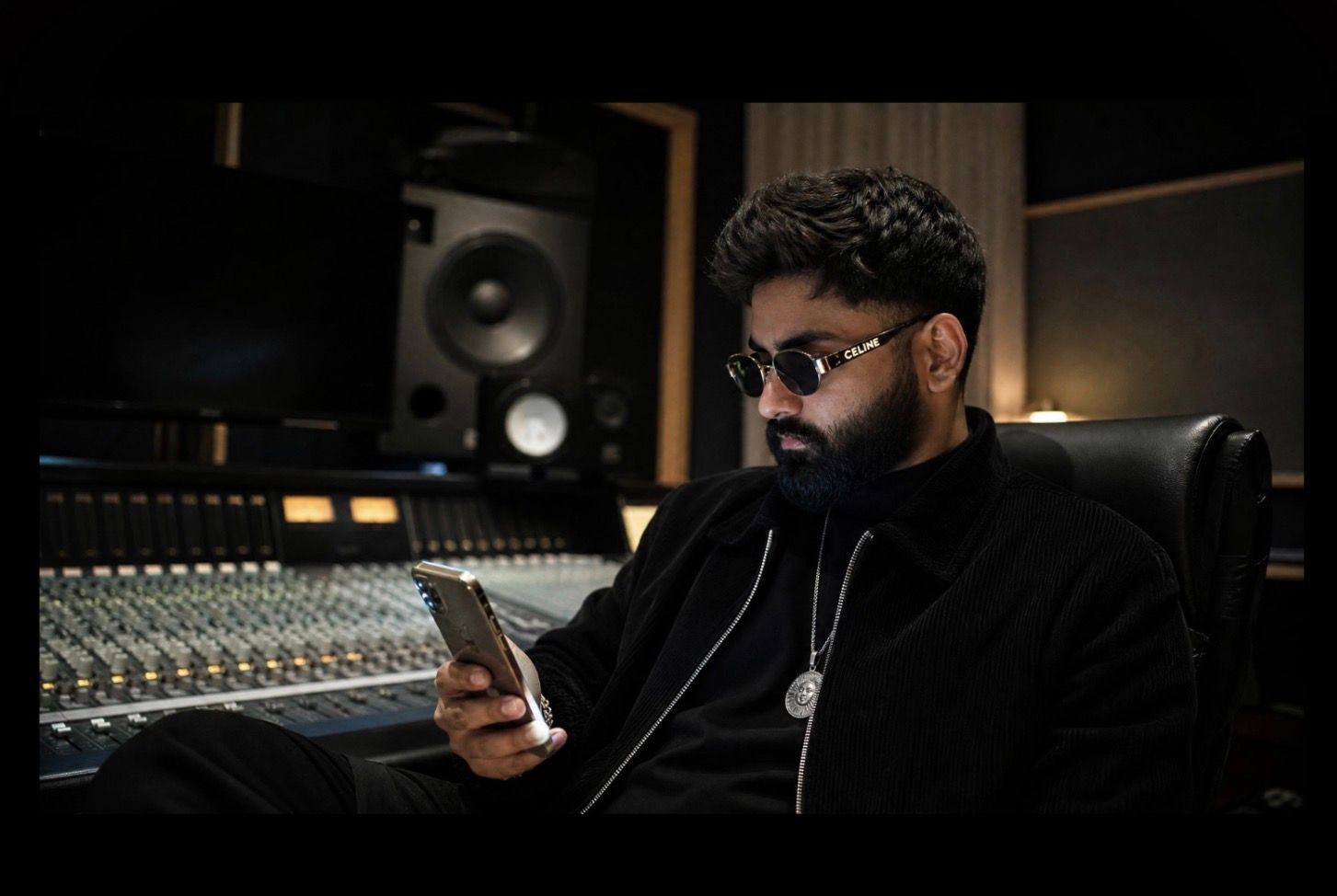
Most of the mixtape was made in my home studio. There wasn’t some big professional setup or a fixed routine. Every day was a different struggle — writing, recording, producing, figuring things out, dealing with life and then coming back to make music. We would spend hours together in the studio, sometimes just experimenting and sometimes turning whatever we were going through that day into a song.
That’s why I call it eight months of our lives recorded. It isn’t just a collection of tracks; it captures a specific period of our lives, our friendships, our struggles and everything we were trying to become. The pain, the late nights and the people around me all became part of the music.
What's happening in that clip you shared — is it a live moment, a booth take, or something you filmed for the reel?
It's a verse from one of my tracks on the mixtape, and I made that for a reel.
Tell us the story behind 'Bikhra' — and if there's a feature on it, who did you bring in and why?
“Bikhra” is a solo track, and the concept came from wanting to tell the same relationship story from two different perspectives. The song has two sides to it — the melodic part represents the girl’s point of view, while the rap represents the boy’s perspective.
I wanted both sides to feel different but still connected, because in a relationship, both people can experience the same situation completely differently. Instead of bringing in a feature, I decided to perform both perspectives myself, which made the song more personal and allowed me to tell the complete story exactly how I imagined it.
For me, “Bikhra” is less about choosing who was right or wrong and more about showing how the same relationship can leave two completely different emotions behind.
You work closely with Mirage across your music — how did that collaboration start, and what does he bring that pushes your sound?
My collaboration with Mirage started naturally through our friendship and our shared love for making music. He’s really good at creating melodies and bringing emotion into a track, while I naturally lean more towards rap, production and songwriting.
I’ve also produced some tracks for his album, and when we work together, the combination just makes sense. He’ll bring the melodic side, while I bring the rap and sometimes add melodies of my own. That contrast gives the songs a different texture and makes them feel complete.
We’ve created tracks like “Bayaan,” “Melancholy,” “Kyun,” and “Aryabhatta” together. I think what makes our collaboration work is that we don’t try to force each other into a particular sound — we understand what the other person brings and build the track around that. That chemistry has helped both of us experiment and push our sound further.
Your bio says 'In a world full of trends, I want to remain a classic' — what does staying a classic mean to you when so much of hip-hop chases what's viral?
For me, staying a classic means not letting trends decide who I am as an artist. Hip-hop is constantly changing, and I’m not against that — I actually love experimenting and trying new sounds. But I don’t want to make music just because I think something is going to go viral.
I want people to come back to my music years later and still feel something. I care more about the writing, the emotion, the production and the story behind a song than whether it fits whatever is trending that week.
Coming from Kanpur and now living in Delhi, I’ve seen different sides of the culture, and I want to build a sound and identity that represents my journey rather than an algorithm. Trends come and go, but if the music is honest and the craft is strong, I believe it can last.
That’s what “classic” means to me — making music that doesn’t have an expiry date.
Is there a bar or line you've written that you're most proud of? Share it and tell us why it hits for you.
There are a few lines that really stand out for me. From “FINE DINE”: “Mai wo matlabi insaan hi nahi / Or haan ye dolat kapda hoti pehchan hi nahi / Qismat ka rona hi kyu / Karmo pe dhyan hi nahi / Or kaise maanu unki jinka khud ka imaan hi nahi.”
From “Wasiyat”: “Ye ankhein num maano jheel chupa rakhi jaan me / Fariyaad khuda meri sune na / Dua mai bol kya karunga raam se.”
And from “Letter To You”: “Milta hai pyar saccha bas tu thora sabar kar / Musafir hi kya jo bhatke na fir suffer par / Hindi me suffer english me thora suffer kar / Banunga gayak ekdin mai bhi bada jabardast.”
There are many more, but these lines capture different emotions and moments that I’m really proud of.
With Profit From The Pain dropping and this award behind you, what's the next thing you're chasing as an artist — and how do you want people to feel when they press play?
Honestly, I’m still just getting started. I came into this just like a lot of people do — with a dream, a lot of doubts and no guarantee that it would work out. I’m still chasing growth, trying to become a better rapper, producer and artist, and I want to keep building something that genuinely represents me.
If there’s one thing I want people to take away when they press play, it’s to believe in themselves. I came from Kanpur, moved to Delhi and started making music in 2022 without knowing where it would take me. Everything I’ve achieved so far has come from simply continuing to believe in myself and keep going.
So if someone listens to my music and feels like, “If he can start from nothing and keep chasing it, maybe I can chase what I want too,” then that means more to me than numbers or awards.
I’m just getting started — and I want people listening to feel like they can believe in themselves too.
Contact and Follow
Email: prakharbajpai454.pb@gmail.com
Instagram: https://www.instagram.com/princebajpaii?igsh=MWlpc2xmeHdvejZhaQ%3D%3D&utm_source=qr
YouTube: https://youtube.com/@princebajpaii?si=cnqxkUx42vtpGqDB