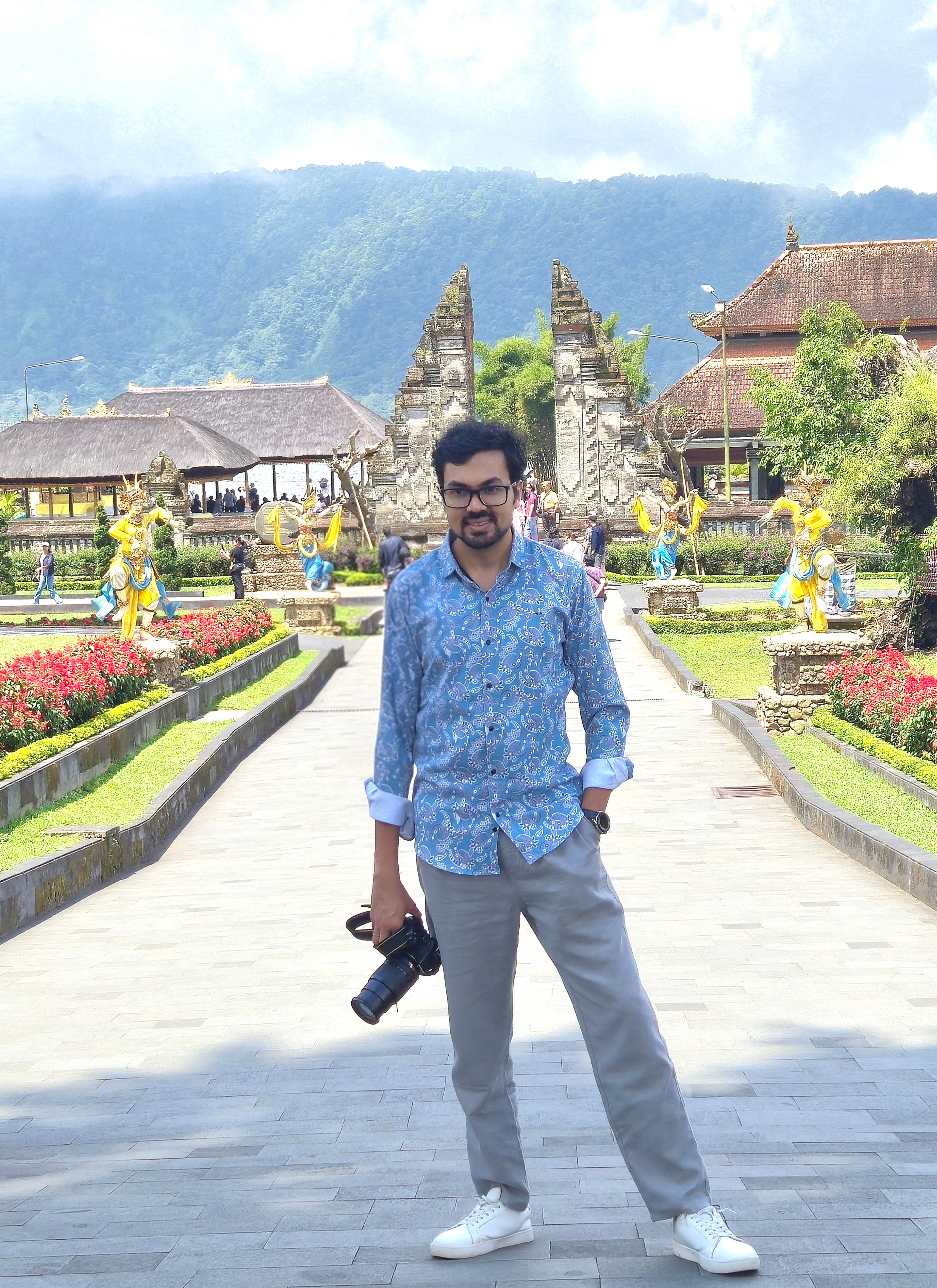



How did your journey in street photography begin?
My interest in visual art started long before I picked up a camera. Since childhood, I've been drawn to painting and sketching, and I always felt I had a natural eye for compelling frames and composition. The actual photography journey began during my time working in IT. I was on an assignment abroad, found myself with a lot of free time and little social circle on weekends, and started experimenting with my mobile phone. When I saw that my frames were turning out well, it gave me the confidence to invest in my first DSLR. From that moment on, there was simply no looking back—the streets became my canvas and photography my chosen medium of expression.
When was the first time you felt truly captivated by the 'quiet poetry' of the streets?
The real captivation happened when I moved back to India and chose Kolkata as my base. Coming from London, the transition was a complete game-changer for my perspective. Kolkata is an incredible cultural hub, bursting with vibrant colors, raw emotions, and year-round festivals. Suddenly, I was surrounded by a community of talented photographers, and the people on the streets here generally don't mind being photographed, which opened up a whole new world. The profound impact of this environment—the chaos, the beauty, the everyday stories—fundamentally altered how I began to see and capture the world through my lens.
How has your experience and artistic perspective grown from your early days to now?
My perspective has undergone a drastic and meaningful shift. In the beginning, I was primarily chasing aesthetically pleasing photographs—images that were simply beautiful to look at. Over time, my focus evolved toward seeking meaning, depth, and narrative. I started to see photography less as a technical craft and more as a powerful medium for expression and storytelling. Another major change was in how I judge 'good' work. I used to think the work of renowned photographers was the ultimate yardstick, but I've learned that art is deeply subjective. True satisfaction in your artistic journey comes from your own belief in your work. If you feel it's great and it expresses what you intend, then it is great.
You balance a software job with photography. How do these two roles influence each other?
They influence each other in complementary ways that might seem surprising. My tech job provides a structured, logical, and disciplined framework to my week. This discipline directly translates to my photography, helping me plan shoots, manage my portfolio, and approach editing with a meticulous eye. Conversely, photography injects creativity, intuition, and a focus on human emotion into my life, which prevents my world from becoming purely analytical. It's a balancing act where each role offers a necessary counterpoint, keeping both my logical and creative muscles flexed and engaged.
Being a Sikkim-born artist now based in Kolkata, how have these distinct cultural environments shaped your photographic eye?
These two homes have given me a unique dual lens. Sikkim, my birthplace, is a serene and breathtakingly beautiful hill state. Being raised there instilled in me a deep appreciation for natural beauty, patience, and the value of hard work—it taught me to see the picturesque in tranquility. Kolkata, in stark and wonderful contrast, is a roaring epicenter of culture and art. The density of artists here is incredible, and the constant buzz of exhibitions and festivals is unmatched. Kolkata taught me to find beauty and narrative in chaos, vibrancy, and human interaction. Together, they have given me a rich, layered perspective that seeks balance and story in every frame.
What are some of your favorite photographs that represent your street photography style?


My work is fundamentally about noticing the subtle, interesting stories and moments in the streets that most people walk past without a second glance. The special part for me is the act of discovery—finding and capturing something intriguing, emotional, or beautifully composed in the most mundane and ordinary places. These images are less about grand events and more about the quiet poetry of everyday life.
Could you walk us through your editing process by comparing an edited and unedited shot?


My editing process is generally quite minimalist and intentional. For these images, and most of my work, the key steps involve careful cropping to strengthen the composition and eliminate distractions, followed by selectively bringing out details in the shadows and highlights to guide the viewer's eye. The goal is never to create something that wasn't there, but to enhance the mood, clarity, and narrative that I felt in the moment I took the shot. It's about refining the raw capture to match the emotion I experienced.
What was a pivotal moment from your first major trip to Varanasi?

Varanasi was a profound turning point. Every photo walk there has been a masterclass in itself, but that first trip fundamentally refined my skills. It taught me to see human emotions with greater depth, to cultivate the patience to stop and observe the subtle connections between different elements within a chaotic frame, and most importantly, to truly vibe with my surroundings. Shooting in Varanasi isn't just about taking pictures; it's about immersing yourself in the flow of life, death, and spirituality, and learning to capture that essence with respect and sensitivity.
How does your background in painting and sketching manifest in your photographic compositions?

My training in traditional art is the foundation of how I see. It directly influences my sense of geometry, balance, and color harmony. When I'm on the streets, I'm instinctively looking for lines, shapes, and frames within the frame, much like I would when sketching a scene. This background helps me impose a sense of order and aesthetics even within the most chaotic environments. The editing choices for an image like this often revolve around cropping to perfect that balance and enhancing details to emphasize the graphical quality I was drawn to in the first place.
Tell us about a candid moment you captured that tells an extraordinary everyday story.
This clip captures a beautifully raw slice of life. I was simply waiting for a cab at a bus stop when this scene unfolded. A wife, visibly upset, was determined to board a bus—perhaps to her parents' place—while her husband employed every possible tactic to console her and bring her back home. The wife's resolute silence contrasted with the husband's growing exasperation was the story. What makes it special is how the painted artwork on the bus stop wall accidentally but perfectly complements the real-life drama, adding a layer of silent commentary to the entire interaction. It's these unscripted, emotional narratives that I live for.
How does the discipline from your tech life influence your weekend photographic explorations?

This image, to me, visually represents that balance. It shows a striking contrast between two worlds sharing the same space. On one side, you have women sitting peacefully, fully immersed in the moment and the serenity of the seaside. On the other, a woman walks by, physically present but mentally tethered to her office work through her phone. The discipline from my weekday life helps me efficiently carve out and protect my shooting time, while the analytical side helps in planning and post-processing. But when I'm on the street, I strive to be like the women sitting down—fully present, observant, and open to the moment, leaving the weekday urgency behind.
What is your mindset when you're out capturing moments on the street?

My mindset is one of open, patient observation. I try to shed any preconceptions and just be present in the environment, allowing scenes to unfold naturally rather than forcing them. It's about becoming a part of the street's flow, not just an observer. I'm constantly scanning for light, geometry, and most importantly, human interactions and emotions that tell a story. It's a blend of technical awareness and emotional intuition—being ready to react in a fraction of a second while also having the patience to wait for the right moment to coalesce.
How does Kolkata itself inspire your street photography?
Kolkata doesn't just inspire my photography; it fundamentally shapes it. The city breathes art—it's in the air. The photography community here is incredibly vibrant and supportive; I even meet high-school students passionately documenting stories. But beyond the community, Kolkata as a subject is endlessly inspiring. It's a layered, complex character in my work. As a cultural melting pot, it erupts into festivals constantly, spilling unimaginable color and emotion onto the streets. The people are expressive and often welcoming, which makes candid storytelling feel natural. The city's unique blend of chaos, history, and warmth provides an inexhaustible well of inspiration.
Contact and Follow
Email: pranaypariyar@gmail.com
Instagram: https://www.instagram.com/triggerha_pp