

How did your journey in photography begin?
As a kid, I was always fascinated by old photographs — flipping through my birthday albums, my parents' wedding pictures, and those dusty family albums that seemed to hold time itself. That curiosity naturally drew me toward photography. I remember in school, I'd take my pencil box and pretend it was a camera, "clicking" pictures of my classmates. Back then, I wasn't allowed to use a real camera, and film was far too expensive for a child. So that imaginary camera was my starting point, and the fascination never really left me.
What was the first moment you realized photography was your passion?
It hit me when I understood that photography captures moments that will never, ever come back again. Each picture holds a fragment of time, a memory preserved forever. That realization — that I could freeze a fleeting instant and keep it alive for a lifetime — is what made me fall in love with this craft. It's not just about taking pretty pictures; it's about holding onto the irreplaceable.
How has your experience and style evolved over the years?
I'd say patience and observing life, learning from it every single day, have been my greatest teachers. I always give the example that Rome wasn't built in a day. It's the same with photography — it's a continuous process of observing, learning from life, and most importantly, understanding yourself. Mistakes? Oh, they're invaluable. They've shaped my experience more than any success. I like to keep a childlike attitude, seeing the world with fresh eyes each day, always curious and open to learning something new.
What drives you to specialize in such a wide range — fine art, architecture, interiors, portraits, and industrial photography?
I think it all comes from a deep love for life and everything it has to offer. There's a subconscious pull that connects me to these varied subjects. Each specialization is so different and unique — fine art lets me express emotion, architecture and interiors challenge my eye for symmetry and light, portraits connect me to people's stories, and industrial photography captures raw, unpolished beauty. It's the diversity that keeps me inspired and hungry to explore more.
Tell us about a fine art photograph that holds a special place in your heart.
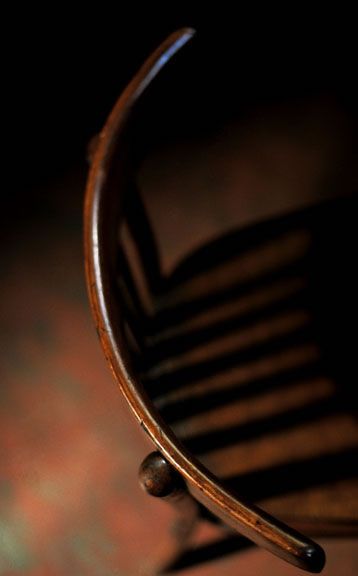
This photo was taken during my two-year photography course at the Light and Life Academy in Ooty. We were given an assignment to capture the alphabet 'C' in a photograph. I remember sitting at an Irani hotel, sipping coffee, when I stood up and noticed this chair. The shape of the backrest formed a perfect 'C'. Instinctively, I pulled out my camera and captured it. It was one of those spontaneous moments where you see something ordinary and suddenly realize its beauty.
What was the biggest challenge you faced while capturing that architecture or interior shot?
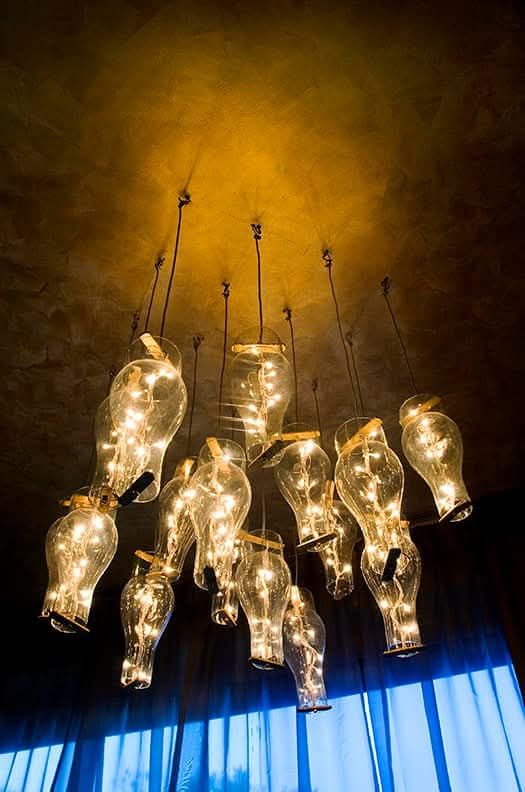
I shot this image at Insitu Design, which designed a lounge bar called "Fireflies" in Bangalore. The biggest challenge was balancing the harsh window light with the ambient interior lighting. I decided to shoot around dusk when the natural light was fading, which allowed me to blend both sources more harmoniously. The timing made all the difference, and I'm happy with how the warm tones came together in the final shot.
Who is the person in that portrait, and what's the story behind it?
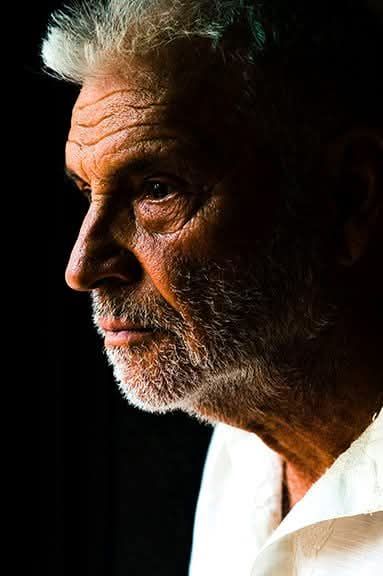
This is the Late Paul Liebhardt, who sadly passed away last year. He was a faculty member at Light and Life Academy in Ooty when I first met him in 2003. His body of work inspired me deeply — especially the way he captured portraits using only available light, making his images feel like poetry. I took this portrait in 2013 when I visited him in Mumbai. It turned out to be the last time I ever saw him. I wanted to capture the essence of his personality — the man I admired and whose work I was such a fan of. I think this image speaks a thousand words on its own.
What drew you to that industrial subject, and how did you approach the shoot?
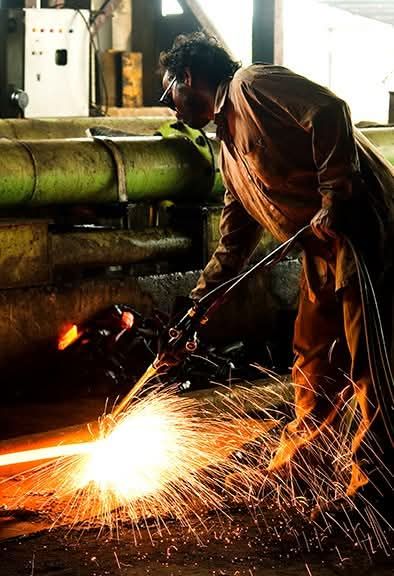
I was commissioned by Indus Strong Steel to shoot at their factory. While walking through the factory floor, I noticed a worker silhouetted against the backlight, his movements creating a perfect balance with the harsh industrial environment. I didn't overthink it — I just raised my camera and captured the moment. The image speaks for itself. It's raw, honest, and tells the story of labor and light coming together.
Walk us through your editing process for a photo you're particularly proud of.
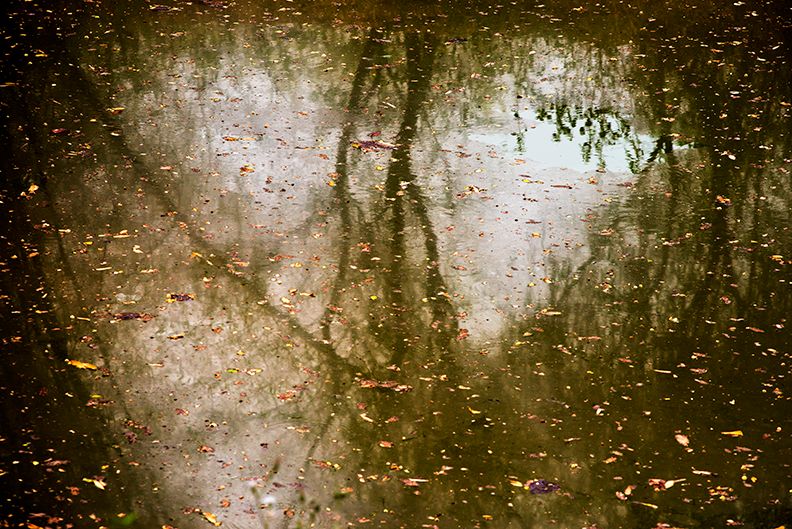
I don't manipulate my images — I believe in capturing what the camera sees and what life presents. My editing is very basic, mostly just color correction. This particular image was taken for my sixth solo exhibition, "Fluid Stillness," in 2018. It's part of a series where I photographed the lakes of Bangalore as abstract images. The aim was to capture the essence of the water and its reflections exactly as I saw them. I was thrilled that many prints from this series sold during the exhibition; it felt like validation of my approach of staying true to the moment.
What makes this photo different from others in your portfolio?
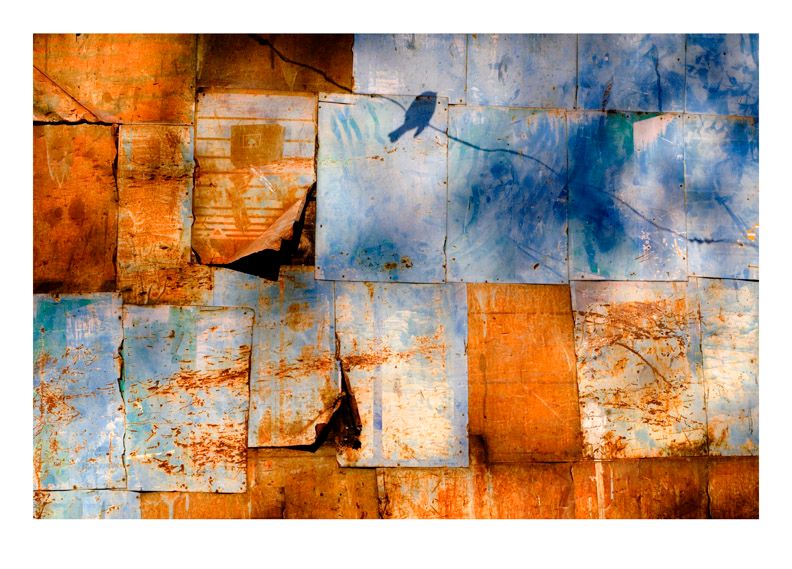
This image is like poetry — it can never be recreated. I was on a morning photoshoot at City Market in Bangalore, walking around, when I noticed a blue-stained sheet on a wall. A shadow was falling on it, and then I saw a bird sitting on a wire, casting its reflection onto that blue surface. I managed to capture it in just a couple of seconds before the bird flew away, and the reflection vanished. That moment was pure serendipity. I can never make that image again, and I feel incredibly lucky to have observed it and pressed the shutter in time.
Contact and Follow
Email: mathew.vivek@gmail.com
Behance: https://www.behance.net/vivekmathew
Instagram: vivekmathewimages
Facebook: Vivekm