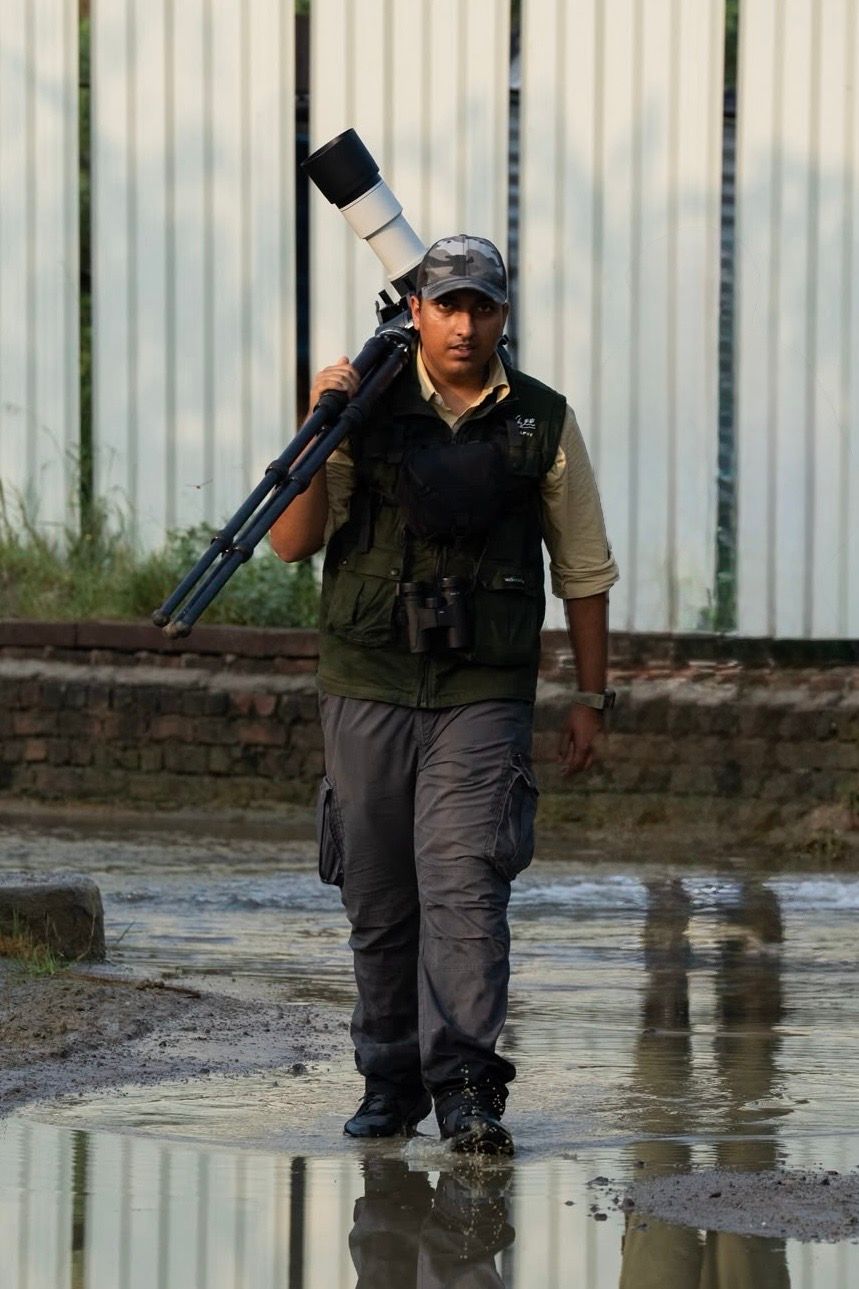


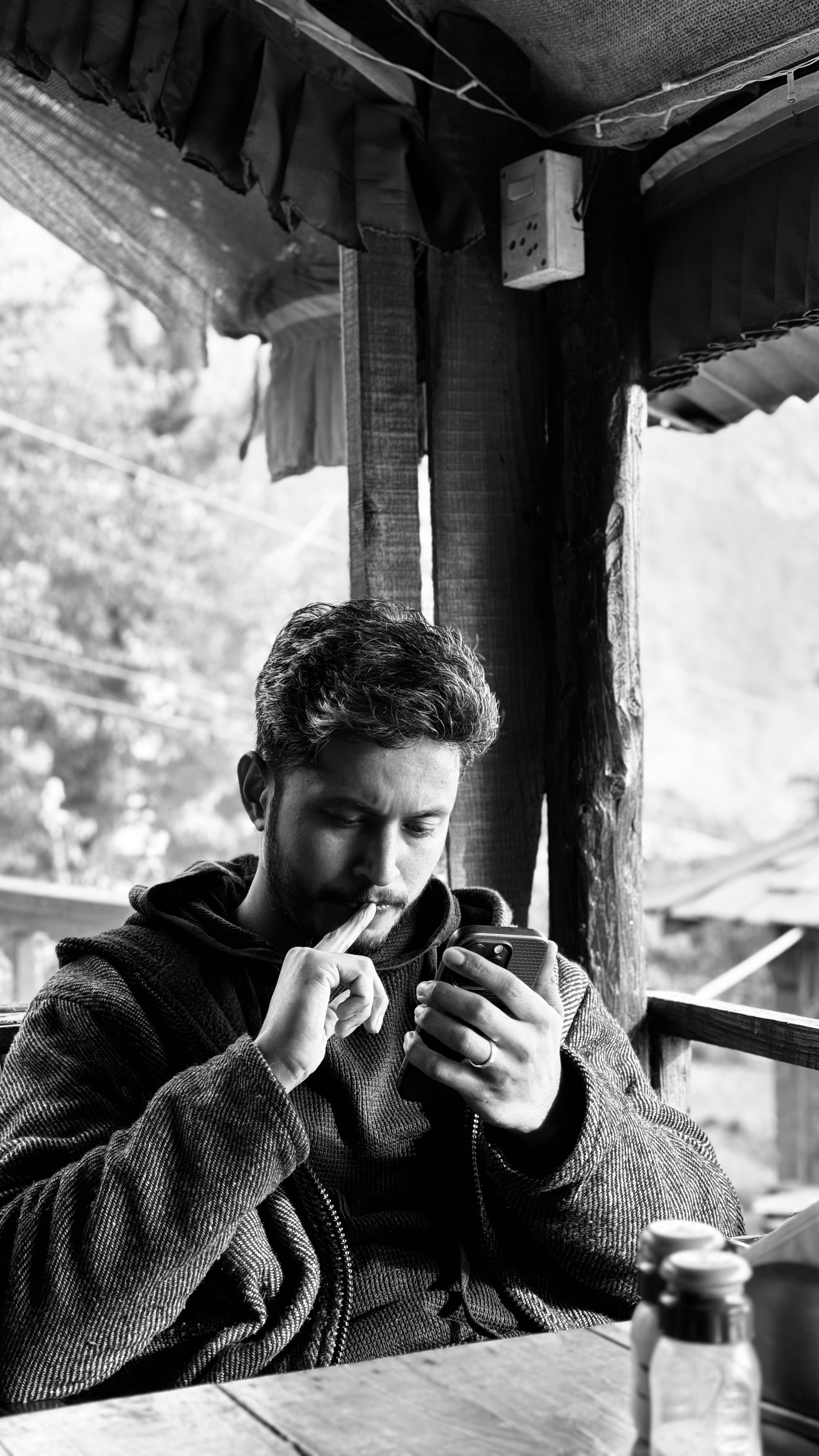
You span five genres — documentary, street, human, nature, and fashion. That's an unusually wide range. Did you start in one and branch out, or were all five always pulling on you?
I did start with documentary and human photography, and from there, it branched out to more. As I worked in the Indian film industry, I grabbed every opportunity that came my way. Each new genre taught me something different, and I never felt the need to limit myself. The film industry is a fast-paced environment where you learn to adapt quickly, and that spirit carried over into my photography. I believe that every opportunity, whether it's shooting a documentary on location or a fashion campaign in a studio, adds a new layer to your creative vision. The more I explored, the more I realized that each genre feeds into the others, making my work richer and more nuanced.
Across those five genres, which one was the first to feel like yours — where you stopped imitating what good documentary, street, or fashion looks like and started doing it your way?
Street photography was the first genre that truly felt like mine. There's something about the unpredictability of the streets that forces you to develop an instinct. You stop thinking about what a 'good' street photograph should look like and start trusting your gut. The moment I stopped trying to replicate the work of photographers I admired and started responding to what I felt in the moment, everything clicked. Street photography taught me patience, observation, and the art of being invisible. It's where I learned that the best images aren't staged—they're discovered.
Photographers who work across documentary and fashion usually pick a side eventually. What keeps you working across all five, and how does that breadth change the way you approach any single shoot?
As a photographer, I like to understand the complete background of everything I am trying to capture. I observe carefully and pick the elements that define the story in the most authentic way possible. Whether it's documenting the raw, unfiltered emotion of a human or any subject on the street, or telling the story of a fashion designer—their vision, the thought behind their design—every frame is ultimately a story. With every story, I align my perspective and convey it with pure intent. Working across documentary, fashion, human, street, and nature photography has never felt like a conflict to me. If anything, each discipline sharpens the others. The patience I've built on the street makes me quieter and more observant on a fashion set. The storytelling instinct from documentary work pushes me to find the 'why' behind every fashion frame—not just what looks beautiful, but what it means. That cross-pollination keeps the work honest, regardless of the genre.
What draws you to documentary, street, human, nature, and fashion photography?
Every genre I work in traces back to a single obsession: storytelling. I initially shot behind-the-scenes of the movie Sultan for Yash Raj Films, then worked as a cinematographer on documentaries, short films, and music videos, and later served as an assistant director on a feature film called Sector 36 for Netflix. That foundation in cinema taught me how stories breathe—how a single frame can carry weight, emotion, and meaning without a single word. When I moved deeper into photography, I carried that instinct with me. Documentary and street photography felt natural because they demand the same patience and observation that film does: you wait, you watch, and you capture the moment before it disappears. Human photography is an extension of that—finding the unfiltered truth in a person's expression. Nature came from a different place—a genuine love for the world around me. Travelling opened my eyes to how extraordinary the ordinary can be. It taught me to notice the art where no one else is looking, to find beauty in the details most people walk past. Fashion, on the other hand, gave me the space to be intentional and deliberate—to construct a story rather than simply witness one. Together, these five genres are not separate pursuits; they are all chapters of the same conversation I'm having with the world through my lens.
Could you share a photograph that best represents your documentary photography style and tell us the story behind it?
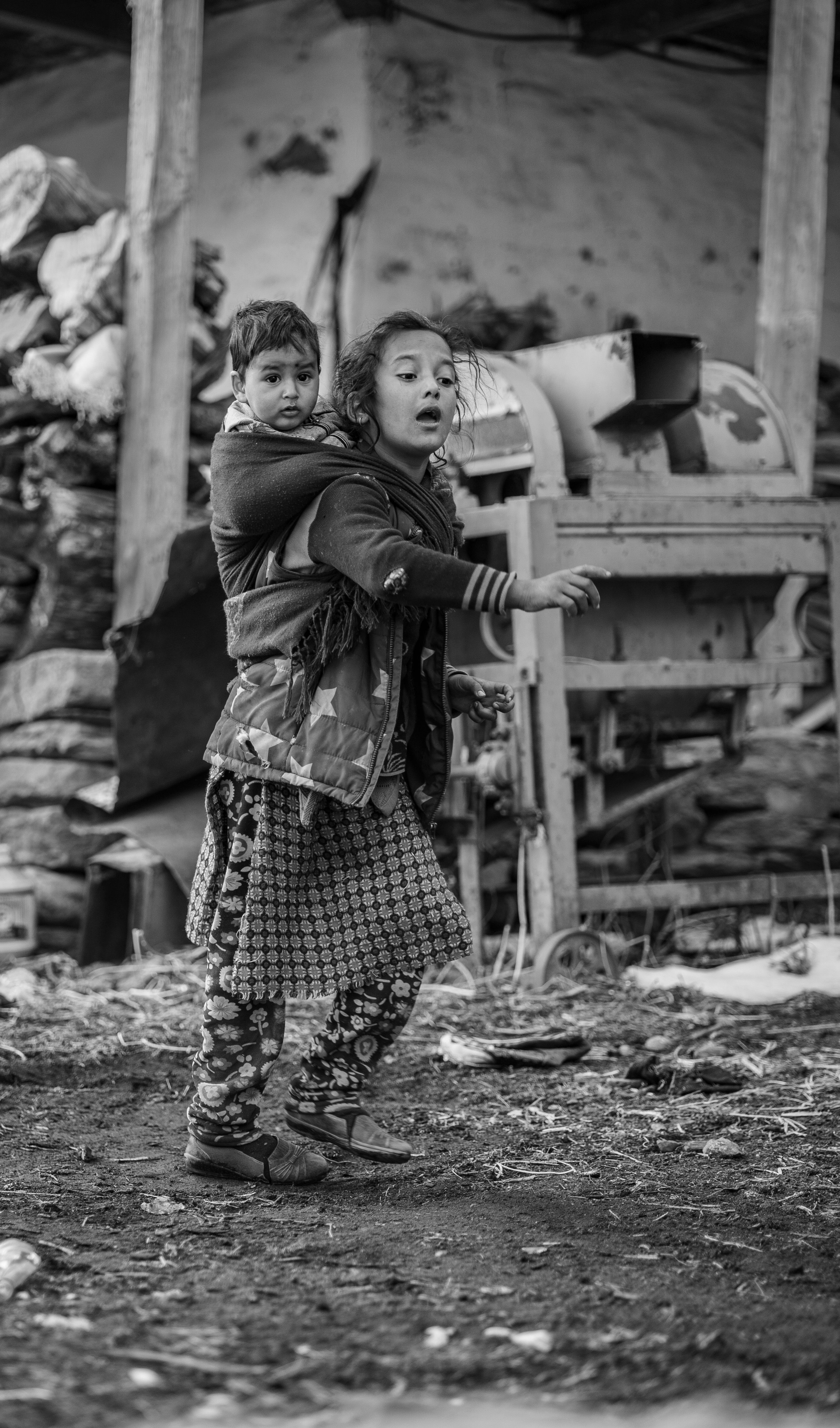
This image features a young girl in a village in Himachal Pradesh carrying her little brother strapped to her back, yet there is nothing heavy about this moment. She is mid-play, pointing ahead, caught in a conversation with her friends, completely unbothered by the weight she carries. Her brother, nestled securely behind her, looks on with quiet curiosity and comfort. What makes this frame so compelling is the effortless duality it captures—responsibility and childhood, duty and joy—existing not in conflict, but in complete harmony. She is not pausing her day for him; he is simply a part of it. Shot in black and white, the image strips away any distraction and lets the raw emotion speak—the charisma in her posture, the innocence in his gaze, and the quiet strength of a bond that needs no words.
This street photo captures a candid moment—what story does it tell?
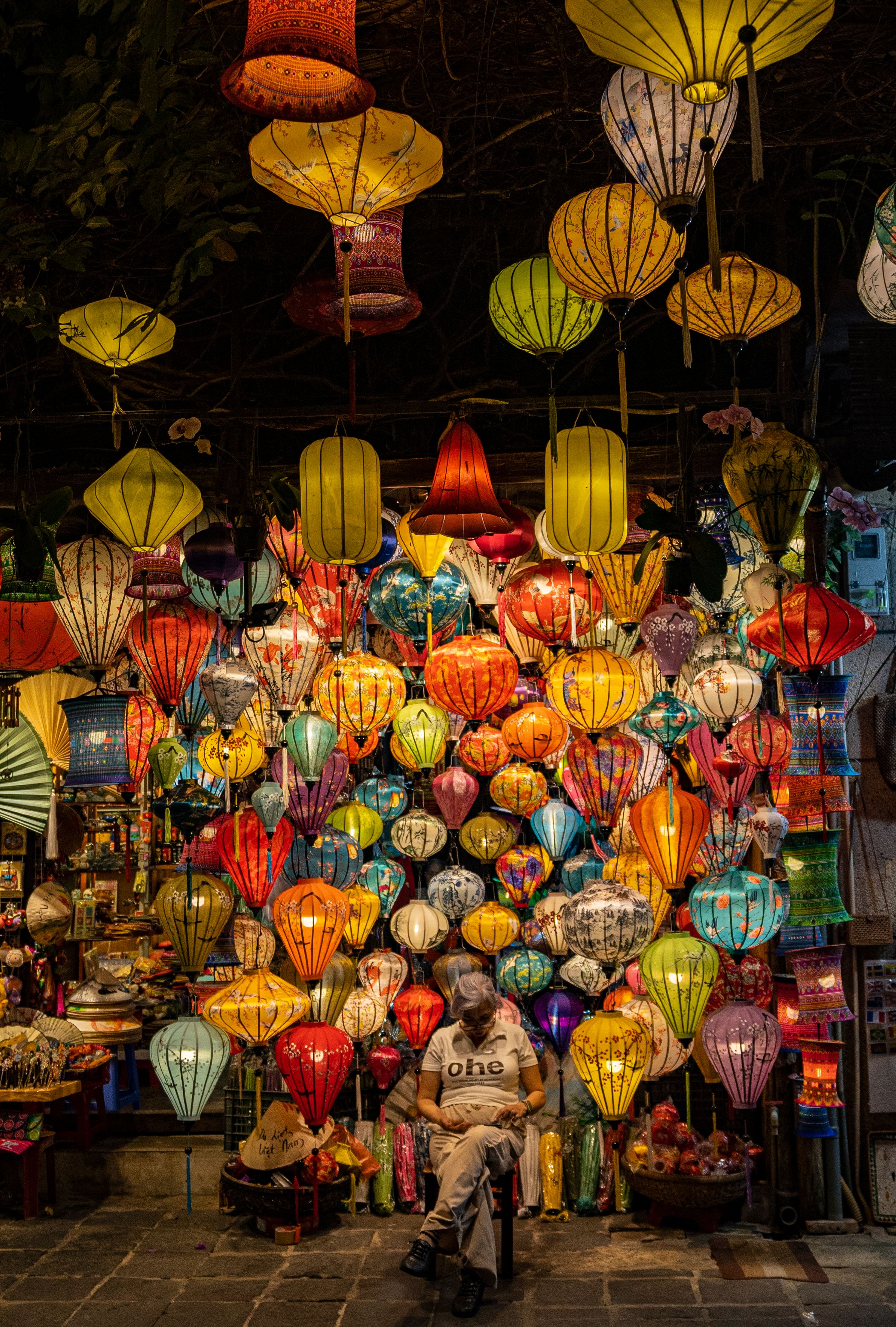
Hundreds of lanterns blaze in every colour imaginable—red, gold, turquoise, pink, violet—each one glowing like a small sun, together creating a canopy of light so overwhelming that it stops every passerby in their tracks. And right at the heart of it all, almost swallowed by the spectacle she has built, sits the shop owner, head down, unbothered, lost in her own world. That contrast is everything. The world around her is loud, vibrant, and alive with colour. She has created something genuinely mesmerising, and yet to her, it is simply another day. No pride, no performance, no pause to admire what she has made. She is there for business, and business only. The magic she creates for others is just her regular morning. There is something deeply human about that. The people who build the most beautiful things are often the least captivated by them. She has lit up the streets of Hoi An, night after night, and somewhere along the way, the wonder became routine. The lanterns tell the story of Vietnam's culture and craft, but the woman sitting quietly beneath them—that is the real story. The invisible hand behind the light.
A portrait you shared shows a man tending a fire in the cold—what emotion or connection were you hoping to capture?
Everything in this frame is cold—the night, the snow sitting heavy in the background, the stone floor beneath him, the world outside. Everything except the fire, and the man coaxing it to life. The selective colour is a deliberate and powerful choice. By keeping only the flame in its warm orange and gold, the fire becomes more than just fire—it becomes the entire point. The one source of warmth in a freezing Himalayan night, and this man is down on his knees, leaning into it with a quiet smile, willing it to grow. That smile is what makes this portrait. He is not performing hospitality; he is living it. There is no obligation in his posture, no burden. Only a genuine, unhurried care for the people waiting inside. In a world where warmth is a luxury of altitude and season, he chooses to create it with his hands, his breath, his time. The sparks flying off the flame felt necessary, almost cinematic—small bursts of life in the cold dark. He leans closer, unbothered, as if the fire already knows he means well. This is what true hospitality looks like—not grand gestures, just a man on a cold night making sure his guests are warm before he thinks of himself.
What was the location and what made you capture this nature or landscape shot?
This was at Anjuna Beach, Goa, just moments before the sun surrendered to the horizon. What made me stop and capture this was not the sunset—sunsets happen every day. It was the relationship playing out in front of it: a father and his young son walking at the water's edge, their silhouettes perfectly mirrored in the wet sand below. Two figures above, two figures below—the same moment, doubled by nature itself. The sun sits right between them in the frame—small, golden, almost fragile—and yet it holds the entire composition together. The clouds stretch endlessly above, dramatic and alive, while the wet sand turns the beach into a mirror, blurring the line between the sky and the earth beneath their feet. Beyond the composition, it was the metaphor that compelled me. A father runs, a child follows—that is life in its simplest form. And the sun, descending without hesitation, reminded me that nature too moves forward, always. It sets not in defeat, but in the quiet confidence that it will rise again. Just like the child one day will lead, and the father will follow. Everything in this frame—the light, the reflection, the two souls walking through it—was saying the same thing: we are here, we are alive, and tomorrow we will be here again.
Tell us about the concept or theme behind this fashion photograph you captured.
The brief was clear from the start: no backdrops, no studio, no artificiality. The brand wanted life itself to be the set, and that is exactly what this frame delivers. Shot on a sun-dappled street, canopied by trees with light breaking through the way it only does in real hours of a real day, this is fashion photography that refuses to be precious about itself. The dress—bold in its colour-print, moving from a fiery orange at the shoulder down to a sweeping teal—is not being displayed. It is being lived in. That is the entire point. This brand is saying: our prints are not for occasions; they are for Tuesday mornings, for laughter on ordinary streets, for the woman who does not need a reason to feel beautiful. Comfort is the foundation, confidence is what grows from it, and joy is that full, unreserved laugh.
What techniques or tools did you use to edit this image?
For this particular image, I used a combination of Adobe Photoshop and Lightroom. The goal was to preserve the natural feel of the shot while enhancing the colours and contrast. In Lightroom, I adjusted the exposure and brought out the warmth in the skin tones. I also worked on the colour grading to make the greens of the trees pop without looking artificial. Then in Photoshop, I did some subtle dodge and burn to add depth to the shadows and highlights. I wanted the final image to feel like a moment you could step into, not something overly processed that takes you out of the reality of the scene.
Contact and Follow
Email: Winterchromephotography@gmail.com
Instagram: @winter_chrome