

How did your journey in wildlife photography and cinematography begin?
My journey of wildlife began in 2014 during a visit to Tadoba National Park. At the time, it was meant to be nothing more than a temporary escape—a much-needed break from the intense, demanding routine of my surgical practice. I went seeking quiet and relaxation, but the moment I witnessed the raw, untamed beauty of the wilderness, something shifted inside me. Watching an apex predator navigate its natural habitat with absolute grace and power completely captivated me. I realized that the deep focus and stillness I relied on every day in the operating theater found a beautiful, parallel home in the wild. What started as a simple retreat quickly evolved into a profound, lifelong passion. Tadoba was the spark, and ever since, my camera has been an extension of my sight, allowing me to preserve the magnificent stories of our planet's wildlife.
What was the first moment you realized you wanted to capture candid human portraits?
The realization that I wanted to capture candid human portraits came to me during my visits outside the hospital and the jungle—most notably while exploring the vibrant, weathered streets of Rajkot, Ahmedabad, Ladakh, Pushkar, Barsana, Nepal, and the rural landscape of India. As an ENT surgeon, I spend my days looking at humans through a lens of clinical precision and vulnerability. But on the streets, away from the sterile environment of the operating theater, I saw a different kind of raw human truth. I watched a lady street vendor smile through deep-set wrinkles, and children playing without a care in the world. I realized that just like an animal in the wild, the human face tells its most profound story when it doesn't know it’s being watched. That was the moment I wanted to use my lens to capture not just the physical form, but the unfiltered, resilient spirit of everyday people.
How has your experience and style evolved over the years?
Over the years, my experience and style have undergone a profound evolution. When I first picked up a camera in 2013 at Rajkot, my approach was driven by the sheer excitement of the encounter. Like most beginners, I focused heavily on tight close-ups—the classic 'documentary' style—simply trying to capture sharp images of people, animals or birds. I was chasing the subject, not the scene. As time passed and my patience deepened, my style shifted from documenting wildlife to capturing fine-art environmental portraits. Today, I don't just zoom in on an animal; I look at how the subject interacts with its environment. I have become obsessed with dramatic light, golden hours, and minimalist framing. Whether it’s an Asiatic lion navigating the dry, speckled shadows of Sasan Gir or a candid face on the streets of Rajkot, I look for the negative space, the mood, and the raw emotion of the moment. Much like my journey in ENT surgery—where technique eventually transforms into fluid, instinctive artistry—my photography has evolved from a conscious technical effort into a seamless extension of my vision. I no longer just take pictures; I compose stories waiting for the perfect light to tell them.
What drives you to keep creating wildlife and portrait content?
What drives me to keep creating is the profound sense of purpose that comes with capturing a single, unrepeatable moment in time. Both wildlife and human life are beautifully fleeting, and through my camera, I am able to freeze them forever. In wildlife photography, my drive is fueled by a deep sense of conservation and storytelling. When I am in jungles of India or East Africa, I know that the majestic lions, tigers, and birds I photograph are part of a delicate ecosystem. Sharing their raw beauty with the world isn't just about creating art; it’s about inspiring people to care for and protect these species. Seeing a photo or a reel resonate with millions of people online pushes me to keep going. In candid portraiture, I am driven by human connection. Capturing the authentic, unscripted emotion of a person living their truth reminds me of our shared resilience and humanity. Ultimately, creating this content is what keeps my soul balanced. My days are spent in a sterile, high-pressure hospital environment where I am constantly giving my energy to save lives. Stepping out into the wild or onto the streets with my camera allows me to look at life through a lens of pure curiosity and wonder. It is my meditation, my creative oxygen, and my way of celebrating the world's incredible diversity.
Tell us about a photo that best represents your wildlife photography work.
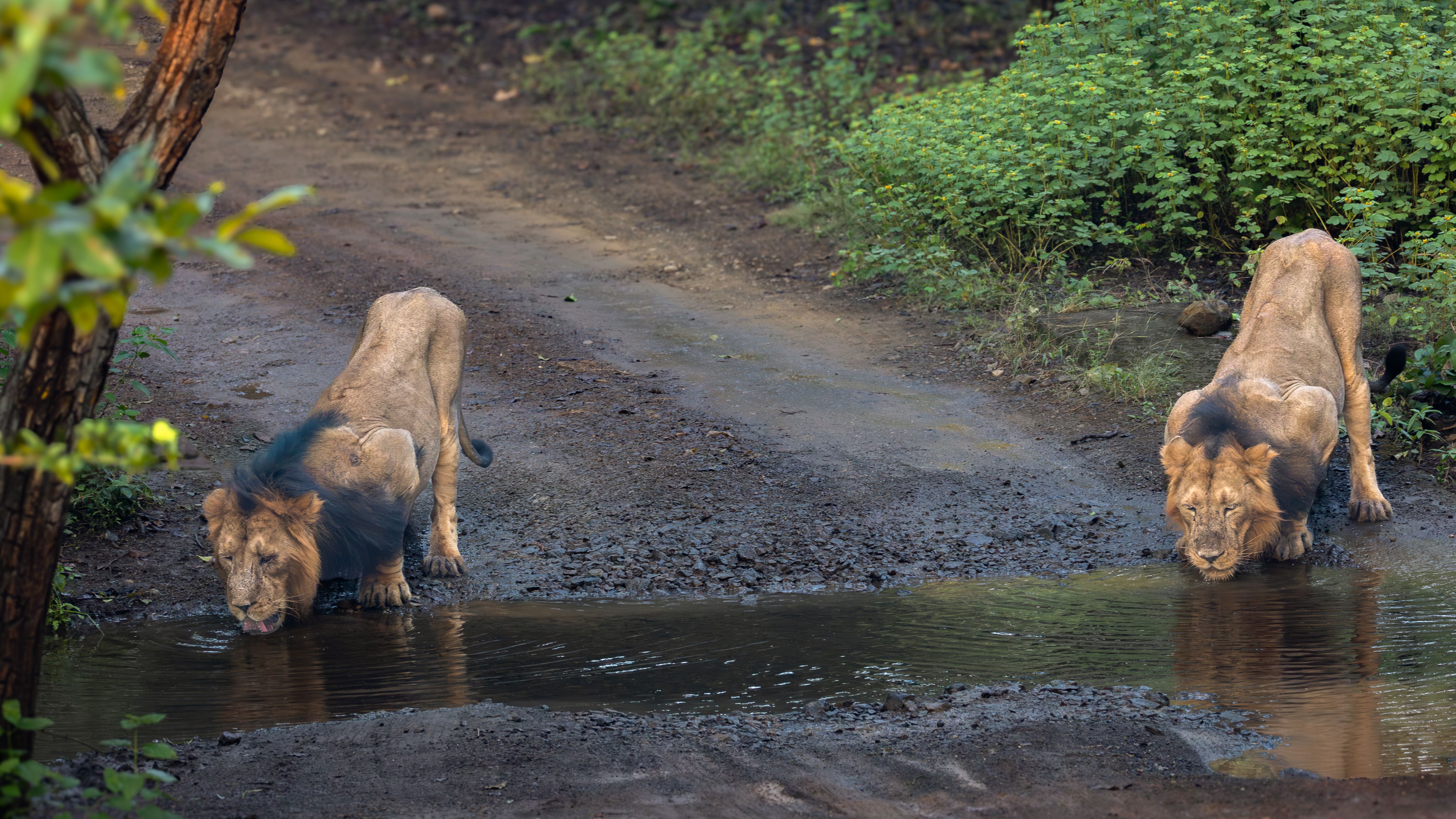
Capturing this picture was an exercise in intense patience and anticipation, highlighting a spectacular moment of symmetry in the wild. We spotted these two majestic Asiatic lion brothers moving parallel to the forest track in Sasan Gir. Instead of rushing to snap a standard walking shot, we anticipated their path. Seeing a small, natural pool of water accumulated across the dirt road ahead, I instructed the safari vehicle to stop at a respectful distance, hoping they would pause for a drink. What happened next was absolute magic. The brothers didn't just stop; they approached the water source from opposite sides of the road, moving in near-perfect synchronization. They lowered their massive frames simultaneously, creating a stunning, balanced composition. As an ENT surgeon, I am trained to look for symmetry, balance, and structure, and seeing it play out so naturally in the wilderness was breathtaking. The frame perfectly captures the contrast between their rugged, battle-tested strength and the absolute stillness of the water reflecting their forms. The lush, green post-monsoon foliage framing the top of the road provided the perfect depth of color to elevate the scene. Moments like this one are incredibly rare—it requires the perfect alignment of animal behavior, light, and a photographer's readiness to capture a split-second act of natural poetry.
What makes this candid human portrait special to you?
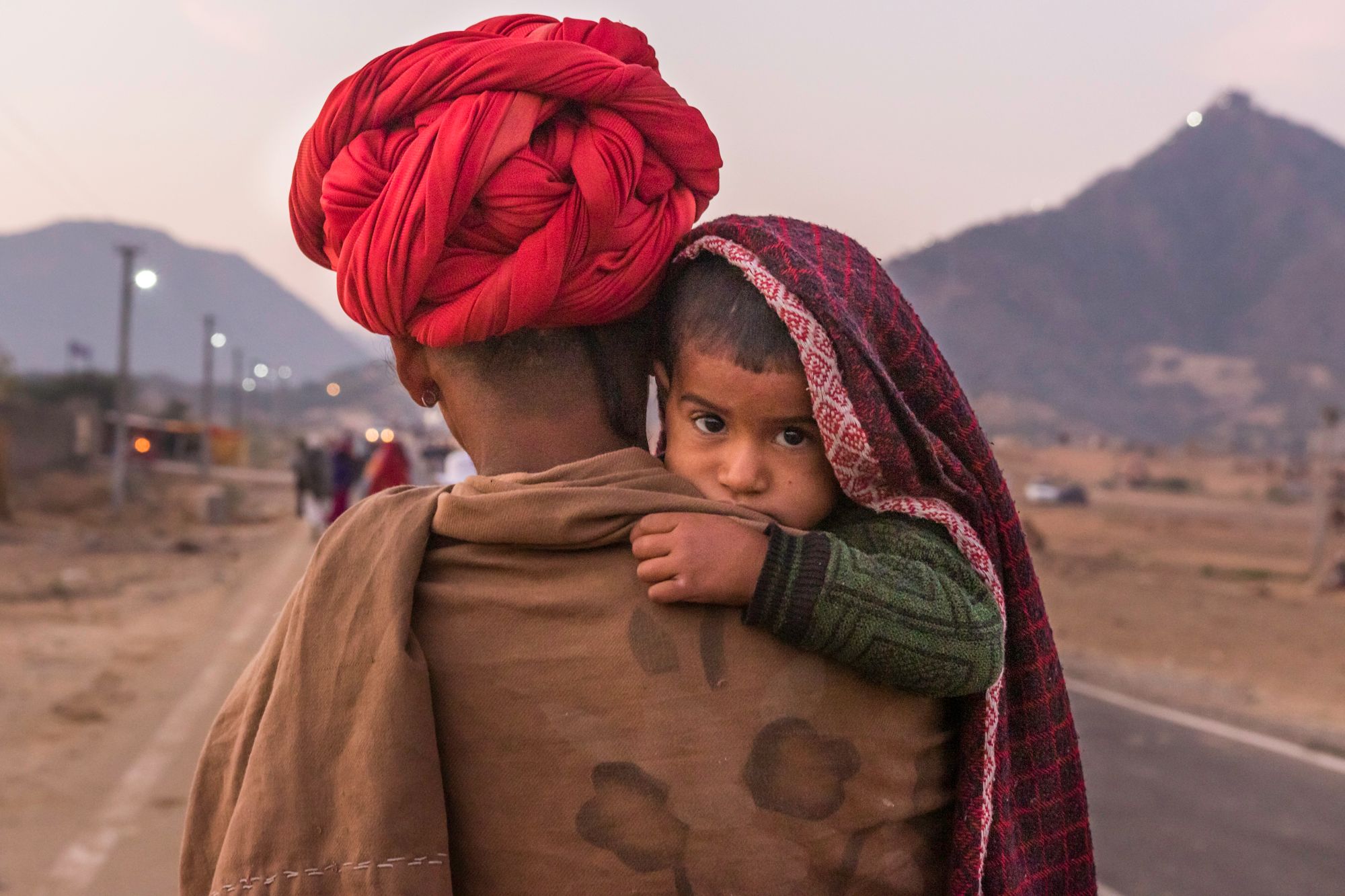
What makes the portrait incredibly special to me is the sheer patience, human connection, and persistence it took to capture a single, fleeting expression. I clicked this picture early in the morning during the vibrant Pushkar Camel Fair. My fellow photographers and I were heading out to the fairgrounds, anticipating that the dawn light would bring something extraordinary. On the way, I spotted a this father walking down the road, carrying his young son on his shoulder. While the father kept his focus forward, the child was peering back, intensely curious about our presence and photography gear. Realizing the magic of the child’s unfiltered curiosity, I ended up walking almost half a kilometer behind them. I didn't want to startle them or disrupt the natural rhythm of their morning; I simply wanted to wait for the exact moment the child would truly lock eyes with my camera. Finally, it happened. The resulting frame represents everything I love about street and travel portraiture. The vivid, striking red of the father's traditional turban anchors the composition, but it is the child’s intense, innocent, and soulful gaze peering over his father's shoulder that steals the show. It captures a pure, unscripted moment of childhood wonder framed against the soft, morning light of the hills. For me, walking that half a kilometer was a small price to pay for a portrait that speaks volumes about innocence, trust, and curiosity.
Walk us through the editing choices you made for that wildlife shot.
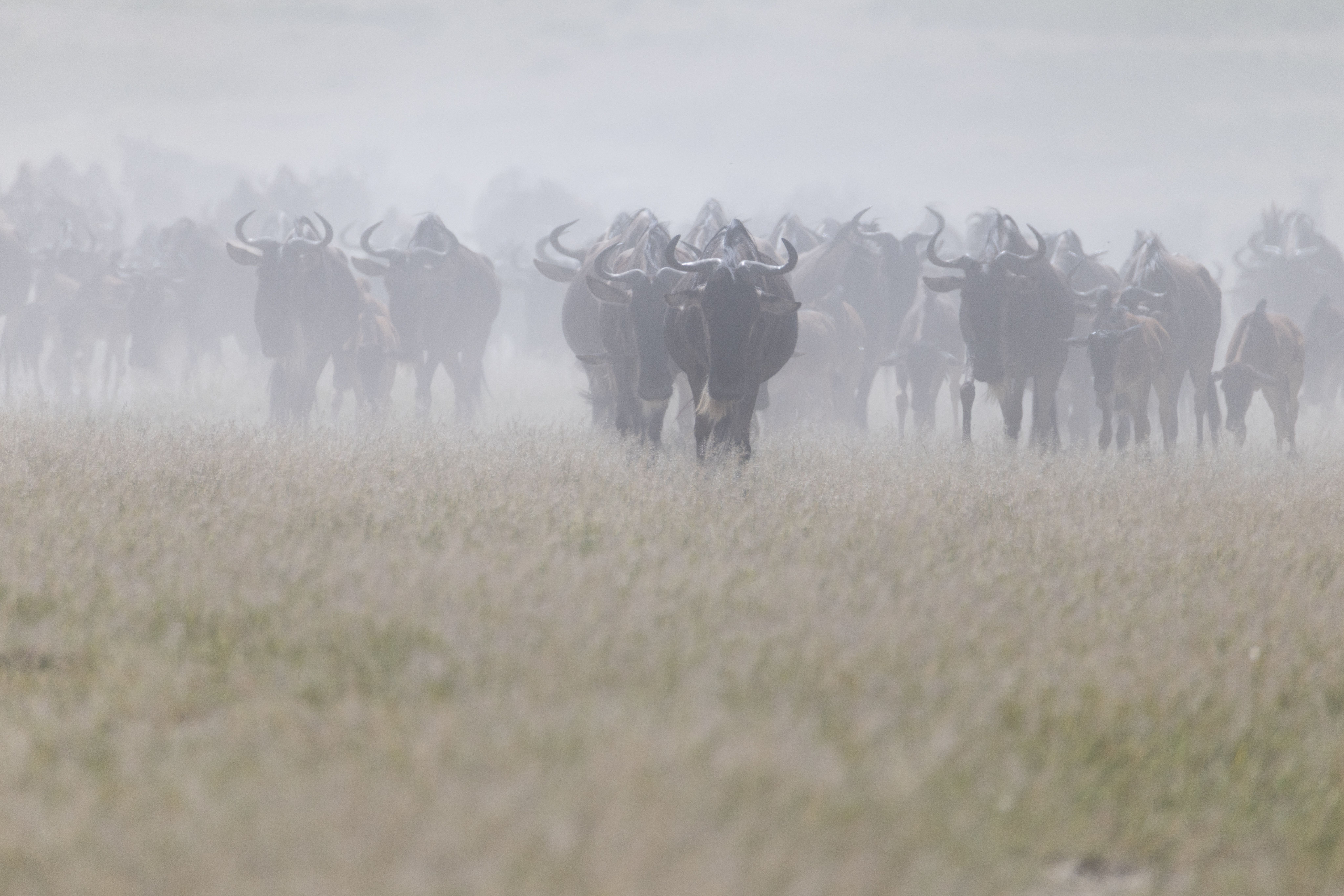
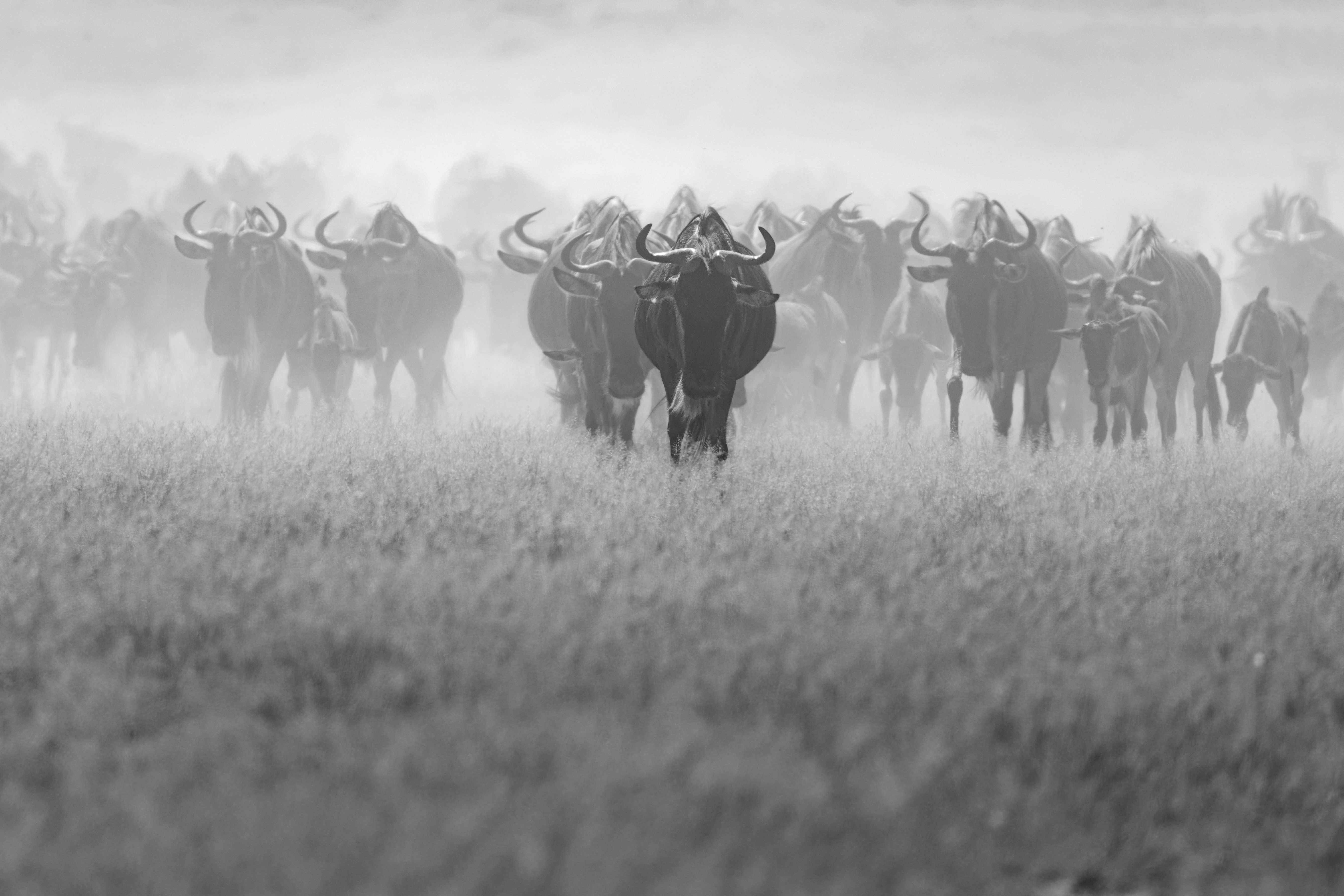
To illustrate how post-processing can completely redefine the emotional impact of a wildlife photograph, I’ve shared the unedited file alongside its finalized counterpart. When capturing a massive herd emerging through the dust and haze, the camera sensor often records a flat, low-contrast image. The unedited frame accurately captured the atmospheric dust, but the pale colours and muted values diluted the sheer power of the wildebeests advancing toward the lens. Ultimately, my goal with the edited image was to transform a flat documentary record into a dramatic, timeless narrative. By stripping away colour, the image stops being just a photo of animals in a field and becomes an art piece about survival, momentum, and the raw power of the wild.
Describe the setting and what you aimed to capture in that video clip.
This clip was filmed deep within the dense, deciduous forests of Sasan Gir during the ethereal early morning hours. The setting is defined by a heavy, misty atmosphere where the rising sun struggles to pierce through the thick canopy, creating a beautifully soft, backlit layer of dust and fog in the background. The immediate foreground is intentionally framed by the dark, silhouetted trunks of large trees, creating a natural window or a 'peep-hole' effect that makes the viewer feel like a silent, undiscovered observer in a private sanctuary. What I aimed to capture in this video was the raw, unscripted innocence of youth in the wild—a stark contrast to the fierce, apex predator image usually associated with Asiatic lions. The clip features young lion cubs left safely in the thicket, engaging in playful behaviour. My objective was twofold: first, to capture their curiosity and interaction with their environment, which peaks beautifully when one of the cubs stands on its hind legs to playfully bat at a low-hanging green leaf. Second, I wanted to experiment with cinematic depth of field and framing. By keeping the foreground trees heavily shadowed and out of focus, the viewer's eye is pushed directly into the misty, golden-lit clearing where the cubs are playing. It tells a story of vulnerability, protection, and the lighter side of life in the Gir forest.
Briefly describe the challenges faced during that shoot.
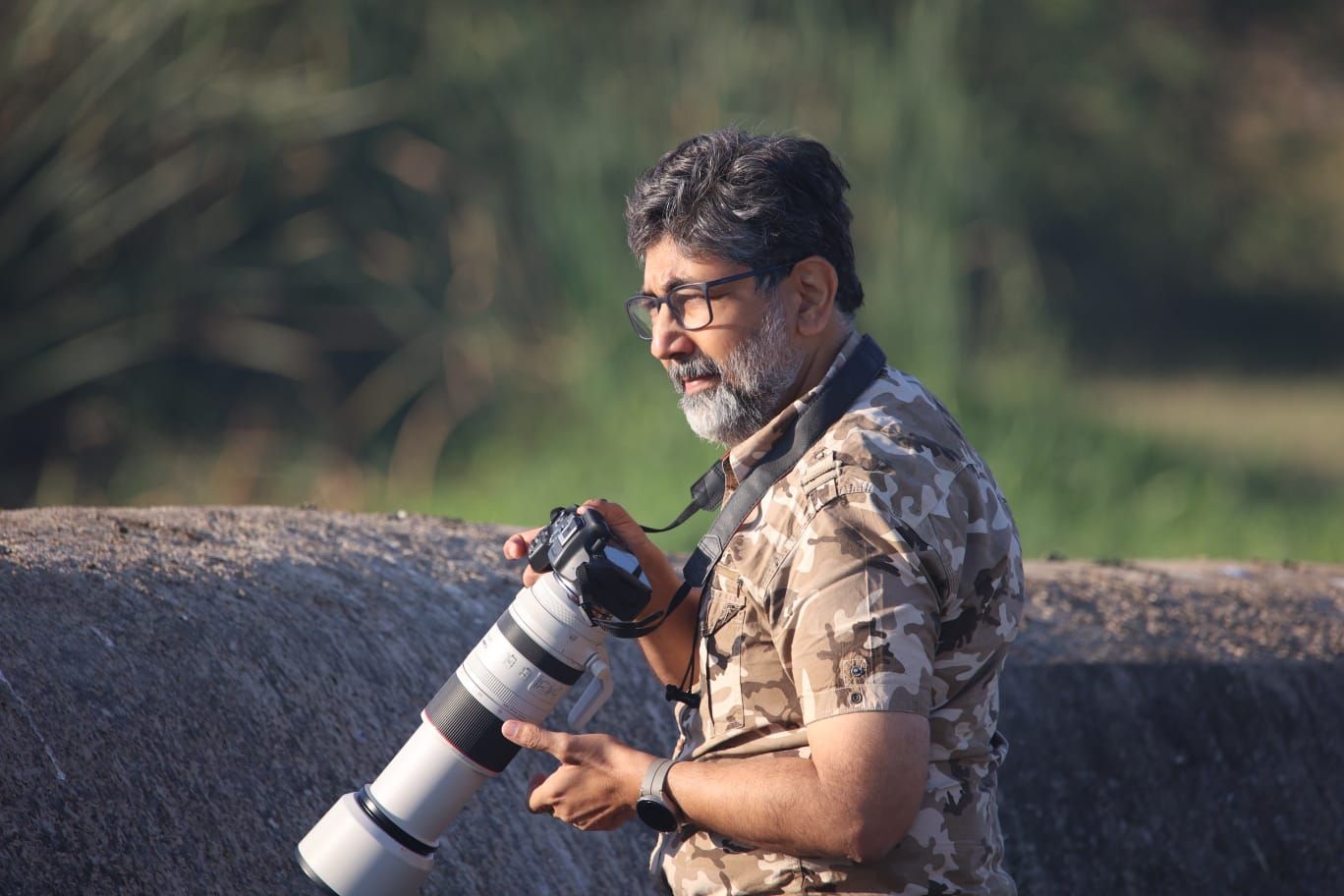
The behind-the-scenes frame shows me out in the field, tracking and waiting—a side of wildlife photography that viewers rarely see. While the final images look pristine, the process of acquiring them in a habitat like Sasan Gir involves overcoming distinct, demanding challenges. As you can see from the highlights on my shirt and gear, the morning sun in Gir cuts through very quickly. Managing the sudden, harsh contrast between blinding bright patches and deep, dark forest shadows requires constant, split-second adjustments to exposure settings to avoid blowing out highlights or losing shadow detail. Handholding a heavy setup for hours while waiting for a split-second window of movement is physically exhausting. In that moment, your muscles are burning, but you cannot put the camera down or make a sudden, jerky movement that might startle the wildlife or ruin the framing. Unlike open African savannas, Gir is dominated by dry deciduous forests, dense teak trees, and thick thorny scrub. Animals, even massive male lions, can completely vanish just five feet into the brush. Getting a clean shot without random twigs, branches, or leaves cutting across the animal's face requires immense patience, continuous tracking, and precise manual positioning. Gir is notoriously dusty, especially during the dry tracking seasons. The fine, swirling forest dust is a constant threat to high-end camera sensors and lens electronics. It requires meticulous gear maintenance in the field, as you are constantly shielding your equipment from the elements while navigating bumpy, unpaved safari tracks.
Contact and Follow
Email: vimal.hemani@gmail.com
Instagram: instagram.com/drhemani
Instagram: instagram.com/vhklikz
Website: vimalhemani.com