

How did your journey as a visual storyteller begin?
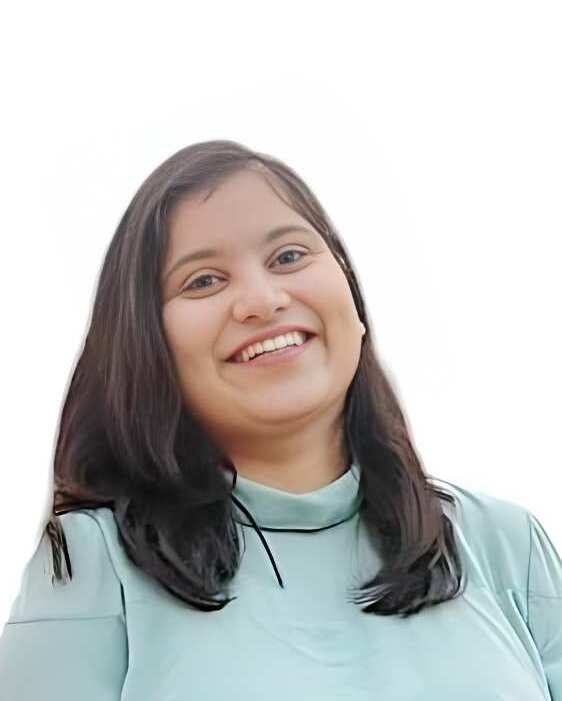
My journey began during a very low phase in my life when photography became a lifeline. It helped me slow down, reconnect, and notice the quiet beauty in everyday moments—the kind of moments we often rush past without a second glance. Nature, silence, and the gentle presence of people continue to be my greatest inspirations. Over time, my relationship with photography deepened through personal challenges that affected both the way I moved through the world and the way I perceived it. Rather than limiting me, those experiences pushed me to create in a more patient, intuitive, and emotionally honest way. Photography is no longer just an art form for me—it has become a way of living, a lens through which I understand life itself. That shift in perspective defines everything I create today.
When was the first time you felt that photography could be more than just a hobby?
It was during one of the most difficult phases of my life that I realized photography had become something far greater than a pastime. What began as a way to slow down and cope emotionally—a quiet escape from the noise—slowly transformed into a means of understanding myself and the world around me. It was no longer about capturing pretty pictures; it became a mirror reflecting my inner state, a tool for processing emotions, and eventually, a voice for stories that words couldn't express.
How has your experience and perspective grown since you started?
Since I first picked up a camera, my perspective has shifted dramatically—from simply taking photographs to truly understanding the emotions and stories embedded within them. I've become far more patient, keenly observant, and deeply connected to the quieter details that often go unnoticed in our fast-paced lives. Over time, my work has grown more personal and intentional, shaped significantly by life experiences and challenges that changed how I perceive the world. Today, I focus less on chasing technical perfection and more on creating images that feel honest, intimate, and emotionally real. It's a liberation, really, to prioritize feeling over flawless execution.
How have personal experiences shaped your visual language as a photographer?
Personal experiences and physical challenges significantly changed the way I see both photography and life. They forced me to let go of the rigid idea that photography is only about perfect clarity or technical precision—a notion I once held dear. Instead, I became more attuned to emotion, atmosphere, and perception. Periods of limited vision and restricted mobility taught me to slow down and observe the world more patiently. That stillness eventually became part of my photographic language. Over time, I discovered a deeper sense of emotional honesty in the way I create. It taught me that the most powerful images often exist in the spaces between sharp lines and clear definitions.
Walk us through the stories behind the photos that best represent your documentary-style visual storytelling.
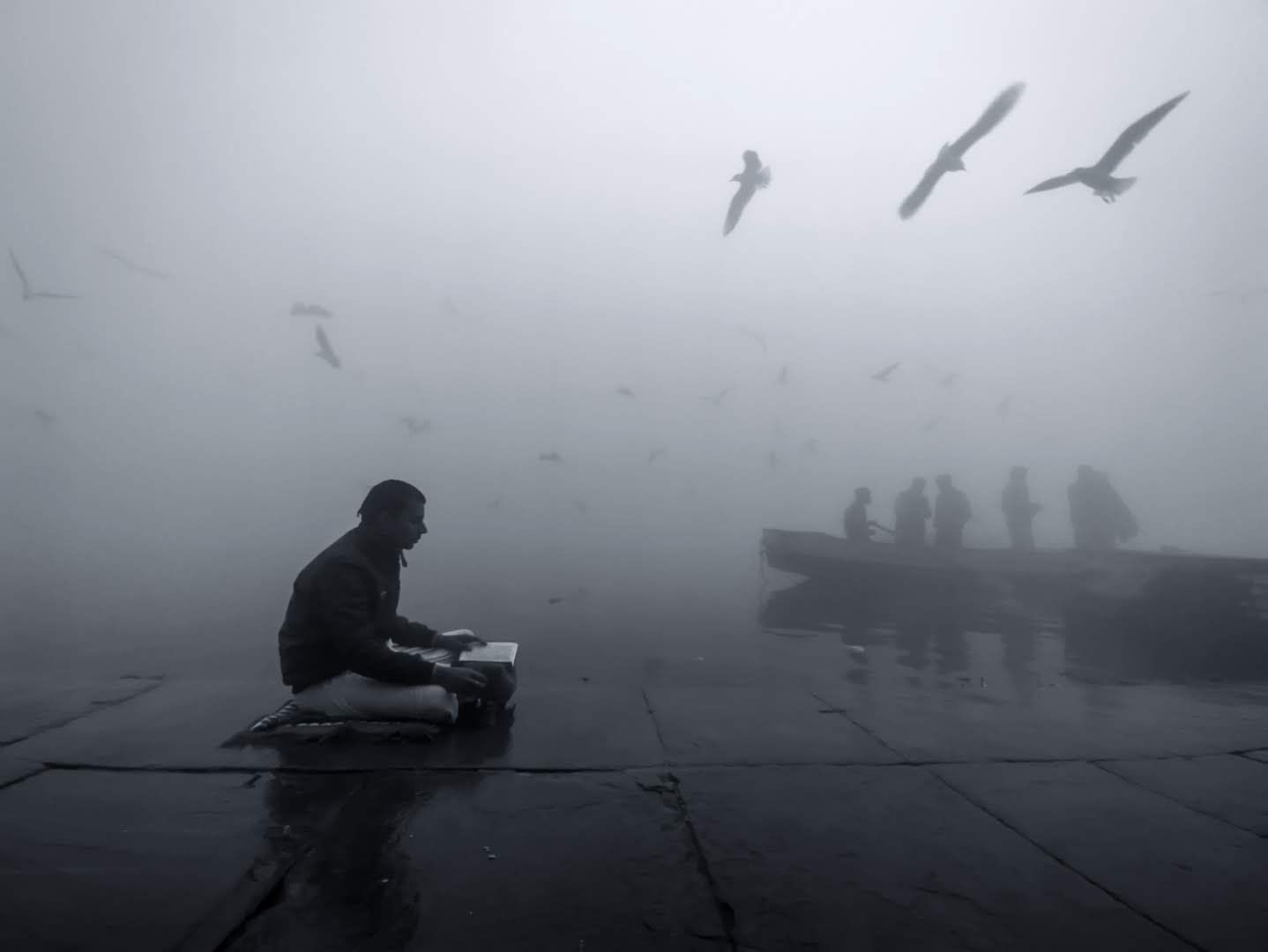
The first image, titled Whispers of Faith in the Winter Fog, was captured on a frozen winter morning at the Yamuna Ghat. The fog was so thick it swallowed the horizon, blurring the line between river, sky, and earth. A lone pandit sat cross-legged on the cold stone steps, absorbed in an ancient holy ritual, while distant silhouettes drifted like ghosts through the mist. Above him, birds cut through the pale air—the only movement in an otherwise still world. The damp ground reflected faint shadows, adding a quiet cinematic depth. Wrapped in the harsh embrace of winter, he continued his prayers with calm devotion, untouched by the cold. In that fleeting moment, faith became stronger than weather, and the ghat transformed into a space suspended between reality and spirituality.
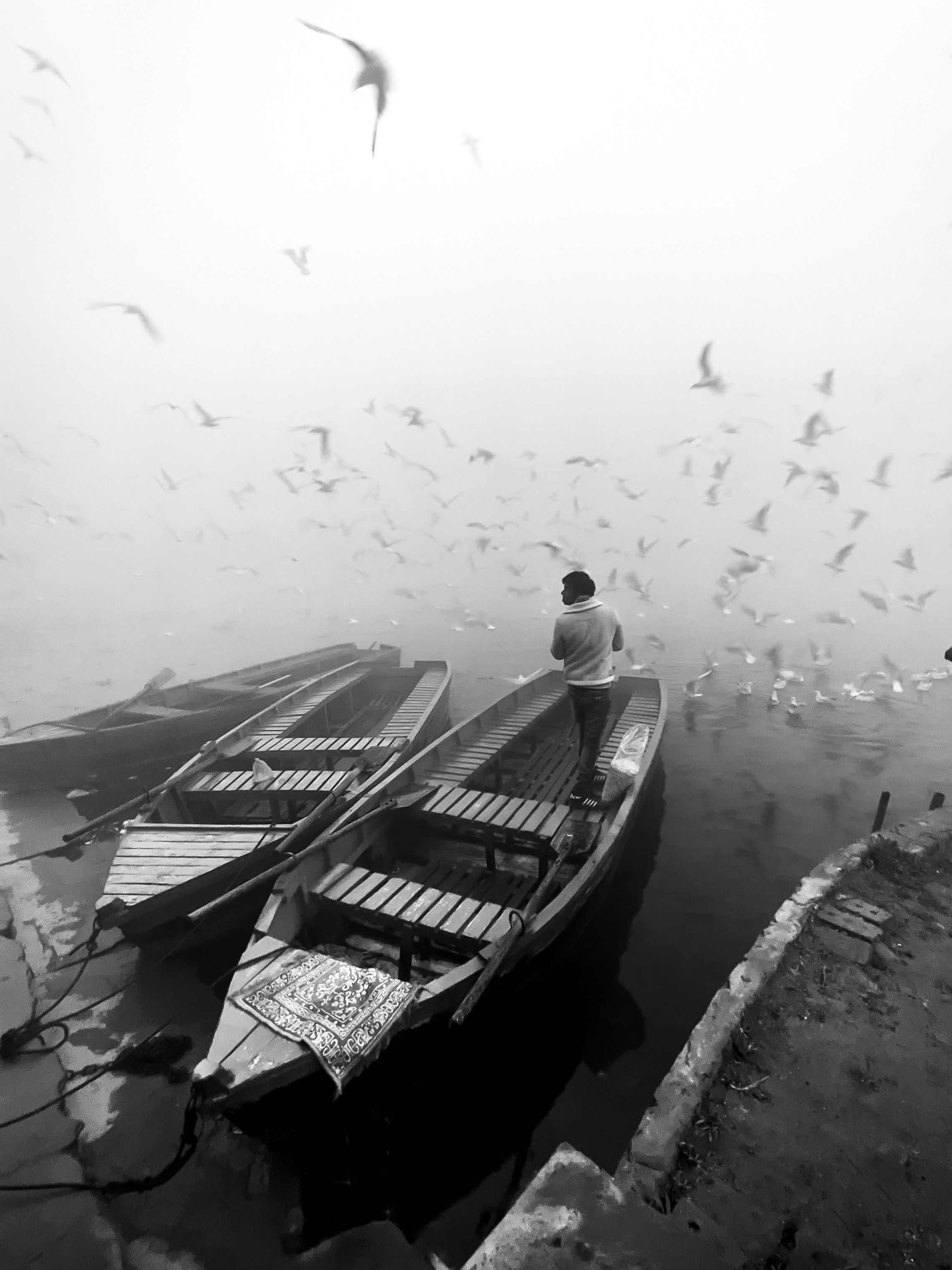
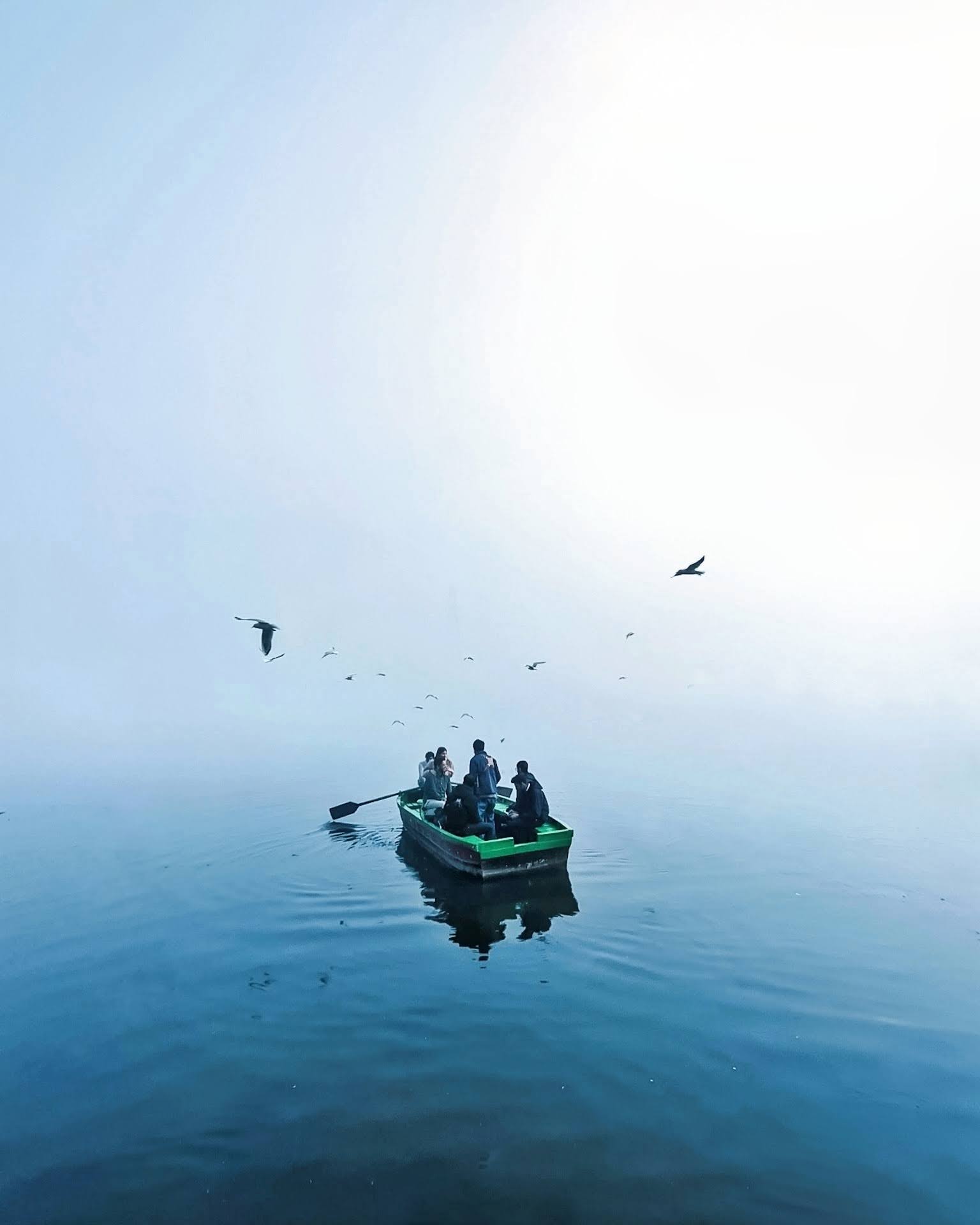
My second image, Unbound, was also taken on a foggy winter morning at Yamuna Ghat, when visibility was almost completely lost. As the light began to emerge, so did this moment: stillness below, flight above. It became a quiet reflection on freedom, choice, and what it means to live life unbound.
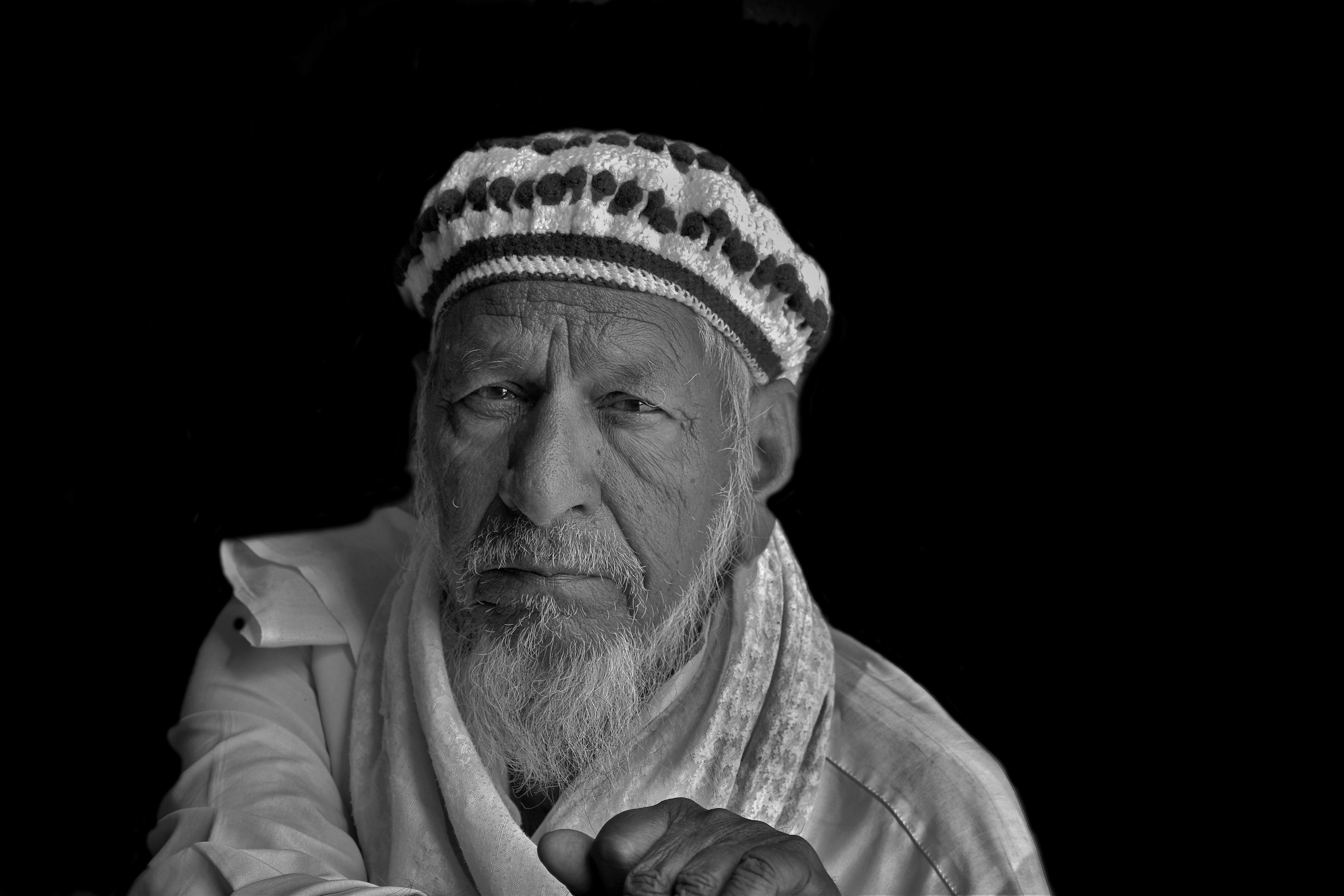
The third image, Depth of Life, is from the Taj-ul-Masjid in Bhopal. While prayers and movement filled the grand space, this one man remained seated for hours, silent and unmoving. His gaze held a quiet weight, clearly shaped by time and experience. I don’t know what he was searching for, but in his stillness, I saw patience, reflection, and a life deeply lived. This photograph is not about ritual—it is about the unseen depth that exists within ordinary, overlooked moments.
What do you hope viewers feel when they see your landscape image of a solitary boat in the fog?
I hope viewers feel a profound sense of stillness, isolation, and quiet introspection. The vast, foggy landscape paired with that small, solitary boat creates a feeling of being suspended somewhere between uncertainty and peace. I also want it to evoke a spark of curiosity—as if the subject is moving through an unknown space, both physically and emotionally. The calm water and minimal composition invite viewers to slow down, take a breath, and reflect on solitude, distance, and their own connection with the natural world. It's a moment of pause in a noisy world.
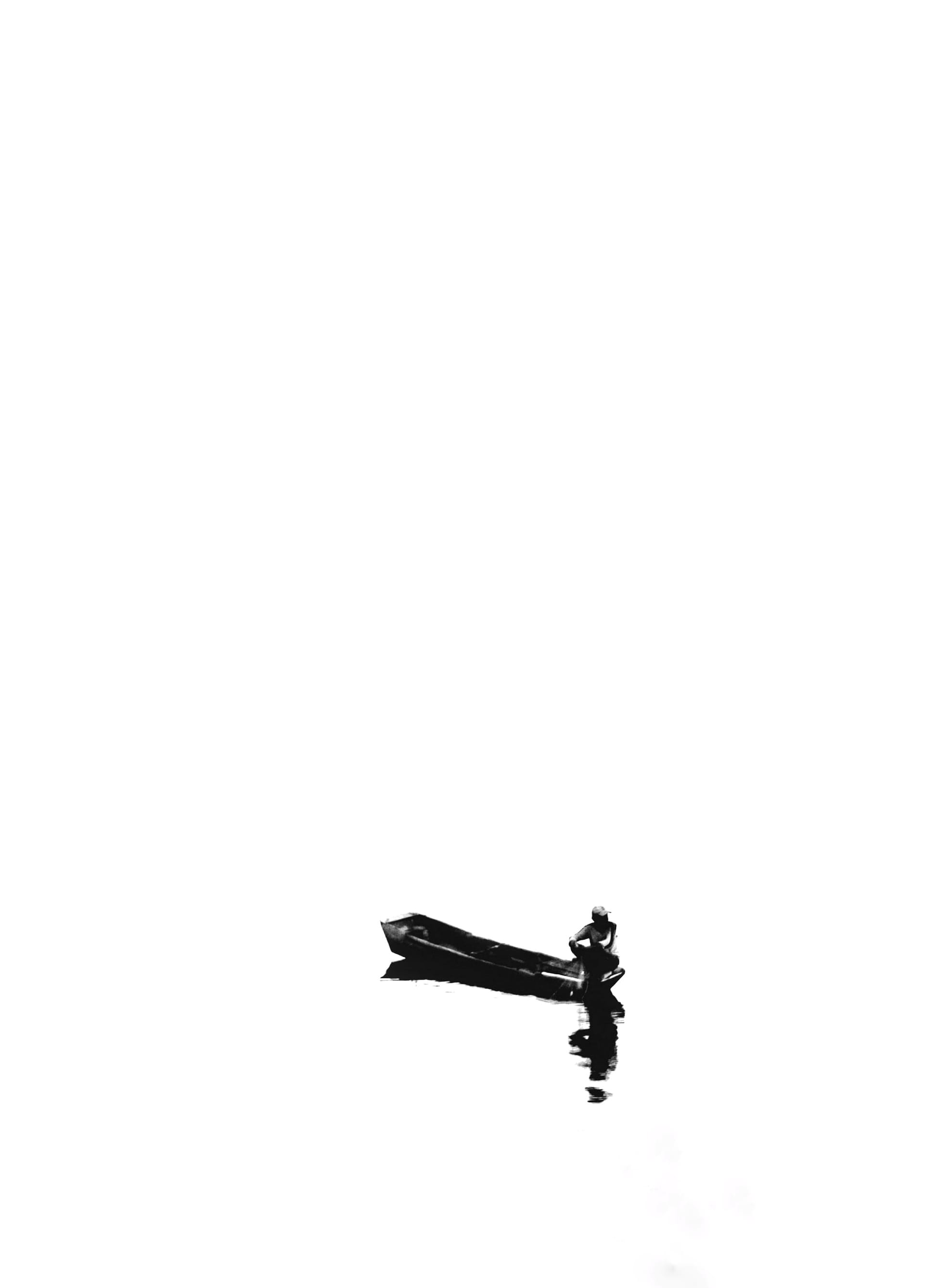
What elements of your raw, minimal aesthetic image reflect your creative philosophy?
This particular image reflects my creative philosophy through its deliberate simplicity, emotional depth, and intentional use of negative space. I've always believed that strong visuals don't require complexity; sometimes, the most minimal elements can create the most powerful impact. The isolated boat and lone subject represent focus and individuality, while the large expanse of empty space conveys calmness, reflection, and an openness to interpretation. The monochrome contrast adds a raw and honest feel, which aligns perfectly with my preference for authentic and meaningful storytelling. It's a visual reminder that less can truly be more.
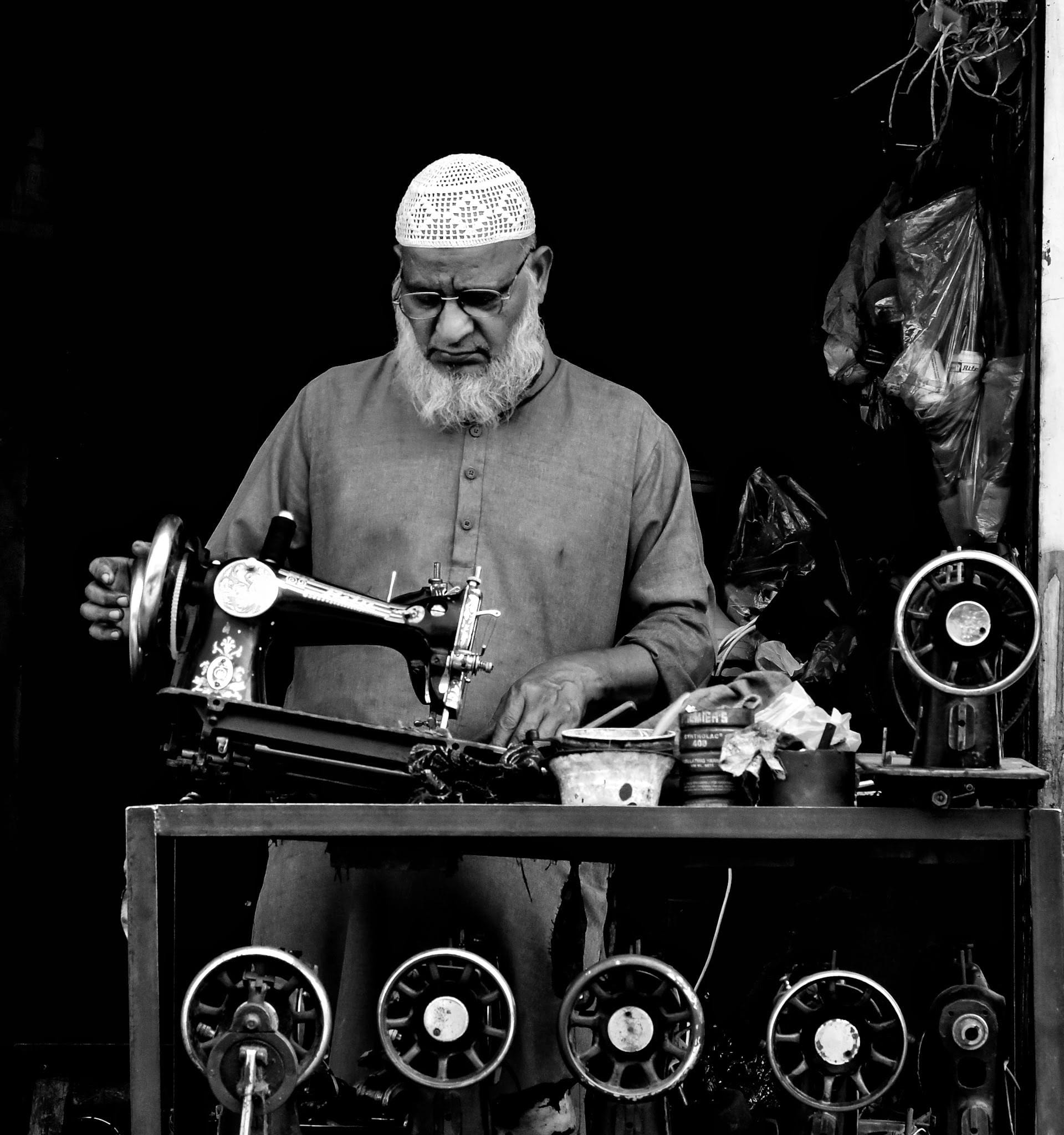
What drew you to capture these particular moments of people at work?
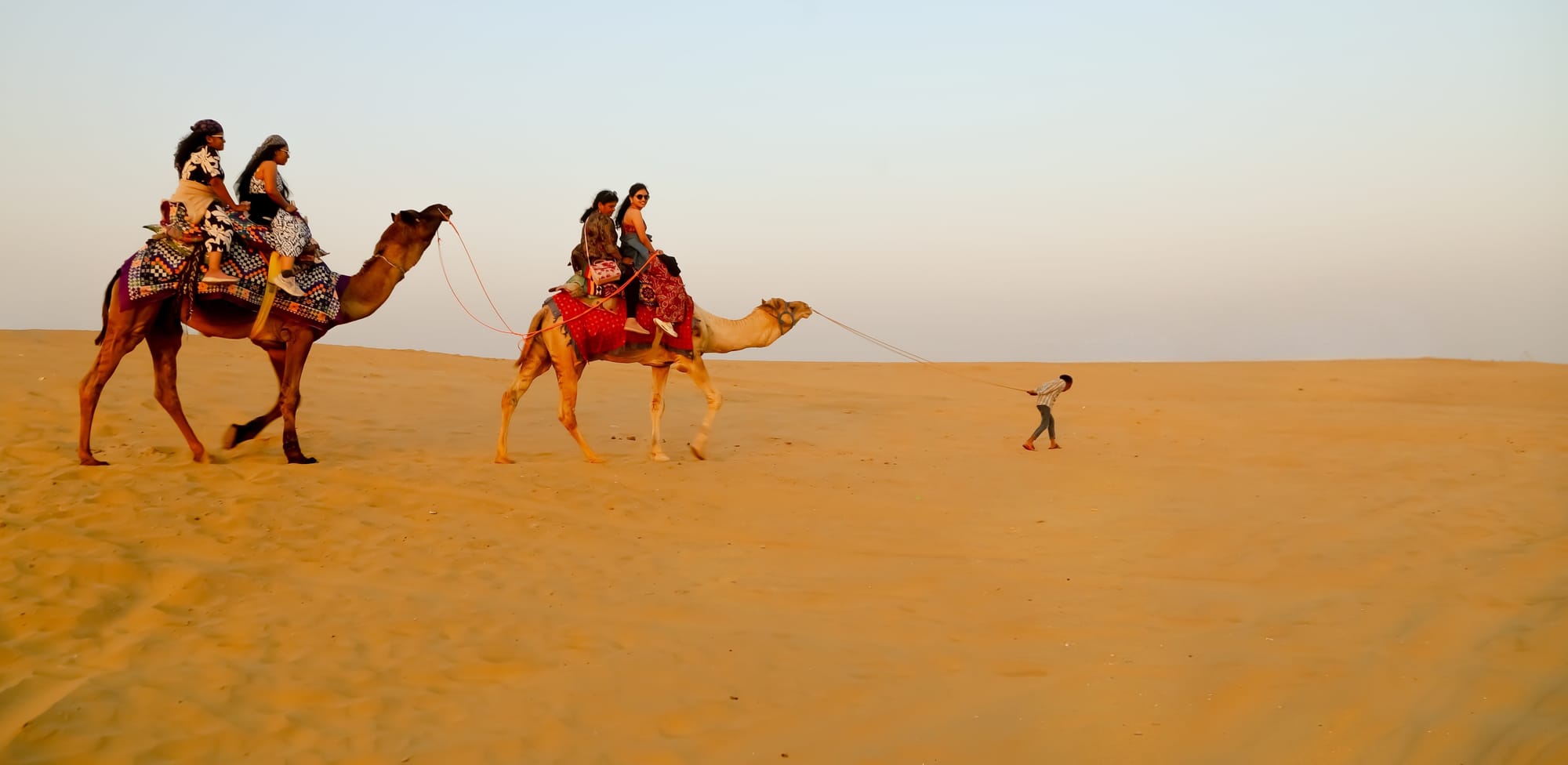
I was drawn to these moments because they reflect the quiet dignity of everyday craftsmanship and labor that so often goes unnoticed in our rapidly modernizing cities. The first image, captured in Bhopal, documents a tailor deeply focused on his work, surrounded by traditional sewing machines and tools that represent years of skill, routine, and dedication. Through this photograph, I wanted to preserve a fragment of local street life and honor the human stories behind small-scale occupations that continue to shape the cultural identity of the city. The second image shows a camel handler leading tourists across the desert, pulling the rope with steady effort. While the riders experience the journey at leisure, for him, the desert is a workplace—defined by routine labor, endurance, and responsibility. Both images capture the quiet, often unseen human effort that sustains our world.
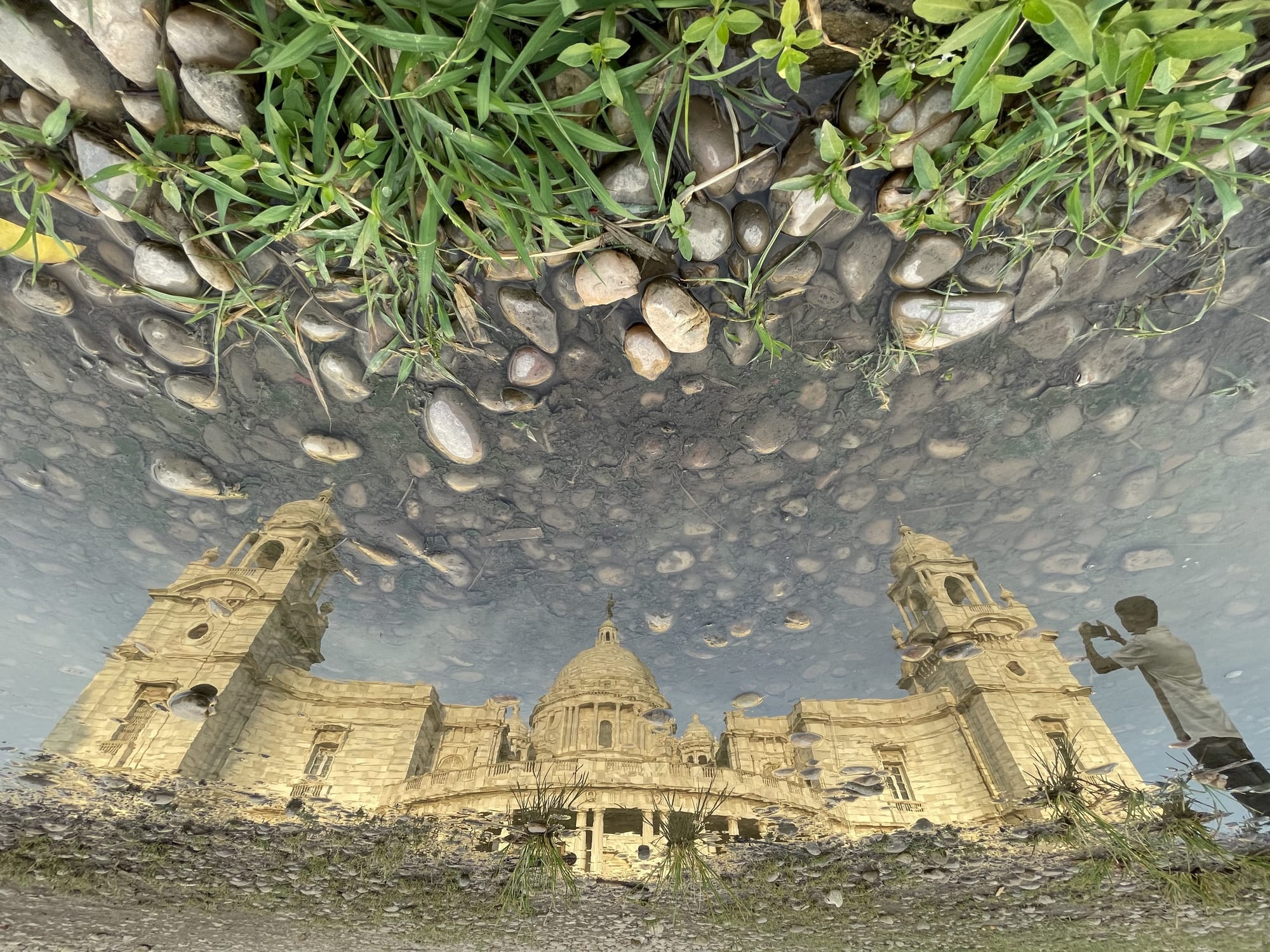
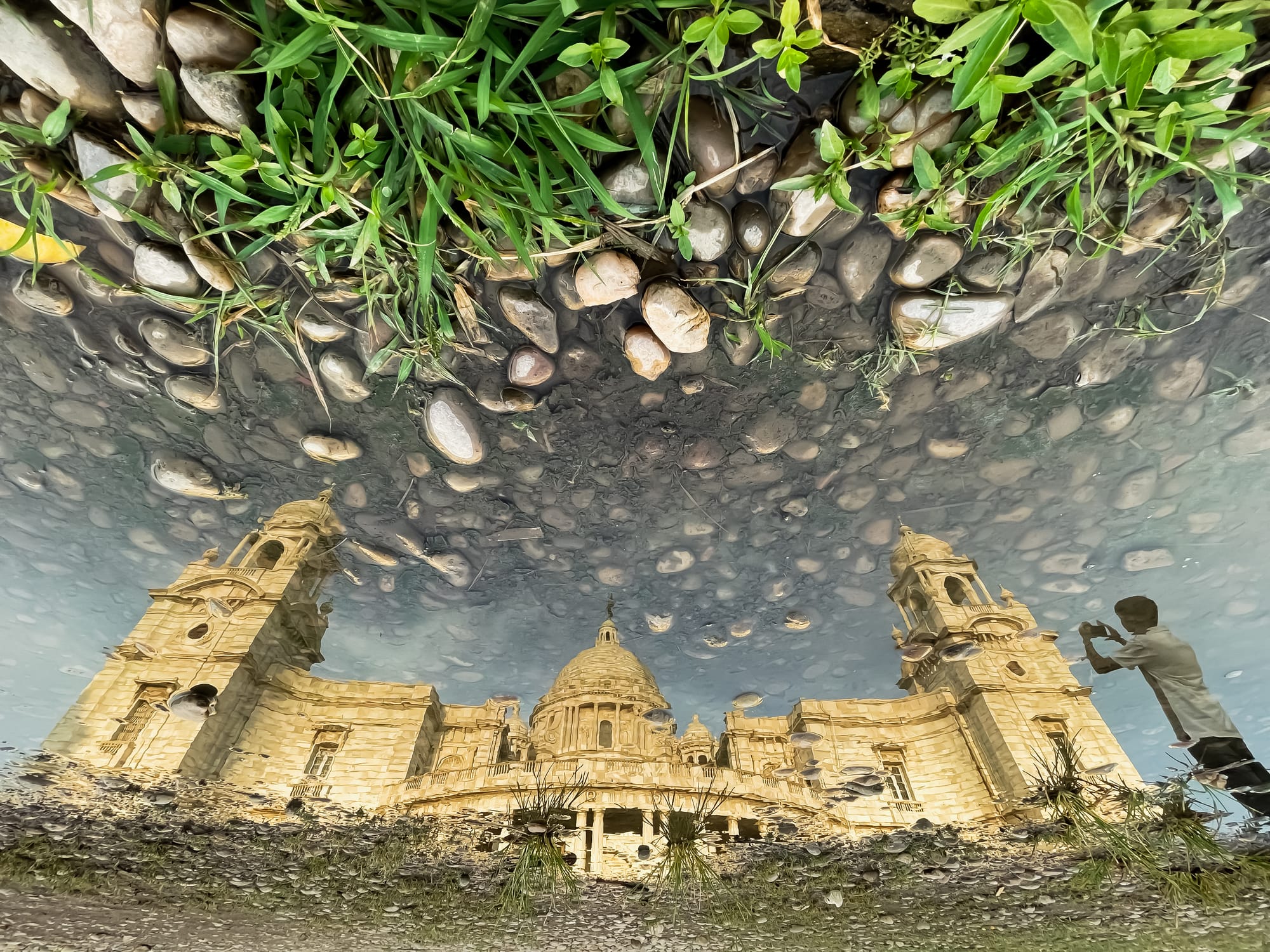
Describe your editing process for this emotionally charged, abstract image and how it enhances the emotion.
The editing process for this particular image was all about enhancing its reflective and emotional atmosphere rather than making it look perfectly realistic. I used Adobe Lightroom to adjust the contrast, clarity, and tonal balance, bringing out the textures of the water ripples, stones, and reflected architecture while maintaining a soft, dreamlike quality. I enhanced the warm tones in the building reflection to create a sense of nostalgia and depth, while cooling the tones in the water to add contrast and mood. The natural distortions and imperfections in the reflection—the way the architecture bends and breaks on the water's surface—were intentionally preserved during editing, allowing the image to feel more abstract and contemplative. The final edit transforms what could have been a simple reflection into a surreal, emotionally charged visual experience that lingers with the viewer.
Contact and Follow
Email: priyaojha789123@gmail.com
Instagram: https://www.instagram.com/escape_withpriya/?hl=en