

How did your journey in street and documentary photography begin?
My journey into street and documentary photography began as a shift in how I chose to tell stories. I've always had a flair for writing, but I eventually realized I could express far more through a lens than I ever could with words.
In the beginning, even I was surprised by the audacity of photographing strangers. My friends used to joke, "How do you just take these photos without getting beaten up?" Looking back at some of those early candid shots, I honestly wonder the same thing.
Since this is a hobby for me, I feel I have nothing to lose, which allows me to be "emotionally rash" and focus entirely on the raw story rather than following trends. My goal is to move past the "trending music" and dramatic narratives of struggle; if I can frame even one image that people remember for the shot alone, I've done my job. It's a privilege to preserve these silent moments, and it certainly beats my old days of writing Facebook captions for friends.
When was the first time you felt that photography could express something words could not?
That realization hit me back in 2017 during my first solo trip to Varanasi, a journey I took right after landing my first job as a Software Engineer. Up until then, I had always relied on my knack for writing to explain the world, but the chaos and soul of the ghats were different. I found myself witnessing fleeting, unscripted interactions that were so layered and raw that trying to pin them down with a description felt like I was stripping away their power. Standing there with my camera, I understood that a single, honest frame could preserve the atmosphere and the unspoken weight of a moment far more effectively than any paragraph I could ever compose.
How has your photographic eye evolved over the years?
My evolution has been a journey from "hiding" to "witnessing." In the early days, I was obsessed with the aesthetic safety of shallow depth of field, using wide apertures like f/1.8 to blur out the world and focus on singular, isolated subjects. It was a technical crutch that allowed me to avoid the complexity of a full scene. However, as I spent more time on the streets, I traded that bokeh for a wide-angle lens and a narrow aperture. Shifting to f/8 forced me to stop blurring the environment and start engaging with it. I began to see the intricate layers of a frame—the way a background character or a ray of light interacts with the primary subject. My eye has moved away from seeking "pretty" shots and toward finding the beauty in the unpolished, candid reality of the human cadence.
What does your creative philosophy 'You show them what you think. You show them what they want to see. The thin line in between is called art' mean to you in practice?
In practice, this philosophy represents the balancing act between raw reality and visual impact. If I only capture a scene exactly as my brain processes it, the result might be too chaotic or personal for a viewer to connect with. On the other hand, if I cater strictly to what an audience wants to see, I'd be staging shots, posing subjects, or falling back on cheap aesthetic tricks and heavy edits. That defeats the entire purpose of documenting life.
To me, the "thin line" is where I find a completely unstaged, candid moment on the street and manage to frame it so cleanly that the raw story speaks for itself. It's about taking an unvarnished slice of human cadence and composing it in a way that naturally forces a stranger to stop and look, all without manipulating or compromising the absolute truth of the scene.
What's your most memorable street photograph that captures an unscripted human moment?
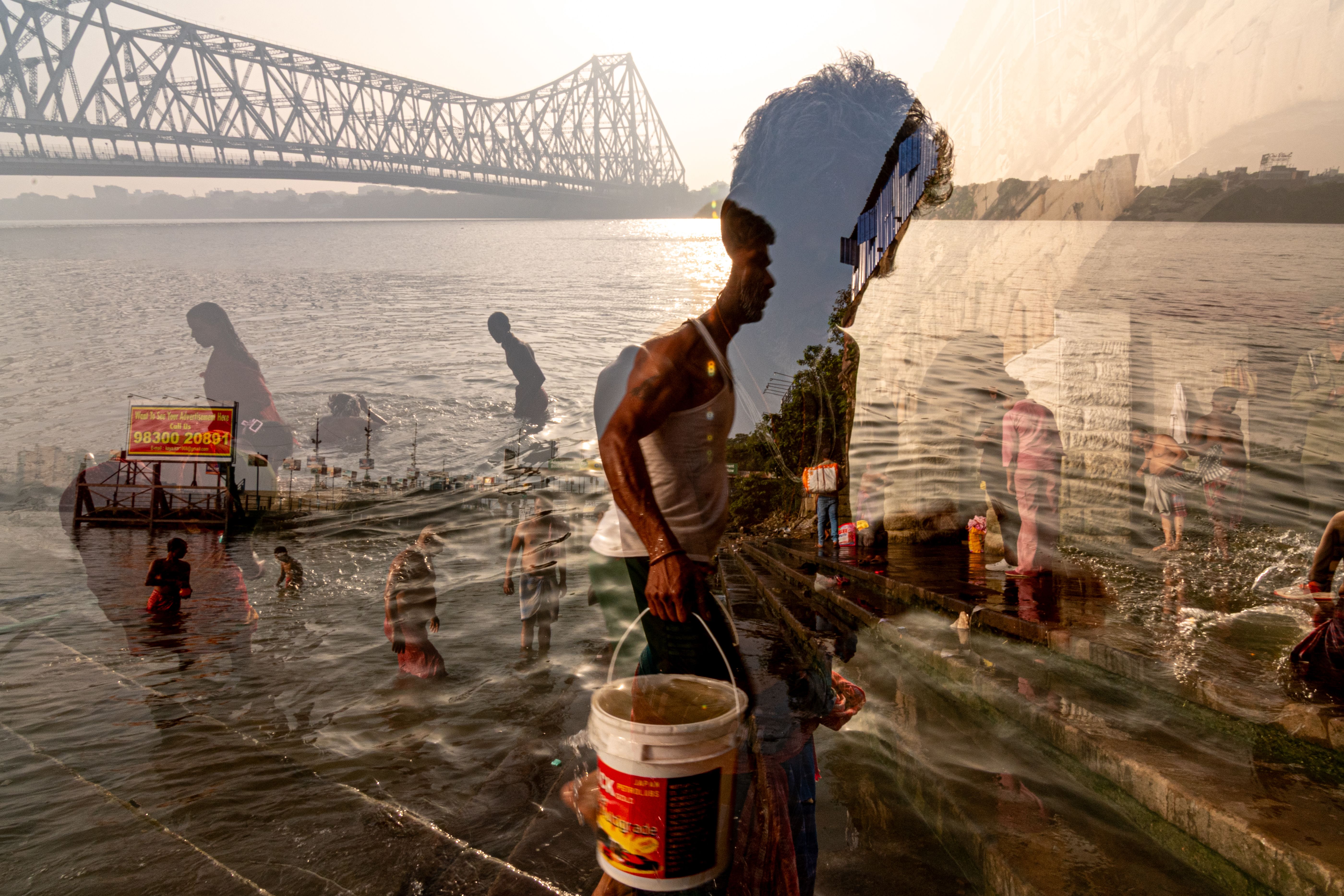
The Howrah Bridge and the Hooghly River are the structural and spiritual anchors of Kolkata, India and in this frame, they represent the pulse of the city's daily life. The bridge is a massive, static monument of the past, while the river is a site of constant, unscripted motion—where life, labor, and ritual collide every morning. By layering them through a double exposure, the goal was to show that the people at the ghats are inseparable from the architecture of the city. The river provides the raw, candid stories, and the bridge provides the scale. It is the ultimate stage for documenting the human cadence, showing a world that is at once ancient and immediate without needing a single word to explain the weight of the moment.
What makes your Theyyam festival photograph so special to you?
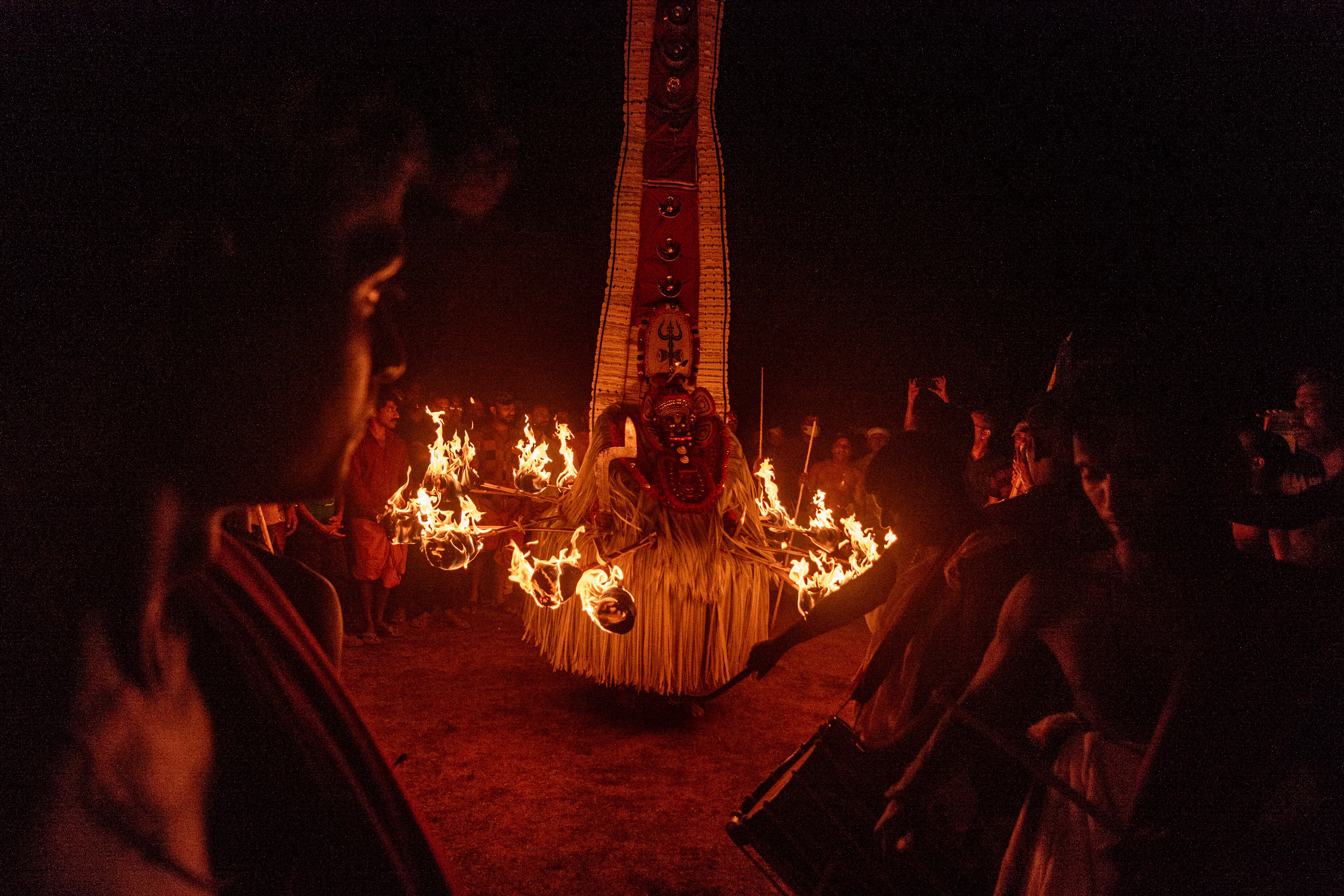
This image stands out because it marked my definitive comeback to the camera after a nearly three-year hiatus. I hadn't shot anything since April 2020. Between the standstill of COVID and watching platforms like Instagram pivot heavily toward trending reels and branded content, I felt completely disconnected from it all. I actually deactivated my account for a full year just to step away.
When I went to shoot Theyyam in January 2023, it was a baptism by fire—literally and figuratively. The shoot was an absolute test of physical endurance and technical limits. I was using my only camera - crop-sensor Nikon D5200 paired with a Tokina 11-16mm f/2.8 wide-angle lens. The conditions were as unforgiving as it gets: pitch dark, the only light source being the erratic flames from the performer, and Theyyam itself is a highly unpredictable, fast-motion ritual. On top of that, I was running on empty, having slept less than three hours over the previous two days. Capturing this raw, dynamic frame under those extreme constraints reminded me exactly why I practice this hobby. It was the perfect proof that capturing an honest, unvarnished story will always beat chasing a digital trend.
Tell us the story behind your candid portrait "The Seeking" and how you captured that moment.
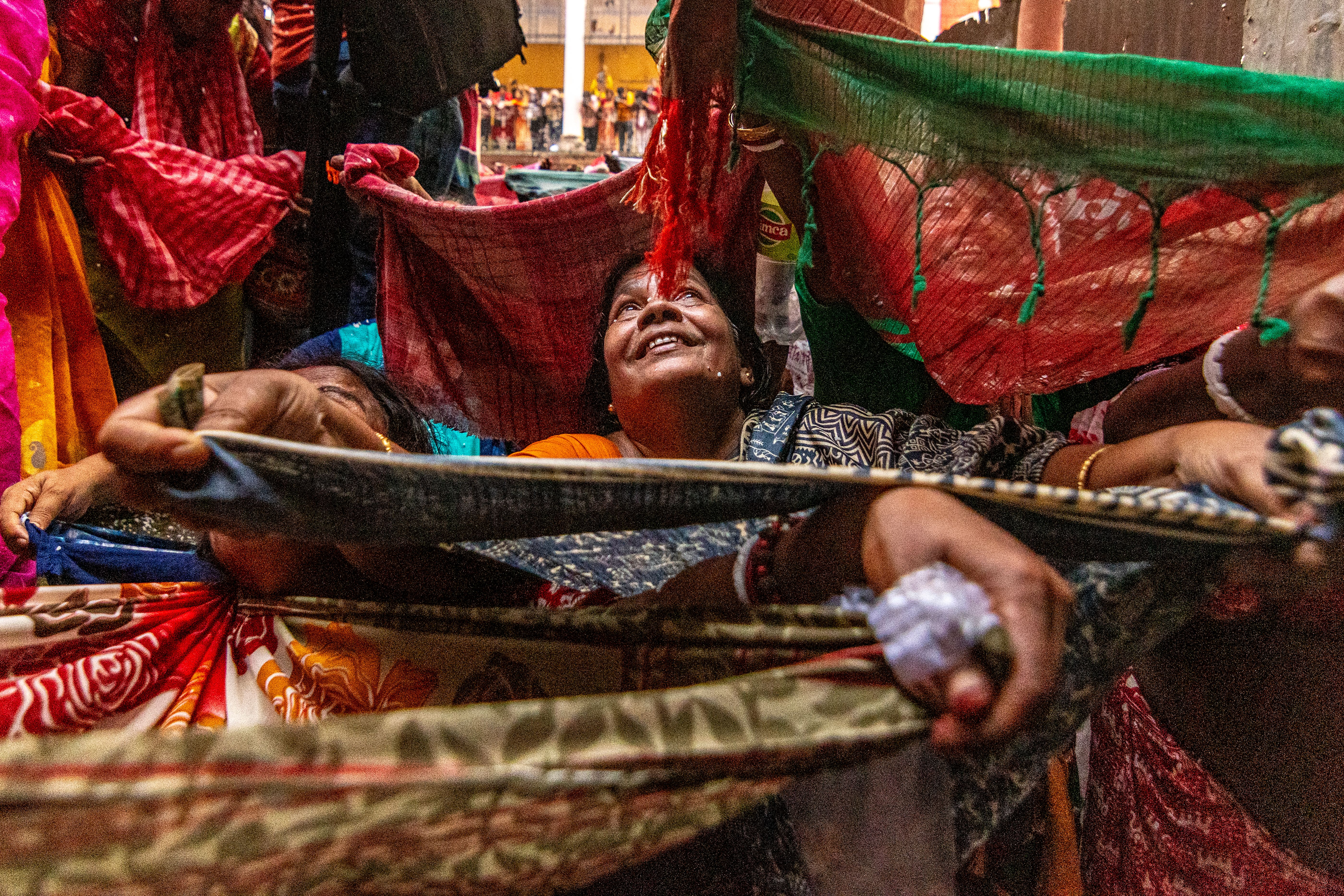
This image, titled "The Seeking," was taken during the Annakut festival in Kolkata, specifically during the frantic 'bhath chora' ritual where consecrated rice is thrown to the devotees. It captures a moment of pure, unvarnished faith. The crowd was surging, with people stretching out colorful sarees and fabrics to catch the offerings, creating a chaotic canopy over everyone. Right in the middle of that frenzy, this woman's upward gaze completely anchored the scene. Her expression held such profound hope and gratitude that it cut right through the physical chaos around her.
Technically, this shot required a departure from my usual f/8 street setup. The scene was incredibly fast-paced, so I needed a fast shutter speed of 1/1600 to freeze the motion of the crowd and the falling rice. To make that work in the light filtering through the fabrics, I bumped my ISO to 1250 and shot wide open at f/2.8. In this specific instance, that wider aperture was crucial; it slightly softened the chaotic layers of cloth surrounding her, drawing all the focus directly to the intensity of her eyes. I had to physically push my way into the crush of people to get the angle. There was no time to think—it was just a visceral, fleeting fraction of a second of human cadence that I was lucky enough to preserve.
Why does your Varanasi photograph from 2017 continue to inspire you?
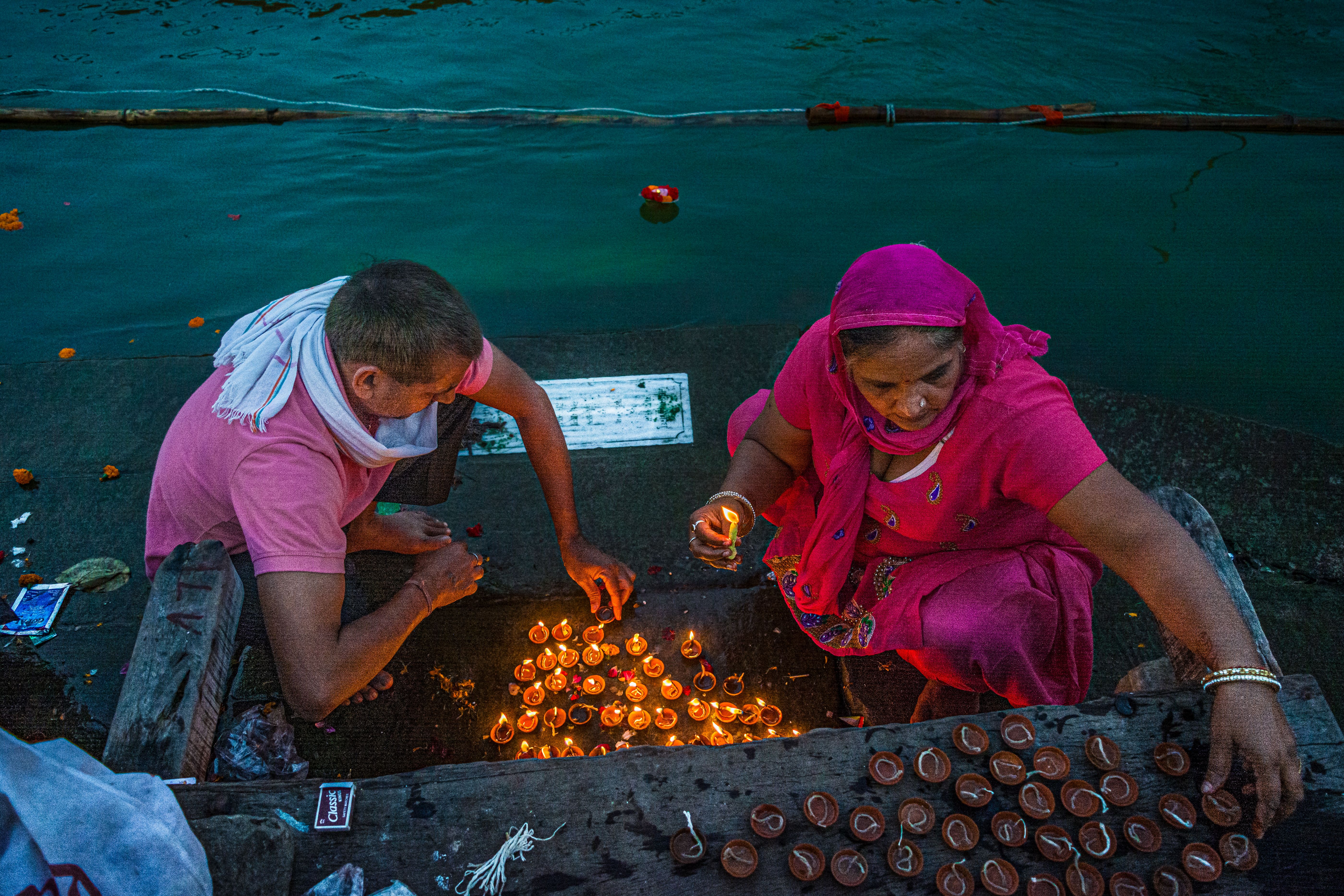
This photograph from Varanasi holds a very special place in my journey because it was taken during my first solo trip in 2017. While my friends were using their first paychecks to travel to places like Goa, Pondicherry, or Thailand, I decided to take my first salary as a software engineer and head to Varanasi. At that time, I didn't even know how to properly use a camera; this shot was actually taken entirely in Auto mode!
Despite the lack of technical knowledge, the image continues to inspire me because it captures the profound, quiet intimacy of the ghats that drew me to street photography in the first place. The contrast between the cool tones of the Ganges and the warm, glowing diyas being carefully arranged by the couple creates a deeply atmospheric scene. It's a completely unstaged moment of devotion and shared purpose. Even though it was shot on Auto, it perfectly encapsulates the raw story and human cadence of Varanasi, proving that sometimes, simply being present to witness an honest moment is more important than technical perfection. It's a constant reminder of why I started doing this.
What makes your double exposure image from the Dondi ritual an example of your documentary style?
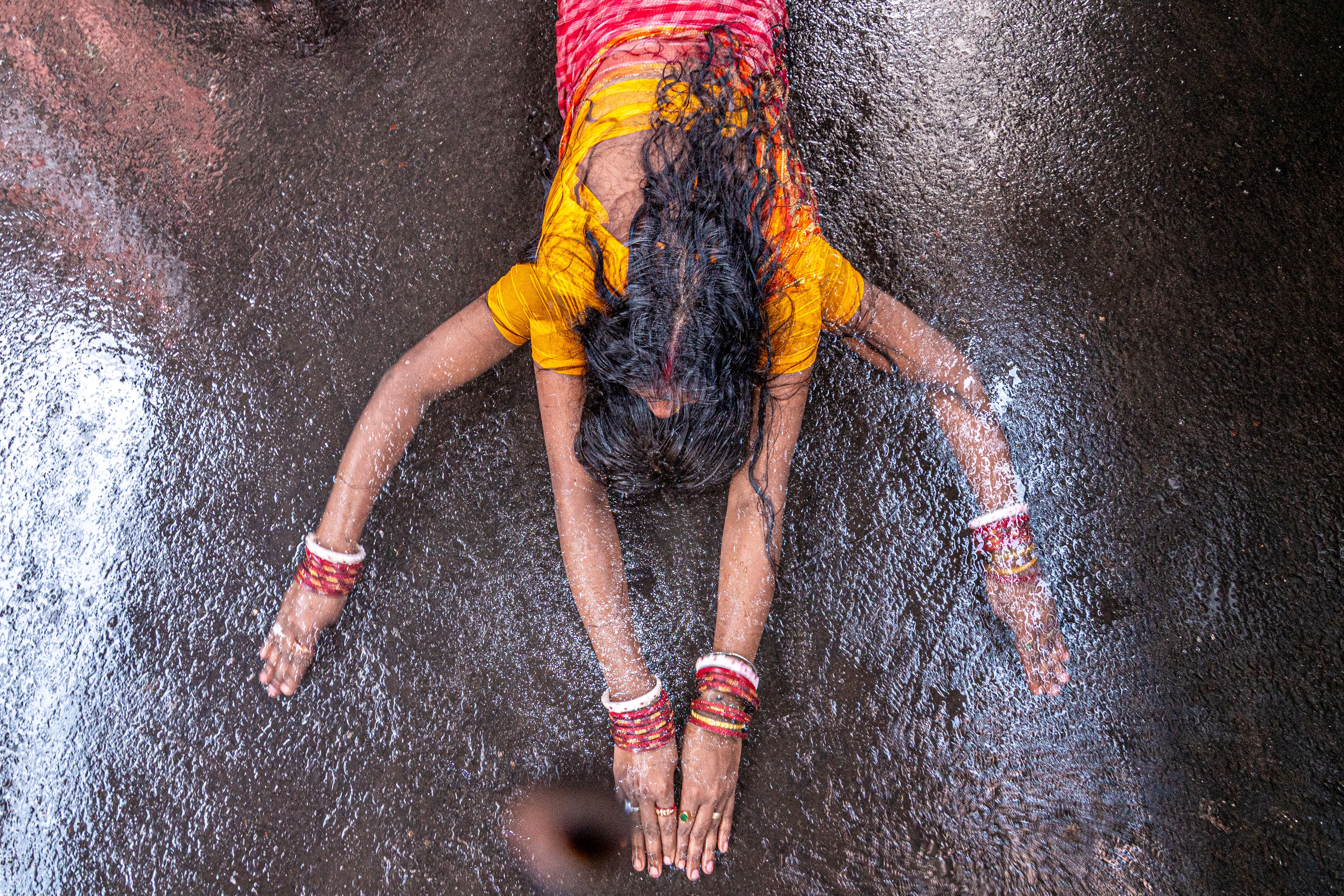
This image is a prime example of my documentary style because it perfectly illustrates the philosophy I try to operate by: you show them what you think, you show them what they want to see, and the thin line in between is called art.
It was taken during the intense Dondi ritual at Kalighat for Maa Shitala Puja. To capture this, I used an in-camera double exposure. I wanted to create an image that was visually arresting and instantly catchy, which satisfies the aesthetic expectation of the viewer. However, it was equally crucial to me that I maintain my integrity as an observer; the moment is completely unstaged. By using a mechanical technique directly within the camera rather than digital manipulation, I was able to translate the profound physical exhaustion and spiritual intensity of the ritual into a compelling visual narrative. It bridges the gap between raw, candid reality and engaging visual art without compromising the truth of the scene.
What drew you to the scene of the man reading a newspaper, and how does it represent your creative vision?
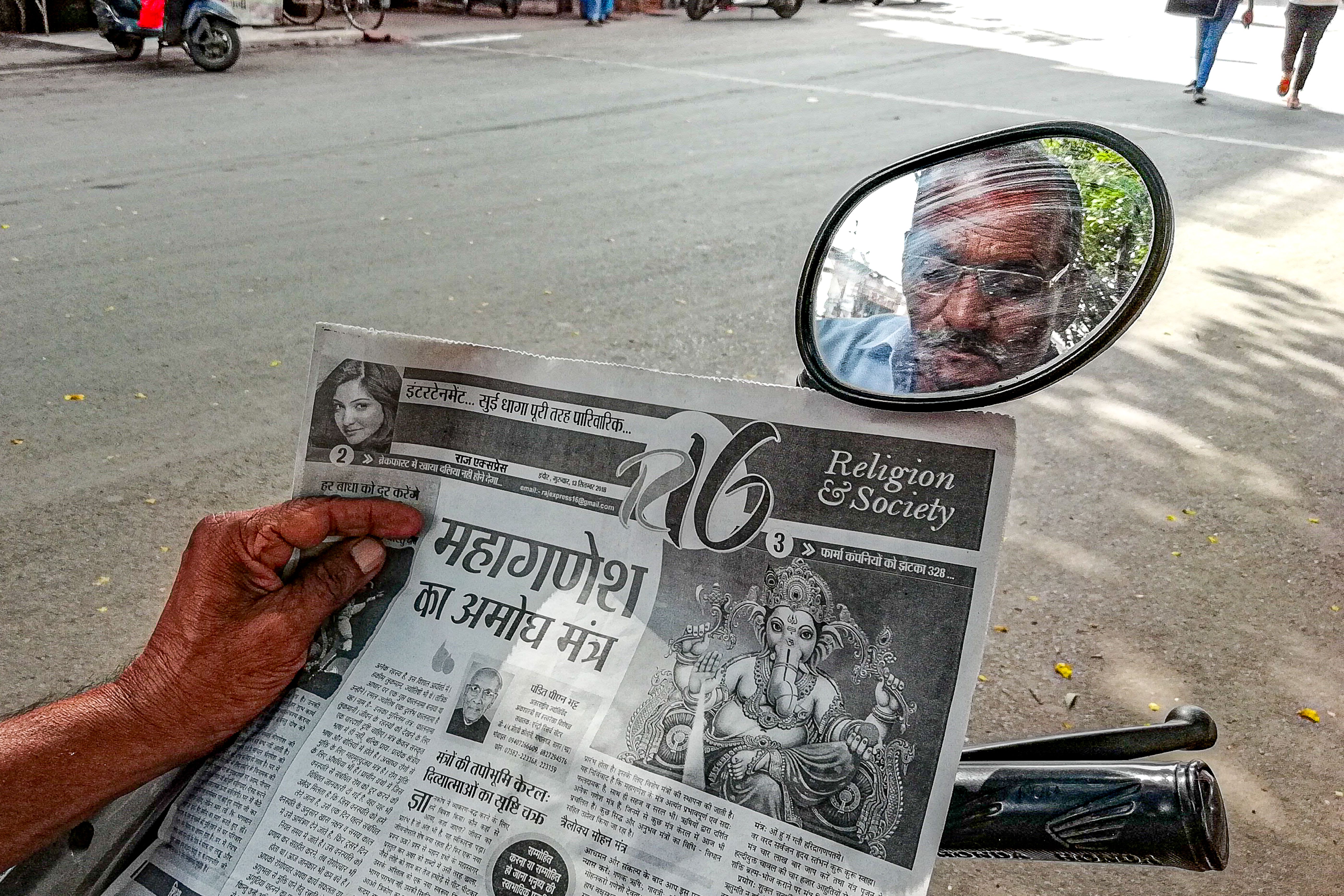
I was instantly drawn to the quiet isolation this man carved out for himself right in the middle of a public street. While the world moved around him, he was entirely absorbed in his newspaper. The rearview mirror offered a perfect, ready-made frame, allowing me to capture his intense focus and the weathered texture of his face without stepping in front of him and intruding on his space.
This scene represents the absolute core of my creative vision: a strict adherence to authenticity. I am a software engineer, and photography is simply a hobby for me, which gives me the freedom to pursue the raw truth of a moment without worrying about commercial appeal or social media trends. I never want to orchestrate or pose a subject. My goal is always to document the natural human cadence exactly as it happens. By utilizing an interesting perspective like a mirror reflection, I can take a completely unvarnished, ordinary slice of life and present it in a visually engaging way, proving that unfiltered reality is compelling enough on its own without any artificial staging.
Walk us through your editing decisions for the before-and-after image of the car windshield.
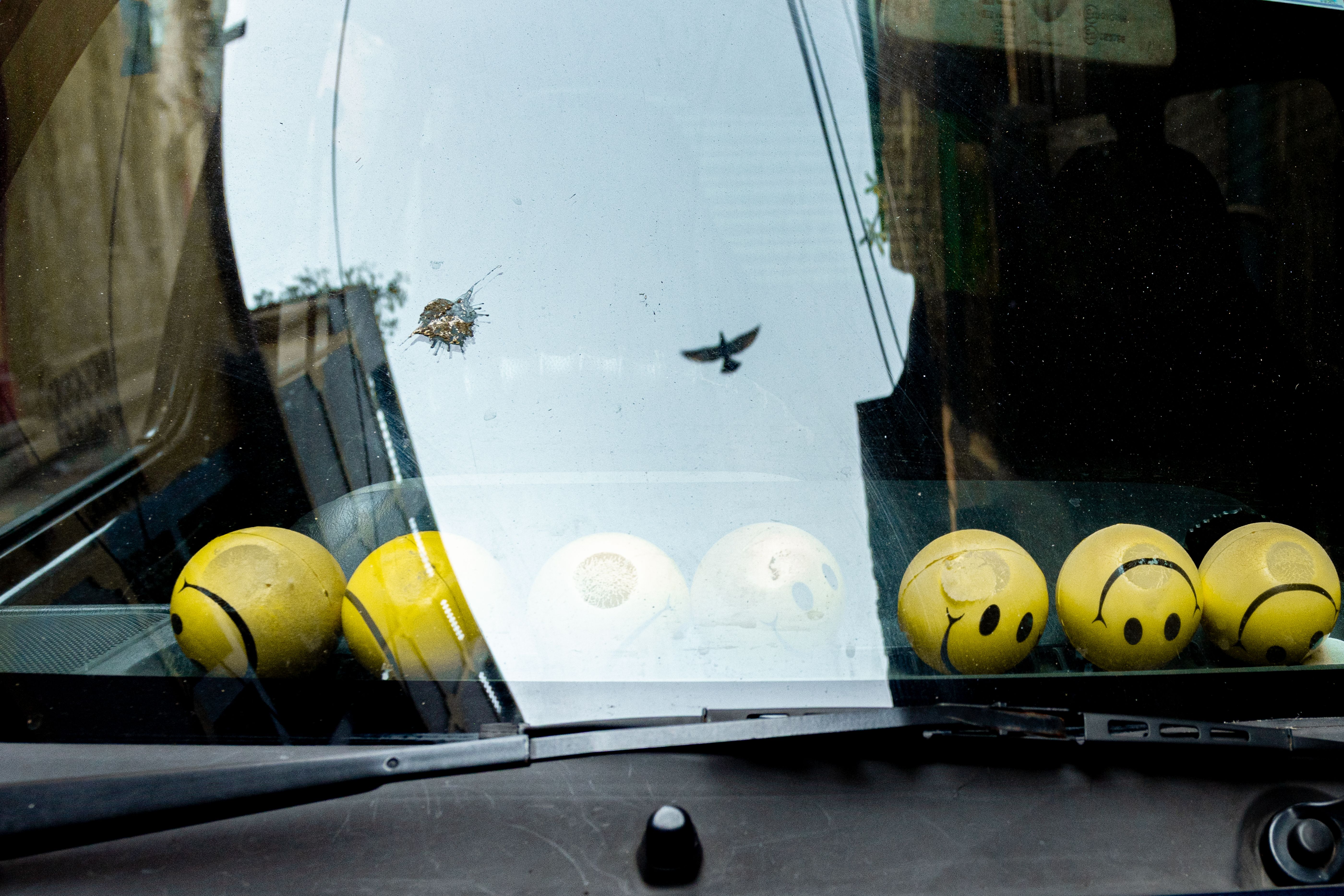
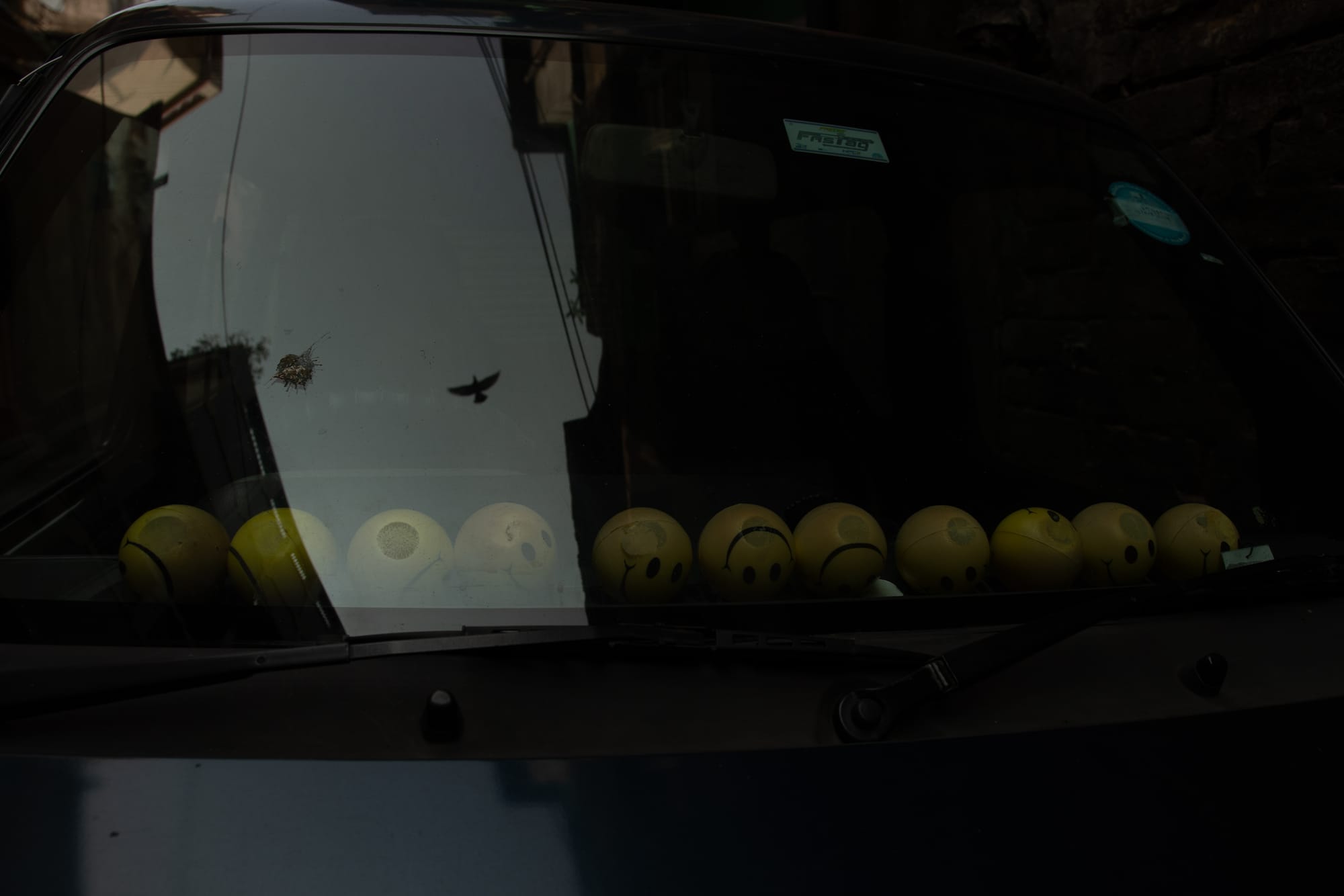
My editing decisions for this image were entirely about distillation and guiding the viewer's eye toward a very specific, mundane truth. If you look at the original, unedited shot, there was a lot of unnecessary context—the hood of the car, the FASTag, the registration stickers, and the broader street scene. It was too cluttered.
I cropped in significantly to strip away those distractions. By tightening the frame, I forced the focus entirely onto the juxtaposition happening on the windshield. The image is meant to showcase that deeply relatable, everyday frustration of owning a car: finding a fresh bird dropping right in your line of sight. But the story isn't just about the mess; it's about the row of bright yellow smiley balls sitting right below it. I bumped the contrast slightly to make those yellows pop, emphasizing the irony. The balls represent how we just have to keep moving on, navigating these tiny, gritty annoyances with a mix of resignation and a smile. I didn't manipulate what was there; I just cropped out the noise so that quiet, relatable slice of human cadence could take center stage.
Contact and Follow
Email: sayanbiswas2412@gmail.com
Instagram: https://www.instagram.com/the_iron_mask