


How did your journey into indie music begin?
My journey into indie music did not begin with a plan. It began with a need. I have been a singer for most of my life, working as a playback singer, lyricist, radio jockey, and author. Yet somewhere along the way, I realized there were thoughts, emotions, and stories within me that didn't always fit into the spaces available. Indie music became that space. For the first time, I wasn't just lending my voice to someone else's vision—I was free to explore my own. I could write what I felt, sing what resonated with me, and create without worrying about expectations. Indie music arrived at a stage in my life when I was learning to trust myself again. It became less about being heard and more about being honest. Some songs were born out of joy, some out of reflection, and some out of questions I was still trying to answer. What I love most about being an independent artist is the freedom it offers. There's something incredibly liberating about creating from a place of authenticity and putting that work into the world exactly as it was meant to be. The journey hasn't always been easy, and it certainly hasn't been free from criticism. But every song, every lyric, and every release has felt like a small act of courage. More than anything, indie music gave me something I didn't know I was searching for: a space where my voice could belong entirely to me.
When was the first time you felt you had created something truly original?
The first time I truly felt I had created something original was when I wrote, composed, and recorded my song 'The Ache of You.' What makes that song particularly special is that it didn't begin as a song at all—it began as a poem. I wrote it during one of the darkest phases of my life, when writing was less a creative pursuit and more a means of survival. I wasn't thinking about music, releases, or audiences; I was simply trying to make sense of emotions that felt too heavy to carry in silence. The poem stayed with me long after it was written, and over time it began to evolve. What started as words on a page slowly became a melody in my mind, and before I knew it, it was asking to become something more. That 'something more' became 'The Ache of You.' For the first time, there was no separation between the writer, the composer, and the singer. Every lyric came from a place I had lived through, and every note carried an emotion I had felt. I remember listening to the finished song and realizing that I had transformed pain into art and silence into expression. It was one of those rare moments when a creation feels entirely and unmistakably yours. What made it feel original was not the pursuit of uniqueness—it was honesty. I wasn't trying to sound like anyone else or fit into a particular mould; I was simply telling the truth as I knew it. That experience taught me that originality isn't always about creating something the world has never seen before. Sometimes, it's about creating something so deeply personal that it could only have come from you.
How has your experience in music grown over the years?
My experience in music has grown from performance to expression. When I first began singing, I was focused on the technical aspects—understanding a composition, delivering it well, and doing justice to the song. Those lessons remain invaluable. Over the years, however, music became something much more personal. Life has a way of changing how you create. The experiences I've lived through, the challenges I've faced, the stories I've written, and the people I've met have all found their way into my music. One of the biggest shifts was moving from interpreting emotions to expressing my own. As a playback singer, I had the privilege of bringing someone else's vision to life. As an independent artist, I discovered the freedom of creating from my own experiences. That transition taught me a great deal about vulnerability. It's one thing to sing a song; it's another to write the lyrics, compose the melody, and then stand behind every word because it comes from a place you've personally lived through. Songs like 'The Ache of You,' which began as a poem written during one of the darkest periods of my life, showed me that music can be far more than entertainment—it can be reflection, healing, and sometimes even a conversation with parts of yourself you haven't fully understood yet. At the other end of that emotional spectrum is 'Meri Pyari Pari,' a song I wrote, composed, and sang for my daughter. Unlike many songs that emerge from introspection, this one was born out of pure love. It carries my hopes, my affection, and the quiet promise every parent makes to a child. Creating 'Meri Pyari Pari' reminded me that music is not only a space for processing pain; it's also a way of preserving joy, gratitude, and the most precious relationships in our lives. Today, I think of music very differently than I once did. I no longer see it as something I do—I see it as a language through which I understand myself and connect with others. If there's one thing that has grown the most over the years, it's not my confidence or my experience—it's my willingness to be honest. The more honest I've become with myself, the more meaningful my music has become.
What inspires your songwriting and sound?
What inspires my songwriting more than anything else is life itself. I've never been someone who sits down with the intention of writing a song simply for the sake of writing one. Most of my songs begin as emotions—a thought that refuses to leave me, a conversation, a memory, a question, sometimes even a wound that hasn't fully healed. More often than not, those emotions first find their way into poetry. I write because I need to make sense of what I'm feeling. Over time, some of those poems begin asking for something more—a melody appears, a rhythm follows, and before I know it, a poem has transformed into a song. Creative freedom plays a significant role in that process. As an independent artist, I cherish the ability to create without having to fit into a mould or follow a formula. I'm not interested in writing what is expected of me; I'm interested in writing what is true to me. Authenticity has always mattered more to me than perfection. Whether it's 'The Ache of You,' which emerged from one of the darkest chapters of my life, or 'Meri Pyari Pari,' which was born from the immense love I have for my daughter, every song I write carries a real emotion that I have personally experienced. I don't separate my life from my art—the two are deeply intertwined. In many ways, songwriting has become my way of understanding the world around me and the world within me. It allows me to hold on to moments that matter, whether they're painful, beautiful, transformative, or fleeting. If there's a common thread that runs through my music, it's honesty. I believe people connect most deeply with art when it comes from a place of truth. My songs may tell different stories, but they all begin in the same place: a genuine emotion and a desire to express it as honestly as I can. At the heart of it all are the people and experiences that have shaped me, and none more so than my daughter. She inspires not only what I create but also the person I strive to become. Some songs come from heartbreak, some from reflection, and some from love—she is the reason I understand the deepest form of that love.
What makes your studio setup special to you?
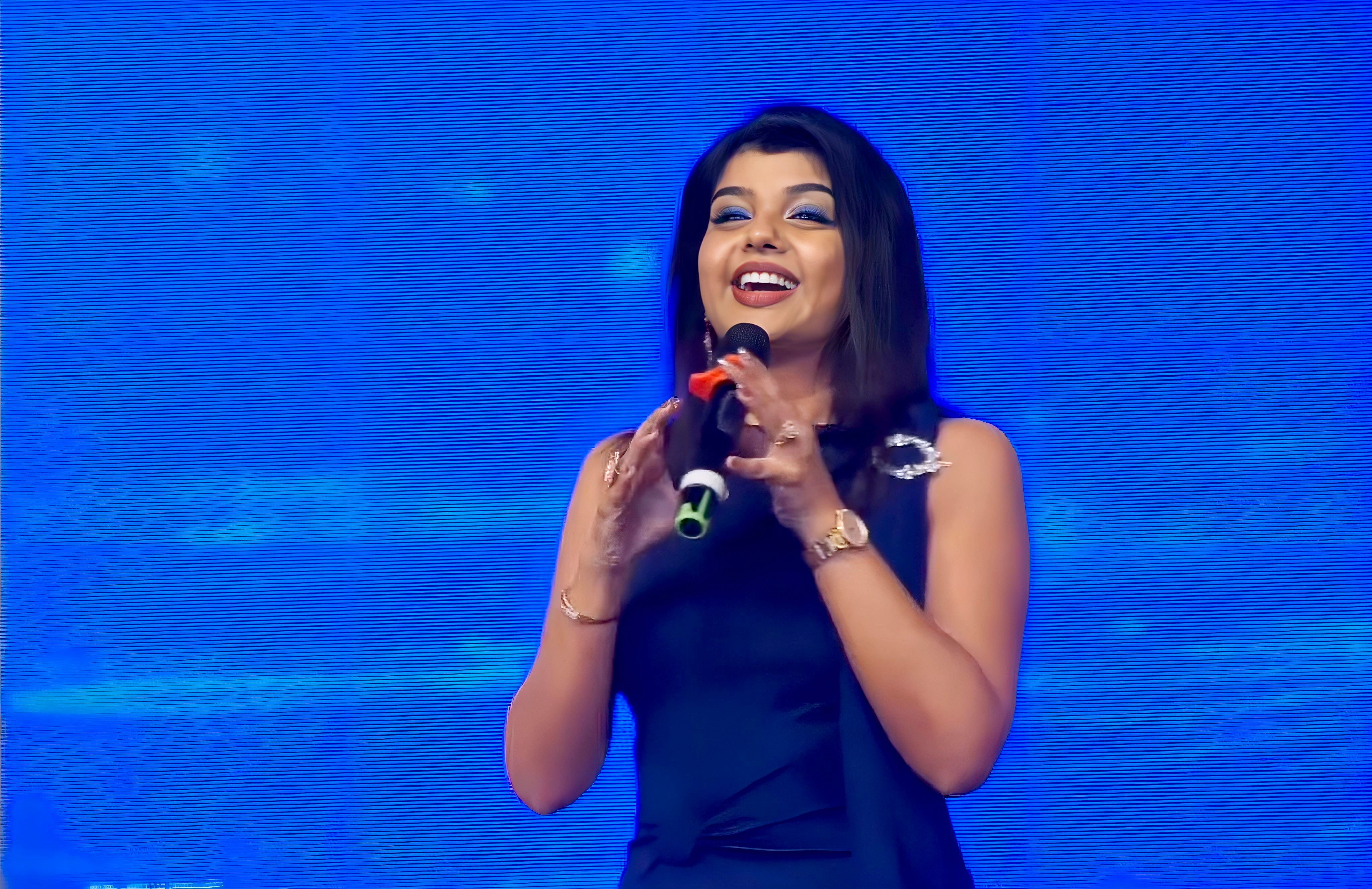

What makes this setup special to me is not the microphone itself—it's the person I become when I sit behind it. There's something almost magical about that moment. The second I put on the headphones and lean towards the microphone, the noise of the world fades away. What remains is connection—with music, with stories, with listeners, and perhaps most importantly, with myself. For years, music has been one of the purest forms of expression in my life. Some of my most personal experiences have first appeared as poetry, eventually finding their way into songs. Whether it was 'The Ache of You,' born from one of the darkest chapters of my life, or 'Meri Pyari Pari,' written for my daughter from a place of unconditional love, music has always helped me express emotions that words alone couldn't fully capture. The microphone became the bridge between those emotions and the world outside. Through radio, I discovered that connection extends far beyond music. Every week, I have the privilege of sharing not just songs, but thoughts, stories, reflections, and conversations with people I may never meet. There's something incredibly humbling about knowing that someone, somewhere, chooses to spend a part of their day listening. What makes that experience even more meaningful is the trust behind it—the trust of my radio station that gave me a platform, the trust of listeners who return week after week, and the trust I slowly learned to place in myself. The irony is not lost on me: a woman who once questioned her voice found herself behind a microphone. A singer who once lent her voice to other stories began creating her own. A writer whose poems lived quietly on paper watched them transform into songs and conversations that reached people beyond the page. That's why this setup means so much to me—it's where my worlds come together: the writer, the singer, the radio jockey, the songwriter, the storyteller, and somewhere in between all of them, simply Sharon. For me, the microphone does not just amplify sound—it amplifies truth.
Can you describe the mood or story behind that performance?
'The Ache of You' is, at its heart, a story about carrying emotions that refuse to leave, even long after the moment that created them has passed. The song began as a poem written during one of the darkest periods of my life. At the time, I wasn't trying to create music—I was simply trying to understand what I was feeling. Writing became a refuge, a place where I could be honest without explanation and vulnerable without judgment. When the poem eventually evolved into a song, I wanted to preserve that honesty. I didn't want to dramatize the emotion or make it larger than it was; I wanted it to feel real. The mood of the song is deeply introspective. It explores longing, memory, loss, and the quiet ache of holding on to someone, something, or even a version of yourself that no longer exists in the same way. It's not a song about heartbreak alone—it's about the lingering emotions that remain when life changes us. While writing, composing, and singing it, I found myself revisiting emotions I thought I had already made peace with. In many ways, the song became a conversation between the person I was during that difficult phase and the person I was becoming. What makes 'The Ache of You' special to me is that it was never written to impress anyone—it was written to heal, to understand, and to express. If listeners connect with it, I believe it's because the emotions behind it are real. The details may belong to my story, but the feeling of longing, loss, love, and resilience belongs to all of us. That honesty became the soul of the performance, and I believe it's what people hear when they listen to the song.
What was the creative process like for 'Meri Pyari Pari'?
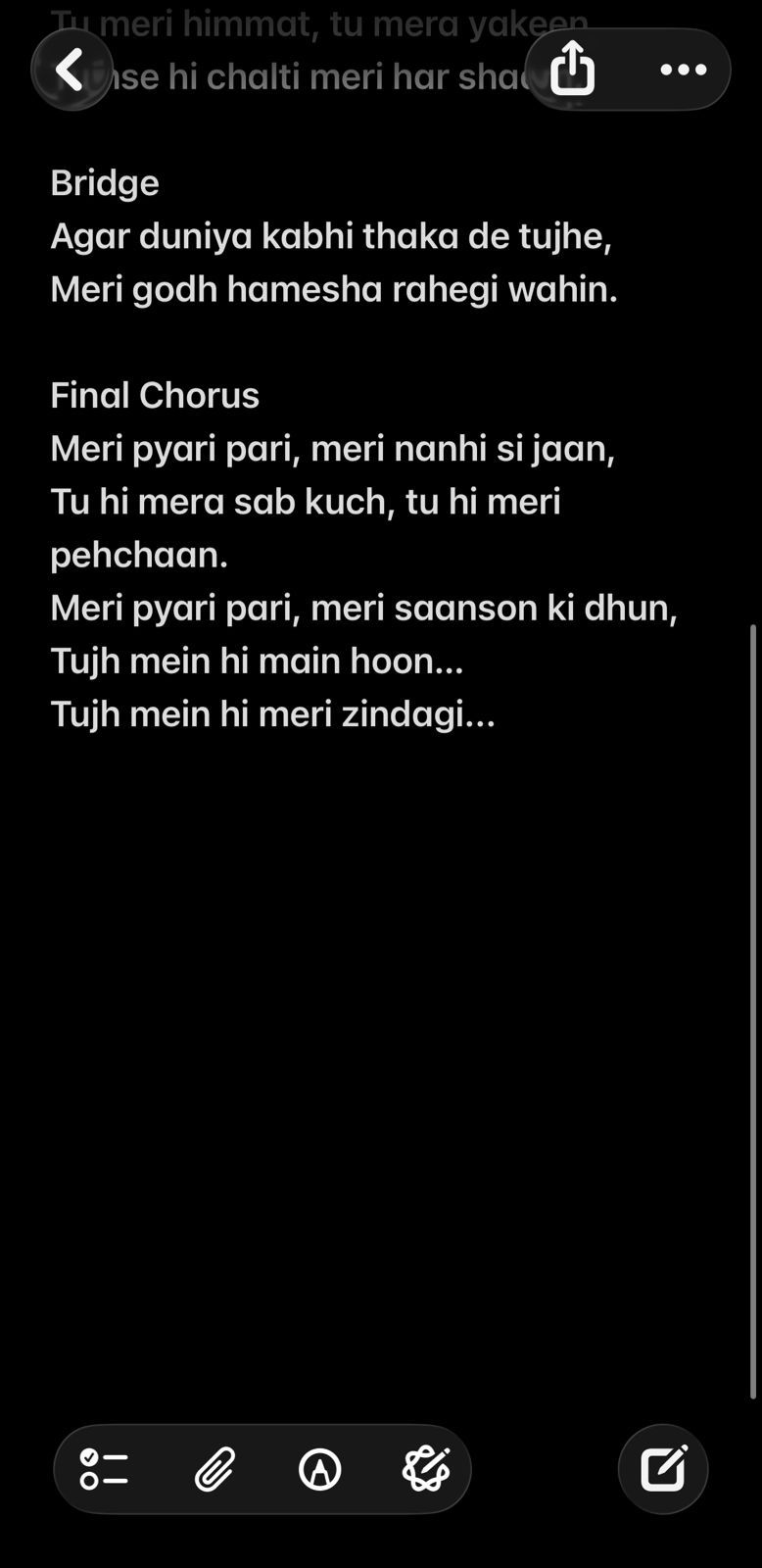
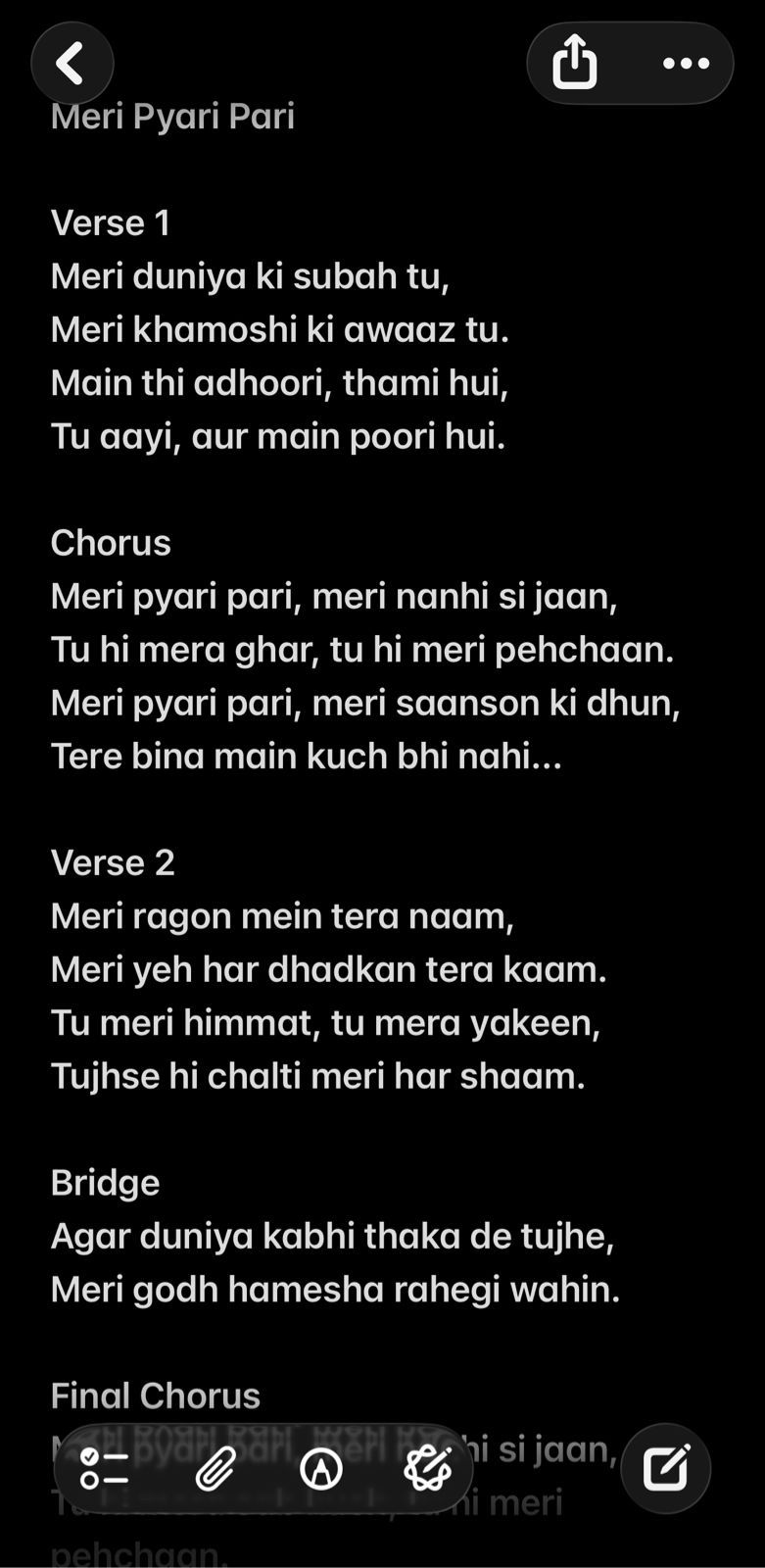
The creative process behind 'Meri Pyari Pari' was unlike anything I had experienced before because it was born from a place that was both deeply vulnerable and deeply beautiful. Like many of my creative works, it didn't begin as a song—it began as a poem. I wrote it during a particularly challenging phase of my life, at a time when I was questioning many things, including myself. Yet through all the uncertainty, there was one constant source of light: my daughter. There were moments when I worried about whether I was doing enough, whether I was giving her enough, and whether I was somehow falling short. But every time those doubts crept in, she had an incredible way of reminding me that my life still held meaning, purpose, and love. Without even realizing it, she became one of my greatest reasons to keep moving forward. The poem was written from the perspective of a lullaby—it was my way of putting into words everything I wanted her to know: how deeply she was loved, how precious she was, and how much strength she unknowingly gave me. Over time, those words began finding a melody. What started as a poem slowly became something I would hum to her at bedtime. Night after night, I would sing fragments of it while putting her to sleep. One evening, she looked at me and said something I will never forget: 'Mama, you come up with such random things. It is so lovely to listen to you and fall asleep. Your voice is the last thing I remember before I go to bed. You should really make this into a song.' That simple conversation changed everything. What had been a private moment between a mother and her daughter suddenly felt ready to become something more. The poem evolved into a composition, the melody became clearer, the emotions became deeper, and slowly, 'Meri Pyari Pari' took shape. Of course, no song comes to life alone. I was fortunate to have wonderful people become part of that journey—Ejish Baby brought the song to life through his music production, helping shape the sound while preserving the innocence and warmth at its heart. Shiju and Pete supported the recording, mixing, and mastering process with great care, helping transform a deeply personal idea into a finished piece of music. What makes 'Meri Pyari Pari' so special to me is that it was never created with commercial success in mind—it was created out of love. It's a song written by a mother for her daughter, but it's also a song about gratitude—gratitude for a little girl who, often without knowing it, became my greatest strength during some of life's most difficult moments. When I listen to it today, I don't just hear a song—I hear a conversation between a mother and her child. And I think that's why it will always hold a special place in my heart.
What is a memorable moment from that studio session?
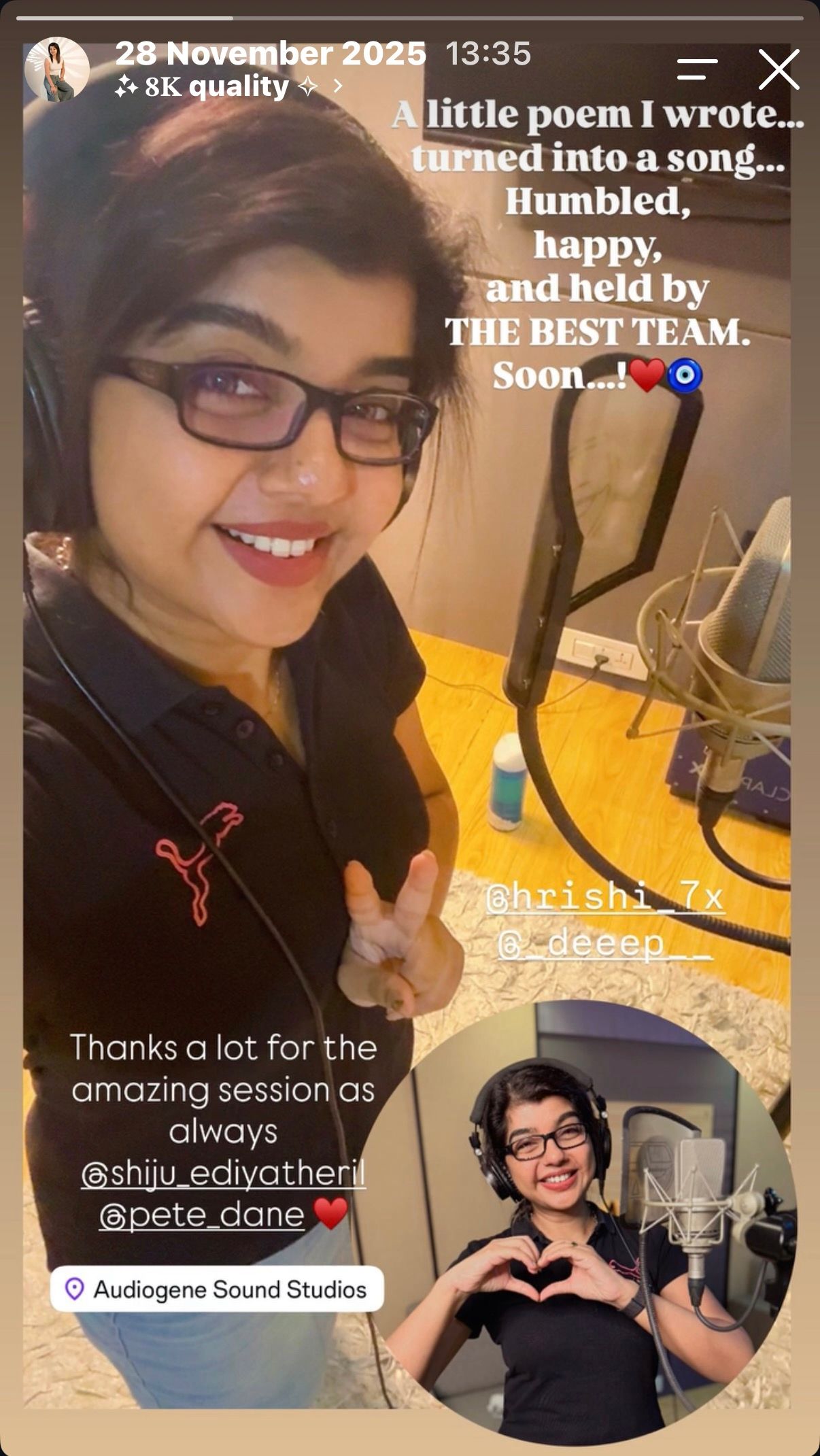
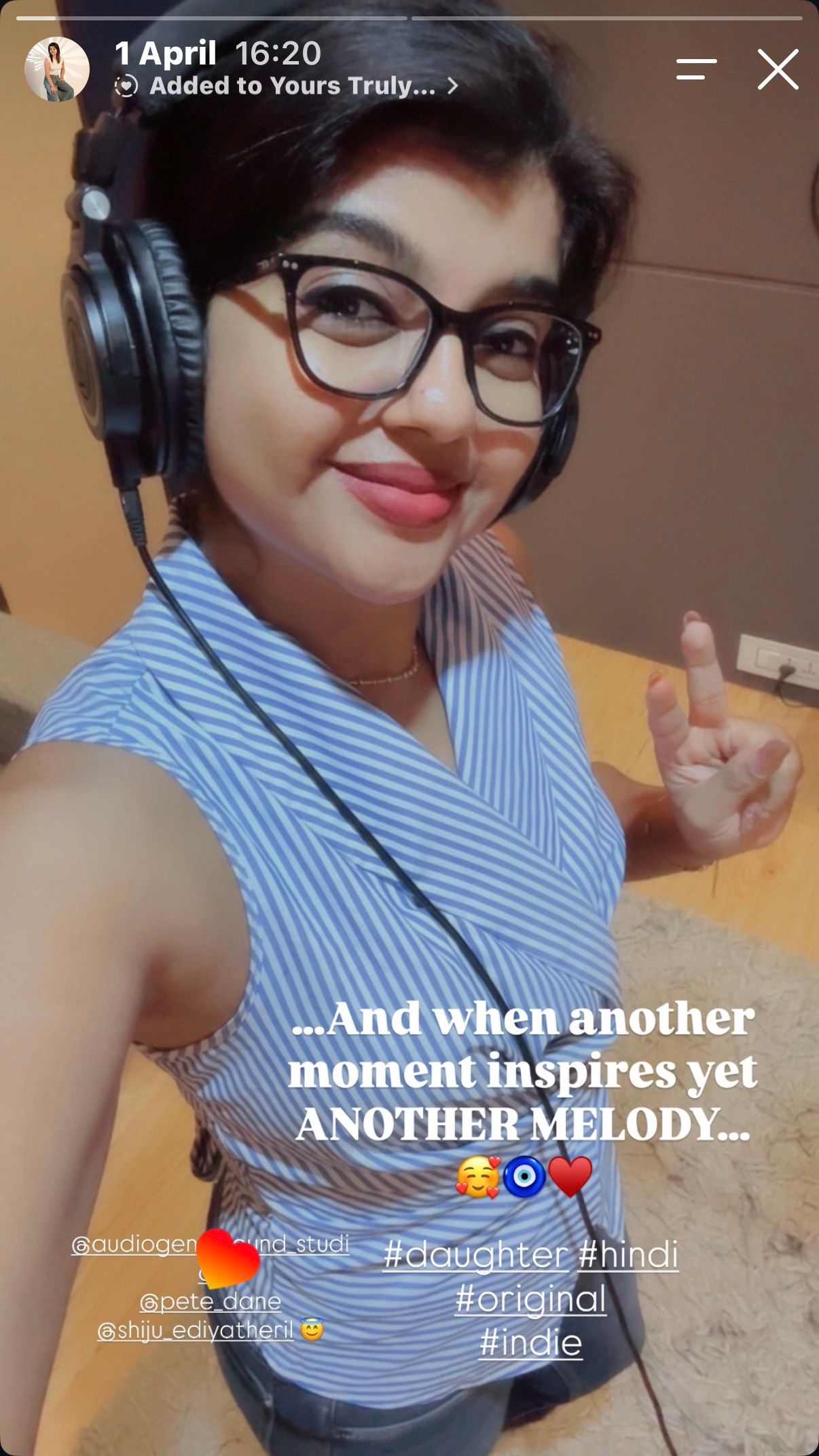
The most memorable moment was not simply standing in the studio to record an original song—it was realizing how much had changed since the last time I had done it. The first original I recorded after a gap of nearly two years felt like a comeback. It was about finding the courage to return, about proving to myself that I still belonged in that creative space. This time felt different. As I stood before the microphone, headphones on, preparing to record, I realized I was no longer creating from a place of uncertainty—I was creating from a place of honesty. There was a quiet sense of confidence that hadn't existed before. Not confidence in success or outcomes, but confidence in my own voice, my own stories, and my own experiences. For years, I had expressed myself through different creative forms, but recording my originals taught me something important: the most powerful art emerges when you stop trying to be what others expect and start embracing who you really are. I remember thinking that this song didn't need to sound like anyone else—it didn't need to fit a trend or a formula. It only needed to be truthful. That realization became the memorable moment, because somewhere between the first comeback and the songs that followed, I stopped seeking validation and started trusting my instincts as an artist. The recording session wasn't just about capturing a song—it was about meeting the real me and finally having the confidence to let her be heard.
What changes did you make to 'The Ache of You' and why?
One of the most important changes made to 'The Ache of You' happened during the arrangement stage, and looking back, it transformed the song completely. The initial version of the track was created primarily as a guide for me to record my vocals. It served its purpose, but somewhere deep down, I felt that something was still missing. The words were there, the emotion was there, but the soul of the song hadn't fully revealed itself yet. That changed when Hrishi began working on the arrangement. As the arrangement evolved, so did my relationship with the song. Suddenly, I could hear dimensions of the composition that I hadn't fully experienced before. The music gave the lyrics room to breathe, bringing out the vulnerability, longing, and emotional depth that had originally inspired the poem from which the song was born. Listening to the arranged version was an emotional experience in itself because for the first time, I felt the song becoming what it was always meant to be. That's when I made the decision to revisit and re-record certain sections—not because the original recordings were technically incorrect, but because I felt I could now offer something more honest. The arrangement had unlocked a deeper emotional connection to the song, and I wanted my performance to reflect that. I returned to the microphone with a clearer understanding of the story I was telling and the emotions I wanted listeners to feel. In many ways, I was no longer just singing the song—I was living it again. Another significant creative decision involved the harmonies. At Hrishi's suggestion, I took on the responsibility of creating and recording the harmonies myself. It was a process that challenged me creatively but also allowed me to contribute another personal layer to the song. I was fortunate to receive guidance and encouragement from the renowned South Indian music director and my dear friend Mejjo Josseph during this phase. His insights helped shape certain creative choices and gave me the confidence to trust my instincts while remaining true to the emotional core of the composition. What I appreciate most about the entire process is that none of the changes were made for perfection—they were made for authenticity. Every revision, every re-recorded phrase, every harmony, and every arrangement choice was driven by a single question: 'Does this feel true to the emotion that gave birth to the song?' For me, 'The Ache of You' was never about creating a polished piece of music alone—it was about preserving the honesty of a poem written during one of the most difficult periods of my life. The arrangement helped uncover that honesty, the re-recording helped honour it, and together, they allowed the song to become the most truthful version of itself.
How does this image reflect your artistic vision?
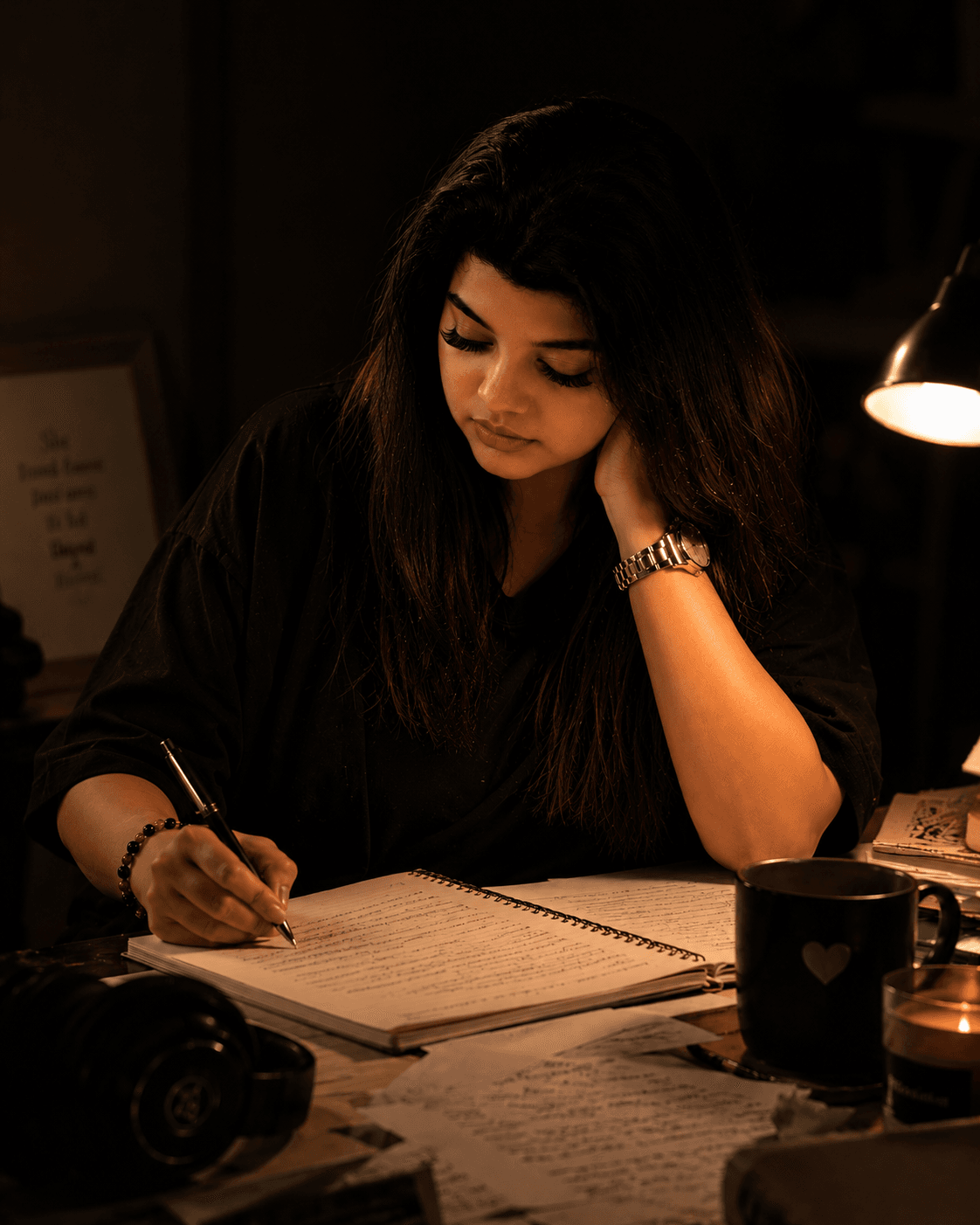
This image reflects my artistic vision because it represents the place where all my creative journeys begin. Before a song becomes a composition, before a melody is recorded, and before a story reaches its readers, it often begins as a thought on paper. Writing has always been the foundation of my creative expression. Whether through poetry, lyrics, fiction, or reflections, I have always found myself returning to the written word. The warm light and quiet atmosphere in this image are especially meaningful because they mirror the environment in which I create best. I am drawn to stillness, introspection, and authenticity. Many of my poems, songs, and stories have been born during late nights spent alone with my thoughts, a notebook, and the freedom to be completely honest with myself. My music is deeply rooted in lived experiences. Songs such as 'The Ache of You' and 'Meri Pyari Pari' began as emotions before they became poetry, and poetry before they became music. This image captures that moment of transformation—the space between feeling and expression. More than anything, it reflects my belief that art does not begin in performance—it begins in truth. For me, creativity is not about creating a persona; it's about creating from a place of honesty, vulnerability, and genuine emotion. This image represents that process, and therefore, the heart of my artistic vision.
Contact and Follow
Email: sharon.john541@gmail.com
Instagram: https://www.instagram.com/iam_rj_sharon
Facebook: https://www.facebook.com/SharonJosephOfficial/
YouTube: https://www.youtube.com/@SharonJosephOfficialIN
Wikipedia: https://en.wikipedia.org/wiki/Sharon_Joseph