

How did your journey as a singer-songwriter begin?
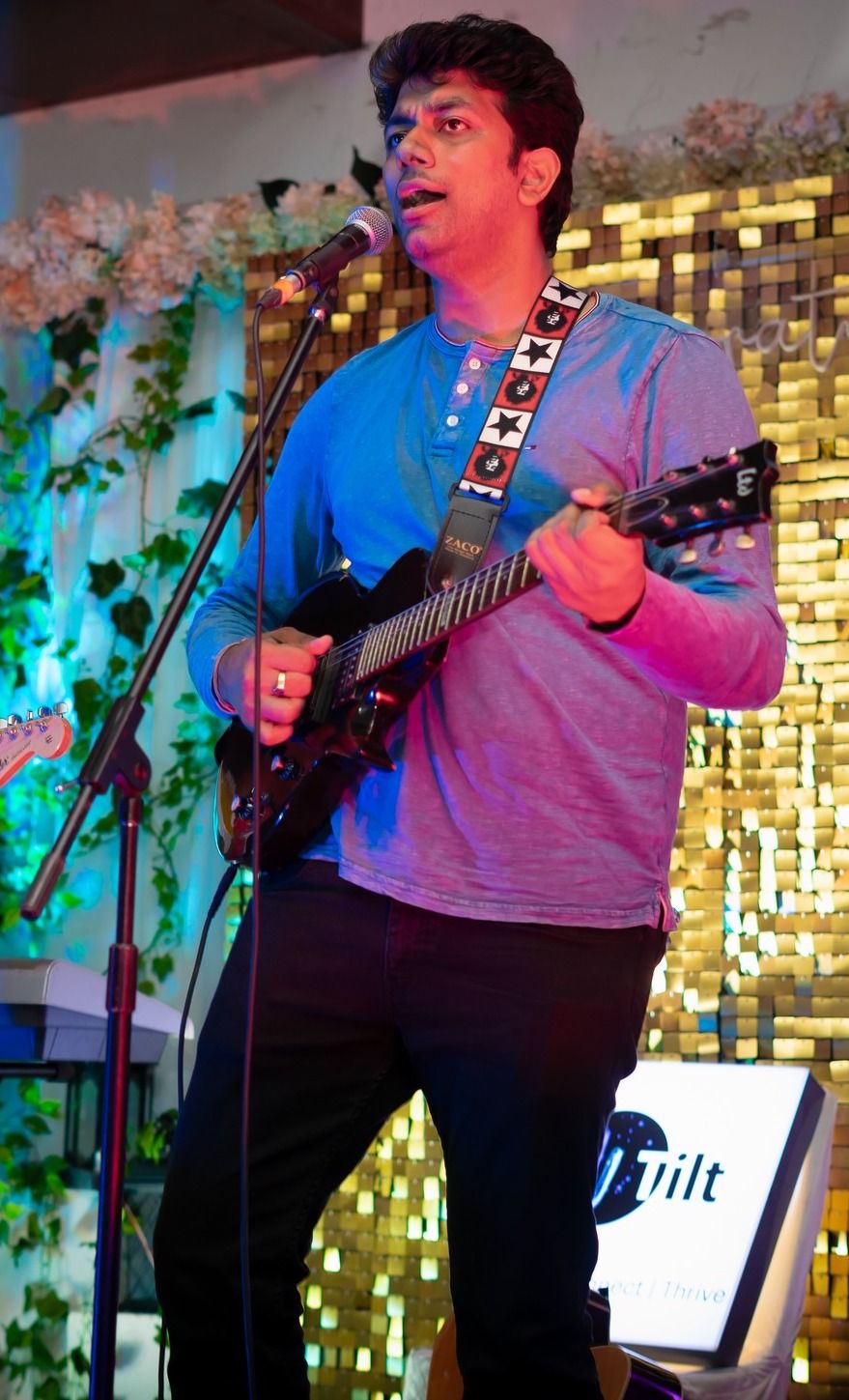
My journey as a singer-songwriter began with a deep love for music and storytelling. My knowledge of piano, guitar, and Logic Pro gave me a strong foundation to understand music from both creative and technical perspectives. Driven by curiosity, I explored music production on my own, experimenting with different sounds, genres, and songwriting techniques. Over time, I became fascinated not just with singing songs but also with creating original melodies and expressing emotions through lyrics. Songwriting has since become my way of turning experiences and feelings into music that resonates with others and helps me connect with people through my art.
What was the first song you ever wrote or performed?
The first song I ever composed was Jee Le Zara. Interestingly, it all began with an intro chord-plucking pattern that suddenly sparked an idea in my mind. I built a song around that progression, while the lyrics and vocals were written and performed by someone else. Jee Le Zara is a motivational song that starts at a slow tempo and gradually transitions into a heavier rock section, culminating in a fast-paced bridge that reflects the energy of perseverance and self-belief.
The first song that I completely wrote, produced, and sang myself was Tu Hai Meri Khwahish. It tells the story of one-sided love, but with a different perspective—that love does not necessarily require reciprocation or validation. The song embraces the beauty of loving someone selflessly, finding meaning in the emotion itself rather than in expecting anything in return.
How has your songwriting evolved over the years?
My songwriting journey has evolved significantly over the years. I composed the music and intro of Jee Le Zara in 2021, with the lyrics coming a few months later and the vocals and mixing being completed in 2022. It was my first experience of seeing an idea gradually transform into a complete song.
In 2023, I started attending more music jams and witnessing live showcases, which exposed me to different styles of songwriting and performance. From 2024 onwards, I began writing my own lyrics and slowly ventured deeper into music production. I wrote three English songs, one of which was released in 2026. At the same time, I decided to explore Hindi songwriting to connect more closely with the Indian music market.
Consistent feedback from fellow musicians and listeners has shaped the way I create music. I have become more conscious of melody development, song structure, and the philosophy that sometimes "less is more." One of my initial challenges was metering and lyrical flow, and I continue to work on improving these aspects in my upcoming songs.
Writing remains the most difficult part of the process for me. Collaboration can be challenging, especially when many writers pursue it professionally and creative favours often take time to materialise. This pushed me to become more independent by strengthening my production and composition skills. I also taught myself beginner-level mixing and mastering and continue to improve these skills, allowing me to have greater creative control over my music and bring my ideas to life on my own terms.
Who are your biggest musical influences and why?
My favourite artists and bands include Coldplay, Green Day, Linkin Park, A.R. Rahman, Arijit Singh, KK, The Local Train, Sifar, Jubin Nautiyal, Pablo, Justin Bieber, and Mika.
Each of them inspires a different side of my music. Green Day's energy and songwriting have motivated me to explore the possibility of creating Hindi punk rock, while Sifar's Aakhri Din and songs by The Local Train such as Choo Lo, Aaoge Tum Kabhi, and Bandey showed me how powerful and relatable Hindi rock can be. Linkin Park was a major inspiration behind one of my released English songs, despite it eventually evolving into a hymnic, church-rock sound.
For Tu Hai Meri Khwahish, I drew inspiration from the simplicity and emotional connect of Pablo's music, the melodic appeal of some of Jubin Nautiyal's dance tracks, and the dreamy atmosphere often found in Hindi fantasy songs. My project Shanti Ka Rang became a personal challenge to unlock my skills as a true one-man army musician. For it, I referred to selected songs by Justin Bieber and Mika for musical ideas and vocal references while trying to develop my own sound.
I currently have a few songs planned for release this year, with the production of three tracks almost complete. At the same time, I am writing new songs for a future album, taking inspiration from Green Day's songwriting, vocal texture and thematic approach. Whether these songs will eventually be produced entirely by me or with a full band is something that remains to be seen, but the journey of exploring and creating continues.
What does your recording setup look like, and how does it influence your sound?
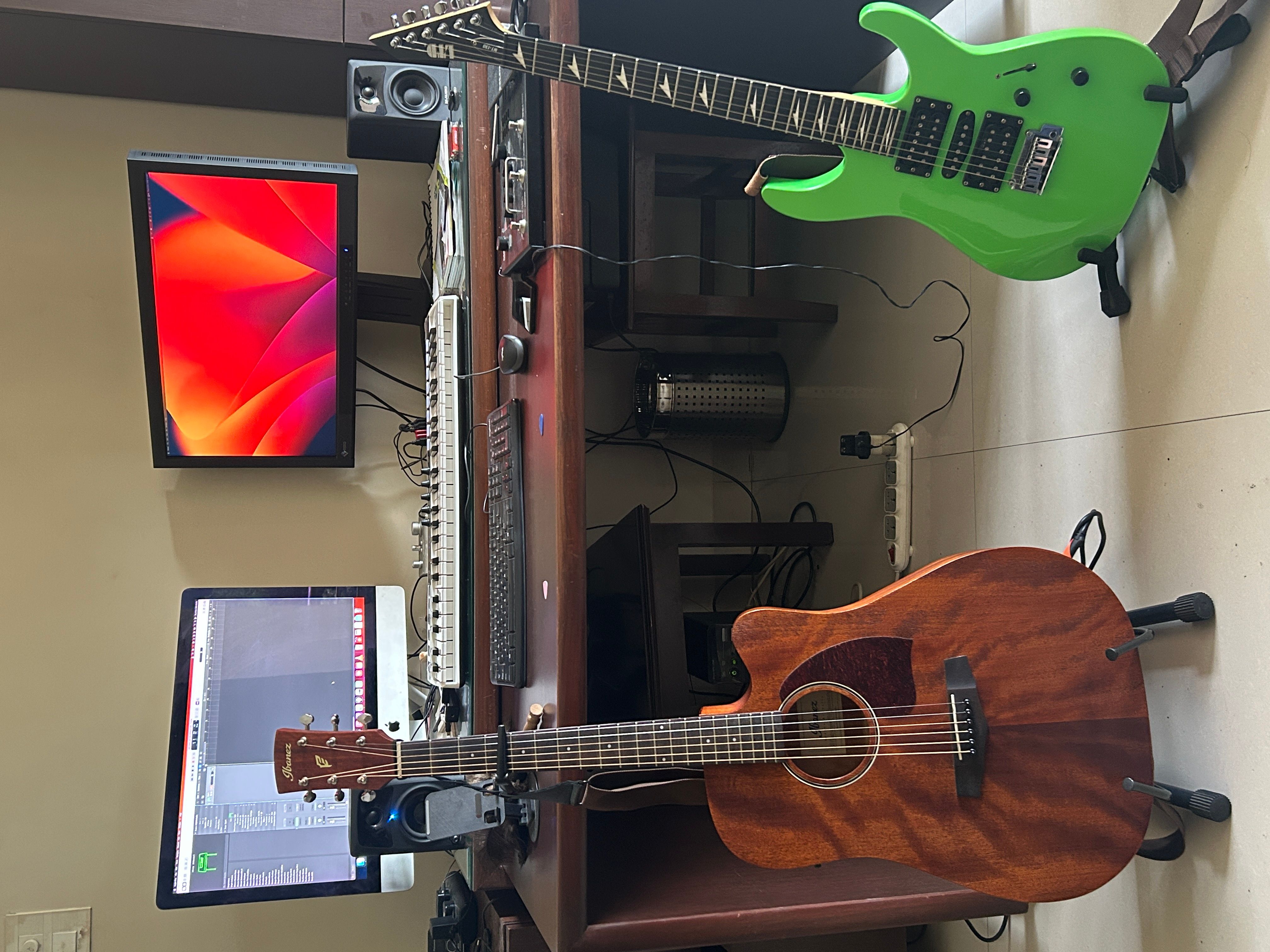

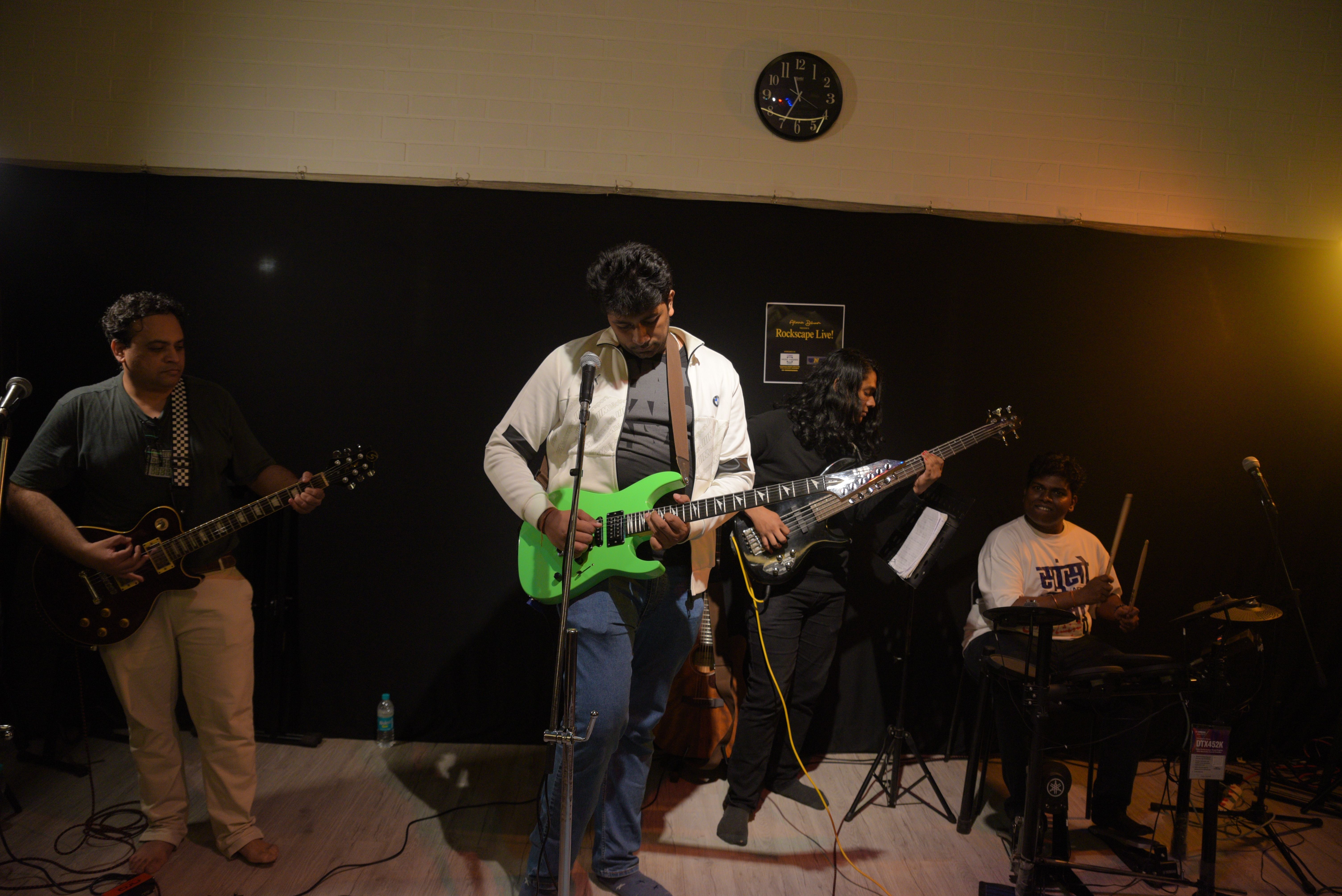
My recording setup is built around creating professional-quality music within a simple home studio environment. Recently, I invested in Audio-Technica headphones and a microphone to further improve the quality of my recordings and monitoring. I also use an AKG microphone, Marshall headphones with a mixing jack converter, an Audient audio interface, a MIDI keyboard, and guitars for composing and recording.
For production, recording, and mixing, I primarily work on a Mac Mini and an iMac running Logic Pro. I also use an isolation shield as part of my basic home studio setup. Since I work in a relatively small room and stay away from heavy traffic noise, I can achieve clean recordings and maintain a controlled environment for creativity.
This setup has encouraged me to become self-reliant and explore every aspect of music production—from songwriting and arranging to recording, mixing, and mastering. At the same time, whenever a project demands a higher level of vocal capture and I can record efficiently, I also prefer visiting well-equipped studios for vocal sessions. The balance between a home setup and professional studio environments gives me both creative freedom and the flexibility to continuously refine my sound.
What's the story behind your track Tu Hai Meri Khwahish?
Tu Hai Meri Khwahish is a song about one-sided love, but not in the conventional sense of longing for reciprocation. The idea behind the track is that love does not always need validation, acceptance, or a happy ending to be meaningful. Sometimes, simply experiencing the emotion and wishing the best for someone can be enough.
The song explores the beauty of selfless affection—loving someone for who they are, without expecting anything in return. Through its melodies and lyrics, I wanted to capture the vulnerability, warmth, and quiet acceptance that often accompany unspoken feelings.
What makes Tu Hai Meri Khwahish especially personal to me is that it was the first song that I completely wrote, produced, and sang myself. It marked an important step in my journey as an independent singer-songwriter, allowing me to express my thoughts and emotions entirely through my own creative vision.
What does your album art for Shanti Ka Rang represent to you?
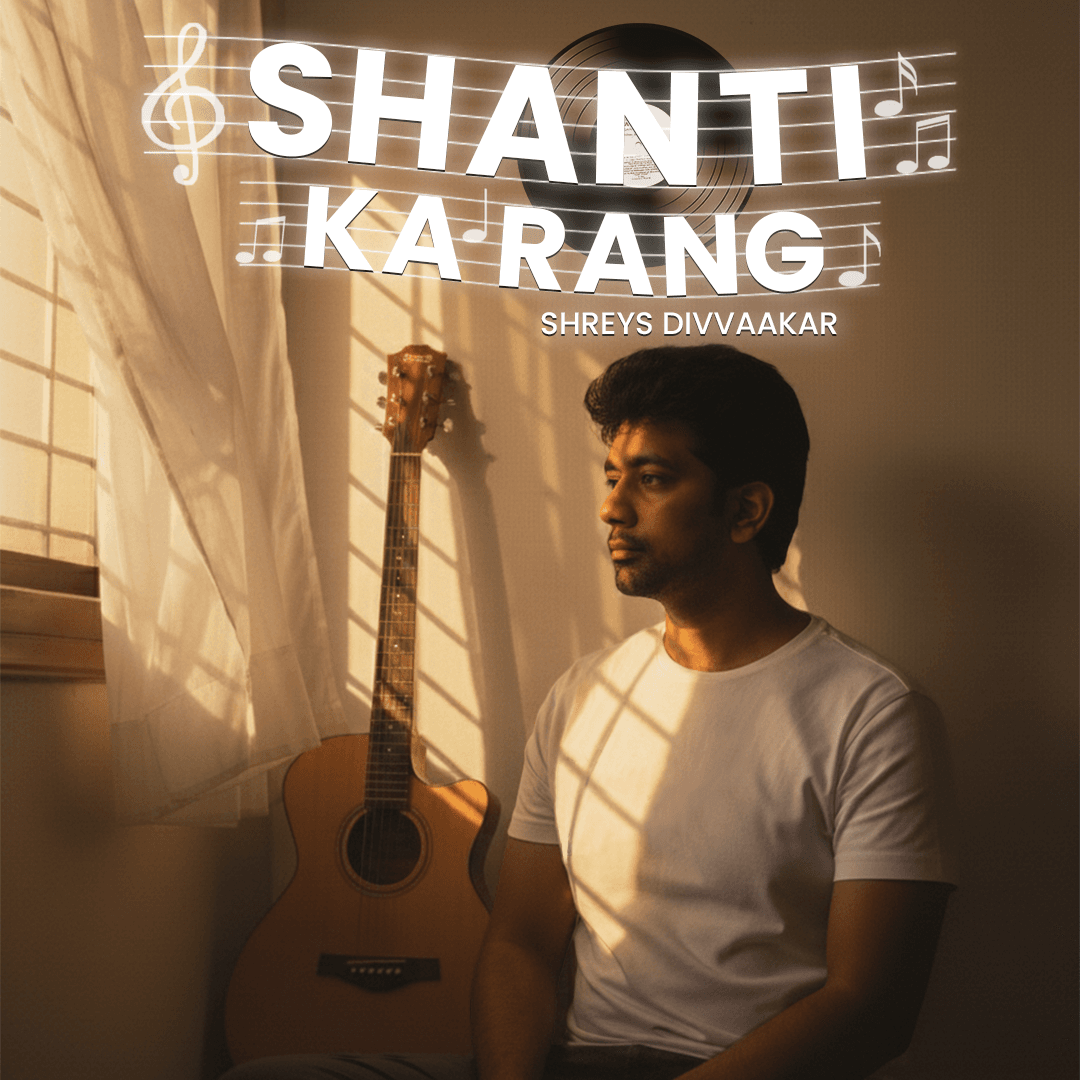
The artwork for Shanti Ka Rang represents peace, introspection, and my personal journey with music. The warm sunlight and shadows falling through the window symbolise hope, calmness, and the different phases of life that shape an artist. Sitting beside the guitar reflects solitude and self-discovery—moments where ideas, emotions, and melodies are born.
The title Shanti Ka Rang (The Colour of Peace) is portrayed not as the absence of struggle, but as finding inner peace through creativity and self-expression. The guitar represents music as a constant companion, while the soft, golden tones signify warmth, healing, and reflection.
To me, this artwork also represents my journey as a one-man army musician—writing, composing, producing, recording, and continuously learning on my own. It captures a quiet moment of looking inward, appreciating how far I have come, and embracing music as both a form of expression and a source of peace.
What can fans expect from your upcoming music?
Fans can expect a diverse mix of rock, alternative, and melodic music that reflects both my personal experiences and evolving musical influences. I enjoy experimenting with different sounds, so my upcoming songs will range from emotional, introspective tracks to energetic, guitar-driven compositions inspired by artists like Green Day, Linkin Park, and contemporary Hindi rock.
I currently have three songs in the final stages of production and plan to release them this year. At the same time, I am writing songs for a future album, where I want to explore storytelling, stronger melodies, and a more refined approach to songwriting and production.
Listeners can also expect more original Hindi music, including my experiments with Hindi rock and punk-rock influences. As an independent artist, I am constantly learning and evolving—from songwriting and production to mixing and mastering—so each release represents a new chapter of growth. Whether these songs are eventually produced entirely by me or with a full band is yet to be seen, but the goal remains the same: to create honest, emotionally resonant music that people can connect with.
Contact and Follow
Email: shreysdivvaakar@yahoo.com
Instagram: www.instagram.com/atmadhun2021
YouTube: www.youtube.com/@atmadhun3294
Linktree: https://linktr.ee/shreysdmusic