

How did your journey in Indian classical vocal music begin?
My association with Indian classical music began in 2015 when I met Padmabhushan Pandit Rajan Sajan Mishra ji and my Guru Pandit Kundanmal Sharma ji. Since then, there has been no looking back. Their guidance opened a new world of melody and devotion that completely transformed my life.
What was the first moment you felt truly connected to your voice?
I remember it vividly—it was when I performed "Hoshwalon Ko Khabar Kya" in front of my whole class in first standard. That moment, I felt a deep resonance within me, as if my voice had found its purpose. The applause and the emotional connection I felt with the audience made me realize that singing was my true calling.
How has your experience and style evolved over the years?
My evolution has been profound and multifaceted. In my early years, I was heavily focused on technical precision—mastering perfect pitch, executing complex fast patterns, and keeping flawless rhythm. But over time, my practice shifted from just singing the note to truly feeling it. I realized that a raga isn't just a scale; it's a living entity with an emotional soul. Today, my style is much more meditative, focused on touching the listener's heart rather than impressing them with speed. I've also developed a matured approach to improvisation—I no longer rush into faster parts; instead, I find immense joy in the slow expansion of the alaap, exploring microtones and letting the raga unfold naturally. My relationship with the lyrics has deepened too; I now contemplate the poetry deeply, ensuring that the literature and melody elevate each other. And while I remain loyal to my gharana's core values, I've learned to filter my guru's teachings through my own life experiences, letting my unique vocal texture shine through responsibly without breaking traditional grammar.
Who are your biggest musical influences, and why?
My biggest influences are Pandit Rajan Sajan Mishra, Pandit Shiv Kumar Sharma, Ustad Rashid Khan, and Ustad Zakir Hussain. Each of them has shaped my understanding of music in unique ways. Pandit Rajan Sajan Mishra ji taught me the depth of bhav and the art of soulful rendition. Pandit Shiv Kumar Sharma's mastery over the santoor showed me how melody can transcend instruments. Ustad Rashid Khan's incredible range and emotional delivery inspired me to explore the limits of my own voice. And Ustad Zakir Hussain's rhythmic genius taught me the importance of laya and the joy of improvisation. Their music continues to guide my journey.
What piece did you perform in the video you shared, and why is it special to you?
I am performing Raag Bageshri in this video. It is special to me because I performed it in my debut concert. That performance marked a significant milestone in my career, and every time I sing Bageshri, it brings back the emotions of that first public appearance—the nervousness, the joy, and the overwhelming love from the audience.
What techniques or elements are you focusing on in your practice?
In my practice, I focus on all the core techniques: alaap, taankari, and bhav paksh. I believe that a balanced approach to these elements is essential for a complete rendition. Alaap helps me explore the raga's mood, taankari builds agility and precision, and bhav paksh ensures that the emotion reaches the listener. Each session is a journey of refining these aspects.
How does your preferred performance space influence your singing?
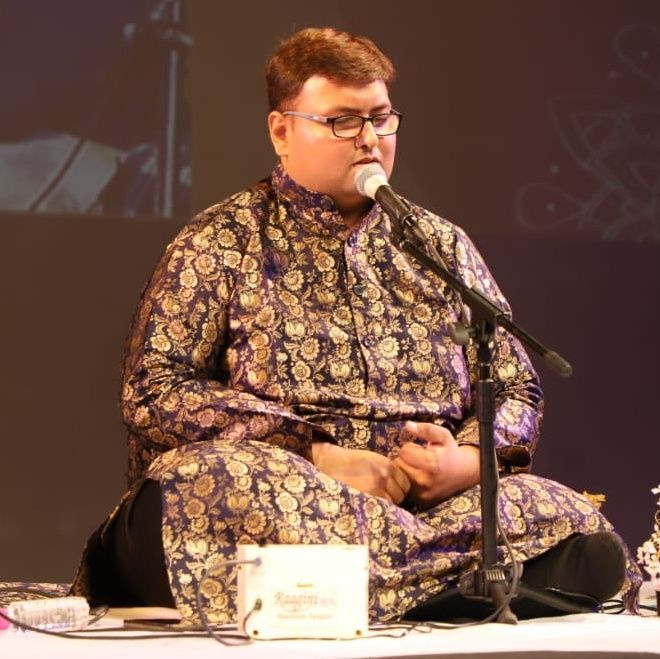
This space is my sanctuary. The quiet ambiance and the natural acoustics help me connect deeply with my voice. It's where I feel most comfortable to experiment and let the raga flow freely. The setup, with my tanpura and minimal distractions, allows me to focus entirely on the music.
What made your performance at the Jaigarh Heritage Festival so memorable?
When I performed at the Jaigarh Heritage Festival, it was a concert that made me realize I had truly arrived. All the big personalities were listening, and the energy of the historic venue added a magical dimension. That night, I felt completely immersed in the music, and the audience's response was overwhelming. It was a validation of all the years of hard work and dedication.
How do you approach improvisation in your practice?
Improvisation, for me, is a blend of deep knowledge and consistent practice. I spend hours understanding the grammar of each raga—its characteristic phrases, the vadi-samvadi notes, and the mood it evokes. Then, through regular riyaz, I internalize these elements so that when I improvise, it flows naturally from within. It's like having a conversation with the raga, where each phrase leads to the next spontaneously.
What does this handwritten notation represent in your journey?
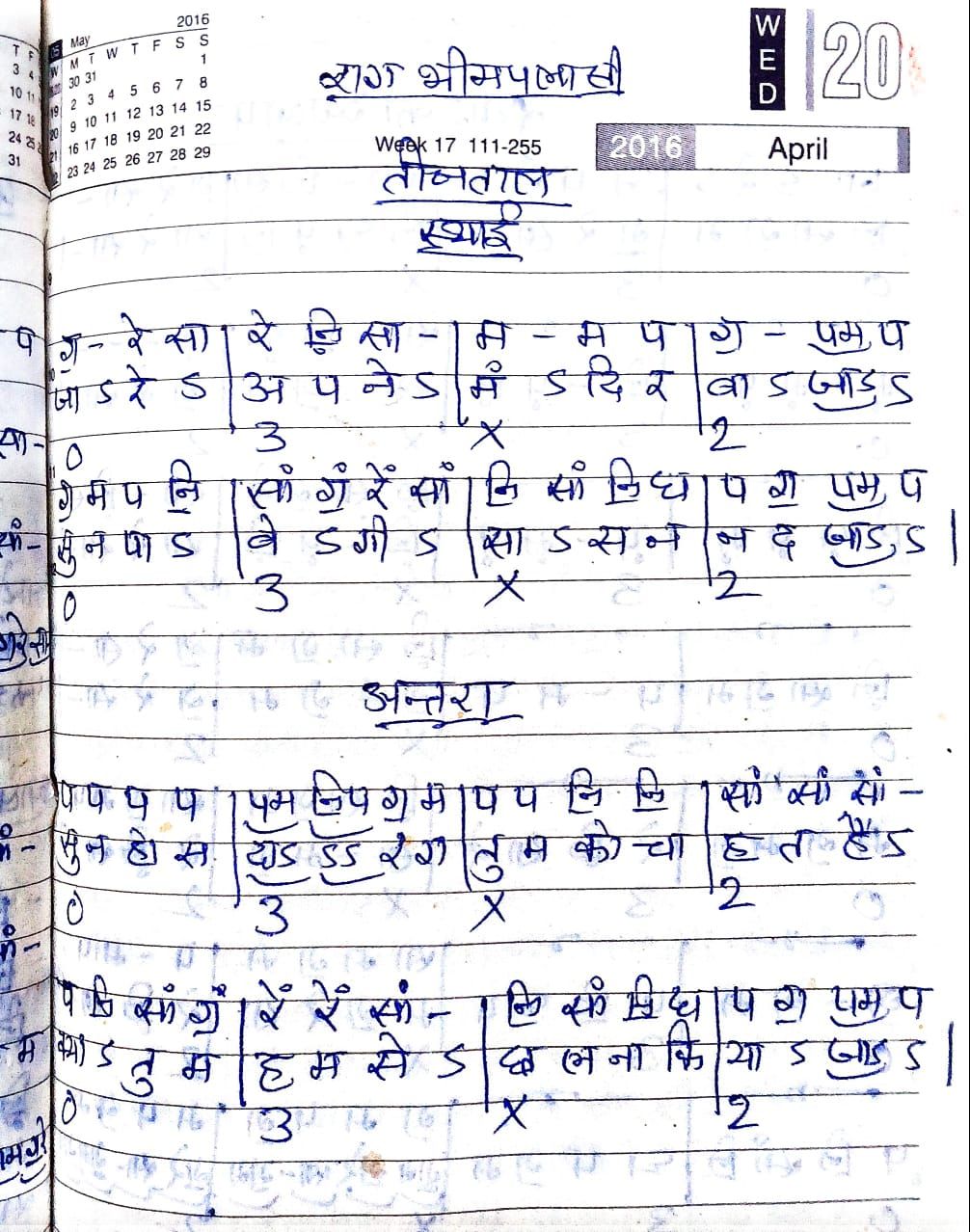
This notation is a reminder to keep shining and be consistent. It represents the discipline and dedication that my guru instilled in me. Every time I look at it, I am reminded of the importance of perseverance and the beauty of the journey itself. It's not just about the destination but the continuous effort to improve and stay true to the art.
Contact and Follow
Email: drpcvikram@gmail.com
Instagram: vspsinger
YouTube: vspsinger