

How did you first discover your passion for writing?
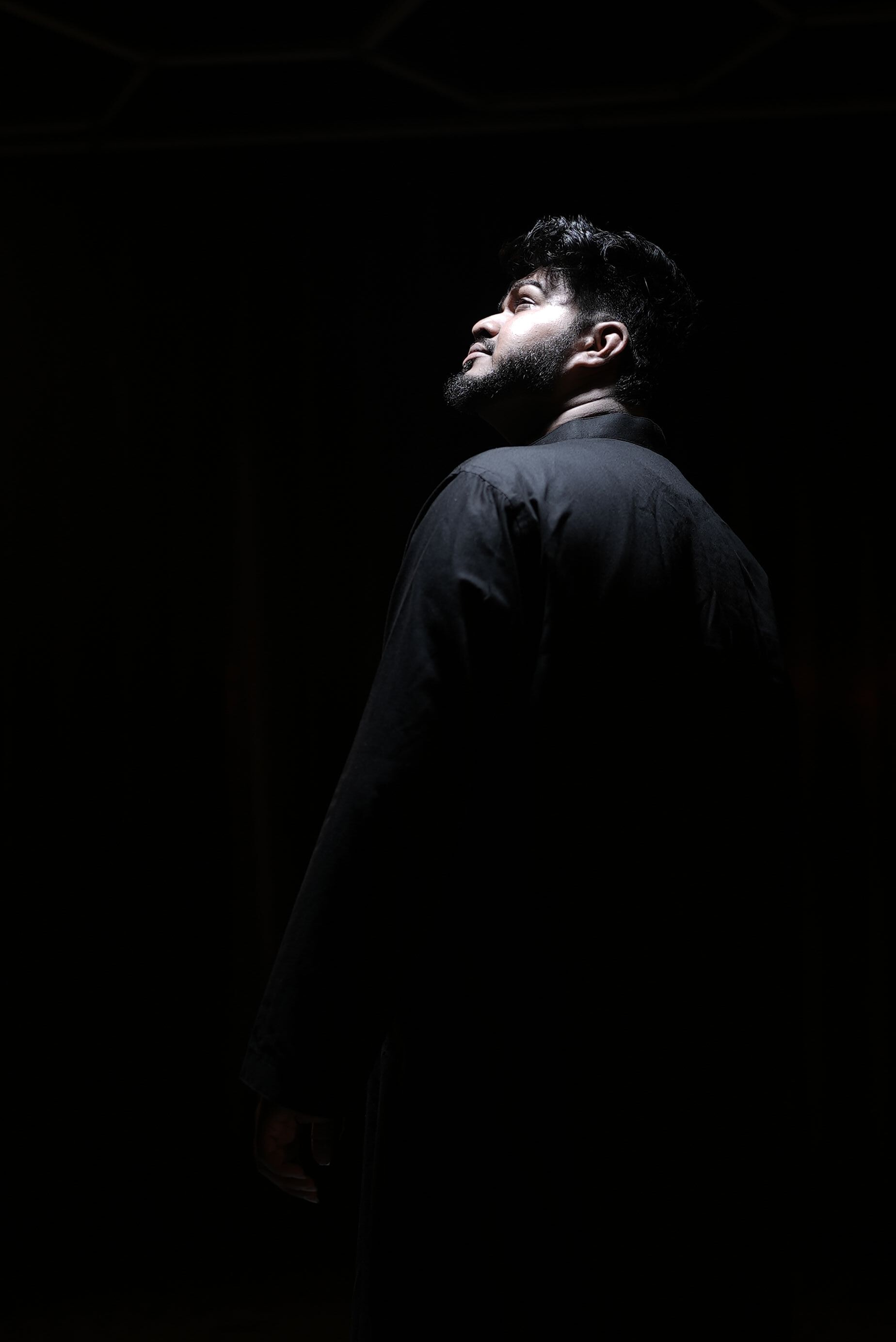
Writing began for me as a conversation with myself. I often found that the deepest emotions could not be spoken aloud, but they could find a home on paper. Over the years, poetry became my way of understanding life—its beauty, its contradictions, its silences, and its sorrows. What started as a personal expression slowly transformed into a lifelong passion. I write because words have the power to preserve what time tries to erase and pour out emotions of the soul.
What was the first piece you ever wrote that made you feel like a writer?
The first piece that made me feel like a writer was not the one that received praise; it was the one that unsettled me from within. After writing it, I felt as though I had stumbled upon a chamber within myself that I did not know existed. The poem seemed to contain more truth than I had consciously placed into it. It was as if language had ventured ahead of thought and returned carrying something from the depths. That was the moment I understood that literature is not merely an arrangement of beautiful sentences. It is a testament to the hidden life of the soul. A writer's task is not to provide answers, but to illuminate those corners of human experience where certainty dissolves into wonder. When I finished that piece, I did not think, "I have written well." I thought, "I have discovered something." And perhaps that is the closest I have ever come to feeling like a writer.
How has your writing style evolved over the years?
My early writing was driven by emotions, and my later writing is driven by curiosity to find answers. I began by writing about what I felt. Over the years, I became more interested in why we remember, why we long, and how ordinary moments acquire extraordinary meaning with time. As a result, my poetry has become quieter, more layered, and more reflective. If there is one defining change, it is this: I have moved from describing emotions to exploring the human condition and psychological dilemmas through them.
What role does poetry play in your creative life?
Poetry is the most contemplative part of my creative life. Through works like An Ode to Shimla and The Taste of Midnight, I have explored how places and moments can become vessels for memory, introspection, and meaning. What attracts me to poetry is its ability to reveal the extraordinary within the ordinary—a hillside wrapped in mist, a midnight silence, a fleeting sensation that might otherwise be lost to time. More than a literary form, poetry is my way of engaging with the world. It allows me to preserve moments, question their significance, and discover the deeper emotional and philosophical truths hidden within them.
Can you describe your writing space and how it influences your work?

The images reflect a space that deeply influences my creative life—a serene corner of books and wood. The shelves represent a lifelong companionship with literature and serve as a reminder that every story ultimately begins with observation. It is the kind of place where reading, reflection, and writing naturally converge. However, I love to write more in open spaces covered by mountains and trees.
What inspired that particular handwritten draft?
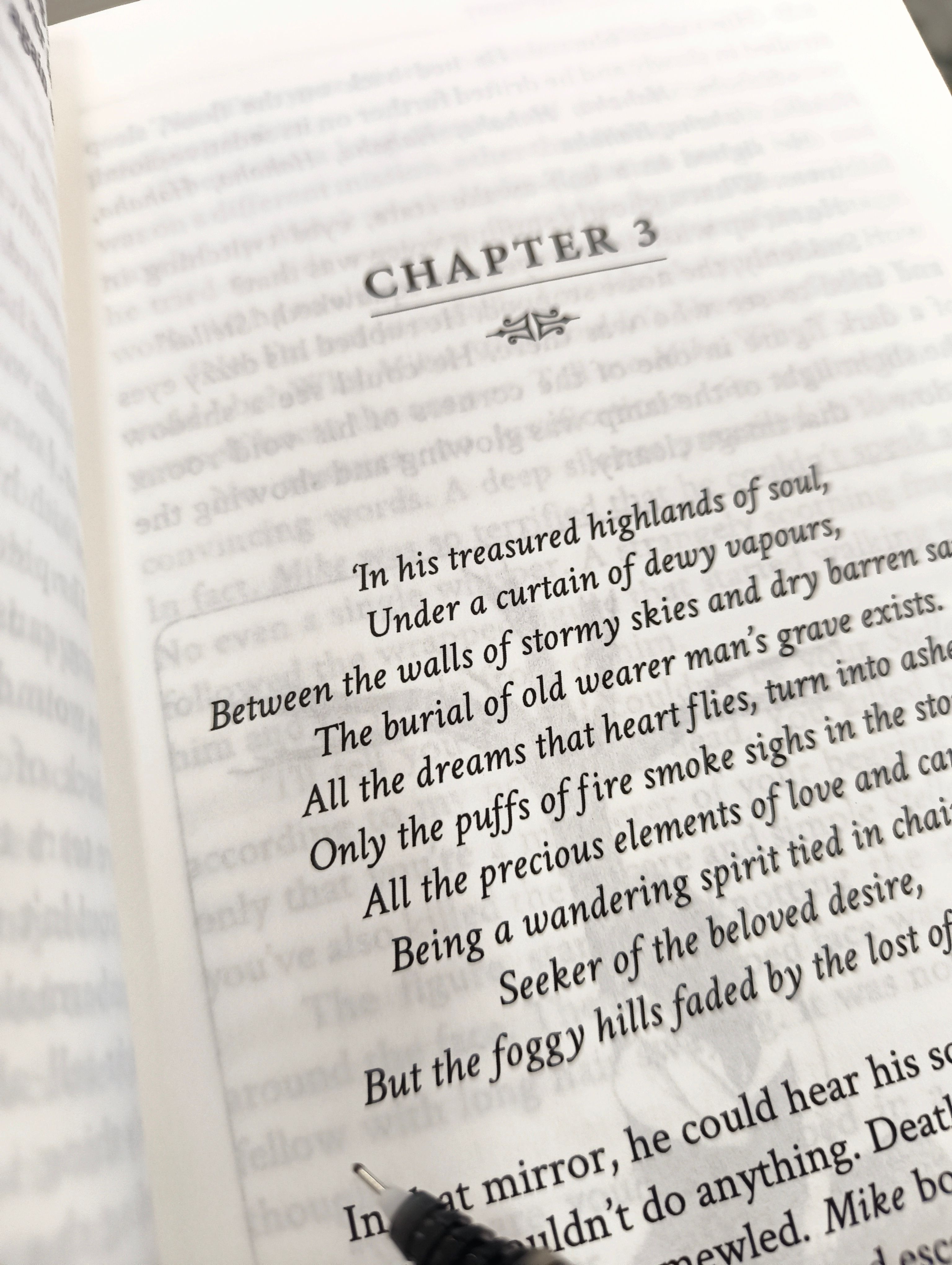
The verses were inspired by Mike's psychological state after Stella leaves him. The mist-covered hills, wandering spirit, and fading dreams symbolize his grief, loneliness, and emotional disorientation. Rather than describing an external landscape, the imagery reflects Mike's inner world—a mind caught between memory and reality, longing for a love that has become part of the past. The passage explores how absence can transform both perception and identity.
What makes your published work An Ode to Shimla special to you?
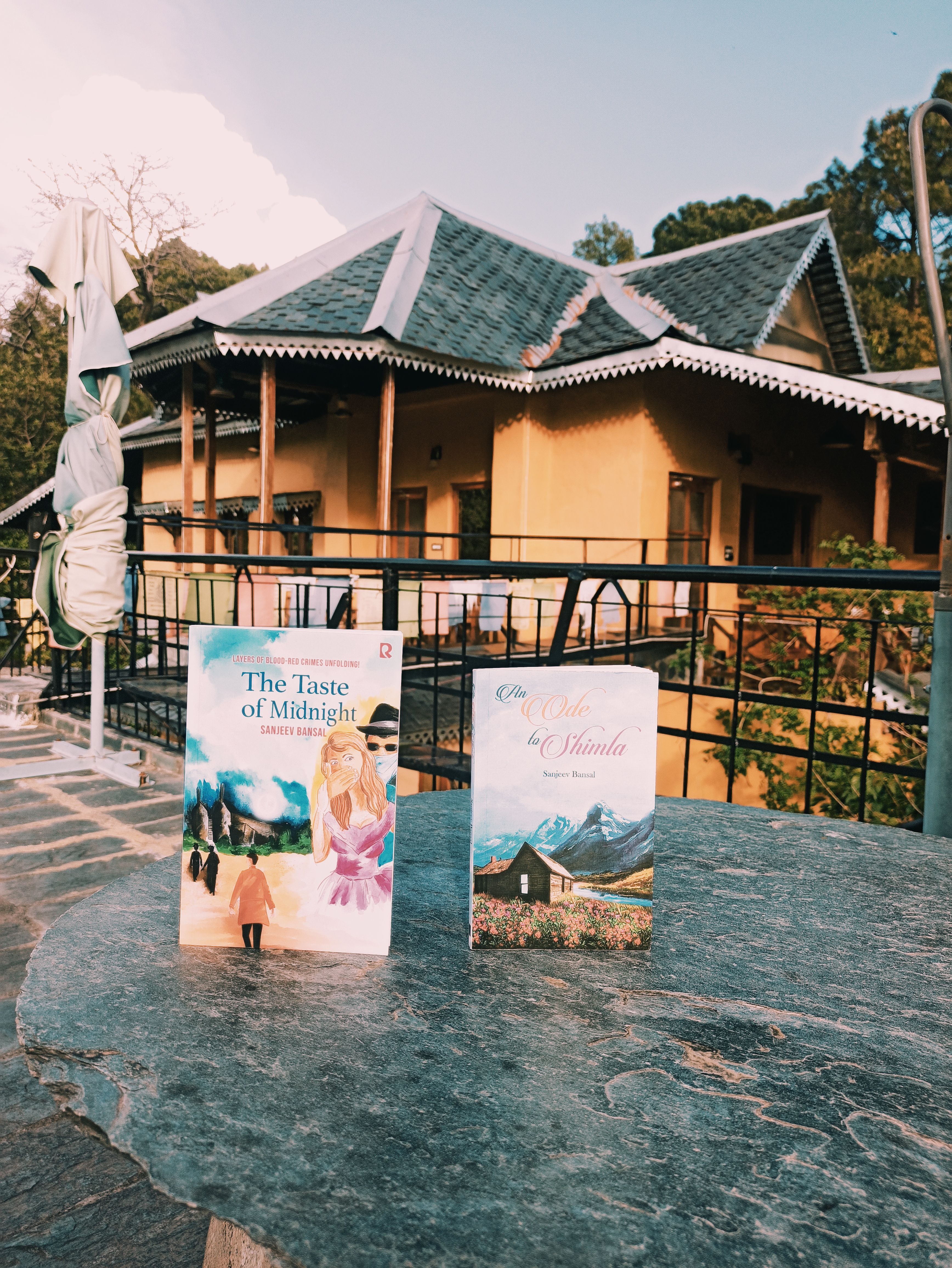
An Ode to Shimla is special to me because it reflects my deep fascination with place, memory, and the emotional resonance of landscapes. Through Shimla's hills, forests, and changing seasons, I explored themes of nostalgia, beauty, and the passage of time. The Taste of Midnight holds a different significance. It is a psychological and emotional exploration of love, loss, longing, and self-discovery through the journey of its characters, particularly Mike. The novel allowed me to examine the inner landscapes of the human mind as deeply as An Ode to Shimla explored the outer landscape of nature. Together, these works represent two complementary aspects of my writing—the search for meaning in the world around us and the search for meaning within ourselves.
What emotion were you trying to convey in the poem you read aloud?
The central emotion I wanted to convey in The Shadow of Oil Lamp was a sense of contemplative wonder. The poem invites the reader to pause and look beyond the obvious light, toward the silence and mystery that exist beneath it. The lamp and its shadow serve as metaphors for those subtle, often overlooked aspects of life—peace, memory, innocence, and the quiet beauty that reveals itself only to those who are willing to slow down and observe. At its heart, the poem is about discovering that the deepest truths are not always found in brilliance, but sometimes in the gentle shadows surrounding it.
How does this image relate to your current writing project?
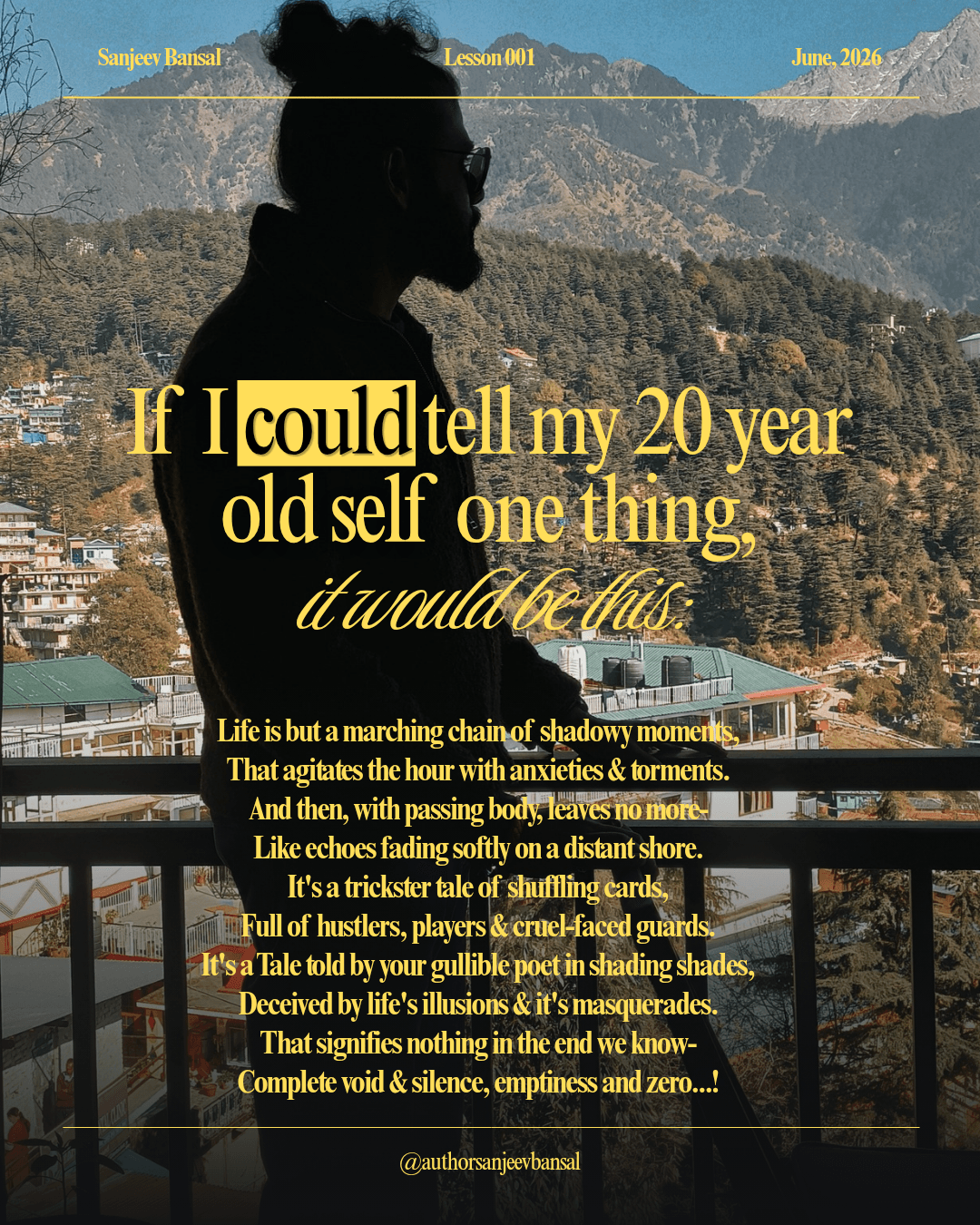
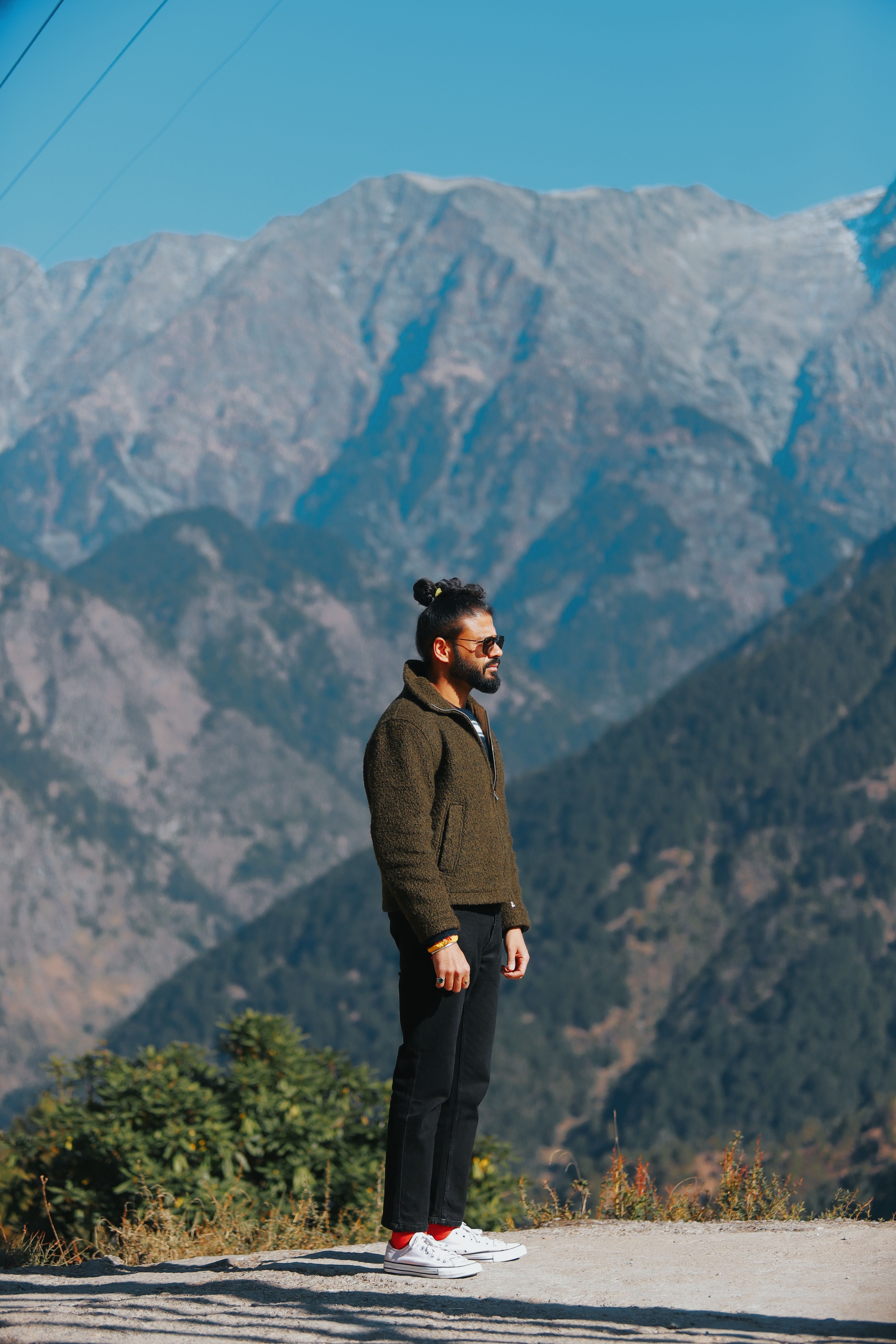
The image reflects the essence of my writing. The mountains symbolize memory, time, and the beauty of the external world, while the solitary figure represents introspection and the inner life of the mind. Much of my work explores the meeting point of these two realms—where landscape becomes emotion, and where observation transforms into reflection. In many ways, this image is a portrait of the writer's journey itself.
Why is your favorite writing tool important to you?
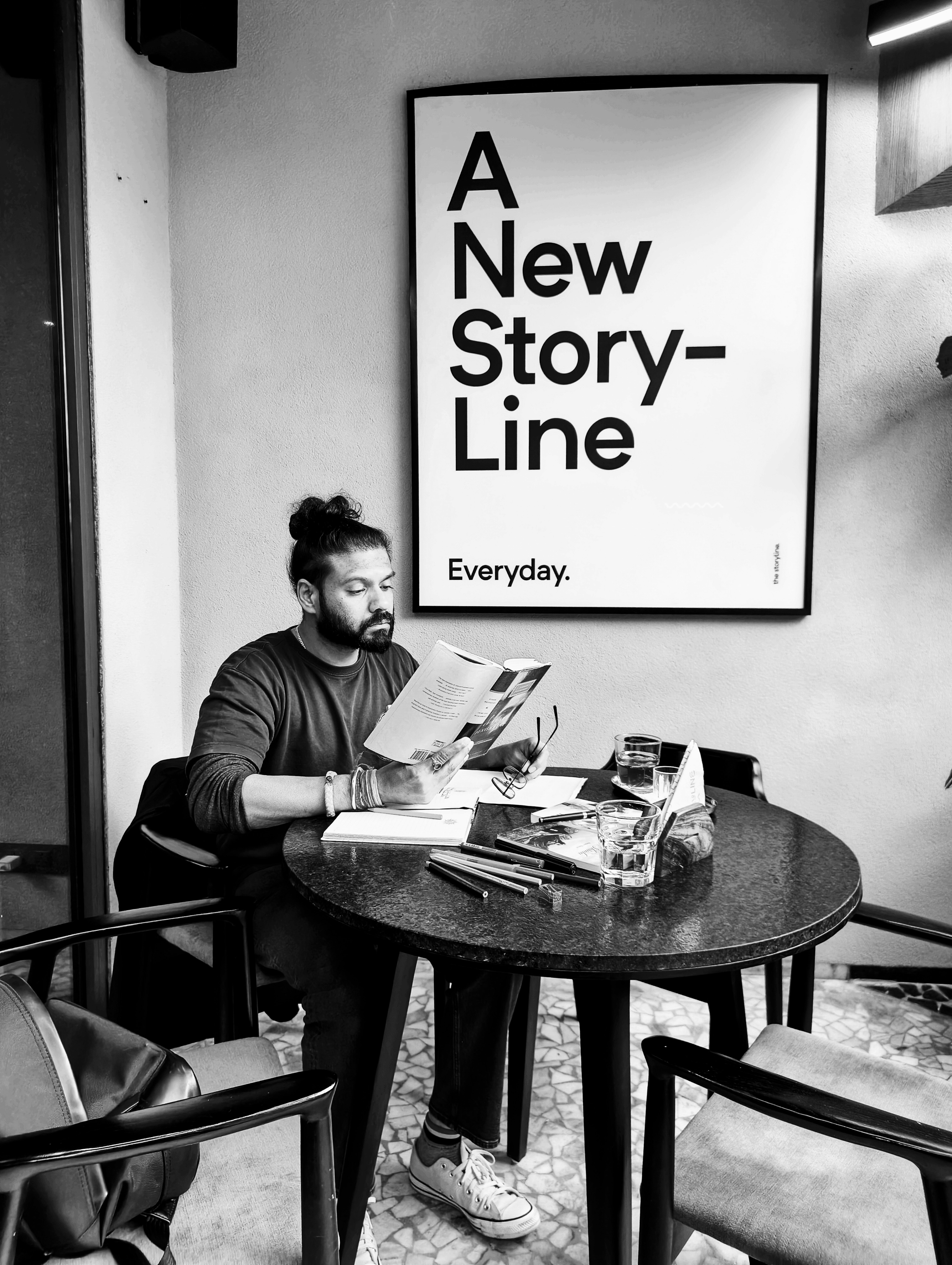
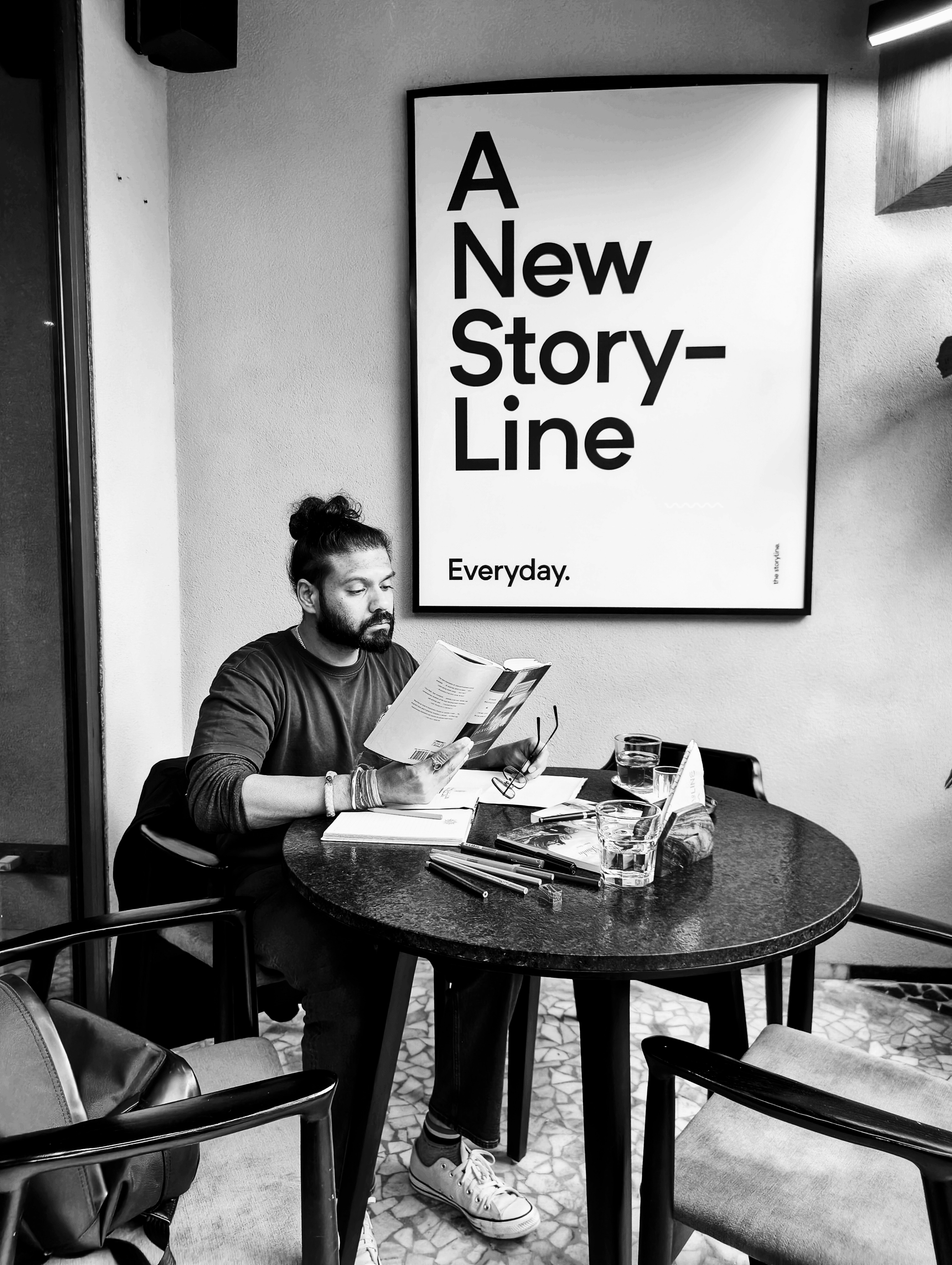
The fountain pen, the bottle of ink, the colored pencils, and the worn volumes of Russian literature are not possessions to me; they are witnesses. The pen records what memory fears to confess. The ink preserves what time is determined to erase. The pencils remind me that every truth exists in shades rather than absolutes. And Russian literature teaches me that the human soul is both a prison and a universe. I keep them close because they serve a common purpose: they protect me from the illusion that life is simple. They remind me that beneath every ordinary day lies an abyss of questions, and that writing is merely the courage to look into it.
Contact and Follow
Email: contactsanjeevbansal@gmail.com
Instagram: https://instagram.com/authorsanjeevbansal
Website: https://www.authorsanjeevbansal.com